
The median home sale price in Allen, TX recently sat around $527,000, and homes are spending roughly 43 days on the market. That’s a steady pace – not frantic, not stagnant – which means buyers who are downsizing or making a move into senior housing have real options without feeling rushed. This market stability is a key factor for anyone weighing the pros and cons of living in Allen.
Collin County runs the full spectrum of senior living, from low-maintenance cottages to full-service continuum care campuses. The right fit depends on your monthly budget, the amenities you want to use, and the fine print in the property’s rules – which varies more than most people expect.
An Overview of Allen Retirement Communities
The Federal Housing for Older Persons Act (HOPA) sets the legal baseline for age-restricted housing in Texas. A property can only enforce age restrictions if it meets specific federal guidelines, so not every community you’ll see marketed as “senior living” qualifies under the law.
The most common standard is the 80/20 rule. At least 80% of occupied units must have at least one resident who is 55 years of age or older. That leaves a technical window for younger residents in the remaining 20%, but individual communities frequently close that window entirely – some HOAs require 100% of units to have a 55+ resident. Always read the specific HOA bylaws before you make an offer, not after.
Defining the Local Options
The range here is wider than most buyers realize at first. You’ll find standalone single-family homes inside age-restricted neighborhoods sitting alongside large apartment complexes built specifically for seniors. Some properties are purely about lifestyle and recreation. Others layer in healthcare services.
That level of care is what ultimately determines how a community gets classified. Active adult neighborhoods function as standard residential living – just with age restrictions attached. Assisted living and continuing care facilities are a different category entirely, with daily personal assistance and medical support built into the model.
Senior Living Options Available in Collin County
Allen currently has about 382 active homes for sale across the broader residential market, so there’s no shortage of starting points. Within the senior housing sector specifically, properties split into a few distinct categories based on care level and ownership structure.
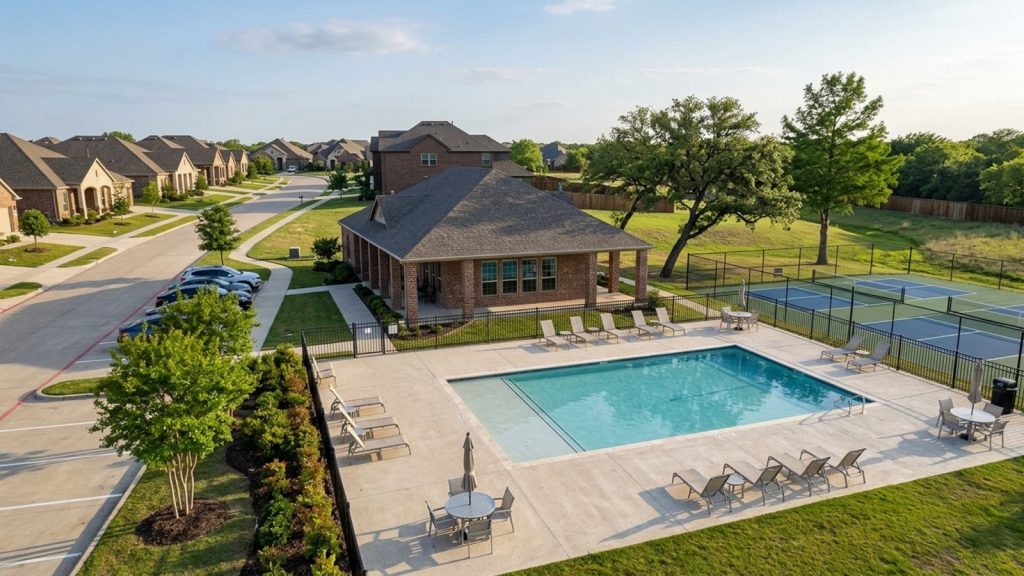
Independent living and active-adult communities are for residents who want a low-maintenance lifestyle without any medical oversight. Shared amenities – clubhouses, fitness centers, organized social events – are the draw here.
Assisted living steps in when residents need help with daily tasks like medication management or meals. At the far end of the spectrum, Continuing Care Retirement Communities (CCRCs) put independent living, assisted living, and nursing care on a single campus, which matters a great deal if your needs are likely to change over time.
Senior Apartments and Mobile-Home Communities
Renters have access to dedicated senior apartment buildings throughout Allen – age-restricted, accessible floor plans, elevators, community gathering spaces.
If you’re working with a tighter budget, 55+ mobile-home communities offer a different model entirely. You own the manufactured home; you pay monthly lot rent to the community operator. Lower upfront costs than most alternatives, with the detached living that a lot of buyers prefer.
Notable 55+ Developments and Communities
Twin Creeks is the name you’ll hear most often when people are looking at this type of housing in Allen. Golf-cart-friendly streets, varied property styles, and enough critical mass that it functions as its own small community within the city.
The Village at Twin Creeks handles the residential neighborhood end of things – low-maintenance cottage homes with HOA fees running about $135 to $145 per month, covering exterior upkeep and shared amenities. For something more service-oriented, Discovery Village at Twin Creeks operates as a luxury senior living facility on the same side of town. Other local properties worth looking at include Alexis Estates and Parkview in Allen, both of which offer dedicated senior living environments with varying levels of included services.
Affordable and Low-Income Options
Income limits control who qualifies for subsidized senior housing in Collin County. For a one-person household, the HUD-derived “Low Income” threshold – 80% of Area Median Income – is $66,000. The “Very Low Income” threshold at 50% AMI drops to $41,250. A two-person household has a low-income limit of $74,250.
If you fall into those brackets, income-restricted apartments are an option, but go in knowing that waitlists for these units are common. It’s not a quick solution.
The Cost of 55+ Living in Allen
The median monthly HOA fee across all of Allen is $281, with a typical range between $187 and $360 per month. That number shifts considerably once you’re inside a dedicated senior community, because fees track directly with the level of services and amenities being maintained.
Basic 55+ community HOA fees in Texas generally run about $120 to $250 per month. Resort-style communities with pools, clubhouses, and extensive facilities charge more – typically $250 to $480 per month. In the broader Twin Creeks area, fees range from roughly $60 to $400 per month depending on which section of the development you’re in and what type of home you’re buying. Build these recurring costs into your monthly budget before you fall in love with a specific property.
Renting Versus Buying and Entrance Fees
Renting a senior apartment in Allen averages $2,126 per month. Studio layouts average $1,254, one-bedroom units run $1,519, and two-bedroom apartments average $1,973 per month.
CCRCs work on a completely different financial model. There’s a large upfront entrance fee before monthly fees even begin. Statewide, Texas CCRC entrance fees typically range from $130,000 to $500,000, followed by monthly fees between $2,250 and $4,800. That’s a significant capital commitment, and it’s worth understanding exactly what refund provisions, if any, apply to that entrance fee.
State Assistance and Medicaid
Texas offers the STAR+PLUS Medicaid waiver program for elderly adults who require a nursing facility level of care. The program allows eligible seniors to live in assisted living or adult foster care while receiving covered services like personal care and meal delivery.
One thing to be clear about: the waiver does not cover room and board costs. For 2026, financial eligibility generally requires individual income below roughly $2,829 per month and countable assets under $2,000.
Weighing the Pros and Cons of Active Adult Communities
This is worth thinking through carefully, because moving into an age-restricted neighborhood changes both your daily routines and your financial obligations.
On the benefit side, you get a predictable environment and neighbors who are in a similar life stage. A lot of these developments also take exterior maintenance off your plate entirely – the association handles lawn care and exterior repairs, which is the whole point for many buyers.
The constraints are real, though. HOAs govern everything from exterior paint colors to pet ownership, and the monthly dues can increase over time. That’s not a reason to walk away, but it’s a reason to read the documents.
Options for Different Budgets
Seniors who find luxury assisted living out of reach typically look at standard 55+ apartments or mobile-home communities. Both provide the age-restricted environment without the overhead of on-site medical staff driving up the cost.
Buyers with equity from a previous home sale often prefer purchasing a low-maintenance cottage – it locks in the base housing cost while avoiding the steep entrance fees that come with CCRCs.
Touring and Selecting Your Next Home
The Allen market saw 336 homes sold over a single tracking period, which tells you buyer activity is consistent. The inventory is there; the task is narrowing it down.
Ask for a complete copy of the HOA bylaws or facility contract before you commit to anything. Pay particular attention to rules about long-term guests – many 55+ communities restrict how long younger family members can visit, which surprises a lot of buyers. Also review the financial health of the community association. An underfunded HOA reserve can produce sudden special assessments when major repairs come due, and that’s not a bill anyone wants to absorb on a fixed income.
Making the Final Decision
Tour the same place more than once, at different times of day. Activity levels in a neighborhood shift, and you want an honest picture of what daily life looks like, not the version you see during a scheduled sales visit. Current residents will tell you more about how management operates than any brochure will.
Then sit down with the numbers. Compare monthly fees against your fixed retirement income, and be honest about both your current mobility and where you realistically expect to be in five or ten years. The right community is the one that works for both.
Frequently Asked Questions About Retiring in Allen
What is the 80/20 rule in a 55+ retirement community in Texas?
Under federal guidelines, at least 80% of the occupied units in a 55+ community must have at least one resident who is 55 or older. The remaining 20% can potentially house younger residents, though many local HOAs enforce 100% age restrictions.
What is the average rent for 55+ apartments in Allen, TX?
The average rent for a senior apartment in Allen is $2,126 per month. Studio units average $1,254, while two-bedroom layouts cost around $1,973 per month.
Is it better to rent or buy in a 55+ community in Allen?
It depends on your financial situation and how long you plan to stay. Buying a low-maintenance cottage locks in your base housing cost, while renting a senior apartment avoids property taxes and exterior maintenance responsibilities.
What is the downside of living in a 55+ community?
The main drawbacks are the HOA regulations and the ongoing monthly fees. Residents must comply with community rules regarding visitors, pets, and exterior modifications, and HOA dues can increase over time.
Is Allen, TX a good place to retire?
Allen offers a strong mix of housing options, from the golf-cart-friendly streets of Twin Creeks to dedicated senior apartments. With a median home sale price around $527,000, retirees can choose between purchasing a detached home or renting in a full-service facility.
How do I choose and tour the right retirement community in Allen?
Schedule multiple visits to observe the daily environment and speak with current residents. Always review the HOA bylaws and financial reserve documents before signing a contract or making an offer.
How does retiring in Allen compare to neighboring cities?
Buyers weighing their options often look at the differences between Allen and Frisco to see which location best fits their retirement lifestyle. Allen offers a steady market pace with a median home price around $527,000, giving downsizers time to evaluate different senior living facilities without feeling rushed.