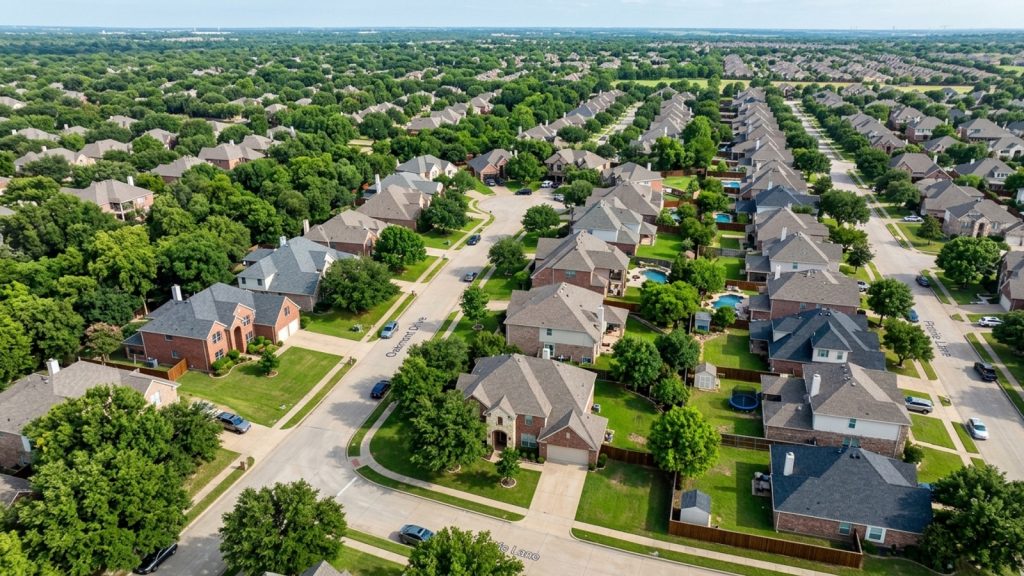
The median home sale price in Plano, TX sits around $540,000 as of mid-2026. Homes are moving, too – first-time home buyers in Plano, TX should expect available properties to spend about 35 days on the market before going under contract.
Here’s the thing most buyers miss: the listing price is only the starting point. Your real budget question is about monthly carrying costs, and lenders are going to look at your gross income, your existing debt, and the specific expenses that come with owning property in Collin County before they tell you what you qualify for.
Figuring Out Your Baseline Buying Power
Most mortgage lenders start with your gross monthly income – before taxes, before anything else – to establish what you can borrow. Take a buyer earning $120,000 a year: that’s $10,000 a month in gross income to work with.
From there, lenders run that number against a set of financial ratios to see how much room a mortgage payment leaves in your budget. The goal, from their perspective, is to make sure your housing costs don’t swallow your entire paycheck. That calculation sets your maximum loan size, which is why it’s worth running these numbers before you start touring homes rather than after you’ve fallen in love with one.
The Standard 28/36 Rule
Mortgage underwriters rely heavily on the 28/36 rule. The 28 means your total housing payment shouldn’t exceed 28% of your gross monthly income. The 36 means all of your debt obligations combined – including the new mortgage – should stay under 36% of gross income. Stay inside those percentages and you’ve got breathing room after closing.
Finding Your Debt-to-Income Ratio
Your debt-to-income ratio, or DTI, is simply the percentage of your monthly gross income that goes toward debt payments. Lenders add up your auto loans, student loans, minimum credit card payments, and the projected mortgage payment to get there.
If your DTI pushes past 36%, your options are to look at lower-priced homes or pay down some existing balances before applying. A lower DTI also tends to unlock better interest rates – so it’s worth the effort either way.
Local Housing Costs That Impact Your Budget
Collin County’s effective property tax rate runs about 1.30%, which is meaningfully higher than the 1.02% national median. That gap matters because it shows up directly in your monthly payment.
This is where a lot of buyers get tripped up. Online affordability calculators default to national averages for taxes and insurance, which gives Texas buyers a rosier picture than reality warrants. You need to plug in the actual local numbers to know what you’re really signing up for each month.
A mortgage payment is made up of principal, interest, taxes, and insurance – PITI, in lender shorthand. In this part of Texas, the tax and insurance portions are a substantial slice of that total, not an afterthought.
Plano Home Prices and Market Pace
The median sale price in Plano is right around $540,000, and homes are selling for about 98% of list price on average. Nearly 19% of recent sales closed above asking, which tells you this isn’t a market where lowball offers go anywhere. Leave room in your budget for a competitive offer – that’s just the reality here.
Collin County Property Taxes and Insurance
The Plano Independent School District carries a tax rate of $1.03955 per $100 of assessed value, which accounts for roughly 61% of a typical homeowner’s total tax bill. The county rate for the 2025-2026 fiscal year is $0.149343 per $100 valuation.
Texas homeowners insurance is another line item you can’t fudge. Average annual premiums in the state range from around $3,291 to $4,585 depending on coverage and provider – one of the higher ranges in the country.
Factoring in HOA Fees
A lot of Plano neighborhoods come with homeowners associations, and those monthly or annual dues aren’t optional – lenders fold them into your DTI calculation the same way they do a car payment. Before you get attached to a property, find out what the HOA actually costs. A high monthly fee directly reduces how much principal and interest you can afford, which pulls your maximum purchase price down.
Planning for Upfront Costs in Texas
Buyer closing costs in Texas typically run between 2% and 6% of the purchase price. Some data models put the specific buyer-side fees in the state closer to 0.93% of the sale price on average.
Either way, these costs are separate from your down payment entirely. They cover things like title searches, appraisal fees, and loan origination charges – and they’re due at the closing table before you get the keys. You’re saving for both the down payment and closing costs at the same time, so knowing your total cash requirement upfront keeps you from hitting a wall at the finish line.
Down Payment Expectations
Conventional loans generally require 3% to 5% down; FHA loans set the minimum at 3.5%. On a $540,000 median-priced home, 5% down is $27,000.
Putting down 20% gets rid of private mortgage insurance, which isn’t nothing. But plenty of buyers opt for a smaller down payment to hold onto cash for moving costs and updates – it’s a trade-off worth thinking through with your lender rather than defaulting to one answer.
Estimating Local Closing Costs
Sellers in Texas typically handle agent commissions, but buyers are on the hook for their own loan-related fees. A 2% closing cost estimate on a $540,000 purchase adds $10,800 to the cash you need at closing.
It’s sometimes possible to negotiate seller concessions to cover part of your closing costs. That strategy works better on homes that have been sitting longer than the 35-day median – a seller who’s been waiting will often be more flexible than one fielding multiple offers in the first week.
First-Time Homebuyer Assistance
The city itself doesn’t run a dedicated program, but there are statewide options worth knowing about. The Texas State Affordable Housing Corporation (TSAHC) Home Sweet Texas grant provides down payment assistance up to 5% of the loan amount with no repayment required. The Texas Department of Housing and Community Affairs (TDHCA) offers deferred loans for up to 5% of the mortgage as well. Both programs cap income eligibility at roughly 115% of the area median income, which means Collin County buyers earning up to about $132,000 may still qualify.
Securing a Mortgage Pre-Approval
A pre-approval letter tells sellers that a lender has actually verified your income, assets, and credit score – it’s not just a ballpark estimate. With roughly 702 homes in the local inventory, having that letter in hand before you start touring is standard practice, not a bonus step.
What pre-approval gives you is a hard number tied to current interest rates. You move from “I think I can afford around this much” to a concrete ceiling, which makes every subsequent decision cleaner.
Lenders will pull your credit and review your tax returns, pay stubs, and bank statements. Going through that process before you’re under contract means any problems surface when you still have time to deal with them.
Moving Beyond Online Calculators
Online tools are a reasonable starting point, but they can’t account for your specific credit history or real insurance quotes. A local lender runs your numbers with actual real-time rates and accurate Collin County tax figures – the difference from a national calculator can be significant.
Sitting down with a loan officer also lets you compare loan types side by side. FHA versus conventional isn’t a one-size-fits-all answer, and a few minutes with someone who knows the local market can save you real money on your monthly payment.
Next Steps for Buyers
Once you have your pre-approval amount, share it with your agent so they can filter listings to what actually fits. Don’t treat your maximum as your target – staying a bit below it leaves room for unexpected expenses, property tax adjustments, or a situation where you need to offer above list price to win. In a market where 19% of homes close above asking, that buffer isn’t just nice to have.
Frequently Asked Questions
What salary do I need to afford a median-priced home in Plano, TX?
It depends on your down payment and current interest rates. Assuming a median home price around $540,000 and the standard 28% housing ratio, a household usually needs an income well over $100,000 to comfortably cover the mortgage, the 1.30% effective property tax rate, and insurance premiums.
How do Collin County and Plano property taxes impact my maximum monthly mortgage payment?
Property taxes are factored directly into your debt-to-income ratio by the lender. Because the Plano ISD tax rate ($1.03955) and county taxes create an effective rate of about 1.30%, this monthly expense lowers the total loan amount you can qualify for compared to areas with lower taxes.
Will high HOA fees in Plano neighborhoods reduce the total house price I can qualify for?
Yes. Lenders include monthly homeowners association dues as part of your total debt obligations. A higher HOA fee means less of your monthly budget can go toward the principal and interest, which reduces your maximum purchase price.
What is the realistic minimum down payment needed to compete for a house in the current Plano market?
Planning to buy? Learn more about Why Buyers Choose Bale Real Estate Group.
For help with preparation, pricing and marketing, explore Why Sellers Hire Bale Real Estate Group.
Buyers can secure a home with as little as 3% to 5% down using conventional loans, or 3.5% with an FHA loan. With homes selling for roughly 98% of list price and spending about 35 days on the market, a strong pre-approval matters just as much as a large down payment.