
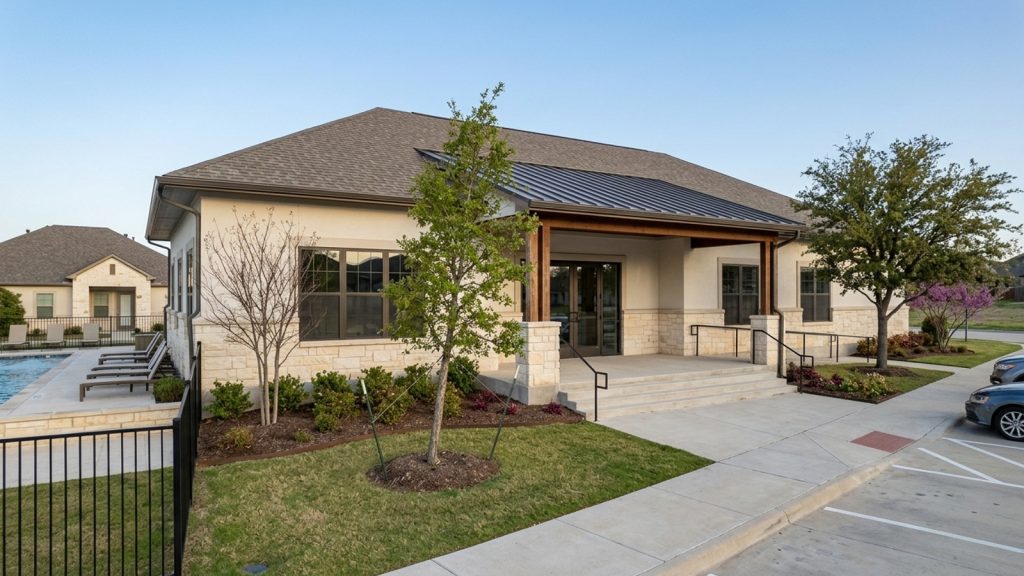
The median home price in Prosper, TX is roughly $872,000, and homes are currently spending about 84 days on the market. Buyers often weigh the pros and cons of living in Prosper, TX before committing to a specific neighborhood. If you’re looking for age-restricted housing here – whether to rent or buy – you’ve got several distinct options in this growing North Texas town.
The real work is in the comparison: monthly rents, HOA fees, and what level of care or support comes with the property. This guide walks through the different types of retirement communities in Prosper, TX, from independent active-adult apartments to assisted living facilities.
An Overview of Prosper’s Senior Housing Market
State law and federal guidelines shape how age-restricted neighborhoods operate in Texas, so what you’re allowed to expect – and what communities are required to provide – follows a specific framework. Buyers looking for over-55 communities in Prosper, TX will encounter defined age requirements and a range of medical or lifestyle support levels that vary considerably from one property to the next.
Some properties are built entirely around low-maintenance living: resort-style pools, social calendars, nothing clinical about them. Others operate as full continuing care campuses, where you can move in independently and transition to full-time assistance if your health needs change – all without relocating.
Housing Options Available in Town
The local market includes single-family homes, townhouses, and dedicated apartment complexes built specifically for older adults. You’ll find both for-sale properties inside larger master-planned developments and standalone rental communities.
The choice often comes down to upfront costs versus long-term flexibility. Buying a home in a 55+ neighborhood builds equity. Renting senior apartments in Prosper, TX gives you a fixed monthly payment without property taxes or exterior maintenance on your plate.
Understanding the 80/20 Age Rule
Under the federal Housing for Older Persons Act (HOPA), a 55+ community must have at least 80% of its occupied units inhabited by at least one person who is 55 or older. Texas communities enforce this strictly to maintain their age-restricted legal status.
The remaining 20% of units can technically house younger residents, but individual HOAs often go further. Many require all permanent residents to be over 19 or put a cap on how many days younger guests can stay each year. Don’t assume the 80/20 rule tells the whole story – read the specific HOA rules for any community you’re seriously considering.
Different Levels of Senior Living
Senior living in Prosper, TX falls into a few distinct categories based on how much daily assistance is provided. The specific licenses, costs, and included services vary widely between property types, so knowing the categories before you start touring will save you real time.
Active Adult and Independent Living
Independent living is exactly what it sounds like – zero medical care, full focus on lifestyle and convenience. These 55-plus communities in Prosper, TX typically include fitness centers, organized social events, and exterior maintenance folded into the monthly fee.
You handle your own meals, healthcare, and daily routines. It’s the right fit if you want to shed the burden of home upkeep while staying completely self-sufficient.
Assisted Living and Continuing Care
Assisted living provides hands-on help with daily activities – bathing, medication management, meal preparation – with staff on-site around the clock. It’s for residents who can no longer safely manage those tasks alone.
Continuing Care Retirement Communities, or CCRCs, take it further by combining independent living, assisted living, and sometimes skilled nursing on a single campus. The tradeoff is a large upfront entrance fee, which buys you guaranteed access to higher levels of care as your needs change over time. It’s a significant financial commitment, and we’ll get into the numbers below.
Senior Apartments and Affordable Housing
Standalone senior apartments offer age-restricted renting without the medical infrastructure of a CCRC. You get standard apartment amenities alongside accessibility-focused design – walk-in showers, ground-floor access, that kind of thing.
For those looking at low-income senior housing in Prosper, TX, eligibility depends on state income limits. Texas considers a single senior adult low-income if they earn less than $32,904 a year, based on 2022 figures. That threshold determines eligibility for state programs like STAR+PLUS Medicaid.
Featured 55+ Communities in Town
Prosper has seen targeted development for older adults, with options ranging from luxury rentals to for-sale villas inside larger neighborhoods. Most of these properties sit close to the town’s major retail corridors and medical offices.
Touring multiple communities will give you the best read on floor plans and what the amenities look like in person. Two properties in particular illustrate the range of senior community types in Prosper, TX.
Alders Prosper
Alders Prosper is an active adult rental community at 2151 Prairie Drive, offering floor plans ranging from studios to two-bedroom apartments. It operates entirely as a rental property for the 55+ demographic, with on-site features built around resort-style amenities rather than medical care.
It’s designed for independent adults – there’s no clinical component here.
Villas at Windsong Ranch
Windsong Ranch is a large master-planned community in Prosper that includes a dedicated age-restricted section. The Villas at Windsong Ranch sits along Fishtrap Road and offers 55+ residents health, wellness, and social amenities alongside the broader community’s infrastructure.
Buyers here purchase their homes and pay HOA fees that cover the neighborhood’s upkeep. Unlike a rental community, this is an ownership arrangement – you’re building equity, and you’re subject to the HOA covenants that come with it.
Costs and Fees for 55+ Living in Prosper
Whether you rent, buy, or sign a continuing care contract determines the entire financial structure of your move. Monthly expenses can range from a single rent payment to a layered mix of HOA dues, property taxes, and care fees.
Before you sign anything, ask for a full fee schedule. Meal plan mandates, annual fee escalators, and special assessment clauses are the details that catch people off guard months after they’ve moved in.
Average Rent for Senior Apartments
The average cost of a senior apartment in Prosper, TX is around $2,124 per month. Rents shift based on square footage, floor level, and which utilities are included.
At Alders Prosper specifically, monthly rents range from about $1,725 to over $3,508 depending on unit size. Those figures cover the apartment itself and access to shared community spaces.
Entrance Fees and Continuing Care Costs
There’s no CCRC located within Prosper’s town limits, but seniors considering regional Texas facilities will encounter substantial upfront costs. Texas-wide, CCRC entrance fees typically range from about $130,000 to $500,000.
On top of that, monthly fees run between roughly $2,250 and $4,800 depending on the region and the level of care required. Facilities closer to the Dallas metro area tend to price toward the higher end of that range.
Evaluating Prosper as a Retirement Destination
Prosper’s housing inventory currently sits at about 390 available homes, with properties selling for an average of 96% of their list price. The market leans toward higher-end, spacious properties – that’s just the character of this town.
One thing worth being direct about: Prosper’s suburban layout requires a car for most errands. That’s not a dealbreaker for everyone, but it’s a real consideration when you’re thinking ten or fifteen years out. Long-term mobility expectations should factor into this decision.
Local Housing Market Dynamics
With a median sale price near $872,000, Prosper is a premium market relative to the broader Texas average. If you’re downsizing from out of state or from another part of the Dallas-Fort Worth area, budget accordingly – the price points here reflect that premium.
The market currently holds about 5.6 months of supply, which puts it in relatively balanced territory between buyers and sellers. Homes are taking roughly 84 days to sell, so you’re not going to lose a property overnight by taking a few days to think it over.
Suburban Layout and Infrastructure
Prosper is spread out – wide roads, large retail centers, extensive master-planned neighborhoods. Grocery stores, medical appointments, entertainment: you’re driving to all of it.
That said, the town’s growth has brought modern medical offices and specialized clinics closer to residential areas. For anything requiring a major hospital system, you’ll typically make the drive to neighboring Frisco or Plano.
Pros and Cons of Moving to a 55+ Community
An age-restricted neighborhood changes both the daily environment and the financial obligations you take on. It’s a different arrangement than a traditional all-ages subdivision, and it suits some people much better than others.
Benefits of Age-Restricted Neighborhoods
The primary advantage is an environment built specifically around the way older adults live. Zero-entry pools, single-story floor plans, accessible walking paths – these aren’t retrofits, they’re part of the original design.
Social connection is the other major draw. Organized events, clubs, and shared common spaces make it easier to meet neighbors who are at a similar stage of life. That can matter more than people expect when they first move in.
Common Drawbacks to Consider
The rules can chafe, particularly around younger family members. Grandchildren are generally welcome to visit, but long-term stays are often prohibited by HOA rules. If your family tends to make extended visits, clarify the specific policies before you commit.
HOA fees in 55+ communities also run higher than in standard subdivisions, because they’re covering specialized amenities and exterior maintenance. You’ll pay those dues every month regardless of whether you set foot in the clubhouse.
How to Tour and Choose a Property
An in-person visit tells you things an online listing never will – the noise level, the actual condition of the amenities, the general feel of the place on a Tuesday afternoon. Touring is required for a decision this significant.
Bring a checklist so you’re gathering consistent information across properties. It’s much easier to compare communities side-by-side when you asked the same questions at each one.
Questions to Ask on a Tour
Start with the monthly fee: ask for an exact breakdown of what it covers, down to specific utilities and services. Then ask for a history of rate increases over the past five years. That number tells you more about future costs than any brochure will.
Get the specifics on pets, parking, and exterior modifications. If you’re touring an assisted living facility, ask about the staff-to-resident ratio during overnight shifts – that one question reveals a lot about the operation.
Reviewing Contracts and HOA Rules
Lease agreements and HOA covenants are binding documents, and the details matter. For buyers, read the community’s reserve study – it shows whether the HOA has enough set aside to handle major repairs like roofs or roads without issuing a surprise special assessment.
For renters, look closely at the clauses covering lease termination. You want to know exactly how much notice is required to break a lease if a sudden medical event forces a move to a higher level of care. Understanding those exit terms now protects you from a difficult situation later.
Frequently Asked Questions
Is Prosper, TX a good place to retire?
Prosper offers a premium suburban environment with new infrastructure and large master-planned communities. Retirees should budget for a higher cost of living, as the median home price sits around $872,000. The town requires a car for daily errands, but offers easy access to modern medical clinics and retail centers.
What is the average rent for 55+ apartments in Prosper?
The average rent for a senior apartment in Prosper is about $2,124 per month. At specific communities like Alders Prosper, rents range from approximately $1,725 to over $3,508 depending on the unit size.
Is it better to rent or buy in a 55+ community in Prosper?
It depends on your financial goals and how much flexibility you want. Buying a home in a place like Villas at Windsong Ranch builds equity, while renting at an apartment complex keeps you out of property taxes and exterior maintenance costs.
What is the 80/20 rule for 55+ retirement communities in Texas?
The 80/20 rule is a federal guideline requiring at least 80% of the occupied units in a 55+ community to have at least one resident who is 55 or older. Texas properties enforce this to maintain their age-restricted legal status, though individual HOAs may place further restrictions on the remaining 20% of units.
What are the downsides of moving to a 55+ community in Prosper?
The main drawbacks are strict HOA rules and limitations on younger residents. Grandchildren can visit, but HOAs usually cap how many days a year anyone under a certain age can stay in the home.
How far in advance should I start touring retirement communities in Prosper?
With homes in Prosper taking roughly 84 days to sell, you should start touring well before you plan to move. Giving yourself time lets you compare monthly costs, review HOA rules, and either secure a spot in a rental community or coordinate a home purchase without feeling rushed into a decision.
Do I need to travel outside of Prosper for major medical care?
The town has added modern medical offices and specialized clinics close to residential areas. However, residents comparing Prosper, TX vs Frisco will find that they typically need to drive to those neighboring cities for major hospital systems.
What should I expect if I am relocating to Prosper from another state?
Anyone planning a move to Prosper, TX from outside the area should budget for a premium housing market with a median sale price near $872,000. You will also need to prepare for a spread-out suburban layout that requires a car for most daily errands.