
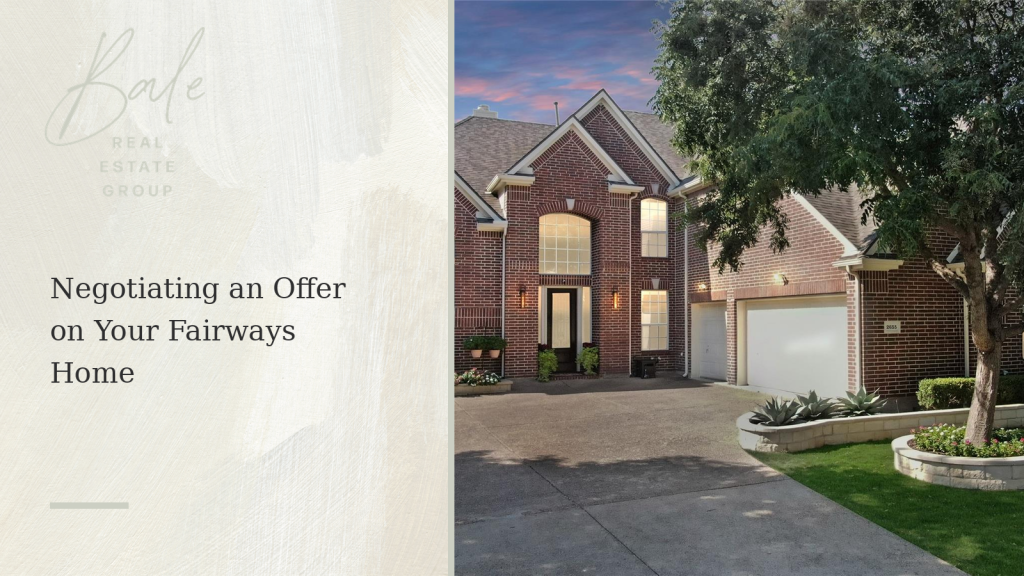
Receiving an offer on your Fairways home is an important milestone, but the highest purchase price does not automatically represent the strongest contract.
Sellers should evaluate the complete offer, including financing, option period, earnest money, concessions, closing date, possession, appraisal exposure and the likelihood that the buyer can successfully close.
Gary and Linda Bale with Bale Real Estate Group help Fairways sellers compare these elements so negotiations focus on both potential proceeds and transaction risk.
Current Homes for Sale in The Fairways



Start With the Purchase Price — But Do Not Stop There
Purchase price is obviously important, but sellers should understand what the complete contract means financially and strategically.
An offer should be evaluated based on:
- Purchase price
- Buyer financing
- Earnest money
- Option fee and option period
- Seller concessions
- Closing date
- Possession terms
- Appraisal considerations
- Contingencies
- Overall probability of closing
The objective is to determine which offer provides the strongest combination of price, terms and certainty.
Evaluate the Buyer’s Financing
A strong offer should be supported by a buyer who appears financially prepared to complete the transaction.
Depending on the offer, sellers may want to understand:
- Whether the buyer is paying cash or obtaining financing
- The type of financing
- Down payment amount
- Lender pre-approval
- Potential appraisal exposure
- Whether financing contingencies are involved
Earnest Money and Option Terms Matter
Earnest money and option-period terms can provide additional information about how aggressively a buyer is structuring the offer.
A shorter option period may reduce the amount of time the property is exposed to inspection-related uncertainty, while a longer period may provide the buyer with additional flexibility.
Seller Concessions Affect Net Proceeds
An offer can appear strong at first glance while including significant requests for seller-paid expenses.
These may include:
- Closing-cost assistance
- Rate-buydown contributions
- Repair credits
- Home warranty requests
- Other negotiated expenses
Sellers should evaluate the offer based on expected net proceeds rather than purchase price alone.
Closing Date and Possession Can Be Negotiating Tools
Terms involving timing may matter considerably to both the seller and buyer.
Depending on the seller’s plans, considerations may include:
- Preferred closing date
- Time needed to purchase another home
- Relocation timing
- Temporary leaseback or possession needs
- Moving schedules
An offer with slightly different pricing may still be more attractive if the timing better supports the seller’s goals.
Understand Appraisal Risk
When financing is involved, an appraisal can become an important part of the transaction.
If the contract price is substantially above recent comparable sales, sellers should understand how the offer addresses a potential appraisal difference.
Compare Multiple Offers Side by Side
When more than one offer is received, sellers should compare the complete contracts rather than focusing only on headline price.
A side-by-side comparison may evaluate:
- Estimated net proceeds
- Financing strength
- Option terms
- Closing timeline
- Requested concessions
- Appraisal risk
- Contingencies
- Overall transaction certainty
Should You Accept, Reject or Counter?
Once an offer is evaluated, a seller may decide to accept the contract, reject it or negotiate different terms through a counteroffer.
A counteroffer may address:
- Purchase price
- Seller concessions
- Closing date
- Option period
- Possession
- Other contract terms
The decision should consider the strength of the current buyer along with the likelihood of receiving another offer if negotiations fail.
Market Position Influences Negotiating Leverage
A seller’s leverage can depend on factors such as:
- Days on market
- Number of showings
- Other interested buyers
- Current Fairways competition
- Recent price reductions
- Property condition
- Seller timing
A newly listed home receiving strong activity may have a different negotiating position than a property that has been on the market for an extended period.
Negotiations Continue After Contract Acceptance
Accepting an offer does not necessarily end negotiations. Inspections, repairs, financing and appraisal issues can create additional decisions before closing.
Frequently Asked Questions About Negotiating a Fairways Home Offer
Should I automatically accept the highest offer?
No. Sellers should evaluate the complete contract, including financing, concessions, option terms, closing timeline, appraisal exposure and overall transaction risk.
Can a lower-priced offer be stronger?
Yes. An offer with fewer concessions, stronger financing or more favorable contract terms may provide better net proceeds or greater certainty.
Should I counter an offer instead of rejecting it?
That depends on the offer, market activity, seller goals and likelihood of reaching acceptable terms with the buyer.
How do seller concessions affect my offer?
Seller-paid concessions reduce net proceeds and should be included when comparing the financial impact of competing offers.
What happens if the appraisal is lower than the contract price?
The outcome depends on the contract terms, financing and negotiations between the parties. Sellers should understand appraisal exposure before accepting an offer.
Can negotiations continue after the contract is signed?
Yes. Inspection findings, repair requests, appraisal issues and other transaction matters may require additional negotiations before closing.
Received an Offer on Your Fairways Home?
Gary and Linda Bale can help you evaluate the complete contract, compare estimated proceeds and negotiate terms designed to protect your interests through closing.
Why Sellers Hire Bale Real Estate Group
Gary & Linda Bale
Bale Real Estate Group | eXp Realty
Call or text: 972-469-0332
Email: info@balerealestategroup.com
Contact Bale Real Estate Group
Client Testimonials | Meet the Team | Proven Results
Strategic. Proven. Results.
Planning to buy? Learn how Bale Real Estate Group helps buyers evaluate homes and navigate their purchase. Why Buyers Choose Bale Real Estate Group.