
Plano, TX, is a major hub in Collin County and the Dallas-Fort Worth metroplex, but don’t let the single city name fool you – for buyers comparing the best neighborhoods in Plano, the real estate market here effectively runs as two separate places. US-75, also known as the Central Expressway, is the dividing line between east and west, and crossing it changes the housing types, price points, and commute options in ways that matter to your budget.
As of mid-2026, the median sale price across Plano sits around $540,000, with homes spending roughly 35 days on the market. That citywide number, though, hides a sharp contrast between the two sides of town. The factors driving that contrast determine where your money goes further.
Overview of Real Estate in Plano’s Two Halves
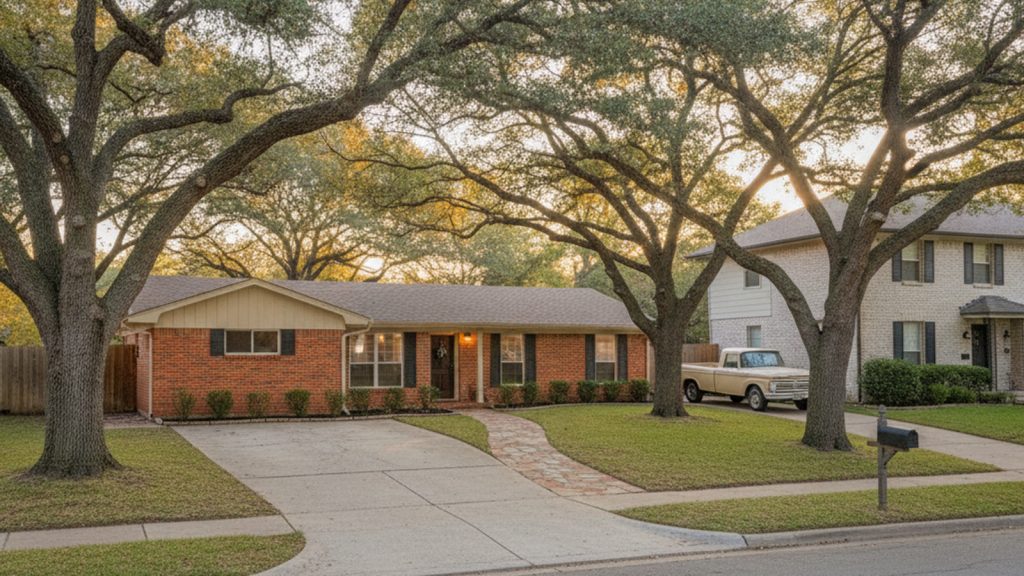
Plano built itself out from east to west over the decades, and you can read that history in the housing stock. The eastern side holds the city’s original downtown and the neighborhoods that filled in primarily during the 1970s and 1980s – mature landscaping, towering oak trees lining the streets, the kind of character you can’t install after the fact.
The western side came later. Newer construction, master-planned communities, and an infrastructure that grew up alongside major corporate arrivals like Toyota’s headquarters and the Legacy West development. These are genuinely two different places to live, and comparing them is worth your time before you start making offers.
Housing Market Prices and Inventory
Plano currently holds around 702 available homes in its inventory, and sellers are getting about 98% of their list price on average – so don’t expect much room to negotiate just because a home has been sitting for a few weeks.
Property taxes deserve a line in your budget before you fall in love with a specific price point. The typical homeowner in Plano faces a combined property tax rate of approximately 1.71% of their home’s taxable value, covering Plano ISD, the City of Plano, Collin County, and Collin College. Run that number against whatever price range you’re considering.
Buying in the Western Zip Codes
The western half carries a real premium over the citywide median. Median home prices here generally run above $600,000, and in zip codes like 75024 and 75093, they frequently exceed $800,000. Luxury estates priced well over $1 million are a regular part of the inventory in these areas.
Much of that premium is tied to school feeder patterns and the proximity to the Legacy West employment center. If those two factors are driving your search, you’re paying for them – knowingly or not.
Buying in the Eastern Zip Codes
The eastern side is consistently the most affordable part of the city. Properties here often list below the citywide median, typically ranging from $425,000 to $520,000 depending on the neighborhood and the condition of the home. In zip code 75074 specifically, the median home price sits around $387,000.
That makes the eastern section one of the few places in the Dallas-Fort Worth metro where you can still find a single-family home within the Plano Independent School District for under $400,000. That’s not a small thing.
Property Types and Lot Sizes Across the City
The physical differences between east and west are obvious the moment you start touring. Architectural style and lot layout reflect the era each side was built, and buyers tend to sort themselves pretty quickly once they see both.
If mid-century character is what you’re after, the eastern half is where you’ll spend your weekends looking. If you want newer custom construction, you’ll be focused west of US-75.
Architecture and Lots in the West
The western side runs toward upscale newer construction and custom homes – typically 3,000 to 6,000 square feet, sitting on generous lots. Architecture leans traditional or transitional, with high ceilings and stucco, brick, or stone facades showing up regularly. Private gated entrances and mature landscaping are common enough that they stop feeling like a selling point and just become part of the neighborhood fabric.
Architecture and Lots in the East
The eastern and central parts of the city are older and more traditional. Mid-century brick ranch-style homes dominate here, and they offer solid bones and larger yards at a price point that’s hard to find elsewhere in Plano.
The tradeoff is honest: these homes often need updates. If you’re buying in this area, build renovation funds into your budget before you make an offer, not after.
Commuting and Transit Access
Both sides of the city have reasonably good highway access. The Dallas North Tollway, the Sam Rayburn Tollway (Hwy 121), and US-75 all serve Plano, and Preston Road (SH 289) runs as a major north-south corridor near the western neighborhoods, making Collin County feel manageable from either side.
Where things diverge is public transit. The eastern side has direct rail service via the DART Red Line, with stations at downtown Plano and Parker Road. If you work in the Dallas urban core, you can board a train and skip the highway traffic entirely – that’s a real quality-of-life difference on a Tuesday morning.
The western side is far more car-dependent. DART bus routes cover the major roads out there, but most residents drive. A typical commute from those neighborhoods to Legacy West runs about 10 minutes by car, which is fine until it isn’t.
Frequently Asked Questions
How much of a price difference is there between homes in West Plano versus East Plano, TX?
It’s substantial. On the eastern side, homes typically range from $425,000 to $520,000, with some zip codes dropping below $400,000. On the western side, median prices generally start above $600,000 and frequently exceed $800,000 in areas like 75024 and 75093.
Do homes in East Plano and West Plano feed into the same Plano ISD high schools?
Not necessarily. Both sides of the city are served by the Plano Independent School District, but feeder patterns differ based on your exact address. Check the district’s boundary map for any specific property you’re considering – don’t assume based on zip code alone.
Which side of Plano offers a faster commute to downtown Dallas and the DFW airport?
The eastern side has the DART Red Line stations at downtown Plano and Parker Road, giving you a direct train link into the Dallas urban core. The western side means driving – the Dallas North Tollway or US-75, depending on where you’re headed.
If I want walkable access to shopping and dining, should I look near Downtown East Plano or West Plano’s Legacy area?
It depends on which type of area fits your lifestyle. The western side puts you within a 10-minute commute of the newer Legacy West development. The eastern side gives you access to the original downtown area near the DART station. They’re genuinely different experiences.
What are the common renovation pitfalls buyers should watch out for when buying older, established homes in East Plano?
Budget for modernization before you close, not after you move in. The 1970s and 1980s ranch-style homes in the eastern half offer great bones, but updates are frequently needed. Going in without a renovation reserve is how buyers end up stretched thin.
Are buyers more likely to encounter strict HOAs and master-planned communities in West or East Plano?
The western side is where you’ll find private gated entrances and newer master-planned developments. The eastern side is mostly older, established neighborhoods built in the 1970s and 1980s – a different ownership culture in a lot of ways.
Planning to sell? Learn how Bale Real Estate Group helps sellers prepare, price, and market their homes. Why Sellers Hire Bale Real Estate Group.
Planning to buy? Learn how Bale Real Estate Group helps buyers evaluate homes and navigate their purchase. Why Buyers Choose Bale Real Estate Group.