
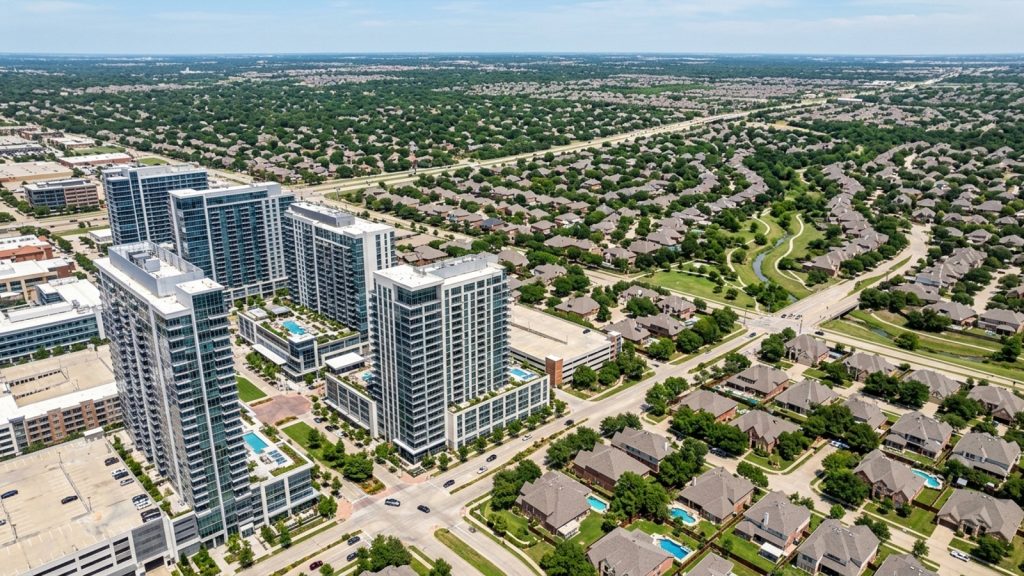
The median home sale price in Plano, TX sits around $540,000, with properties typically spending about 35 days on the market before going under contract. Right now there are roughly 702 active listings across the city – a mix of traditional detached houses and attached properties that gives first-time home buyers in Plano, TX more than one way into Collin County homeownership.
Many of those buyers are zeroing in on condos for sale in Plano, TX. In a single recent month, 248 homes closed overall, including 96 townhouses and 33 condos. Attached home styles tend to offer a different trade-off than a standard single-family lot – different upfront costs, different maintenance picture, different amenity packages. Worth understanding before you start scheduling tours.
Current Condo Prices and Market Trends in Plano
The median sale price for condos and co-ops in Plano reached approximately $529,712 in mid-2026 – a slight 1.5% decrease year-over-year. That number gets pulled upward by luxury units in high-rise buildings. If you’re looking at more standard layouts, typical units average closer to $275,000.
The broader market is tight. Homes are selling at an average sale-to-list ratio of about 98%, and nearly 19% of homes sell above list price – so don’t assume attached housing means you can lowball. The city is sitting at roughly 2.8 months of housing supply, which keeps sellers in a reasonably firm position.
How Condos Compare to the Broader Market
With the overall median at $540,000, a standard condo priced near $275,000 represents a meaningfully lower entry point into Plano. For some buyers, that gap is the difference between getting into the market and not.
That said, pricing varies sharply between older garden-style complexes and newer luxury developments, so don’t rely on city-wide medians to make an offer. Pull recent comparables for the specific building you’re looking at. A local agent can do that for you in about ten minutes.
What to Expect from Association Fees
Condo and townhome owners in Plano pay monthly HOA fees covering exterior maintenance, building shell insurance, and shared amenities. Average fees here typically run between $100 and $150 per month – lower than the broader Texas average for condos and townhomes, which ranges from $150 to $400 monthly.
High-amenity buildings and luxury high-rises charge more to maintain elevators, concierge services, and fitness centers. In planned communities like Lakeside On Preston, those dues fund the upkeep of private lakes, walking paths, and overall aesthetic maintenance standards.
Factoring Fees Into Your Budget
Lenders include your HOA fee in the debt-to-income calculation, so a lower purchase price doesn’t always mean a lower monthly obligation. A condo at $275,000 with a steep assessment can end up costing more per month than it first appears.
Before you close, ask to see the association’s reserve study and recent meeting minutes. Those documents tell you whether the building has adequate cash set aside for future repairs – roof replacements, parking lot repaving, that kind of thing. If the reserves are thin, you’re eventually paying for it one way or another.
Popular Neighborhoods and Condo Buildings
The Legacy neighborhood is the most prominent hub for attached housing in Plano – retail, office space, and residential streets layered together, with a lot of townhouses and luxury condos in the mix. Many of those units sit in high-rise buildings offering fitness centers and concierge services.
Windrose Tower at Legacy West is one of the most recognizable examples: a 29-story luxury tower near Headquarters Drive, positioned close to major corporate employers like Toyota. Beyond Legacy, you’ll find active condo inventory in Downtown Plano, Willow Bend, and neighborhoods including Bunker, River Bend, Armstrong Park, and Twin Creeks.
Established Communities and Landmarks
If you’re drawn to mid-rise or garden-style living rather than a high-rise, communities like Bonaventure Condominiums have an established local presence worth looking into. Far North Dallas shares a border with Plano and adds more condo inventory to your search radius.
There’s also history in this part of the city – the Heritage Farmstead Museum preserves a restored 19th-century farm, including an 1895 schoolroom replica. You’re not buying a 19th-century farm, obviously, but the neighborhoods surrounding landmarks like that tend to feature older, established attached-housing options that can look quite different from newer construction.
Townhomes, Duplexes, and Other Attached Layouts
With 96 townhouses sold in a single recent month, townhomes are a substantial part of the attached market here. They occupy a practical middle ground – more than a condo, less than a detached house. You typically get a small private outdoor space and no neighbors above or below you.
Duplexes and multi-family properties show up in smaller numbers, but they’re worth knowing about. Owning the full structure opens the door to renting out one half, or to multi-generational living arrangements where a separate entrance matters.
Balancing Space and Maintenance
Townhomes generally put interior maintenance and sometimes a small exterior footprint on the owner, while the association handles the roof and siding. Read the community declarations carefully – where your responsibility ends and the association’s begins isn’t always intuitive, and it varies by community.
On square footage, townhomes often deliver more space than a standard condo. That matters if you need multiple bedrooms but don’t want to take on a large single-family lot.
Evaluating the Cost of Living in Plano
Plano’s overall cost of living runs about 7% above the national average, driven primarily by housing – the median sale price here is 28% higher than the national average. Property taxes add to the monthly picture: the median effective property tax rate is roughly 1.16%, though combined rates across all local taxing entities can reach 1.95% depending on your exact ZIP code, such as 75074 or 75093.
A $275,000 condo carries a lower property tax bill than a $540,000 detached home even after you account for monthly HOA dues. It doesn’t eliminate the cost-of-living premium, but it does reduce it.
Deciding Between Renting and Buying
Plenty of residents in areas like Legacy rent townhouses and luxury condos rather than buying. It’s a legitimate choice in a market like this. But buying an attached home builds equity instead of covering someone else’s mortgage payment.
If you’re on the fence, compare current rental rates in buildings like Windrose Tower or communities in Willow Bend against the full monthly cost of purchasing – mortgage, HOA dues, taxes, insurance. A local mortgage professional can run those specific numbers against current interest rates and give you an actual comparison rather than a guess.
Frequently Asked Questions
Where can I find historic properties or older ranch-style houses in Plano?
Buyers looking for older homes often search near Downtown Plano or around landmarks like the Heritage Farmstead Museum. Much of Plano’s condo inventory skews toward newer construction, but those central areas feature older established detached properties worth exploring.
What is the average price difference between buying a townhome and a detached single-family house in Plano?
The overall median home price in Plano is approximately $540,000, which includes many detached single-family houses. Standard condos and attached units often average closer to $275,000. Luxury townhomes and high-rise units can push the attached-home median up to around $529,712.
How long is the typical build timeline for new construction homes in West Plano communities?
It varies widely depending on the developer and the complexity of the project. High-rise buildings like the 29-story Windrose Tower take multiple years from groundbreaking to move-in. For exact delivery dates on current projects, go directly to the specific builder.
Are there strict HOA restrictions I should watch out for when buying a zero-lot-line or patio home in Plano?
Yes – always review the HOA rules before you close on an attached or zero-lot-line home. Communities like Lakeside On Preston charge fees to maintain private lakes and walking paths and enforce aesthetic maintenance standards. Typical fees in Plano run $100 to $150 per month, and the rules dictate what exterior modifications you’re allowed to make.
Does Plano zoning allow buyers to add a guest house or ADU to a standard single-family residential lot?
Regulations around Accessory Dwelling Units (ADUs) and guest houses depend on the specific lot and neighborhood codes. Condos and townhomes generally don’t allow exterior additions. If you’re looking at a detached home and planning an ADU, verify the zoning with the city of Plano before you build that into your plans.
Should I buy a condo near Legacy West or look for a traditional single-family home in central Plano?
It comes down to budget and lifestyle. Legacy West offers high-rise living with concierge services and walkable retail, though luxury units there can exceed the city’s $540,000 median home price. A traditional home in central Plano gives you more private lot space and direct control over the exterior – along with the full responsibility for maintaining it.