
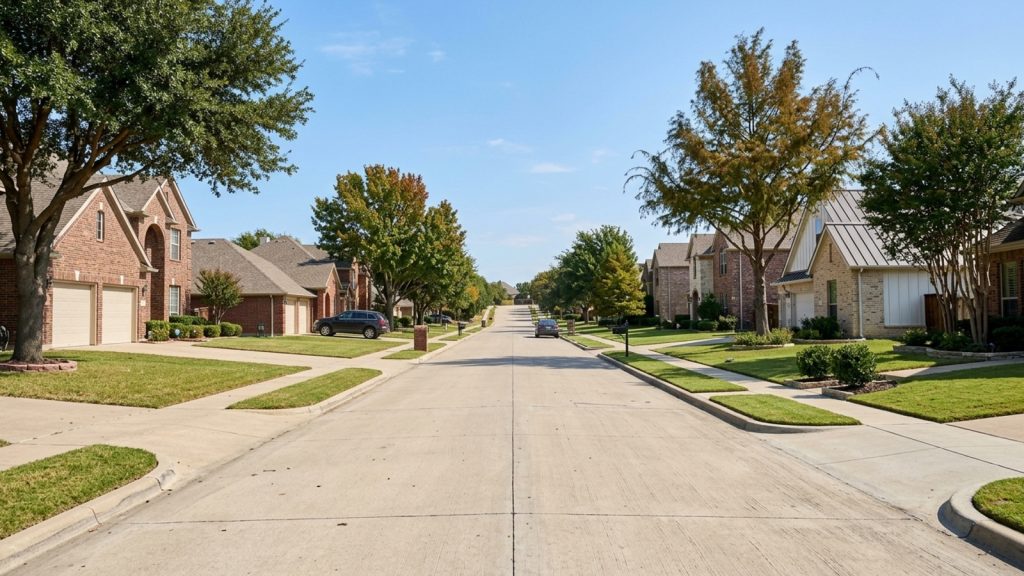
McKinney, TX, sits just north of Dallas and has drawn steady demand from buyers who want space outside the immediate urban core. The pros and cons of living in McKinney often come down to the budget. For 2026, the cost of living here depends on the specifics – rising household incomes, shifting housing inventory, and what the bills look like month to month.
Statewide averages won’t tell you much. You need to know what everyday life costs in Collin County: housing, utilities, transportation, the full picture.
Cost of Living in McKinney, TX at a Glance
Different data sources don’t agree, and that’s worth knowing upfront. BestPlaces assigns the city a cost of living score of 111.7, putting it about 11.7% above the U.S. average and 18.6% above the Texas average. uscostofliving.com lists an index of 128. RentCafe’s 2026 data, on the other hand, suggests costs sit 3% below the national average but 4% above the state average.
That’s a wide spread, and it’s exactly why index scores only take you so far. Actual dollar amounts are more useful – and a high median income in the area does offset some of the premium on consumer goods.
The Short Answer on Affordability
McKinney runs higher than the Texas statewide average, and housing is the main reason why. Groceries and utilities stay relatively close to national norms. It’s the real estate market that pulls the overall number up.
Buyers coming from coastal markets tend to find it affordable. Those relocating from rural Texas sometimes get a surprise. Either way, affordability comes down to one thing: how your household income stacks up against local home prices.
Housing Costs: Home Prices and Rent in McKinney
Real estate is the biggest line item, so let’s start there. The median sale price for a home in McKinney, TX, sits at roughly $509,663. Homes are spending about 49 days on the market right now, and there are currently 951 available homes in inventory – more options than buyers have seen in previous years.
For renters, RentCafe reports the average apartment runs about $1,657 per month as of mid-2026. A one-bedroom unit averages around $1,400, and a two-bedroom typically costs $1,797. Apartment List puts the median closer to $1,503 – those differences usually come down to the age and amenity level of the complexes each platform surveyed.
How Housing Compares to the Dallas-Fort Worth Area
McKinney sits on the higher end of the pricing spectrum within the broader Dallas-Fort Worth metroplex. Some southern Dallas suburbs offer lower median prices, but they often come with longer commutes to northern employment hubs.
Property type matters when you’re comparing numbers across the region. Townhomes and older builds in McKinney can come in below the $500,000 mark, which balances out what the luxury new-construction neighborhoods do to the median.
Everyday Expenses: Utilities, Groceries, and Transportation
Once you’ve accounted for housing, the recurring monthly bills are what determine whether a budget works. Utility costs in McKinney average about $253.49 per month for a standard household – breaking down to roughly $121 for electricity, $44.80 for water, $67.10 for sewer, and $20.36 for trash collection. RentCafe notes that local energy costs run about 13% above the national norm.
Transportation is the other variable. Local gas prices have been bouncing between $2.50 and $3.78 per gallon, depending on the source and the month.
Budgeting for Local Commutes
Most residents drive. Collin County isn’t set up for much else, and the wider metro area demands a personal vehicle for most daily routines. Fuel costs and toll road fees both belong in your monthly budget.
Statewide Texas gas averages have hovered near the higher end of that range in 2026. If you’re commuting down Route 75 to Dallas daily, your transportation costs will look meaningfully different than someone working locally.
Taxes in McKinney, TX
Texas has no state income tax. That’s a real number – it stays in your pocket, and it’s one of the more concrete reasons people relocate here from other states.
To fund local services, the state leans on sales taxes and property taxes. Homeowners in Collin County pay annual property taxes based on their property’s assessed value, and the exact rate shifts depending on the neighborhood, school district zoning, and any municipal utility districts that apply to a specific address.
Before you close on anything, verify the tax rate for that individual property. Don’t assume.
Balancing Income and Property Taxes
For high-earning households, the absence of a state income tax meaningfully offsets the property tax load. The math works – but only if you look at the total tax picture rather than just the property tax percentage in isolation.
The tax history for any home is on its public listing. Pull those past bills and fold them into your estimated monthly mortgage payment before you fall in love with a place.
Salaries and Income: What You Need to Live Comfortably
Collin County’s economy supports strong earning potential. Multiple sources report the median household income in McKinney at approximately $120,273, though other demographic estimates put it slightly lower at $113,286 depending on the specific census data used. Both figures sit well above national averages, which reflects the concentration of professional jobs in the region.
How comfortable you are month to month comes down to how your income lines up with your housing cost. That’s the lever that matters most here.
Defining a Middle-Income Salary in McKinney
There’s no official bracket for middle class, but cost-of-living data gives you a working baseline. BestPlaces estimates a single person needs an annual income of about $66,400 to live comfortably in McKinney. For a family of four, that threshold rises to $96,480. Those figures cover housing, utilities, transportation, and groceries without stretching things too thin.
Why Prices in McKinney Are Changing
Demand for housing in northern Texas has pushed prices upward steadily over the last decade. McKinney’s mix of established neighborhoods and new construction pulls buyers from across the country, and the area’s proximity to major corporate campuses in neighboring cities keeps that demand from letting up.
As employment hubs expand northward from Dallas, more workers look to Collin County for their primary residence. Land development costs and construction materials feed into this too – builders pass those expenses on, which sets a higher baseline for new homes before anyone negotiates a single dollar.
Is This a High-Income Area?
With median household income crossing the $120,000 mark, yes. The retail and dining sectors reflect that disposable income – you’ll notice higher-end commercial development throughout the city.
That said, the housing market still covers a range of price points. Townhomes and older single-family homes are there for buyers who don’t want to stretch their budgets to the top of the market.
Comparing McKinney to Dallas-Fort Worth and Beyond
McKinney generally requires a larger housing budget than cities in the southern half of the Dallas-Fort Worth metroplex. That’s the honest baseline comparison.
Measured against Austin or major coastal cities, Collin County still delivers more square footage for the dollar. Buyers often trade slightly higher property taxes for a lower purchase price and no state income tax. Whether that trade works for you depends on your specific numbers – a personalized monthly budget will tell you more than any regional index.
Estimating Your Own Monthly Costs
Take a household buying at the median price of $509,663. After a standard down payment, that budget needs to account for the mortgage, property taxes, and roughly $253 in utilities each month. Add transportation, groceries, and local sales tax on goods, and you’ve got a realistic monthly target to work from.
Running those numbers before you start touring homes keeps your search grounded in what you can afford.
Is McKinney a Good Place to Live? Pros and Cons
McKinney offers extensive park systems, a well-maintained historic downtown, and a wide variety of housing styles. Those are genuine draws, not marketing copy.
The honest drawback for a lot of people is the distance to central Dallas. If you’re commuting downtown, Route 75 is part of your daily life – and it adds real time and fuel costs to the workweek. Property taxes are another friction point for budget-conscious buyers. The lack of state income tax and the quality of local infrastructure balance the equation for many households, but that’s a call only you can make based on your own priorities.
Neighborhood Features and Layout
The city covers a large geographic area with distinct zones. The eastern side has older, established properties near the historic square. The western edge is dominated by newer master-planned developments with community pools, walking trails, and golf courses.
If you’re looking at those newer subdivisions, factor in Homeowners Association fees. They’re common in those neighborhoods and belong in your monthly housing number.
Frequently Asked Questions
Is it expensive to live in McKinney, TX?
Yes, generally more expensive than the Texas state average. Cost of living indices place it anywhere from 4% to 18.6% above the state average, driven primarily by higher housing costs and a median home price around $509,663.
What salary do you need to live comfortably in McKinney, TX?
It depends on household size. Estimates suggest a single person needs about $66,400 annually to live comfortably, while a family of four requires around $96,480 to cover standard expenses.
Why is McKinney so expensive?
Strong housing demand and a high median household income – around $120,273 – are the main drivers. Proximity to major employment hubs in northern Dallas keeps real estate values elevated.
Is it cheaper to live in McKinney or Dallas?
It depends on the specific neighborhood and property type. McKinney generally has higher median home prices than the overall Dallas average, but buyers often find newer construction and larger lot sizes in Collin County.
How high are property taxes for homeowners in McKinney, TX?
Property taxes in Collin County are a significant part of the housing budget, though specific rates vary by neighborhood and municipal utility district. Texas has no state income tax, which offsets some of that property tax burden for residents.
Is McKinney, TX a good place to live?
Many buyers find it an excellent fit, given the historic downtown, extensive park systems, and range of housing options. Commuters should go in with realistic expectations about traffic on Route 75 when traveling into central Dallas.
Is it better to live in McKinney or Frisco?
Buyers looking north of Dallas frequently weigh these two cities when evaluating their housing options. A direct comparison of McKinney and Frisco usually comes down to your daily commute down Route 75 and whether you prefer an established historic downtown. Both areas provide access to major corporate campuses and newer master-planned developments.