
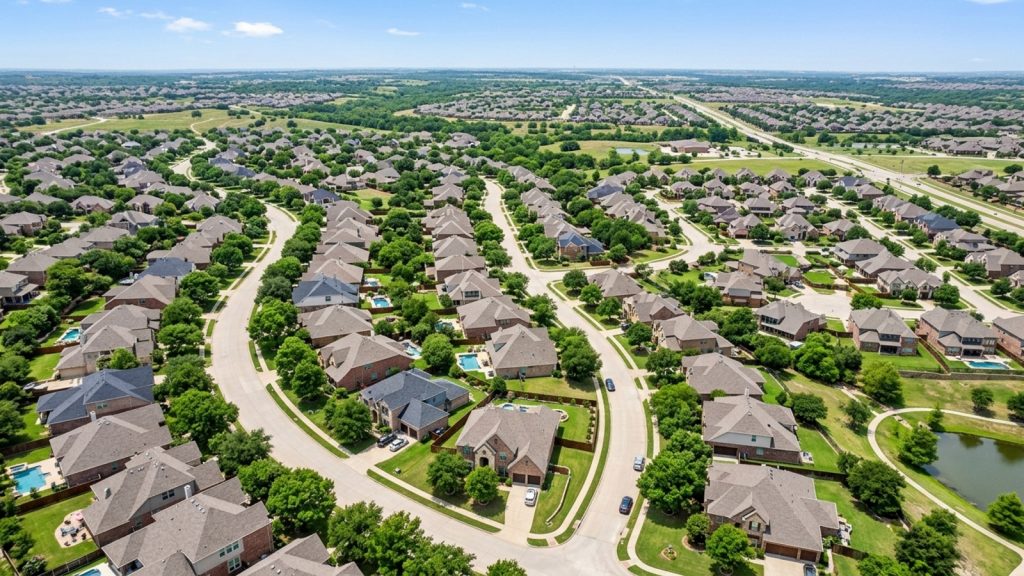
For anyone buying a home in McKinney, TX, the median sale price sits at roughly $509,700, and there are currently about 1,075 listings available. If you’re shopping Collin County, you’re almost certainly stacking this city up against Dallas and the other northern suburbs.
That comparison is worth making carefully. Relocating means getting into the actual numbers – housing data, commute times, utility costs – not just the general feel of a place. Here’s what the concrete details say about whether this part of North Texas fits your budget and your life.
The Quick Verdict on Relocating to McKinney
There’s about four months of inventory on the market right now, and homes are sitting a median of 42 days before going under contract. That’s not a frantic market. You’ll have time to look at a few houses before you have to decide.
The median household income here is $124,177, and the population is growing. Whether McKinney makes sense for you comes down to one honest trade-off: the amenities are real, and so is the North Texas commute.
Top Pros of the Area
You’ll find a solid range of property types – newer developments, established subdivisions, and everything in between – backed by a consistent local economy. Inventory is healthy, which means you’re not walking into a situation where you have to waive everything just to get an offer accepted.
On the municipal side, the city’s water system carries a “superior” rating from the Texas Commission on Environmental Quality. That’s the highest rating the state gives out, and it’s worth knowing before you sign anything.
Main Cons to Consider
The distance to downtown Dallas is the one that catches most buyers off guard. Thirty miles sounds manageable until you’re sitting on US Highway 75 on a Tuesday morning.
Cost of living is the other honest conversation to have. Some sources put the local index above the national average, and Texas property taxes plus summer cooling bills add up faster than people expect. Neither of these is a dealbreaker, but neither should come as a surprise after you’ve already closed.
Where Is McKinney and What County Is It In?
McKinney is the county seat of Collin County, sitting roughly 30 miles north of downtown Dallas. The city covers 68.4 square miles along the northern edge of the Dallas-Fort Worth metroplex.
US Highway 75 and the Sam Rayburn Tollway are the two main arteries connecting residents to the rest of the region – employment centers, regional airports, and everything in between.
Distance and Dallas Access
That 30-mile drive into downtown Dallas shapes the daily rhythm for a lot of people who live here. There’s no regional rail to lean on; it’s entirely a highway commute.
Traffic on US-75 is the variable. A weekend run into the city might take 35 minutes. That same drive during the weekday morning rush can stretch past an hour without much warning.
Population and Size
The 2024 Census puts the city’s population at 227,515, with a density of roughly 3,328 people per square mile. The city is still expanding – official estimates project the population will reach 237,130 by the end of 2026.
McKinney Crime Statistics and Data Sources
The most current official crime data for the city comes from the FBI’s Uniform Crime Report and Crime Data Explorer, with the latest figures reflecting the 2024 calendar year, released by the FBI in late 2025. Use those primary sources. Anecdotal neighborhood reviews are not a substitute for the raw data.
Looking at the actual reported incidents by address is the right way to evaluate a specific property – not a zip-code generalization.
Current Published Crime Rates
HomeSnacks reports a total crime rate of 932.8 per 100,000 people, which is roughly 56 percent below the national average and about 61 percent below the overall Texas rate. The violent crime rate stands at 117.3 per 100,000 residents. NeighborhoodScout calculates an overall crime rate of 9 per 1,000 residents, which lines up closely with the average for similar-sized U.S. cities.
Researching Specific Areas
The McKinney Police Department’s crime map and the Collin County Sheriff’s Office both let you search by street name or zip code. Pull up both before you make an offer.
They’ll give you a real picture of property and violent crime trends block by block. What you’re comfortable with is your call – these tools just make sure you’re basing that call on actual data.
Cost of Living and Housing Prices
Over a recent 30-day tracking period, 811 homes sold in the area. The median sale price came in at $509,723, down 4.7 percent year-over-year. Sellers are averaging about 97.8 percent of their list price, and roughly 11.6 percent of recent sales closed above asking – which tells you that well-priced homes are still drawing real competition.
Rent and Everyday Expenses
Median gross rents are running around $1,900, with some zip codes showing figures up to $2,440 depending on where you’re looking. That range matters if you’re deciding between renting first and buying immediately.
On the cost of living question, the sources don’t agree. City-Data puts the local index at 98.0, essentially at the national average. HomeSnacks estimates it’s about 30 percent higher than the rest of the country. The spread between those two numbers is wide enough that you should factor in your own spending patterns rather than relying on either figure alone.
Income and Affordability
The 2024 Census estimates put the median household income at $124,177 – roughly 1.3 times higher than the broader Dallas-Fort Worth-Arlington metro average. The homeownership rate is nearly 64 percent, which reflects a stable, long-term resident base rather than a transient rental market.
Run your own budget against those benchmarks. The income numbers here are strong, but your housing costs need to make sense for your specific situation.
Lifestyle, Amenities, and Utilities in McKinney
The median age here is 38.8 years, about 10 percent higher than the Texas state average. The city offers a range of municipal services and recreational facilities, though daily life in McKinney looks like daily life in most of suburban North Texas – which means hot summers and a car-dependent layout.
Knowing what the infrastructure actually looks like going in saves you from adjusting expectations after the fact.
Local Amenities and Recreation
Public parks, healthcare facilities, and dining options are spread across the city’s 68 square miles. Retail centers and grocery stores are accessible from most major subdivisions, but you’ll need a car for nearly every errand. Public transit options are limited.
Tap Water Quality
The City of McKinney gets its treated water from the North Texas Municipal Water District. The system meets or exceeds all state and federal drinking water requirements, and the Texas Commission on Environmental Quality rates it “superior” – the highest designation the agency awards.
McKinney vs. Nearby Alternatives
Buyers looking at Collin County almost always end up comparing McKinney directly to living in Dallas. The honest version of that comparison comes down to three things: housing density, lot sizes, and how much commuting you’re willing to do.
Dallas gives you a denser urban environment with immediate access to major corporate headquarters and mass transit. McKinney is a traditional suburban layout – distinct subdivisions, larger retail plazas, more space between you and your neighbors.
Cost and Commute Differences
Housing costs in Collin County suburbs can run higher than certain Dallas neighborhoods, depending on the property’s age and size. Price per square foot is the right metric to compare across both markets.
Getting from Collin County into downtown Dallas means driving through dense traffic on US-75. Test that commute during morning rush hour before you pick a location. Don’t take someone’s word for it.
Housing Type Comparisons
Dallas has a wider mix of high-rise condos, historic homes, and attached townhomes. The suburban market here tilts heavily toward detached single-family homes with private yards and attached garages.
If new construction is a priority, you’ll find more of it in the northern suburbs. The available land in Collin County supports ongoing residential development in a way that most of Dallas simply can’t.
Housing Options: Senior, Assisted, and Sober Living
Alongside the traditional single-family neighborhoods and apartment complexes, the local market includes specialized facilities for residents who need specific care or community structures. These aren’t rare outliers – they’re a real part of the housing landscape here.
Availability and pricing vary based on the level of care provided. If you’re evaluating these options for yourself or a family member, touring multiple facilities is the only way to accurately compare what’s actually included.
Senior and Assisted Living Facilities
The city has several senior living and assisted care communities offering different levels of medical support, meal services, and daily programming. Many sit near major healthcare centers and regional hospitals, which makes getting to specialized medical appointments more practical.
Sober Living in McKinney
There are sober living homes operating within the city limits for residents in recovery. These homes offer structured environments and peer support for people transitioning out of primary treatment.
Location and intake requirements differ by property. Contact the facility directors directly for specifics on availability and program rules.
Frequently Asked Questions
What are the biggest downsides or cons to buying a home in McKinney, TX?
The primary downsides are the long commute to downtown Dallas and heavy traffic on US Highway 75. Texas summer heat is also a real factor – it drives up seasonal utility costs in ways that catch some buyers off guard.
How does living in McKinney compare to neighboring cities like Frisco or Allen?
All three are in Collin County and share similar suburban layouts, weather patterns, and access to the Dallas metroplex. The decision between them usually comes down to which city puts you closer to your specific workplace.
How high are property taxes in McKinney compared to the rest of Collin County?
Property tax rates vary by address, school district boundaries, and municipal utility districts. Check the Collin County Central Appraisal District for the exact rate on any property you’re considering.
Is the daily commute from McKinney to downtown Dallas manageable?
That depends on your tolerance for traffic. The city is about 30 miles north of Dallas, and a daily commute on US-75 can take an hour or more during peak morning and evening rush hours.
What are the best neighborhoods in McKinney for families relocating to the area?
Under Fair Housing guidelines, real estate professionals don’t designate areas as better or worse for specific household types. Choose a location based on your budget, your preferred housing style, and how close it puts you to work.
How fast are homes currently selling in the McKinney real estate market?
Planning to buy? Learn more about Why Buyers Choose Bale Real Estate Group.
The median days on market is currently 42. About 11.6 percent of recent listings sold above asking price, and the area is carrying roughly four months of available inventory.
Planning to sell? Learn how Bale Real Estate Group helps sellers prepare, price, and market their homes. Why Sellers Hire Bale Real Estate Group.