
For retirees weighing the pros and cons of living in McKinney, TX, the city offers housing costs about 4.5% below the national average – a real number that makes a real difference when you’re working with a fixed income. The local market recently featured a median home sale price of around $510,000, with homes spending roughly 49 days on the market before selling.
If you’re exploring 55+ communities in McKinney, TX, you’ll find a genuine range – from active-adult neighborhoods with resort-level amenities to dedicated senior apartments. Knowing the difference between property types, fee structures, and age-restriction rules is what gets you from “I’m thinking about this” to an actual decision that fits your life.
Overview of Age-Restricted Living in McKinney
The Fair Housing Act allows communities to designate themselves for older adults if they meet specific occupancy thresholds. In McKinney, that plays out across everything from single-family homes to apartment complexes built exclusively for residents above a certain age.
The rule you’ll hear most often is the 80/20 rule. It requires that at least 80% of the occupied units have at least one resident who is 55 or older. The HOA manages the remaining 20%, which can sometimes allow younger spouses or adult children to live in the home – though that depends entirely on each neighborhood’s bylaws.
Types of Senior Living in McKinney
Active-adult communities focus on independent living with lifestyle amenities layered on top. You own your home or townhouse, handle your own meals and personal care, and the HOA typically covers exterior maintenance. It’s a clean arrangement for people who want community without giving up independence.
Senior apartments work for buyers who want to downsize without the commitment of a mortgage. You get age-restricted rental units, shared common areas, and organized social calendars – without the financial weight of ownership.
Assisted Living and Continuing Care
Assisted living facilities provide daily personal care, medication management, and meals for residents who need that extra layer of support. These run on a rental model rather than ownership, which gives you flexibility as care needs shift over time.
Continuing Care Retirement Communities – CCRCs – take that a step further by putting independent living, assisted living, and skilled nursing all on one campus. Residents pay an upfront entrance fee plus monthly charges. The logic is that you won’t have to move to a new facility if your health needs escalate.
Popular 55+ Neighborhoods in McKinney
The McKinney area has several well-established active-adult neighborhoods, and they’re worth knowing before you start scheduling tours.
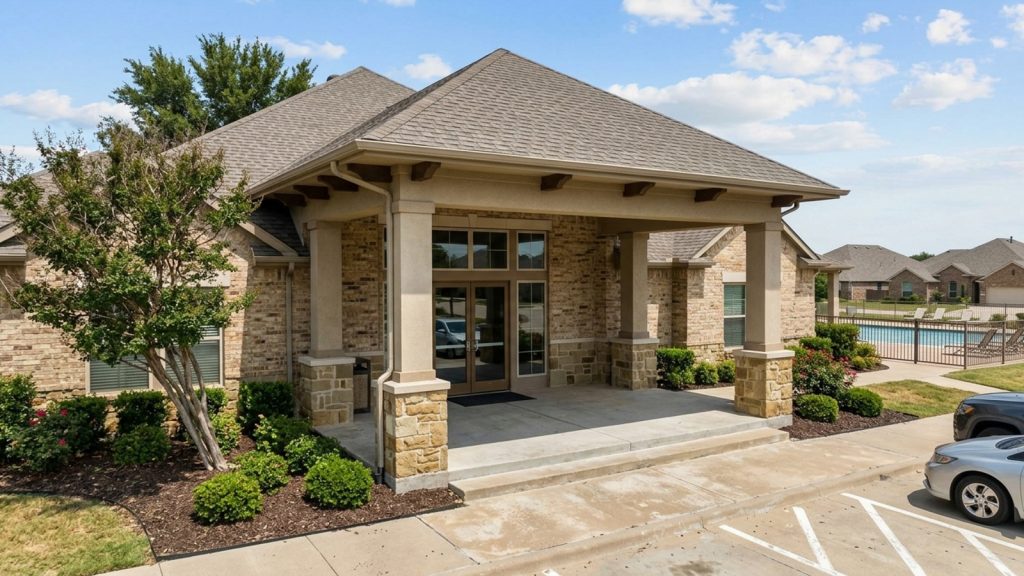
Del Webb at Trinity Falls is the one most buyers bring up first, and with reason. Residents have access to a 10,000-square-foot clubhouse, swimming pools, and courts for pickleball and bocce. Beyond Trinity Falls, buyers regularly look at Heritage Ranch, Eldorado Lakes, and The Retreat at Craig Ranch. Waterford Point at the Tribute and The Villas at Stonegate round out the ownership options for people who want a community designed specifically for older adults. Price points and housing styles vary enough across these neighborhoods that budget alone won’t knock most of them off your list right away.
Luxury and Affordable Options
On the high end, Hidden Springs of McKinney offers luxury rentals with extensive on-site services, fine dining, and concierge support. The pricing reflects it – these properties run closer to an upscale resort than a standard apartment building.
On the other end, HUD sets income limits that determine eligibility for subsidized senior housing in Collin County, TX. For 2026, the low-income threshold is $51,350 for a one-person household and $58,650 for a two-person household. If you fall within those numbers, subsidized senior housing programs in the county are worth investigating.
The Cost of 55+ Living in McKinney
Senior apartments in McKinney average around $1,357 per month. Available units generally run from about $1,123 to $2,394 depending on the floor plan and what the building offers.
If you’re buying into an active-adult neighborhood, HOA dues are part of the math from day one. General HOA fees in McKinney average around $158 per month. Zoom out to Texas-wide data and you’ll see basic 55+ communities averaging $120 to $250 monthly, while resort-style neighborhoods run $250 to $480.
Entrance Fees for Continuing Care
CCRCs work differently from anything else on this list. Statewide data shows CCRC entrance fees in Texas generally range from $130,000 to $500,000. That upfront cost comes with ongoing monthly fees that typically fall between $2,250 and $4,800. What you’re buying with those fees is guaranteed access to escalating levels of care without having to relocate if your health picture changes.
Why Retirees Choose McKinney
The overall cost of living in McKinney, TX sits about 2.5% below the national average. That gap is modest on paper, but it adds up across years on a fixed income in ways that matter.
Housing is where McKinney earns the most credibility – costs run approximately 4.5% below the national average. With the local median home sale price around $510,000, you can often land a modern, low-maintenance home without blowing past what you’ve planned to spend.
Healthcare Access
For most retirees, proximity to good medical care is essential. McKinney has access to multiple regional hospitals and specialized medical centers within Collin County, and a number of 55+ communities are deliberately built near those healthcare hubs. Getting to a primary care physician, a specialist, or an emergency room doesn’t require a long drive – and that’s not a small thing.
Pros and Cons of Age-Restricted Communities
The appeal is real. Communities like Del Webb at Trinity Falls handle heavy exterior maintenance, which frees up your time for the clubhouse, pools, and sports courts rather than yard work. The shared spaces and structured activities give you built-in community without you having to manufacture it yourself.
The tradeoff is that 55+ communities come with rules. HOA covenants govern exterior modifications, parking, and how long grandchildren or underage visitors can stay at the property. Some buyers find the structure reassuring; others find it restrictive. You’ll want to read the bylaws before you fall in love with a floor plan.
Alternatives to Assisted Living
If assisted living is outside your budget, independent senior apartments offer a lower-cost path – no medical care, but a maintenance-free environment with a predictable monthly payment.
The other route is staying in a standard single-family home and modifying it to age in place, then bringing in in-home care services as the need arises. That keeps you out of the premium pricing that comes with dedicated senior care facilities, and it keeps you in a traditional neighborhood if that’s where you want to be.
How to Choose and Tour a Community
With McKinney homes currently averaging 49 days on the market, you have a reasonable window to tour more than one community before committing. Use it. When you’re walking through an active-adult neighborhood, ask for a complete breakdown of what the HOA dues cover and request a copy of the bylaws. You want to understand the rules around pets, rentals, and visitor age limits before you’re bound by them.
Vetting the Neighborhood
Drive through at different times of day. The community at 10 a.m. on a Tuesday and at 5 p.m. on a Friday can look pretty different. Talk to residents who live there – not the sales team. They’ll give you a more honest read on how the management company operates and whether the amenities hold up.
If a CCRC is on your list, the contract details around the entrance fee deserve close attention. Specifically, you need to know whether any portion of that six-figure upfront payment is refundable to your estate if you leave the community or pass away. That’s not a small question.
Frequently Asked Questions
Is McKinney, TX a good place to retire?
McKinney’s cost of living runs 2.5% below the national average, and housing costs come in roughly 4.5% below the national average. For retirees watching their budget, those numbers make it a practical option worth taking seriously.
What is the 80/20 rule in a 55+ retirement community?
The 80/20 rule requires that at least 80% of the occupied units in a community house at least one resident who is 55 or older. The HOA manages the remaining 20%, which may allow younger residents depending on that specific neighborhood’s rules.
What is the average entrance fee for a CCRC in McKinney?
McKinney-specific figures vary by facility, but statewide data for Texas puts CCRC entrance fees in the range of $130,000 to $500,000. Monthly fees on top of that typically fall between $2,250 and $4,800.
Is it better to rent or buy in a 55+ community?
It depends on how long you plan to stay and what you’re trying to accomplish financially. Buying gives you equity and stability. Renting a senior apartment in McKinney – which averages $1,357 per month – gives you flexibility and no maintenance headaches or HOA fees.
What is the downside of a 55+ community?
The HOA covenants are the part that catches people off guard. They cover everything from exterior paint colors to visitor policies, and they’re enforced. Some buyers also find the age homogeneity less appealing than the mix you’d get in a traditional all-ages neighborhood.
How far in advance should I join a waitlist for a McKinney 55+ community?
It varies by property, and popular rentals or CCRCs can have longer waits than you’d expect. Ask about waitlist timelines on your first tour – don’t assume a unit will be ready when you are.
How does McKinney compare to neighboring cities for retirees?
For buyers looking at a comparison of Frisco and McKinney, housing costs and healthcare access are usually the deciding factors. McKinney features a median home sale price around $510,000, which keeps local housing expenses roughly 4.5% below the national average. Both locations also keep you close to the regional hospitals and specialized medical centers throughout Collin County.