
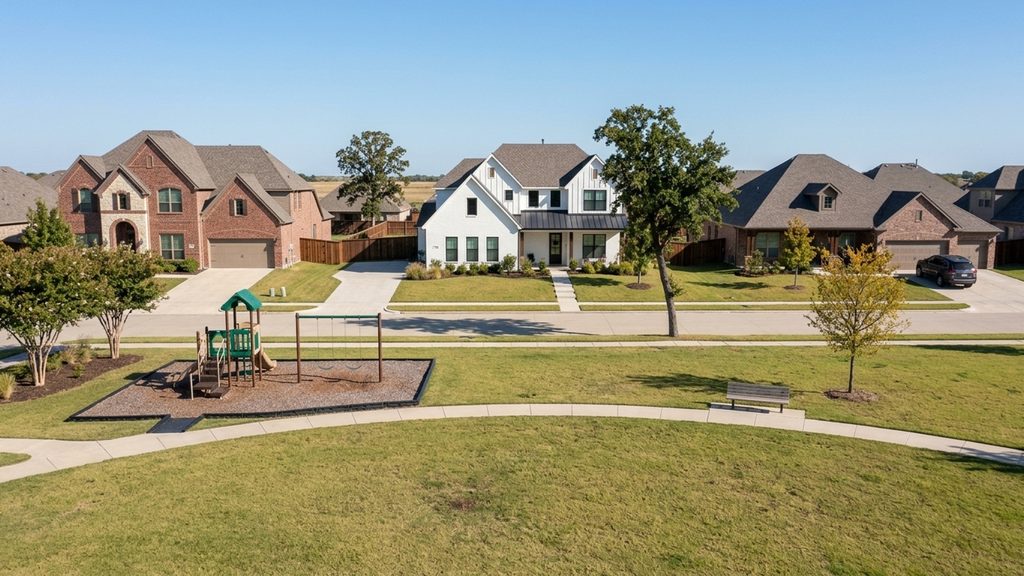
Prosper’s weather matters less for daily comfort than for what it does to the physical structure of your house. Of the 175 homes sold in the 90 days ending September 30, 2026, 170 were single-family houses.
That means nearly every buyer here takes on direct responsibility for the roof and foundation. Because there is no official weather station in town, the National Weather Service forecast for Prosper relies on McKinney National Airport and long-term records from Dallas-Fort Worth.
Key Takeaway
Prosper has long, hot summers, mostly mild winters broken by occasional hard freezes, and a spring storm season that brings hail and tornado risk. Fall is the most comfortable time to tour properties and move. With Prosper homes taking a median 101 days to sell (all homes, 90 days ending September 30, 2026), buyers have time to check a house for weather damage before closing.
Who This Guide Is For
You are weighing a move to Prosper and want to know what the weather is like year-round and what it means for the house you would be buying.
Year-Round Weather in Prosper
The local climate follows a distinct cycle: long hot summer, short mild winter, stormy spring, smaller fall storm season. Snow is rare. Ice and severe thunderstorms are routine parts of the calendar.
Rather than tracking daily forecasts, home buyers should focus on how these seasonal shifts affect property condition. You can check the National Weather Service forecast page for current conditions, but the long-term patterns tell you what to inspect before closing. To see how these patterns fit into a broader relocation plan, check the guide on moving to Prosper.
Prosper Weather by Season
Each season places a different stress on a single-family home. Summer and spring drive the highest costs and risks, while fall provides the most comfortable conditions for outdoor activities.
The months you plan to tour homes or move dictate how you prepare. If you want the most comfortable window, start with October and November: the spring storm peak is over and the summer heat has broken.
Summer in Prosper
Summer is the longest season, running roughly from June through September. According to the National Weather Service, the Dallas-Fort Worth area averages 20.2 days a year with temperatures reaching 100 degrees or higher.
Outdoor time shifts to mornings and evenings, and air conditioning runs constantly for months. If you want a realistic read on summer cooling costs, ask for the seller’s electric bills for July and August. You can compare those figures against typical utility estimates in the guide to the cost of living in Prosper.
The longer-term issue is what the heat does underground. Long dry stretches shrink the clay soil under Prosper homes, making summer the time when foundations are most likely to move. A house that looks fine in April can show new cracks by August.
Fall in Prosper
Fall is the most comfortable stretch of the year, and the easiest time to tour homes, move furniture, or attend local festivals. The intense heat subsides by October, making it a good time to explore things to do in Prosper.
The National Weather Service reports the average first freeze in the region arrives around November 22. That date arrives faster than many new residents expect, before exposed pipes are insulated or plants are covered.
Fall also brings a smaller second storm season, with the possibility of hail and heavy rain. Comfortable as it is, it is not without its risks.
Winter in Prosper
Winters here are mostly mild, defined by short, sharp cold snaps rather than prolonged freezing weather. The February 2021 winter storm illustrated how extreme those drops can be: the National Weather Service recorded a low of -2 degrees at DFW.
Homes in North Texas are built to shed heat, not retain it, so exposed pipes, outdoor spigots, and attic plumbing are especially vulnerable when a hard freeze arrives. Before buying, ask the seller whether the home had freeze repairs in 2021 or later. Icy roads and bridges also disrupt local traffic, which you can read about in the guide to getting around Prosper.
Hard freezes are rare enough that many homes are simply not ready for them. When one comes, burst pipes and closed roads tend to arrive at the same time.
Spring in Prosper
Warm, humid Gulf air meets passing cold fronts during the spring months, creating the wettest stretch of the year and the peak of the severe storm season. Roofs, gutters, cars, and fences take damage. Drainage problems that are invisible in dry conditions become obvious on a lot during a spring downpour.
The timing is notable: the best-looking weeks of the year carry the highest hail and tornado risk. A spring listing can easily have fresh storm damage the seller has not found yet.
How Severe Weather Affects Prosper Homes
Almost all buyers in Prosper purchase single-family homes, which means the physical risks of the local climate fall entirely on the homeowner. Roof strikes, foundation shifts, frozen pipes: the repair bills are yours.
Buyers identify those risks before closing as a standard part of buying property in North Texas. Here is how the most common severe weather events affect houses in the area.
Hail and Roofs
Hail causes the most common weather damage to Prosper homes. NOAA’s Storm Events Database logs numerous large hail events in Collin and Denton counties, including a 2023 storm that dropped 2.5-inch hail near the area.
Damage typically shows up as bruised shingles, dented gutters, and broken skylights. If you want less hail exposure, look at homes with impact-resistant (Class 4) shingles, which the Texas Department of Insurance notes can qualify for insurance discounts. Ask the seller for the roof’s installation date and any replacement invoices.
The problem is that hail damage is often invisible from the ground. Many Texas policies use a percentage wind and hail deductible, often 1 to 2 percent of the dwelling coverage, so ask your insurance agent what that percentage equals in dollars before assuming a claim covers a new roof.
Tornadoes and Storm Shelters
The Town of Prosper operates 11 outdoor warning sirens to alert residents to severe weather. They sound for tornado warnings, winds exceeding 70 mph, or hail larger than 1.5 inches, and the town tests them on the first Wednesday of each month at noon.
When touring homes, look for an interior room on the lowest floor or an in-garage storm shelter. Ask the seller if a shelter is present, who installed it, and whether the town keeps a registry for it. Don’t expect a basement: if a house has a storm shelter, it is an added feature you should verify carefully.
Clay Soil and Foundations
The ground under Prosper is mostly expansive clay. Data based on the USDA’s soil surveys indicates that Collin County soils are dominated by Houston Black clay with very high shrink-swell potential, covering roughly 67.6 percent of mapped acreage, while Denton County sits at about 31.9 percent.
Wet springs swell the clay. Summer droughts shrink it. Slab foundations move with it. Signs of movement include diagonal drywall cracks, stair-step cracks in brick, sticking doors, and gaps around window frames.
Foundation repair is one of the most expensive fixes a house can need. A general inspector can flag the symptoms, but if they note movement, plan on paying a structural engineer before you close.
Heavy Rain and Drainage
Spring downpours regularly test how well a lot is graded. The Town of Prosper participates in the National Flood Insurance Program under FEMA Community ID 480141, and the town engineer administers floodplain regulations.
Look for water pooling near the slab, erosion along fences, gutters dumping directly next to the foundation, or water stains in the garage. Look up the exact address on FEMA’s Flood Map Service Center, and ask your insurance agent about flood coverage if the lot backs to a creek. A standard homeowners policy typically does not cover flood damage, and a dry showing tells you nothing about how the lot drains in a storm.
Buying a Home in Prosper with the Weather in Mind
Before you make an offer, evaluate how the home has handled past seasons. You have several tools to uncover hidden issues during your option period. These seasonal risks are a key part of weighing the pros and cons of living in Prosper.
If your home search or moving day falls between June and September, read about summer conditions first, then check the watering rules before you plan landscaping. If the home you like has a roof with no replacement record, ask for the insurance claim history right away. When you notice cracks in drywall or brick, bring in inspectors who check specifically for weather damage. If the lot backs onto a creek or a low spot, look up the address on FEMA’s flood map before you write an offer.
Read the Seller’s Disclosure for Storm and Foundation Repairs
The disclosure document is where past roof replacements, hail repairs, foundation work, and freeze damage should appear. Read the repair answers against the roof’s stated age and any visible patching.
You can learn more about what Texas owners must report in the guide to Prosper home seller disclosures.
A disclosure covers only what the seller knows or remembers. Repairs made by a previous owner, or damage nobody noticed, will not be on it.
Ask for the Home’s Insurance Claim History
Ask the seller for a CLUE report or a written claim history covering hail, wind, water, and freeze claims.
A past hail or water claim can affect what an insurer will quote you for a new policy. It also tells you exactly which past repairs you should verify during your inspection. A clean claim history can mean the house has no damage, or it can mean there is damage that was never claimed. It never replaces a physical inspection.
Hire Inspectors Who Check for Weather Damage
Request a roof inspection that includes walking or drone-imaging the surface, check the attic and plumbing for past freeze damage, and get detailed grading notes. Ask each inspector in writing what their report includes.
If the inspector flags foundation movement, hire a structural engineer. You can review how this fits into the full timeline in the Prosper buying process guide.
A standard inspection may not include a roof walk or an engineer’s evaluation. Each add-on costs extra and takes time inside your option period, so schedule them early.
Negotiate Weather Repairs in a Slower Market
Buyers currently have time to ask for a roof replacement, foundation repair, or a credit when inspections turn up weather damage. All homes recently showed 6.9 months of supply and a median 96 percent sale-to-list ratio for the 90 days ending September 30, 2026.
If you want room to negotiate roof or foundation repairs, start with homes that have already been listed for several months. The Bale Real Estate Group can help weigh a repair request against comparable sales. You can check current trends on the Prosper housing market page.
A slower market cuts both ways. Some sellers would rather hold their price and offer a credit than manage a repair, and conditions can shift quickly, so check current numbers first.
At a Glance
- Median sale price, all homes: $840,125, down 2.3% year over year (90 days ending 2026-09-30)
- Median sale price, single-family: $850,661, down 1.6% year over year (90 days ending 2026-09-30)
- Homes sold: 175 all homes, of which 170 were single-family (90 days ending 2026-09-30)
- Median days on market: 101 all homes; 100 single-family (90 days ending 2026-09-30)
- Sale-to-list ratio, all homes: 96%; 2.3% of homes sold above list (90 days ending 2026-09-30)
- Months of supply: 6.9 all homes, 393 homes in inventory; 6.8 single-family, 378 in inventory (90 days ending 2026-09-30)
- Median price per square foot: $234 all homes; $233 single-family (90 days ending 2026-09-30)
Prosper, TX Weather FAQs
How Cold Does It Get in Prosper, Texas?
Winter temperatures are generally mild, but rare cold snaps push the thermometer much lower. The February 2021 winter storm brought a low of -2 degrees at DFW. Check the National Weather Service records for exact monthly averages.
Does Prosper Have Better Weather than Other Parts of Texas?
It depends on what you prefer. Based on long-term normals, the Dallas-Fort Worth area experiences colder winters than Houston or Austin, but receives more rain than El Paso. Check the National Weather Service data to compare specific temperature and precipitation averages across the state.
Does Prosper, TX Get Tornadoes?
Yes. NOAA’s Storm Events Database records multiple tornadoes in Denton County, including an EF0 tornado near Krum on May 29, 2019, and a historical F2 tornado in 1973. Look for homes with interior rooms or registered storm shelters if this is a concern.
Does Prosper, Texas Get Snow?
It receives very little. The National Weather Service reports that DFW’s normal annual snowfall is 1.6 inches based on 1991-2020 data. Ice and sleet cause far more winter disruption than snow does.
Does Prosper ISD Close for Bad Weather?
Yes, the district cancels, delays, or dismisses classes early when road conditions become unsafe. District officials monitor weather overnight and notify parents via email, phone, text alerts, and the district website if a decision is made. Check the official channels on the day of a storm, and read more about the district on the schools in Prosper page.
Is It Humid in Prosper, TX?
Yes, especially during the spring and summer when warm Gulf air moves into the region. Check the National Weather Service forecast page for current relative humidity readings and average morning or afternoon levels.
Does Prosper Have Watering Restrictions?
Yes. The Town of Prosper enforces a water conservation outdoor watering schedule that dictates allowed watering days and hours. Because these rules change depending on current drought stages, confirm the current stage directly on the town’s website.
What Growing Zone Is Prosper, TX In?
According to the 2023 USDA Plant Hardiness Zone Map, ZIP Code 75078 falls within Zones 8a and 8b. That means landscaping must be able to survive both intense summer heat and occasional winter temperatures dropping between 10 and 20 degrees.
Sources
- Redfin: Data Center
- NWS Fort Worth: DFW Records and Normals
- NWS Fort Worth: February 2021 Winter Event
- NOAA NCEI: Storm Events Database (Collin County Hail)
- NOAA NCEI: Storm Events Database (Denton County Tornadoes)
- Maligariani: Foundation Problems in North Texas
- The Roofing Brief: Impact Resistant Shingle Insurance Discount
- Town of Prosper: Outdoor Warning System
- Prosper ISD: Weather Alerts and Guidelines
- FEMA: Community Status Book for Texas
- PlantMaps: USDA Plant Hardiness Zone Map for 75078