
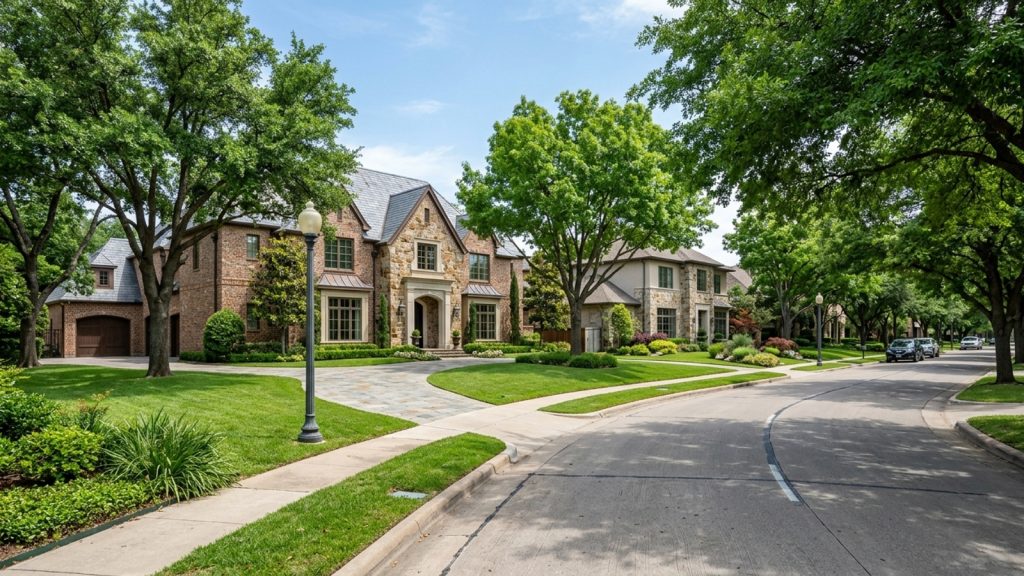
The median sale price for a home in Preston Hollow is currently around $2,411,000, and roughly 130 homes are actively listed on the market. With 4.5 months of supply available, you’re looking at a balanced but deliberate environment – one where buyers have options and anyone selling a home in Preston Hollow needs a plan.
Selling a high-value property isn’t just about finding a buyer. It’s about knowing the local timeline from listing to closing so you can budget your holding costs, plan your next move, and set realistic expectations when offers start coming in.
Time on Market for Homes in Preston Hollow, TX
Recent market data from summer 2026 puts the median days on market for a Preston Hollow home at approximately 44 days. About 89 homes sold recently in that window, with sellers receiving an average of 96.55% of their list price. That last number tells you something important: buyers here are negotiating, and they’re winning some ground.
The median of 44 days is a useful benchmark, but average timelines stretch longer depending on where you are in the neighborhood and what you’re selling. Higher-end luxury estates simply take more time to find the right buyer than a standard single-family home or a teardown lot does.
Current Days on Market in Preston Hollow
The overall neighborhood average hovers around 80 days – well above that 44-day median, which tells you the upper end of the market is pulling the number up. Homes in Preston Hollow East average about 43 days on the market. Trophy properties and large estates on streets like Strait Lane, on the other hand, routinely stay listed for 90 to 180 days or more. That’s not a failure of the market. That’s just what happens when the buyer pool is thin by design.
Comparing Preston Hollow to Dallas County and Texas
Dallas County as a whole moves at a similar pace, with homes averaging about 60 days on the market. Zoom out to the state level and the Texas Real Estate Research Center reports that sold homes averaged 82 days on the market as of March 2026. The Texas statewide median sits around 69 days, while the broader Dallas-Fort Worth metro ranges from 60 to 105 days depending on the specific sector.
Preston Hollow’s median of 44 days reflects real demand for this specific Dallas enclave – even within a market that isn’t exactly flying right now.
Averages for the 75225 Zip Code
Homes in the 75225 zip code average about 60 days on the market before selling, up from a 37-day average seen a year earlier. That’s a meaningful shift. Other local data tracking more recent 30-day periods shows a median closer to 35.5 days for 75225, which illustrates how quickly specific luxury brackets can move compared to the broader zip code inventory when conditions line up.
The Complete Home-Selling Timeline
Days on market only measures the time a home is actively listed. The real process starts weeks before a sign goes in the yard and ends weeks after a buyer signs the contract.
Plan on three to four months total – from the initial decision to the final closing day. Breaking that into distinct phases keeps the whole thing from feeling like one long blur.
Preparing the Property for the Market
Before listing, sellers typically spend two to four weeks on preparation: decluttering, staging, professional photography, and minor repairs. In a neighborhood where the median sale price exceeds $2.4 million, buyers expect a certain level of presentation. Cutting corners here almost always costs you time on the back end.
Showing the Home and Waiting for Offers
Once the listing goes live, the active days-on-market clock starts. Based on current Preston Hollow data, you should expect 40 to 80 days of active showings before landing a solid contract. The house needs to stay clean and available throughout, which is its own kind of patience test.
Only about 10% of local homes are currently selling above list price. Bidding wars happen, but they’re the exception here – not something to count on.
From Accepted Offer to Closing
After you accept an offer, escrow typically runs 30 to 45 days. That window covers the buyer’s mortgage underwriting, property inspections, and appraisal review. Cash transactions can close much faster – sometimes in as little as 10 to 14 days. Financed deals need the full month to satisfy lender requirements. There’s no shortcut there.
Factors That Speed Up or Slow Down a Sale
Not every house in Preston Hollow sells in 44 days. With 4.5 months of supply and roughly 130 active listings, buyers have room to be selective. How you position your property against that competition matters more than most sellers expect.
Pricing Strategy and Reductions
Overpricing is the most common reason a home sits unsold. The first two weeks on the market are when a new listing gets the most attention – if the price isn’t right from day one, you’ve already missed the peak.
If you’re getting consistent showings but no offers after 30 days, that’s the market telling you something. The current local average sale-to-list ratio is 96.55%, so buyers are already negotiating off the asking price. Don’t give them an excuse to negotiate even further by starting too high.
Property Condition and Value
Deferred maintenance and outdated finishes move buyers along to the next listing fast. Properties needing immediate roof repairs, foundation work, or major cosmetic updates consistently take longer to sell.
Move-in ready homes attract faster offers because buyers don’t have to mentally add a renovation budget on top of an already significant purchase price. Fix the obvious issues before listing. What surfaces during inspection can stall or kill a deal that was otherwise going smoothly.
Local Supply and Demand
With 4.5 months of supply, Preston Hollow is in a balanced state – slightly favoring sellers, but giving buyers enough inventory to take their time. When supply climbs, the touring process stretches out and days on market follow. Keeping an eye on the local month’s supply figure tells you whether the wind is at your back or in your face.
The Best and Worst Times of Year to Sell in Texas
Dallas real estate follows a predictable seasonal pattern. When you go on the market affects both how fast you sell and what price you get.
The Best Months to List
Spring is consistently the most active selling season in Texas. March and April are prime months to list, as buyers get serious after the winter pause. May is often identified as the single best month for securing both a fast sale and a strong price in the Dallas metro – many buyers want to close in early summer so they can complete their move before the new school year begins.
The Slowest Months to Sell
November through January is the hardest stretch. Holidays, travel, and cooler weather pull buyers off the market. The ones who do schedule showings in winter are usually motivated – corporate relocations and life changes don’t follow a seasonal calendar – but the overall volume drops considerably.
Deciding When to List
If you can wait for spring, the exposure and competition among buyers is worth it. If you need to move now, don’t let a calendar date become the reason you delay. A well-priced home in excellent condition will find a buyer in November or December. It might just take a few more weeks.
Recognizing When a House Has Sat on the Market Too Long
The longer a listing sits, the more buyers start to wonder what’s wrong with it. That quiet stigma leads to lowball offers and thinning showing activity – a cycle that’s hard to break without making a change.
In Preston Hollow, crossing the 80-day mark on a standard single-family home is a clear signal the current approach isn’t working.
Tracking Days on Market
For homes in the 75225 zip code, the average time to sell is about 60 days. Past that point, the listing is officially lagging behind local pace. Luxury estates are a different story – a $10 million property on Strait Lane might naturally sit for 150 days because the buyer pool for that price bracket is simply that small. Context matters.
Adjusting the Selling Strategy
When a standard home sits unsold for two months, go back through the showing feedback. If multiple buyers are flagging the same issue – an outdated kitchen, road noise, whatever it is – the price needs to reflect that drawback. Pretending the feedback isn’t real doesn’t make it go away.
Refreshing the listing with new professional photos or staging vacant rooms can also revive interest. Sometimes pulling the listing off the market for a few weeks and re-listing provides a necessary reset – buyers scroll past what they’ve already seen.
Selling As-Is to a Cash Buyer
If you’d rather not wait 60 to 80 days, selling directly to an investor or local builder bypasses the traditional showing and financing timeline entirely. You’ll net less – that’s the trade-off – but you get a guaranteed closing date. For properties needing extensive repairs or for sellers managing an inherited estate, that certainty has real value.
Selling Shortly After Buying a Property
Sometimes life moves faster than your real estate timeline planned for. A job relocation, a financial change, a shift in household size – any of these can put you in the position of selling a home much sooner than you expected. When that happens, the IRS has opinions about it.
The timeline of your ownership directly affects how the proceeds get taxed. Better to understand the rules now than find a surprise on next year’s return.
The Two-Year Capital Gains Rule
To exclude profit from a home sale from capital gains tax, the IRS requires you to have lived in the house as your primary residence for at least two of the five years preceding the sale. Single filers can exclude up to $250,000 of profit; married couples filing jointly can exclude up to $500,000. Sell before hitting that two-year mark and the profit may be subject to short-term or long-term capital gains taxes.
Special Cases and Life Events
There are exceptions for unforeseen circumstances. A sudden job change requiring a move of more than 50 miles, severe health issues, or a divorce can qualify a seller for a partial tax exclusion. Other special timelines apply to inherited properties and refinances – an executor selling a probate property can list as soon as the court grants authorization, while a homeowner who recently refinanced can sell immediately but must pay off the new loan balance at closing. These situations vary enough that a tax advisor is worth the conversation before you list.
Estimating Your Net Proceeds from a Sale
The list price is not the number you walk away with. It never is.
Once you subtract the costs of the transaction from your final sale price, what’s left is your actual payout. Map those expenses out before you list – especially if you’re counting on that equity to fund your next purchase.
Calculating Your Take-Home Amount
Start with your expected sale price. In Preston Hollow, sellers are currently getting about 96.55% of list price on average. From that final number, subtract the remaining mortgage balance, any secondary liens, and total closing costs. What’s left is the cash you receive when the transaction funds.
Agent Commissions and Closing Costs
Seller closing costs typically run 6% to 8% of the final sale price, covering agent commissions, title insurance, escrow fees, and prorated property taxes. On a median $2.41 million Preston Hollow home, that’s a substantial number. Ask your agent for a net sheet before you sign a listing agreement – it breaks down every line item so you know exactly what youre working with.
Frequently Asked Questions
How many days does it typically take to sell a house in Preston Hollow?
It typically takes a median of 44 days to sell a house in Preston Hollow. Average times can stretch to 80 days depending on the specific neighborhood and price point.
Do luxury estates in Preston Hollow take longer to sell than older teardown properties?
Yes, luxury and trophy estates on streets like Strait Lane often stay on the market for 90 to 180 days. The buyer pool for multi-million dollar properties is much smaller than the pool of builders looking for teardown lots.
What is the best time of year to list a home in Preston Hollow for a fast sale?
Spring is the best time. March, April, and May bring the highest volume of buyers to the Dallas market, which typically results in quicker offers and better prices.
Why is my Preston Hollow home sitting on the market when Dallas real estate is booming?
If your home is sitting while the rest of Dallas County averages 60 days to sell, the issue is usually pricing or condition. Buyers will bypass a property that requires too many repairs or is priced above comparable local sales.
How much faster is it to sell my Preston Hollow lot to a local Dallas builder instead of a traditional buyer?
Selling to a builder or cash investor can often close in 10 to 14 days. That bypasses the traditional 30- to 45-day mortgage underwriting and appraisal process required by standard buyers.
What holding costs should I budget for while waiting for my Preston Hollow property to close?
Budget for continuous mortgage payments, property taxes, homeowners insurance, and utility bills. Given the 44-day median market time plus a 30-day escrow period, plan to cover at least three months of holding costs.
For help with preparation, pricing and marketing, explore Why Sellers Hire Bale Real Estate Group.