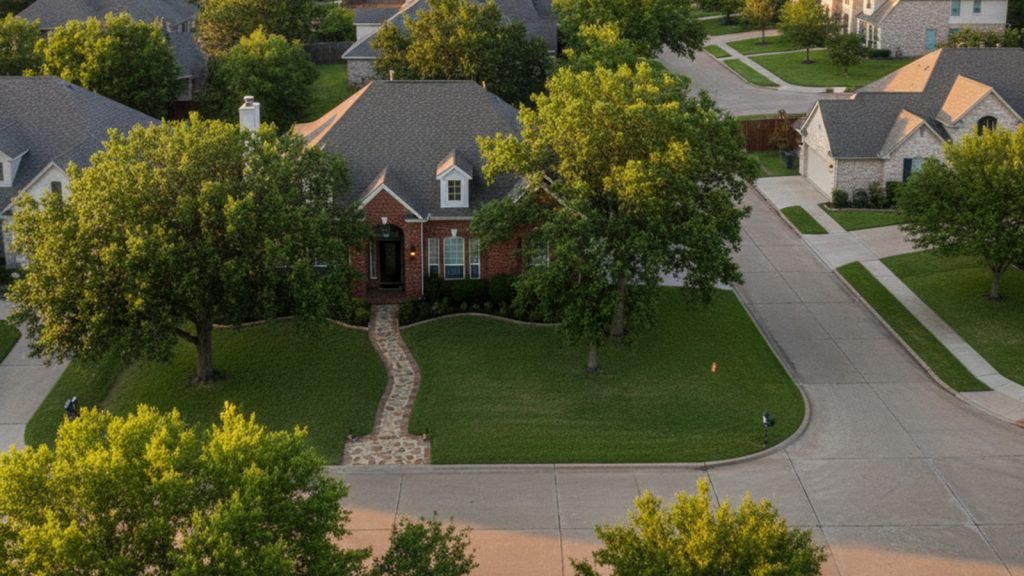
The median sale price for a home in Frisco, TX is currently around $687,500. With over 1,000 homes actively listed on the market, first-time home buyers in Frisco, TX have more options than in recent years – but none of that matters if you haven’t done the math on what you can actually carry each month.
Figuring out your real price range means looking past the sticker price. Lenders will run your income against your debts, but they won’t hand you a number that accounts for Frisco’s property taxes, insurance costs, or HOA dues. That part is on you.
Calculating Your Purchasing Power in Frisco
Lenders determine your mortgage eligibility using a debt-to-income (DTI) ratio – a formula that compares your monthly debt obligations to your monthly gross earnings. Most conventional lenders want to see a total DTI below 43%, though some loan programs allow higher limits. Staying well under that ceiling gives you actual breathing room; riding right up to it does not.
Gross Income Versus Net Income
Mortgage lenders calculate your purchasing power using your gross monthly income – the full amount you earn before taxes, retirement contributions, and health insurance premiums come out. That’s the number on the approval letter.
The problem is you pay your mortgage with your net income. Build your personal housing budget around your take-home pay, not the lender’s number. Those two figures can be far enough apart to make a payment feel comfortable on paper and uncomfortable in practice.
The 28/36 Rule Explained
The 28/36 rule is a standard guideline used by financial professionals to gauge housing affordability. It says your total housing costs – principal, interest, property taxes, and insurance – shouldn’t exceed 28% of your gross monthly income. Your total debt load, which adds credit card minimums, auto loans, and student loans on top of housing, shouldn’t exceed 36%.
It’s a blunt instrument, but it’s a useful one. Run your own numbers before you run anyone else’s.
Factoring in Local Frisco Costs
A mortgage payment is not just principal and interest. In Texas, property taxes and insurance can add hundreds of dollars a month to your carrying costs – and in Frisco specifically, the numbers are high enough that buyers who skip this step routinely get surprised at closing.
Frisco also spans two counties, and which side of that line your house sits on changes the tax math. Verify the exact tax rate and HOA dues for any property you’re serious about before you make an offer.
Collin and Denton County Property Taxes
Collin County’s median effective property tax rate runs around 1.30% to 1.31%. For the median homeowner in the county, that’s roughly $7,143 per year in property taxes.
The Denton County portion of Frisco carries an effective rate closer to 1.99%. Home values in that corridor are elevated, so median homeowners there pay somewhere between $6,790 and $8,947 annually depending on the property’s assessed value. That’s a meaningful range, and it swings your monthly payment by more than most buyers expect.
Texas Homeowners Insurance Rates
Texas homeowners insurance runs higher than the national average – weather risk is the reason. A policy with $300,000 in dwelling coverage averages $4,085 to $4,510 per year, which breaks down to roughly $340 to $375 per month.
Your actual rate will shift based on the home’s age, roof condition, and exact location within the city. Get a firm quote from an insurance broker during your option period on a specific house, not a general estimate beforehand.
HOA Dues and Maintenance
A lot of Frisco neighborhoods operate under a Homeowners Association with monthly, quarterly, or annual fees covering shared amenities like pools, parks, and landscaping. Lenders include those mandatory HOA dues in your DTI calculation – they’re not invisible to the underwriter.
If you’re putting less than 20% down, add Private Mortgage Insurance (PMI) to that list as well.
Down Payments and Closing Costs
What you bring to the closing table determines your loan amount and shapes your monthly payment. A larger down payment cuts the principal balance and can improve your interest rate. It also affects whether you’re paying PMI.
Beyond the down payment itself, you’re responsible for lender fees, appraisal costs, and prepaid taxes. These need their own savings bucket – separate from your emergency fund, not drawn from it.
Minimum Down Payment Requirements
Conventional loans typically require 3% to 5% down. FHA loans require at least 3.5%, which makes them common among buyers with smaller cash reserves. Hit 20% down and you eliminate the PMI requirement entirely. On a median-priced $687,500 Frisco home, that 20% figure works out to $137,500.
Typical Closing Costs in Frisco
Buyer closing costs in Texas generally run 2% to 6% of the purchase price. On a typical Frisco home priced between $300,000 and $500,000, that’s roughly $6,000 to $15,000. Sellers here often cover the title insurance policy and the property survey fees – a local custom that meaningfully lowers your net out-of-pocket costs compared to what buyers pay in other markets.
Texas Down Payment Assistance Programs
Buyers who meet specific income and credit guidelines can access state and local programs to offset upfront costs. These initiatives provide grants or forgivable second liens to help bridge the cash gap, and the application process runs through lenders who partner with the agencies during standard mortgage underwriting – it’s not a separate, parallel process.
Eligibility comes down to household income, household size, and the home’s purchase price.
State and Local Grants
The Texas State Affordable Housing Corporation (TSAHC) offers down payment assistance in tiers of 2%, 3%, 4%, or 5% of the loan amount. TSAHC recently raised its income ceiling to 125% of the area median family income for most programs, though the Mortgage Credit Certificate limit stays at 115%.
Local options exist at the municipal level too. Collin County cities including Frisco, McKinney, and Plano offer city grants. The City of Denton provides up to $50,000 in assistance for income-eligible first-time buyers within its city limits – worth knowing if you’re open to exploring neighboring communities.
Frequently Asked Questions
What salary do I need to make to afford a median-priced home in Frisco right now?
It depends on your down payment and current interest rates. With the median sale price around $687,500, buyers putting down 20% still need a substantial household income to keep their total housing payment under 28% of gross earnings. Whether your property falls under Denton County’s 1.99% tax rate or Collin County’s 1.31% rate shifts the exact salary requirement.
How do Frisco property taxes and HOA fees impact my maximum monthly mortgage budget?
They reduce the amount of principal and interest you can afford – directly and dollar for dollar. Lenders cap your total housing payment at a specific percentage of your income, so a $7,143 annual tax bill in Collin County takes up space in your budget that would otherwise go toward the loan balance. HOA dues work the same way.
How much of a down payment is required to be competitive in the Frisco housing market?
You don’t need 20% down to win an offer. Conventional loans with 5% down and FHA loans with 3.5% down are common and routinely accepted by sellers. Homes are currently sitting on the market for roughly 43 days, which gives buyers with lower down payments a fair opportunity to negotiate.
Do I need to factor MUD or PID taxes into my affordability calculations for new builds in Frisco?
Yes – additional district taxes can impact your monthly payment if the new build is subject to them. Standard property taxes alone are significant, with Denton County effective rates near 1.99% and Collin County rates around 1.31%. Verify the total tax rate for any specific subdivision before you finalize your budget.
If my budget is stretched in Frisco, what neighboring towns offer a similar lifestyle for less?
It depends on your specific needs, but nearby cities like McKinney, Plano, and Denton also offer local first-time homebuyer grants. The City of Denton provides up to $50,000 in assistance for income-eligible buyers. Exploring those Collin and Denton County communities might get you to a property that fits your target debt-to-income ratio without the stretch.
Does getting pre-approved by a local Collin County lender give my offer an advantage over online banks?
Yes. A local lender understands regional costs and state-specific programs. They can factor in accurate Collin and Denton County tax rates and walk you through Texas State Affordable Housing Corporation (TSAHC) grants without a learning curve. That local knowledge makes your pre-approval a more accurate picture of what you can actually borrow – which matters when you’re writing an offer.
Planning to buy? Learn how Bale Real Estate Group helps buyers evaluate homes and navigate their purchase. Why Buyers Choose Bale Real Estate Group.