Preston Hollow sits in Dallas, TX, and if you’ve spent any time in the city’s real estate market, you’ve heard it called the “golden corridor.” That nickname holds up: the neighborhood commands a median home sale price of around $2.1 million, which puts it firmly among the highest-priced areas in the region. Buyers weighing the pros and cons of living in Preston Hollow should factor in these premium costs.
What most buyers don’t realize is that before the grand estates and tree-lined streets, this was dairy farm country. Wooded creeks, hollow trees, open land. Tracing the history of Preston Hollow means tracing how a modest 19th-century farming community became an independent town – and eventually one of Dallas’s most sought-after addresses.
A Look at Preston Hollow’s History and Founding
Land grants in the Preston Hollow area date to the 1850s, when the first settlers started farming the land. Residential development didn’t begin in any serious way until the 1920s, and the man behind it was real estate developer Ira P. DeLoache.
DeLoache purchased a 56-acre farm in 1924. That purchase laid out the residential street pattern you still see today. When buyers browse the roughly 121 available homes in the area now, they’re often looking at lots that trace directly back to that original subdivision.
City, Town, or Neighborhood?
Preston Hollow is a neighborhood within the city limits of Dallas – but it didn’t start that way.
On November 28, 1939, Preston Hollow was formally incorporated as its own independent municipality. It ran as a standalone town for a few years before the City of Dallas annexed it in April 1945.
Location and County Lines for Preston Hollow
Preston Hollow falls entirely within Dallas County, TX. It sits in North Dallas, roughly bounded by Northwest Highway to the south and extending northward along Preston Road. As part of the City of Dallas, residents rely on Dallas municipal services – no separate township layer to sort through.
The neighborhood’s central position makes it a practical base whether you’re working in downtown Dallas or in one of the nearby commercial centers. That’s not hype; it’s geography.
Position Within the Dallas Metro
The original 1939 town incorporation covered about 79.5 acres around Northwest Highway and Preston Road. Today’s recognized neighborhood boundaries stretch further, though that intersection still functions as the central anchor.
Those two thoroughfares carry residents throughout the broader Dallas-Fort Worth region, and the specific lot location relative to them matters. Homes here have recently spent roughly 79 days on the market – buyers tend to take their time when the price tag demands it, and evaluating where you sit relative to Preston Road and Northwest Highway is part of that process.
The Origin and Meaning of the Preston Hollow Name
The name is straightforward once you know the land. “Preston Hollow” describes what early settlers found here: dark, deeply wooded terrain extending westward from Preston Road.
“Preston” came directly from the existing Preston Road. “Hollow” described the low-lying landscape – creek beds, hollow trees, dense canopy. Put them together and you have an accurate picture of what this place looked like before the estates arrived.
The Landscape Behind the Name
Before the development wave of the 1920s, those creek beds and hollow trees were the defining features of the local environment. It was a different texture than the flatter, more open plains in other parts of North Texas.
Modern landscaping and estate construction have reshaped most of it, but not all of it. Many of the original creeks still wind through the neighborhood’s residential lots today. If you’re touring properties here, you’ll notice them.
From Early Settlement to Modern Dallas Annexation
The first recorded settlers arrived in the 1850s. The Lively family settled on what is now Guernsey Lane; the Howell and Meaders families received some of the earliest land grants in the area. For decades it stayed agricultural. A dairy farm at what is now 6303 Meadow Road was still operating well into the early 20th century.
That’s the baseline this neighborhood grew out of – working farmland, not planned development.
The 1930s Incorporation and 1945 Annexation
After Ira P. DeLoache’s 1924 land purchase and the residential development that followed, the growing community pushed for self-governance. Preston Hollow incorporated as an independent town in late 1939 to control its own infrastructure and zoning.
It didn’t last long. By April 1945, the City of Dallas annexed Preston Hollow, folding the 79.5-acre town into its expanding municipal boundaries. That annexation set the zoning and development framework that still shapes the market today – a market where homes routinely sell for around 95.5% of their list price.
Historic Architecture and Local Landmarks
The oldest surviving structure most people associate with the neighborhood is Ebby’s Little White House. Built in 1926, it started as Ira P. DeLoache’s real estate office and later served as the town hall during Preston Hollow’s brief run as an independent municipality. The Penson House on DeLoache Avenue is another prominent historic site. Preston Hollow Park, established in 1947 shortly after the Dallas annexation, rounds out the neighborhood’s foundational landmarks.
Mid-Century Design and Nearby Museums
For architecture enthusiasts, the John Gillin Residence is the one to know. It’s Frank Lloyd Wright’s only residential project in Dallas and, notably, the last home Wright completed before his death.
Just outside the neighborhood on the Southern Methodist University campus, the George W. Bush Presidential Library and Museum offers extensive exhibits on the former Preston Hollow resident’s presidency. Worth a visit if you’re spending serious time in the area.
What Preston Hollow Is Famous For Today
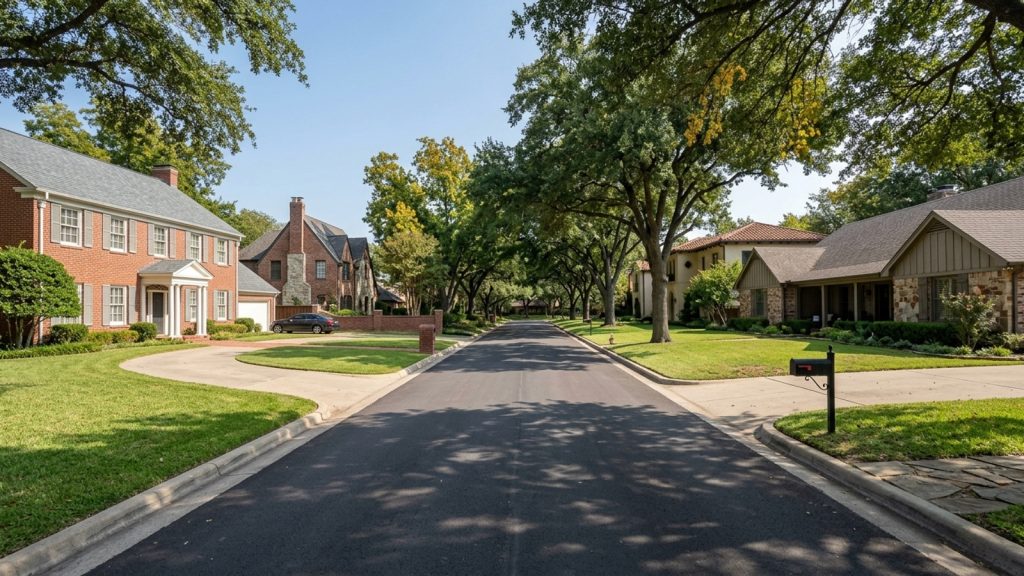
The “golden corridor” label sticks because it’s earned. Preston Hollow is recognized as one of Dallas’s most affluent neighborhoods – large estates, prominent architectural styles, well-known private schools and shopping centers. The residential design record here includes work by architects like Charles Dilbeck and Frank Lloyd Wright.
The market reflects all of it. Seventy-eight homes have sold in the area recently, which signals steady demand for luxury properties even at this price point.
Local Dining and Specialties
Preston Hollow doesn’t have a single historical dish to its name, but the local dining scene has its own character. Claremont Dallas is a neighborhood fixture – tuna tartare tostadas, tortilla soup, blackened redfish. Mesero is another staple, known for its Queso Mesero, a silky house white queso, alongside mesquite-grilled fajitas and brisket tacos.
Notable Past and Present Residents
The resident list here reads like a shorthand for Dallas power. Former President George W. Bush and First Lady Laura Bush are the most recognizable names. Beyond them: billionaire investors T. Boone Pickens and Harold Simmons, former presidential candidate Ross Perot, and Dallas Mavericks owner Mark Cuban. Cosmetics founder Mary Kay Ash lived here, as did professional golfer Lee Trevino, former Dallas mayors Tom Leppert and Laura Miller, and ClubCorp founder Robert H. Dedman Sr.
It’s a long list. That’s part of what defines the neighborhood’s identity.
Frequently Asked Questions
What is Preston Hollow, TX known for?
Preston Hollow is known as the “golden corridor” of Dallas. It’s famous for its luxurious estates, tree-lined streets, high-profile residents, and architecture by notable designers like Frank Lloyd Wright.
What county is Preston Hollow, TX in?
Preston Hollow is located entirely within Dallas County, TX. It sits in North Dallas, roughly bounded by Northwest Highway and Preston Road.
How did Preston Hollow get its name?
The name comes from the area’s original geography. It combines “Preston” from the nearby Preston Road with “Hollow,” which described the low-lying, wooded terrain filled with creeks and hollow trees.
When was Preston Hollow, TX founded?
Initial land grants date back to the 1850s, and residential development began in the 1920s. The area was officially incorporated as an independent town on November 28, 1939.
Is Preston Hollow a city, town, or neighborhood?
It’s currently a neighborhood within the City of Dallas. It operated as an independent town from 1939 until Dallas annexed it in April 1945.
Are there any famous people from Preston Hollow?
The neighborhood has housed numerous high-profile individuals. Famous residents include former President George W. Bush, Mark Cuban, Ross Perot, Mary Kay Ash, and Lee Trevino.
What are the most notable historic landmarks in Preston Hollow, Dallas, TX?
Notable landmarks include Ebby’s Little White House, which served as the original 1926 real estate office and former town hall. Other sites include the historic Penson House on DeLoache Avenue, Preston Hollow Park, and the John Gillin Residence.
How does Preston Hollow compare to Highland Park?
Buyers evaluating the local luxury market often weigh the differences between Preston Hollow and Highland Park. These premium areas both command high prices, but Preston Hollow operates entirely within the City of Dallas without a separate township layer.
Why do buyers choose Preston Hollow over other parts of Dallas?
Buyers are often drawn to the area’s deeply wooded terrain and large estates, which offer a different texture than other local neighborhoods. A direct comparison of Preston Hollow versus the wider Dallas area reveals an affluent community that maintains a central position near downtown commercial centers.