

Star Trail buyers should understand the property’s estimated annual tax obligation before deciding what they can comfortably afford. Property taxes can materially affect the monthly cost of ownership, and the amount shown on a previous owner’s tax record may not be the amount a new buyer ultimately pays.
This is especially important when comparing a resale home with new construction. Assessed values, exemptions, completed improvements and lender escrow estimates can all change after a purchase.
Bale Real Estate Group helps Star Trail buyers look beyond the purchase price and consider property taxes as part of the complete ownership budget.
Learn More About DFW Property Taxes
Current Star Trail Homes for Sale


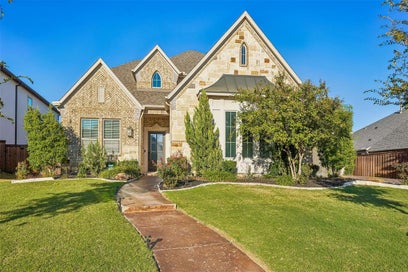


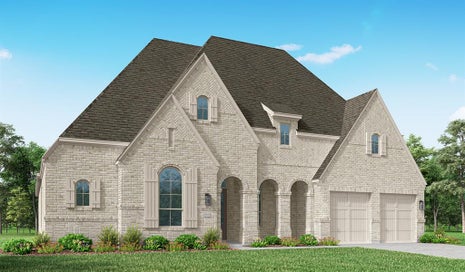


As you compare Star Trail homes, remember that two homes with similar asking prices can still have different total ownership costs.
Differences may result from:
- Taxable value.
- Available exemptions.
- Prior ownership history.
- New construction versus resale.
- Different taxing jurisdictions or district assessments where applicable.
- Recent improvements.
Property taxes should be evaluated property by property rather than estimated from the purchase price alone.
How Are Property Taxes Calculated?
Property taxes are generally based on the property’s taxable appraised value and the tax rates established by the applicable taxing entities.
Those entities may include:
- County.
- City.
- School district.
- Special districts where applicable.
The exact combination can vary by property.
That is why buyers should review the tax information for the specific Star Trail home they are considering rather than relying on a general Prosper estimate.
The Seller’s Current Tax Bill May Not Be Your Future Tax Bill
One of the most important things for a buyer to understand is that the seller’s current tax amount may reflect circumstances that will not apply after closing.
The seller may have:
- A homestead exemption.
- Other qualifying exemptions.
- A different taxable value.
- Assessment history that changes after the sale.
Using the seller’s current tax bill as your future budget without further analysis can create an inaccurate ownership estimate.
What Is a Homestead Exemption?
Eligible Texas homeowners may be able to claim a homestead exemption on their primary residence.
Because eligibility and application requirements matter, buyers should review the current rules and determine what may apply to their situation after purchasing the home.
A homestead exemption can affect taxable value, but buyers should not assume the prior owner’s exemption automatically transfers to them.
Learn About Texas Homestead Exemptions
Property Taxes Affect the True Monthly Cost of a Star Trail Home
Buyers frequently begin with principal and interest when estimating a monthly payment.
A more complete ownership calculation can include:
- Principal and interest.
- Property taxes.
- Homeowners insurance.
- HOA dues.
- Mortgage insurance where applicable.
- Utilities.
- Maintenance.
For a substantial Star Trail home, overlooking one of these recurring expenses can materially change the monthly budget.
Learn About the Cost of Home Ownership
Why New Construction Property Taxes Require Extra Attention
Property-tax estimates deserve particular attention when purchasing new construction in Star Trail.
A newly constructed home’s previous tax record may reflect vacant land, a partially completed property or a value that does not yet include the finished home.
After construction is completed and the property is fully assessed, the tax obligation can be substantially different from an earlier tax record.
Buyers should therefore be cautious about budgeting from:
- A prior year’s land-only tax bill.
- A partially completed assessment.
- An early lender estimate that does not reflect the finished home.
- A builder sales illustration without independently reviewing the assumptions.
The more useful question is what taxes may look like once the completed home is fully assessed.
A Low New-Construction Tax Bill Can Be Misleading
A buyer may find a public record showing surprisingly low annual taxes on a newly built home.
That does not necessarily mean the completed property’s future tax bill will remain at that level.
The record may simply reflect a point in time before the completed improvements were fully recognized in the assessment.
This is one of the reasons buyers should distinguish between:
- Historical taxes.
- Current assessment information.
- Estimated future taxes.
New Construction Escrow Estimates Can Change
If property taxes are included in the buyer’s mortgage escrow account, the lender estimates how much should be collected each month.
With new construction, that estimate may later change as the completed property’s tax information becomes available.
If the initial escrow collection was too low, the homeowner could later experience:
- An escrow shortage.
- A higher monthly payment.
- An additional amount due to correct the shortage.
Star Trail new-construction buyers should budget conservatively rather than assuming the first projected payment will remain unchanged.
Builder Incentives Do Not Reduce the Property Tax Rate
Builder incentives can make a new-construction purchase more attractive, but they should be separated from recurring property-tax obligations.
A builder may offer benefits such as:
- Closing-cost assistance.
- Interest-rate buy-downs.
- Preferred-lender financing incentives.
- Design-center credits.
- Upgrade incentives.
- Lot-premium adjustments.
- Inventory-home incentives.
Those incentives may reduce certain acquisition or financing costs, but buyers still need to understand the property’s ongoing taxes after closing.
Why Independent Buyer Representation Matters With a Builder
The builder’s sales representative represents the builder’s interests. Their responsibility is to sell the builder’s homes and protect the builder’s position in the transaction—not to independently advise the buyer.
Having your own Realtor gives you someone focused on evaluating the purchase from your perspective, including:
- Builder contracts and important deadlines.
- Lot selection and lot premiums.
- Floor plans, elevations and structural options.
- Design-center upgrades and option pricing.
- Construction timelines.
- Inspection opportunities.
- Builder warranties.
- Financing incentives.
- Closing-cost incentives.
- Comparable resale homes.
- Competing builder inventory.
- Estimated ownership costs.
Builder Incentives and Negotiation Matter
Experienced buyer representation can also help buyers understand what builders may be offering beyond the advertised base price.
Builder incentives change and can sometimes include:
- Closing-cost assistance.
- Interest-rate buy-downs.
- Preferred-lender incentives.
- Design-center or upgrade credits.
- Lot-premium adjustments.
- Appliance or window-treatment packages.
- Inventory-home incentives.
- Price adjustments on completed or nearly completed homes.
An experienced Realtor who regularly works with builders may be aware of incentives, inventory pressures and negotiation opportunities that a buyer walking into a builder’s sales office alone may not know to ask about.
Not every builder will negotiate every term, but buyers should understand what may be available before signing a contract.
The earlier a buyer establishes independent representation, the easier it is to compare builders, evaluate incentives, understand competing inventory and negotiate from a more informed position.
The builder has someone protecting its interests. A buyer should have someone focused on protecting theirs.
Learn About New-Construction Buyer Representation
A Star Trail Highland Homes Buyer’s Experience
Vishal Sarathi Theegula — 5-Star Google Review | Highland Homes New-Construction Buyer in Star Trail, Prosper
“Linda was an outstanding advocate for our Highland Homes new construction purchase in Prosper. We were relocating and needed someone who actually understood North Dallas builders, taxes, and floor plans, not just open houses.
She planned tours around no PID/MUD communities and our must haves, helped us compare Highland and Tradition quotes with comps and options pricing, and stayed sharp when we changed elevation and contract details. When our pre-foundation inspection turned up with some issues, she went straight to the builder and kept pressure on so we weren’t left negotiating alone. She stayed with us from first tours through closing.
If you’re buying new construction in Prosper or the North Dallas area, especially from out of town, get your own Realtor and get Linda.”
— Vishal Sarathi Theegula, 5-Star Google Review
Should Buyers Ask About PID or MUD Assessments?
Yes. Buyers should confirm which taxes, assessments and districts apply to the specific property they are considering.
A Municipal Utility District, Public Improvement District or other special district can affect the cost structure of a property where applicable.
Do not assume that every Prosper community—or every property within a broader area—has the same district structure.
Verify the specific property rather than relying on assumptions based on ZIP code or city name.
Learn About MUD and PID Districts
How Should You Estimate Taxes Before Making an Offer?
A useful approach is to review several sources rather than relying on one number.
Consider:
- Current appraisal information.
- Previous tax records.
- Known exemptions.
- Applicable taxing entities.
- Current tax-rate information.
- Whether the home is new construction.
- Whether the property has been fully assessed.
The goal is not to predict the future tax bill to the dollar.
The goal is to develop a reasonable ownership estimate before committing to the purchase.
Purchase Price and Appraised Value Are Different Concepts
Buyers sometimes assume the property’s taxable value will simply equal the purchase price.
Tax appraisal, market value, lender appraisal and contract price are related concepts, but they are not identical processes.
Buyers should avoid building a long-term budget around an assumption that any one number will automatically determine another.
Property Taxes Can Affect How Much Home You Want to Buy
A buyer may qualify for a certain purchase price but still decide that a lower price creates a more comfortable monthly budget after taxes and insurance are included.
This is particularly important when comparing:
- A larger home versus a smaller home.
- A resale home versus new construction.
- A home with a pool versus one without.
- Different communities.
Affordability should be based on the complete ownership cost—not simply the maximum loan approval.
Compare New Construction and Resale on Total Cost
Star Trail buyers may have the unusual advantage of comparing resale homes against builder opportunities within the same community.
That comparison should go beyond base price.
For a new home, consider:
- Base price.
- Lot premium.
- Structural options.
- Design selections.
- Window treatments.
- Landscaping.
- Pool costs.
- Estimated completed property taxes.
For a resale home, some of those improvements may already be included in the purchase price.
The better value is not always the home with the lower advertised starting price.
Property Taxes and Homeowners Insurance Should Be Reviewed Together
Taxes and insurance are two major expenses that can sit outside the advertised purchase price but directly affect monthly ownership cost.
A buyer comparing Star Trail properties should estimate both.
What Buyers Should Know About Homeowners Insurance in Star Trail
What About HOA Dues?
HOA dues are separate from property taxes.
Buyers should include association expenses independently when estimating the cost of owning a home.
Review:
- Current dues.
- Payment frequency.
- Association documents.
- Community rules.
- Any additional assessments disclosed for the property.
Learn About HOA Fees and Rules
What Should Relocation Buyers Know?
Buyers moving to Texas from another state may encounter a property-tax structure that differs from what they are accustomed to.
A relocation buyer should avoid comparing only purchase prices between states.
Instead, compare:
- Property taxes.
- Homeowners insurance.
- HOA expenses.
- Utilities.
- Maintenance.
- Transportation and lifestyle costs.
This produces a more useful comparison of the actual cost of living in the home.
Why Star Trail Buyers Choose Bale Real Estate Group
Bale Real Estate Group helps buyers compare Star Trail resale and new-construction opportunities while considering property taxes, insurance, inspections, builder incentives, financing and long-term ownership costs.
Bale Real Estate Group has completed $65 million+ in residential real estate volume and 110+ successful transactions during the past 48 months while representing buyers and sellers throughout Frisco, Plano, Prosper, McKinney, Allen, Preston Hollow, and surrounding North Texas communities.
Ranked among the top 1% of North Texas Realtors, Bale Real Estate Group has also earned 80+ five-star client reviews.
Why Buyers Choose Bale Real Estate Group
More Buyer Experiences
“Linda has now successfully helped me buy/sell two homes! The experience was so great, my brother and my friends are/were clients too.”
— A Tom, 5-Star Client Review
“Gary and Linda have sold or helped purchase 7 homes for me and my family over the past 4 years. They thoroughly research things and take the stress out of the process.”
— Tony Weiss, 5-Star Client Review
Other Prosper Communities to Consider
Windsong Ranch — A large Prosper master-planned community known for extensive amenities and a broad range of newer homes.
Gentle Creek — An established Prosper community known for substantial homes, larger lots and golf-course settings.
Whitley Place — A Prosper luxury community offering larger homes, distinctive residential settings and mature surroundings.
Saddle Creek — An established Prosper community offering substantial homes, pools and varied residential settings.
Lakes of La Cima — An established Prosper community offering substantial homes and a broad range of property styles.
Frequently Asked Questions About Star Trail Property Taxes
Can I use the seller’s current tax bill to estimate my future taxes?
It can provide background information, but it should not be treated as a guaranteed future amount because exemptions, assessments and other circumstances may change after a sale.
Why can new-construction tax records look unusually low?
The recorded value may reflect vacant land or a partially completed home rather than the fully completed property.
Can my mortgage payment increase after buying new construction?
It can if the escrow amount changes after updated property-tax information becomes available.
Does a homestead exemption automatically transfer from the seller?
No. Buyers should determine their own eligibility and follow the applicable process after purchasing the property.
Are HOA dues included in property taxes?
No. HOA dues are a separate ownership expense.
Do builder incentives reduce property taxes?
Builder incentives may reduce certain purchase or financing costs, but they do not eliminate the buyer’s ongoing property-tax obligation.
Should I compare property taxes when deciding between resale and new construction?
Yes. Buyers should compare estimated completed ownership costs rather than relying only on advertised purchase prices.
Buying a Home in Star Trail?
Bale Real Estate Group can help you compare Star Trail resale homes and new construction while considering property taxes, builder incentives, financing, inspections, insurance and the complete cost of ownership.
The goal is to understand what you are buying and what it may cost to own before you reach closing.
Clarity First. Pressure Never.
Why Buyers Choose Bale Real Estate Group