
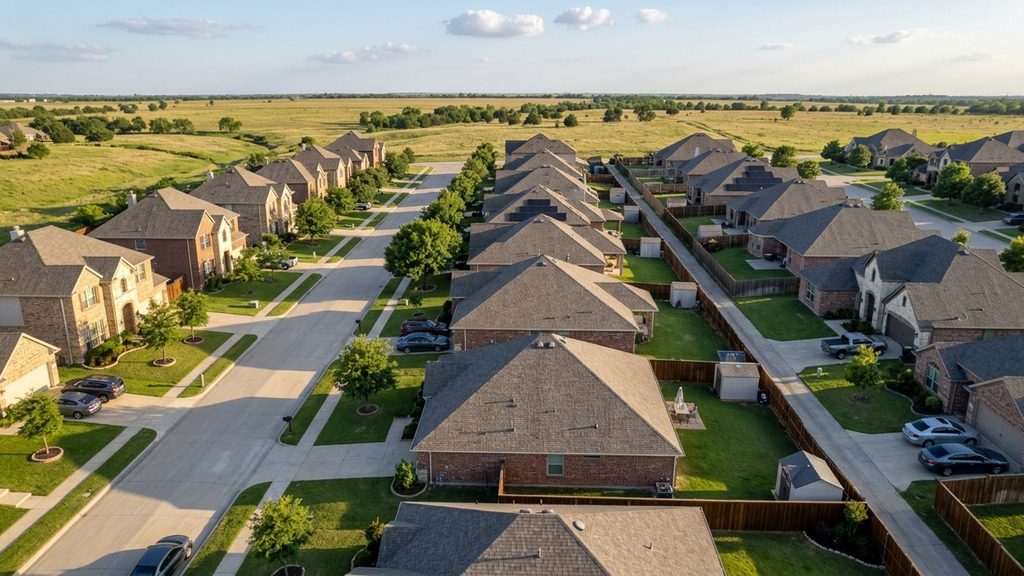
McKinney’s weather matters to a homebuyer mainly as a house-and-timing question rather than a comfort one. Hail-season roofs, clay-soil foundations, summer cooling loads, and wind and hail deductibles are where the local climate reaches your budget.
The hottest stretch of the year has recently been a buyer-friendly window. In the 90 days ending September 30, 2026, McKinney homes took a median 65 days to sell.
Key Takeaway
McKinney has hot, humid summers, short mild winters, and a stormy spring that brings most of the hail and tornado risk. For a buyer, that climate shows up in the roof, the foundation, and the cooling bill more than in daily comfort. Shopping in late summer has paid off for buyers, as homes took a median 65 days to sell in the 90 days ending September 30, 2026, and townhouses offer an alternative if you prefer an association to handle exterior repairs.
Who This Guide Is For
You’re weighing a move to or within McKinney and want to know what the weather will mean for when you buy or sell and which house you choose.
What Are McKinney’s Weather Patterns?
McKinney sits at an elevation of about 630 feet above sea level and falls under a humid subtropical climate classification, which means hot summers, cold to mild winters, and no distinct dry season. The official weather observation point is McKinney National Airport, the station the National Weather Service uses for its local point forecasts.
McKinney Weather by Season
Spring is the wettest and stormiest stretch of the year in North Texas, with the highest frequency of thunderstorms and associated severe weather, according to the National Weather Service Fort Worth office.
Summer brings consistent highs in the 90s paired with rising humidity. Average monthly dew points peak around 70 to 71 degrees from June through August, which is why outdoor work and yard maintenance tend to shift to early mornings and late evenings.
Fall is the mildest window of the year and acts as a second, smaller peak for storm activity. Comfortable temperatures and periodic rain make it the most reliable season for outdoor plans.
Winter is short and generally mild. The real seasonal hazards are ice and sleet, not prolonged deep freezes. Those deep freezes are rare, but disruptive when they happen, and the severe weather section below covers what they can do to a home.
Severe Weather in McKinney: Hail, Tornadoes and Ice
The National Oceanic and Atmospheric Administration maintains a Storm Events Database that records hail and tornado reports for Collin County. Spring and fall are the most active seasons for severe weather; summer typically sees quieter, isolated storms. Hail stands out as the most common costly event for local homeowners, which is why roof condition is a primary focus in any transaction here.
Winter weather is a different kind of risk. During the February 2021 winter storm, the Dallas-Fort Worth region experienced 205 consecutive hours of freezing drizzle and winter weather conditions, and temperatures at the regional airport hit minus 2 degrees. Widespread frozen pipes followed, so knowing where your main water shutoff is and checking pipe insulation aren’t optional tasks for a McKinney homeowner.
The city maintains an outdoor warning system of 29 sirens positioned throughout McKinney, designed specifically for people who are outdoors. They activate for severe thunderstorm warnings predicting destructive winds of 70 miles per hour or higher, large hail, or any tornado warning that names McKinney.
How McKinney’s Weather Shows Up in a Home
Hail and high winds hit the roof first and your insurance premium second. Ask the seller for the roof’s age, any replacement invoices, and the property’s full insurance claim history. Texas homeowners policies often carry wind and hail percentage deductibles, so before you close, ask your insurance agent what that deductible would cost you out of pocket on a roof claim.
The ground beneath the house reacts to the climate too. Collin County sits within the Texas Blackland Prairie region, where the dominant soil is Houston Black clay. This expansive soil shrinks during dry spells and swells when wet, which puts real stress on concrete slabs. A structural or foundation inspection is worth ordering, along with questions about past repairs and whether the city’s current watering schedule allows for foundation watering.
Summer heat places a heavy load on the cooling system. Request the HVAC age, ask for recent service records, and review 12 months of utility bills to see how the house performs in July and August. For flood risks, check the Federal Emergency Management Agency flood map for the exact address; standard homeowners policies don’t cover flood damage.
If you’d rather not deal with exterior maintenance through hail season, townhouses are worth a look. In the 90 days ending September 30, 2026, McKinney townhouses sold for a median of $370,004, or $191 per square foot, based on 22 sales. Because you share walls and an association, get it in writing from the homeowners association who insures and repairs the roof after a storm, and confirm current dues before you commit.
Best Time to Buy or Sell a Home in McKinney
Late summer has historically given buyers more room on price. In the 90 days ending September 30, 2026, McKinney homes closed at 97.5% of their list price, with only 7.8% of homes selling above list. Buyers had 4.3 months of supply to work with, meaning inventory was available even as the heat peaked.
There’s a practical inspection benefit, too. Touring in summer lets you see the cooling system working under a real load before you commit. An inspector can accurately judge how well the air conditioning keeps up with 100-degree days. Hail damage from spring storms may also already be visible or recently repaired by late summer, so ask about recent claims every time.
For sellers, homes sat longer during this window, a median of 65 days. Buyers have choices and they’re viewing houses in the heat, so price and presentation matter more than usual. You can review professional staging strategies and the seller guide to prepare your property, and check the housing market updates for the latest inventory shifts.
Is McKinney’s Climate a Good Fit for You?
If you’re timing a purchase, the late-summer market numbers show how the heat can create negotiating room. If you’re comparing specific houses, the roof, foundation, and air conditioning are where weather-related wear tends to hide before you write an offer.
If severe weather is your main concern, the official Collin County records in the Storm Events Database give you the actual risk picture. If the heat itself is what you’re weighing, the seasonal breakdown shows exactly how long summer runs and when the mild months arrive. You can weigh these factors against the broader pros and cons of living here or read through a moving guide for more detail.
Bale Real Estate Group can pull the roof, claim, and inspection history on homes you’re considering. Getting into those details early is how you buy a property that handles the North Texas climate well.
At a Glance
- Median sale price, all homes: $509,757, down 1% year over year (90 days ending 2026-09-30)
- Median days on market, all homes: 65 (90 days ending 2026-09-30)
- Sale-to-list ratio, all homes: 97.5%, with 7.8% of homes selling above list (90 days ending 2026-09-30)
- Months of supply, all homes: 4.3, with 934 homes in inventory (90 days ending 2026-09-30)
- Median sale price, single-family homes: $519,793, or $209 per sq ft (90 days ending 2026-09-30)
- Median sale price, townhouses: $370,004, down 5.5% year over year, $191 per sq ft, 5.9 months of supply (90 days ending 2026-09-30; based on 22 townhouse sales, so treat with caution)
McKinney, TX, Weather FAQs
Is McKinney, TX, in Tornado Alley?
Tornado Alley is an informal term with no official boundary, though North Texas is commonly included in the description. The National Oceanic and Atmospheric Administration maintains the official count of recorded tornadoes for Collin County in its Storm Events Database. The city uses 29 outdoor sirens to warn residents of incoming threats, activating them for tornado warnings, confirmed sightings, or severe thunderstorms with 70 mph winds or hail larger than 1.5 inches. The city does not sound an all-clear signal.
Does McKinney, TX, Flood?
Flood risk is address-specific and is usually concentrated near local creeks. The city designates land covered by floodwaters in a 100-year storm as a floodplain and acts as the local repository for this data. The FEMA flood map linked in the body section above gives the definitive answer for any specific address.
Does McKinney, TX, Have Water Restrictions?
Yes. The city manages water use through a Landscape Water Management Plan supplied by the North Texas Municipal Water District. From April 1 through October 31, watering is prohibited between 10 a.m. and 6 p.m., and properties are limited to their designated watering day plus three days later as needed. Confirm the current drought stage and foundation watering exemptions directly with the city.
How Much Snow Does McKinney Get a Year?
Very little accumulating snow, and exact annual averages are tracked by the National Weather Service. Ice and sleet are the more disruptive winter hazards for local homeowners and drivers. Historical climate normals are available through the National Centers for Environmental Information.
How Many 100-Degree Days Does McKinney Get?
The nearby Dallas-Fort Worth Airport weather station averages 20 days per year with temperatures reaching 100 degrees or higher, typically between early July and late August. Factor that cooling load into your utility budget and confirm any home you buy has a properly sized air conditioning system.
Where Can I Check the Current Weather and Forecast for McKinney?
The most accurate live point forecast for McKinney National Airport comes from the National Weather Service. The Fort Worth office issues all active weather alerts and warnings for Collin County. Historical seasonal patterns are covered in the sections above.
Sources
- Redfin: Data Center
- Plantmaps: McKinney Climate Data
- Weather.gov: DFW Records and Normals
- Weather.gov: DFW 100 Degree Days
- Weather.gov: DFW Climate Narrative
- Weather.gov: February 2021 Winter Event
- City of McKinney: Outdoor Warning Siren System
- City of McKinney: Floodplain Management
- City of McKinney: Outdoor Water Use
- USDA NRCS: Soils of Texas