Allen, TX, has grown into a genuine hub within Collin County – master-planned communities, commercial centers, and a 2026 population just over 115,000 residents. That headcount reflects steady movement into the northern suburbs of the Dallas-Fort Worth metroplex, and it hasn’t slowed down.
Buying here means getting your arms around local inventory levels, how the neighborhoods are actually laid out, and the Texas-specific closing procedures that trip up buyers who’ve purchased elsewhere. This guide covers the Allen housing market, the areas worth your attention, and what the process looks like from offer to keys.
The Allen Housing Market at a Glance
The median sale price for homes in Allen, TX, sits at roughly $505,000 as of mid-2026 – a slight 3.5% decrease compared to the same time last year. That’s not a dramatic shift, but it does give you a bit more breathing room on purchase prices than buyers had a couple of years ago.
Recent MLS data shows about 410 active listings on the market, which translates to 3.7 months of supply. That’s not a strict buyer’s market, but it’s meaningfully better than the inventory shortages we saw in previous years. Homes are spending a median of 34 days on the market before going under contract.
Homeowners selling a home in Allen are still getting close to what they’re asking – the average sale-to-list ratio is hovering around 98.5%. You’ll want to come in strong, but standard contingencies and minor negotiations are back on the table in a way they weren’t before.
Is Now a Good Time to Buy in Allen?
With prices stabilizing and inventory sitting above 400 active listings, you can actually evaluate properties without a bidding war on every house. First-time buyers and relocating professionals have room to view multiple homes before committing.
If you’re hunting for something specific – a single-story house, a lot backing to a greenbelt – that slight uptick in supply works in your favor. Keep an eye on weekly listing updates. The good ones still move.
Homes for Sale in Allen: Types and Price Ranges
The types of homes in Allen run the full range, from established subdivisions built in the 1990s to newer developments still going up. You’ll find attached townhomes on one end and large single-family estates on the other.
Single-family homes make up the bulk of what’s available. Brick or stone exteriors, two-car garages, fenced backyards – that’s the standard package here. Step into the luxury segment and you’re looking at custom pools, premium lot placements, and significantly more square footage. Condos and townhomes are the lower-maintenance alternative, though you’ll need to account for HOA dues – those cover exterior maintenance and community amenities, and they add up when you’re calculating a real monthly payment.
Finding Entry-Level Options
The median is around $505,000, but buyers can find more affordable houses in some of the city’s older neighborhoods. These entry-level homes typically need cosmetic updates, though they’re a real way to get into Collin County without stretching to the top of your range.
Townhomes are worth a look here too. Many sit close to major retail centers, which cuts down on the daily errand commute, and they generally come in below what a detached single-family house will cost you.
Neighborhoods in Allen to Consider
The best neighborhoods in Allen pull in different directions – golf course communities, mixed-use urban districts, master-planned setups with all the amenities built in. Where you land depends on your budget and how you actually want to live.
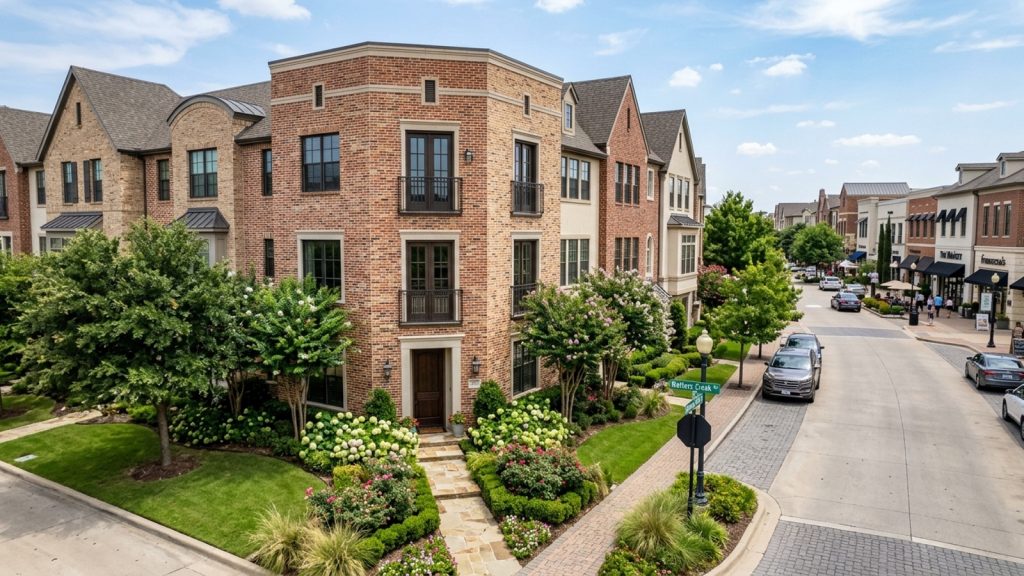
Twin Creeks is probably the most recognized master-planned community in the city. A golf course, swim center, parks, and lakes – it draws buyers who want recreation without leaving the neighborhood. Star Creek is another master-planned option, with housing styles ranging from townhouses up to large estates. Buyers who want something more walkable tend to look at The Village at Allen or Watters Creek. The Village at Allen is a mixed-use shopping and dining district with nearby apartments and housing. Watters Creek runs more upscale – luxury residences integrated into curated retail spaces.
Proximity to Local Landmarks
Distance to parks matters more than people expect before they’ve lived somewhere for a year. Allen Station Park and Celebration Park are the main hubs for outdoor activities and sports leagues. Bethany Lakes Park adds more green space and water features if that’s on your list.
Other landmarks worth knowing: the Allen Old Stone Dam, the Cottonwood Creek Trail – which gives you miles of paved paths for walking and cycling – and the Allen Event Center, which hosts concerts and minor league sports and anchors the entertainment side of the area.
Where Is Allen, TX? Location and Getting Around
Allen sits entirely within Collin County, on the northern edge of the Dallas-Fort Worth metroplex. Its position along a major highway makes it practical for commuters working anywhere in the broader region.
The city spans two primary Allen ZIP codes – 75002 and 75013. The 75002 ZIP covers the eastern and central portions of the city; 75013 covers the western side and the downtown area. Check the specific ZIP code when you’re researching property taxes and utility providers, because they don’t always match up the way you’d expect.
US-75 runs directly through the city, and that’s what most commuters rely on. A drive from Allen to downtown Dallas typically takes 30 to 38 minutes depending on traffic. You’ve also got straightforward access to the rest of the DFW metroplex via nearby tollways and arterial roads.
Living in Allen: Population and Lifestyle
The population reached an estimated 115,492 in 2026 – a 9.4% increase since the 2020 census. That growth is driven by steady job expansion in North Texas and ongoing residential development, and the city is still adding residents at an annual rate of roughly 1.4% to 1.8%. Steady job expansion and sustained residential growth are major factors for most buyers evaluating the pros and cons of living in Allen.
That headcount supports a solid local economy. Retail centers, restaurants, and corporate offices are operating within the city limits in real numbers. It’s not a bedroom community that empties out during the day.
One practical note: Allen follows standard North Texas climate patterns – hot summers, mild winters. Updated HVAC systems and proper insulation aren’t optional here. Cooling costs during peak summer months are a real line item, and it’s worth checking both when you’re evaluating a property.
Finding a Real Estate Agent in Allen, TX
The best real estate agent in Allen will save you time and missteps with specific insights into neighborhood values, HOA structures, and what the comps actually mean in a given subdivision.
Interview multiple agents before you sign a representation agreement. Ask about their recent transaction volume in Allen, how they communicate, and whether they’re available for weekend showings. A good agent will walk you through the standard Texas Real Estate Commission (TREC) contracts and explain the required disclosures without making you feel like you’re reading a legal filing.
On commissions: the seller negotiates with their listing broker, who often shares a portion with the buyer’s agent. Clarify how your agent will be compensated before you start touring homes. New industry rules may require a signed buyer representation agreement that outlines the fee structure, so don’t let that conversation wait.
The Home-Buying Process in Texas
Texas has specific timelines and contractual obligations, and understanding them early protects your earnest money and keeps the deal from going sideways.
It starts with mortgage pre-approval. Sellers expect to see that letter with any offer – submitting without one puts you behind before negotiations even start. Once a seller accepts your offer, you enter the option period. That’s a negotiated timeframe, usually five to ten days, where you pay a small fee for the right to terminate the contract for any reason. Use that time. Hire a licensed inspector to evaluate the property, and if major issues turn up, your agent can help you negotiate repairs or a price reduction before the option period expires.
Closing Costs and Final Steps
Buyers in Texas typically pay for their own loan origination fees, appraisal, and a portion of the title policy – though those terms are negotiable in the contract. Bring funds to closing to cover both your down payment and closing costs.
Before the closing date you’ll complete a final walkthrough to verify the property’s condition. Once you sign the final loan documents at the title company and the lender funds the loan, you get the keys.
Frequently Asked Questions
What is the average property tax rate for homes in Allen, TX?
Property tax rates in Allen vary depending on the specific neighborhood, county assessments, and school district boundaries. Look at the Collin County Appraisal District records for the exact tax history on any property you’re considering.
Are houses in Allen currently selling over asking price?
Some still do, though it’s not the norm. Recent data shows about 17.3% of homes in Allen sold above their asking price, while the overall average sale-to-list ratio is 98.5%.
How does buying a home in Allen compare to neighboring McKinney or Plano?
All three cities sit within Collin County and offer similar access to the Dallas-Fort Worth metroplex via US-75. Allen currently has a median home sale price of around $505,000. Buyers often compare neighborhoods across all three municipalities to find the right combination of price and amenities.
Should I get a foundation inspection before buying an older house in Allen?
Yes. The soil in North Texas is known for shifting, and that movement can affect concrete slab foundations over time. If a general home inspector flags cracks or uneven floors, hire a specialized structural engineer to evaluate the foundation during your option period – not after it expires.
Which neighborhoods in Allen zone to the top-rated public schools?
Attendance zones shift based on district enrollment and new construction. Verify current boundaries directly through the Allen Independent School District’s official maps before you make an offer.
Are there any first-time home buyer assistance programs available in Allen or Collin County?
Planning to buy? Learn more about Why Buyers Choose Bale Real Estate Group.
Collin County periodically participates in state and local housing assistance initiatives. Check the official Collin County website or talk to a local mortgage lender to find out which down payment or closing cost programs are currently funded and available.