
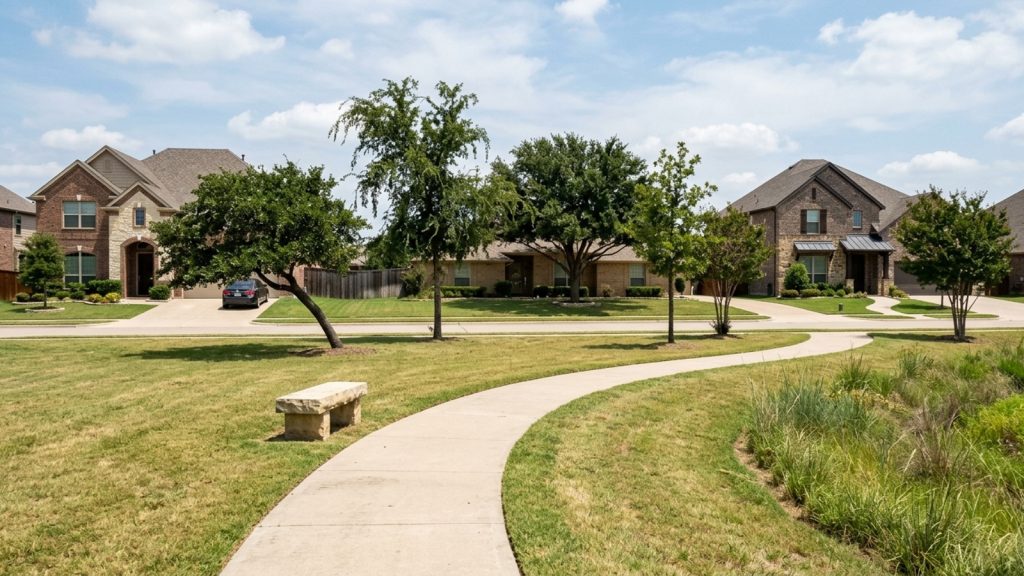
Allen sits in Collin County, about as north-of-Dallas suburban as it gets. If you are weighing the pros and cons of living in Allen, TX, the cost of living here runs above the national average – and that gap is almost entirely a housing story. The Dallas-Fort Worth metroplex has been pulling people and prices upward for years, and Allen is squarely in that current.
What you’ll find when you look closer is that groceries, utilities, and healthcare are pretty reasonable. The question that matters for most buyers and renters is whether local real estate prices and the income required to carry them make sense for their situation.
Allen Expenses at a Glance
Depending on which index you trust, Allen’s cost of living lands between 10% and 22% above the U.S. average. HomeSnacks puts the city at 120; BestPlaces calculates it at 111.7. That spread tells you something: the premium is real, but it’s weighted toward housing. Once you strip that out, most other expense categories sit close to the national baseline.
For a single person, everyday expenses in Allen run roughly $2,651 per month. A family of four is looking at about $5,839 per month. Those figures cover housing, food, transportation, and healthcare, and overall they land about 7% above the national average.
Are Prices High?
It depends where you’re coming from. If you’re relocating from a coastal market, Allen will feel moderate. If you’re comparing it to rural Texas or the outer suburban ring, it’s noticeably more expensive. The saving grace is that local incomes are strong – which is a big part of why prices have held where they are.
Housing Costs: Home Prices and Rent
Real estate is where Allen’s cost premium shows up. The median sale price for a home here sits at approximately $527,151, and homes are spending about 43 days on the market before going under contract.
There are about 382 homes available in recent inventory – moderate, not thin. Sellers are getting roughly 97.7% of their list price, so there’s a little negotiating room, but don’t bank on it. About 12.5% of homes are still selling above asking.
Apartment and Rental Rates
Renting looks meaningfully different from buying here. The average rent in Allen is approximately $1,448 per month, which comes in below the U.S. average of $1,665. Depending on the apartment size and which leasing platform you’re using, estimates range from $1,440 to $1,675.
For someone new to Collin County, renting first makes a lot of financial sense. You get to learn the area without immediately committing to a half-million-dollar mortgage.
Monthly Bills: Utilities, Food, and Transit
Outside of housing, day-to-day life in Allen is pretty manageable. A single person spends about $387 per month on groceries – roughly 3.2% below the U.S. baseline. A family of four typically runs about $1,259 a month on food.
Utilities follow a similar pattern. Monthly energy costs average $170 for a single resident and $291 for a family of four, running about 3% below the national average. That’s a real offset against the higher housing payments, even if it doesn’t fully close the gap.
Transportation and Healthcare
You’ll need a car in Allen – this is not a walkable suburb by any stretch. Transportation costs track close to the national average: roughly $402 per month for a single adult, $854 per month for a family of four.
Healthcare is one of the better line items here. A single person averages $271 per month in medical expenses, which is nearly 10% below the U.S. average. A family of four runs about $721 per month. It’s not dramatic savings, but it’s a consistent break across the board.
Income Required to Live Comfortably
Allen is a high-income city, and the numbers bear that out. According to 2024 Census data, the median household income is $130,901 – roughly 62% above the national median. The average annual household income climbs even higher, to $161,489.
That concentration of higher earners isn’t a coincidence. It reflects who Collin County attracts: professionals plugged into the broader Dallas-Fort Worth economy, often in tech, finance, and healthcare.
What Salary Do You Need?
For a single adult, the range you’ll see depends on how conservatively you want to budget. Apartments.com suggests $56,520 covers the basics. TrueCostLiving pushes that to $67,864 if you want a real savings buffer. BestPlaces, which models it slightly differently, puts a comfortable single-person minimum at $65,600.
For families, BestPlaces estimates a minimum annual income of $95,040 to live comfortably here. That’s not a ceiling – it’s a floor.
Budgeting for Allen vs. The Metroplex
Allen sits in a premium suburban tier within Dallas-Fort Worth. You can find lower housing costs if you’re willing to go further out from the urban core, but Allen commands higher prices for its location and local amenities.
To make this concrete: a single renter earning the recommended $65,000 salary brings in roughly $5,416 per month before taxes. Rent at $1,448 takes the first chunk.
Breaking Down the Rest of the Paycheck
After rent, that same renter is spending $387 on groceries, $170 on utilities, $402 on transportation, and $271 on healthcare. That totals $2,678 in tracked expenses, leaving roughly $2,738 for taxes, debt, savings, and everything else life costs.
For a family purchasing a median-priced $527,151 home, the math shifts entirely – mortgage rates, property taxes, and insurance become the story. The $5,839 monthly baseline figure gives you a rough anchor, but the actual number will depend on what rate you lock in and what you put down.
Pros and Cons of the Local Market
The upside here is real: local incomes are strong, everyday expenses are more moderate than you’d expect for a high-income suburb, and rents are below the national average. That’s a better combination than you’ll find in a lot of comparable markets.
The honest downside is the barrier to entry on the ownership side. At $527,151 for a median home, first-time buyers without substantial equity coming in from another sale are going to feel the squeeze.
Who This Market Fits
Allen works well for established professionals and dual-income households that can handle the property costs without stretching. It’s also genuinely workable for renters – $1,448 in average rent for a Collin County address is a reasonable deal.
If you’re buying, go in ready to move. Homes are averaging 43 days on the market and about 12.5% are going above list price, which means sitting on a decision for two weeks can cost you the house.
Frequently Asked Questions
Is it expensive to live in Allen, TX?
Yes, the overall cost of living runs roughly 10% to 22% above the U.S. average. That premium is almost entirely driven by housing – most other daily expenses come in at or below the national baseline.
What salary do you need to live comfortably in Allen, TX?
A single adult needs somewhere between $56,520 and $67,864 per year, depending on savings goals. A family typically needs a minimum annual income of $95,040 to cover local expenses comfortably.
Why is Allen, TX so expensive?
Housing demand across the Dallas-Fort Worth metroplex is the main driver. The city’s high median household income of $130,901 also sustains local pricing – when buyers in a market earn more, sellers price accordingly.
How does the cost of living in Allen compare to the rest of Dallas-Fort Worth?
Allen runs more expensive than the broader metro average. It’s a premium suburb. Rent is relatively accessible at $1,448 per month, but purchasing a home costs much more than in outlying rural areas.
How much are property taxes in Allen, TX?
That depends on your home’s assessed value and the specific Collin County tax rates for the year. Talk to the county tax assessor directly for current millage rates before you make an offer.
Is Allen, TX a wealthy area?
Yes. The average annual household income is $161,489, and the median household income runs 62% above the national median. It’s one of the higher-income communities in the region.
Is Allen, TX a good place to live?
That depends on your budget and what you’re trying to accomplish. Everyday expenses are moderate and local incomes are strong, but the $527,151 median home price is a real hurdle for buyers who aren’t coming in with significant resources.
How does Allen compare to neighboring Frisco?
Buyers looking at Collin County often weigh the differences between Allen and Frisco to determine which community best fits their housing budget. While Allen commands higher prices for its location and local amenities, checking nearby alternatives is a standard step before purchasing a home.