
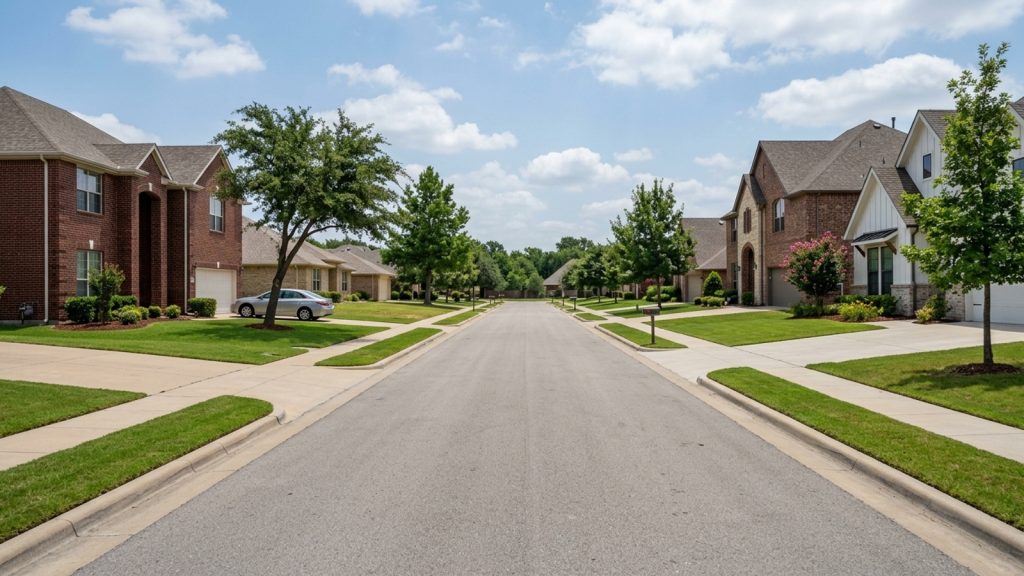
Allen, TX sits in Collin County, about 25 miles north of Dallas, and it draws buyers who want suburban breathing room without completely cutting ties with the DFW metroplex. Safety comes up in almost every conversation I have with buyers weighing the pros and cons of living in Allen, TX – and the numbers are worth knowing before you start scheduling showings.
The market here reflects what that demand looks like in practice. As of late 2026, the median home sale price is around $527,000, with homes spending roughly 43 days on the market. Getting a clear picture of the crime data, emergency services, and environmental factors before you make an offer is just due diligence.
Town-Level Crime Data for Allen, TX
Aggregate, town-level data is what tells you something useful – not individual incident reports or neighborhood-level anecdotes. The FBI Uniform Crime Reporting (UCR) program and local police records give you a verified baseline to work from.
According to 2024 FBI UCR data, Allen’s total crime rate was 984.7 incidents per 100,000 residents. That’s the number to anchor everything else against.
Comparing Allen to State and National Averages
The Texas total crime rate for 2024 came in at 2,429.9 per 100,000 people. Allen’s overall crime rate is approximately 59.5% lower than that state baseline – a substantial gap, not a rounding difference.
Texas as a whole did see overall crime drop 13% between 2024 and 2025, according to the Department of Public Safety. Allen was already sitting well below both state and national benchmarks before that statewide improvement, and it continues to hold that position.
Overall Safety Rankings
Data aggregators like HomeSnacks and CrimeGrade run the FBI statistics through their own frameworks to rank cities against each other. Based on the 2024 UCR data, Allen ranks 277th safest out of 710 cities analyzed in Texas. Nationally, it places 4,352nd out of nearly 9,900 U.S. cities. For both violent and property crime categories, Allen falls below national averages.
Recent Crime Rates and Trends in Allen
The total crime rate alone doesn’t tell you much about what’s happening on the ground. Breaking it into violent crime and property crime, then watching how those numbers move year over year, gives you a more useful read.
Property crimes – theft, burglary – make up the bulk of reported incidents in most municipalities, and Allen is no different. What’s worth paying attention to is the direction things are moving.
Violent and Property Crime Statistics
The 2024 FBI Uniform Crime Report puts Allen’s violent crime rate at 106.4 per 100,000 people. The Texas statewide rate for that same period was 389.4, and the national average was 359.0. Allen is running well below both.
On the property crime side, Allen reported a rate of 878.3 per 100,000 residents in 2024. Texas came in at 2,040.5 per 100,000 that year, and the national rate was 1,760.0.
Multi-Year Crime Trends
The year-over-year shift here is notable. Total crimes dropped from 1,143 incidents in 2024 to 885 in 2025, which pushed the city’s crime rate down to 7.59 offenses per 1,000 residents. That gave Allen the lowest per-capita crime rate among Texas cities with populations over 80,000.
Drilling into the 2025 data: violent crime declined 36.4% from the prior year. Property crime dropped 20.9%, with motor vehicle thefts down 59% and burglaries down 17.1%.
Collin County Context
Allen doesn’t exist in isolation – it’s part of Collin County, which also runs below state and national crime levels. In 2022, Collin County reported an overall crime rate of 2,679 per 100,000 residents, against a Texas average of 5,489 for that year. The county’s violent crime rate was roughly 2.969 per 1,000 residents, and property crime measured about 18.82 per 1,000.
The county did see a 17.6% increase in crime between 2020 and 2022. Worth knowing – though that increase still came in well below the statewide growth of 24.5% over the same period.
Public Safety and Emergency Services
Crime statistics tell one part of the story. How well-staffed and how quickly the departments respond tells you the other part. The Allen Police Department handles local law enforcement, emergency response, and community patrol duties.
Police Staffing and Patrols
A 2022 operational review of the Allen Police Department broke down the patrol section’s structure: four lieutenants, ten sergeants, nine corporals, and 65 police officers maintaining 24/7 coverage. Overall department staffing runs approximately 137 officers – about 12.7 officers per 10,000 residents. The department dispatches an average of 2.2 units per community-initiated call for service.
Emergency Response Times
The same 2022 review found average response times for calls for service at 7.9 minutes in the winter and 8.1 minutes in the summer. Those figures compare favorably to many similar communities. Emergency medical and fire response operate alongside the police department to cover the city’s full geographic footprint.
Environmental and Natural Hazards
Physical safety isn’t just about crime. Texas weather and local environmental conditions are things every buyer in this area should think through before closing.
From storm season to water quality at nearby recreational spots, knowing what you’re dealing with helps you make smart decisions about insurance, disclosures, and how you use the property.
Lavon Lake Water Quality
Lavon Lake is a major nearby reservoir – residents use it for boating, fishing, and swimming. It’s a natural body of water, which means conditions can shift based on rainfall, temperature, and agricultural runoff. Before swimming, check current advisories from the Texas Commission on Environmental Quality (TCEQ) or local health departments, which monitor bacteria levels and issue notices after heavy rains.
Severe Weather Planning
North Texas gets real weather. Spring thunderstorms, high winds, hail, and the occasional tornado are all part of life here – not statistical outliers. Make sure your property insurance covers wind and hail damage, both of which are common claims in Collin County.
Heavy, sudden rainfall can cause localized pooling in streets and low-lying areas. Review property disclosures and local flood maps during your purchase process. Understand the drainage situation for your specific lot before you’re committed.
What Living in Allen Is Like
The numbers give you a framework, but daily life is what you experience. Allen is a suburban city with direct highway access to the broader DFW employment base, a mix of housing types, and a commercial core that handles most everyday needs.
Buyers entering the market will find single-family homes, townhouses, and new developments. The lifestyle here is built around community facilities, retail corridors, and highway connectivity.
Recreation and Community Amenities
The city maintains a network of public parks, walking trails, and recreational facilities. These aren’t just amenities in the marketing sense – they’re genuinely used, and they’re spread across the city rather than concentrated in one area. Retail and dining options cluster around major intersections and dedicated shopping centers, so you’re not driving out of the city for everyday errands.
Commuting and Highway Access
U.S. Highway 75 runs directly through Allen north-to-south, connecting it to Dallas and neighboring suburbs like Plano and McKinney. Combined with the Sam Rayburn Tollway, commuters have multiple routes to major corporate campuses in the region. Drive times shift with the time of day – that’s true anywhere in DFW – but the infrastructure handles the daily load reasonably well across Collin County.
Housing Costs and Local Schools
The Allen real estate market currently shows a median home price of roughly $527,000. Homes are generally selling for about 97.7% of list price, and inventory sits around 3.5 months of supply – a relatively balanced position for both buyers and sellers.
Schools are managed by the local independent school district, with campuses distributed across the city. Verify attendance zones directly with the district before you buy – boundaries shift as new housing developments come online, and you don’t want to assume based on a neighbor’s experience from a few years ago.
Frequently Asked Questions
Is Allen, TX safe?
Yes, the data supports that. In 2024, the city’s total crime rate was 984.7 per 100,000 people – approximately 59.5% lower than the overall Texas crime rate.
What is the crime rate in Allen, TX?
For 2025, the Allen Police Department reported a total crime rate of 7.59 offenses per 1,000 residents. Total crimes dropped from 1,143 in 2024 to 885 in 2025.
How does Allen’s crime rate compare to the Texas and national average?
It’s lower than both. Allen’s 2024 violent crime rate of 106.4 per 100,000 sits below the Texas average of 389.4 and the national average of 359.0.
How fast are emergency and police response times in Allen?
A 2022 operational review found the Allen Police Department’s average response time for calls for service was 7.9 minutes in the winter and 8.1 minutes in the summer.
What natural hazards should Allen residents plan for?
Severe weather is the main one – spring thunderstorms, high winds, and hail are all common in North Texas. Buyers should also review local flood maps to understand how their specific lot handles drainage during heavy rain.
Is it safe to swim in Lavon Lake?
It depends on current conditions. Lavon Lake is a natural reservoir, so water quality varies. Check the Texas Commission on Environmental Quality (TCEQ) for active advisories before getting in the water.
What is Allen, TX like to live in?
It’s a suburban city with a median home price of around $527,000, public parks, retail centers, and straightforward commuting access to Dallas via U.S. Highway 75.
How does Allen compare to neighboring communities like Frisco?
House hunters often weigh their options between local cities when looking for suburban breathing room north of Dallas. Anyone making an Allen, TX vs Frisco comparison will find that Allen offers strong highway connectivity and a balanced housing market. The city provides straightforward commuting access to major regional employers while maintaining crime rates well below state averages.