If you’ve been renting in the DFW metroplex or are planning a relocation to North Texas, you probably already know that Plano is a highly desirable place to land. It has established neighborhoods, incredible parks, and serves as a major employment hub. But you also probably know that buying a house here isn’t as cheap as it was a decade ago.
The good news? The market in early 2026 looks a lot different than the chaotic bidding wars of the past few years. It’s steadier, more predictable, and there are distinct pockets of affordability if you know where to look.
Here is a roadmap for first time home buyers Plano TX, from breaking down the budget to navigating the specific quirks of Texas real estate contracts.
Buying a Home in Plano: The 2026 Market Outlook
Let’s start by setting the scene for what you’re walking into right now. As of February 2026, the Plano real estate market has shifted into what most local agents call a “balanced” state.
A few years ago, buyers had hours to make a decision. Today, inventory has improved. You likely won’t face twenty competing offers on a Tuesday afternoon, but that doesn’t mean you can lowball, either. There is still healthy competition for well-priced starter homes, especially those that are move-in ready.
Interest rates have also stabilized in the 6–7% range. While that isn’t the rock-bottom rate environment of 2021, the stability allows for much better financial planning. You aren’t chasing a rate that changes drastically week to week.
When it comes to pricing, let’s be real about the numbers. The median home price in Plano generally hovers between $515k and $550k. However, as a first-time buyer, you aren’t necessarily looking for the median. You are looking for the entry-level sweet spot. It is absolutely possible to find homes in the $350k–$450k range, provided you are looking in the right neighborhoods and are open to homes that might need a little cosmetic updating.
If you want to dive deeper into the stats, checking out current Plano real estate market trends is a smart way to see exactly what sold last month near your target area.
Financial Requirements for Plano Buyers
One of the biggest hurdles for renters is the “20% down” myth. Many people stay on the sidelines believing they need $80,000 or $100,000 in the bank to buy a home here. That is simply not true.
Here is what the financials actually look like for most first-time buyers:
- Down Payment: For most first-time buyers using FHA or Conventional loans, the standard down payment is between 3% and 3.5%. On a $400,000 home, that is roughly $12,000 to $14,000—a much more manageable goal than 20%.
- Credit Score: While a higher score gets you a better interest rate, you don’t need perfection. A score of 620 is a common benchmark for many assistance programs, though FHA loans can sometimes work with scores down to 580.
- Closing Costs: This is the hidden cost that surprises many people. On top of your down payment, you need to budget for closing costs, which cover title insurance, lender fees, and pre-paid taxes. In Texas, a safe bet is to budget 2–5% of the purchase price. For a starter home, that’s usually $8,000–$15,000.
- Cash Reserves: Lenders like to see that you aren’t draining your bank account to zero. It’s wise to have a “repair fund” set aside post-closing for the inevitable trip to the hardware store.
Additionally, in Texas, you need a little liquidity right when you make an offer. You will need about 1% of the offer price for “Earnest Money” and another $200–$500 for the “Option Fee” (we’ll explain that in a moment).
If you are trying to crunch the numbers on your own, a closing costs calculator Texas specific can help you estimate how much cash you need to bring to the table.
First-Time Home Buyer Programs in Plano & Texas
If the down payment and closing costs still feel like a stretch, you need to look into assistance programs. Texas has some of the best programs in the country for helping buyers get into their first home.
TSAHC (The “Gold Standard”)
The Texas State Affordable Housing Corporation (TSAHC) runs two main programs: “Homes for Texas Heroes” (for teachers, first responders, nurses) and “Home Sweet Texas” (for low-to-moderate income buyers).
These are excellent options for 2026. They typically offer assistance ranging from 2% to 5% of the loan amount. This can come as a grant (which you don’t pay back) or a deferred forgivable second lien (which goes away if you stay in the home for three years). TSAHC also offers a Mortgage Credit Certificate (MCC), which allows you to claim a tax credit for some of the mortgage interest you pay every year.
TDHCA (My First Texas Home)
The Texas Department of Housing and Community Affairs (TDHCA) is another state-level option. Their “My First Texas Home” program offers up to 5% assistance for down payment and closing costs. It’s highly competitive and works well for buyers who need maximum cash assistance to get to the closing table.
City of Plano Programs
The City of Plano occasionally offers its own First Time Homebuyer Assistance Program. However, a word of caution: these local funds are often limited. They may run out of budget mid-year or have stricter income caps than the state programs. It is always worth checking with the city or your lender to see if funds are currently available, but don’t bank your entire strategy on this one source.
Eligibility for most of these depends on income limits and credit scores. The good news is that because the cost of living in Collin County is higher, the income limits for these programs are often higher here ($100k+) than in other parts of Texas. Reading up on a Texas down payment assistance guide can give you the granular details on these limits.
Loan Options for First-Time Buyers
Choosing the right loan is just as important as choosing the right house. Here is a quick look at what most Plano buyers are using:
- FHA Loans: These are backed by the government and are very popular for first-timers. They allow for a 3.5% down payment and are more lenient if your credit history has a few bumps.
- Conventional Loans: If your credit is strong (typically 680+), a conventional loan is often the better route. You can still buy with as little as 3% down, and unlike FHA, the mortgage insurance (PMI) eventually drops off once you build enough equity.
- VA Loans: Plano has a strong veteran population. If you are eligible, the VA loan is arguably the best product on the market—0% down payment and no monthly mortgage insurance.
- Texas Vet Land Board (VLB): This is a unique perk for Texas residents. The VLB offers competitive interest rates and discounts for veterans living in Texas, and it can often be combined with VA loans.
Best Plano Neighborhoods for First-Time Buyers
Plano is large, and prices can swing by hundreds of thousands of dollars depending on which side of US-75 or the Dallas North Tollway you are on.
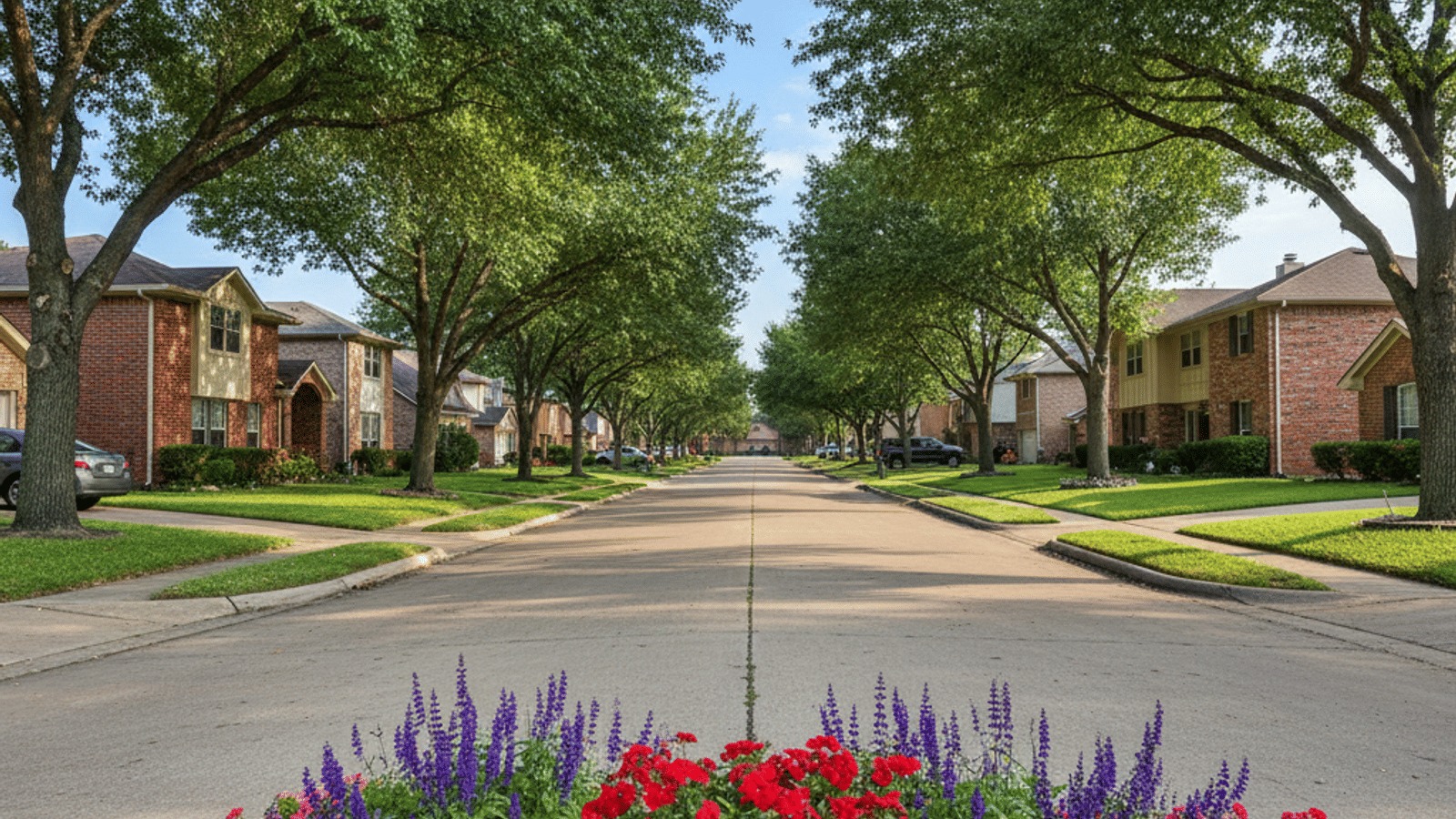
Central & East Plano: If you are looking for homes for sale in Plano TX under $450k, this is where you should start. Neighborhoods in Central and East Plano generally feature older stock—homes built in the 70s and 80s—that offer great bones and larger yards. Look at areas like Park Forest, Timber Brook, or Pitman Creek. You get excellent access to amenities like Bob Woodruff Park and the Oak Point Nature Preserve without the premium price tag of the west side.
West Plano: West Plano is known for luxury builds, newer infrastructure, and proximity to Legacy West and Toyota’s headquarters. While the median price here is significantly higher ($600k+), you can sometimes find entry-level options if you look at condos or townhomes near the Shops at Legacy or the tollway corridor.
Condos and Townhomes: Don’t rule out attached living. Older condo complexes, particularly those near US-75 or Parker Road, can offer ownership opportunities under $350k. This is a great way to enter the market, build equity for a few years, and then move up to a single-family home later.
Step-by-Step: Buying Your House in Plano
Buying a home in Texas involves a few specific steps that differ from other states. Here is the chronological flow:
- Pre-Approval: Before you tour a single home, get pre-approved. This locks in your budget and proves to sellers that you are a serious buyer.
- The Search: Work with a local agent who knows the “pockets” of affordability. They can help you spot the difference between a bargain and a money pit.
- Making an Offer & The Option Period: This is the most “Texas” part of the process. When you make an offer, you will usually pay a small “Option Fee” ($100–$500). In exchange, you get an “Option Period” (usually 5–7 days). During this time, you can cancel the contract for any reason—cold feet, bad inspection, or just changing your mind—and only lose that small fee.
- Inspections: You typically do your inspections during the Option Period. In Central and East Plano, where homes are older, paying close attention to foundation and cast-iron plumbing is vital.
- Closing: Once financing is approved and repairs are negotiated, you’ll head to a title company to sign the paperwork.
Understanding Taxes, HOAs, and Insurance
If you are looking at living in Plano, you have to look beyond the mortgage payment. There are three big ongoing costs to watch.
Property Taxes: Texas has high property taxes because there is no state income tax. In Plano, the total effective tax rate is usually around 2.0% to 2.2% of the home’s value. Valuations have risen, meaning tax bills have gone up. However, as soon as you move in, you should file for your Homestead Exemption. This lowers the taxable value of your home and caps how much your taxable value can rise each year (currently capped at 10%).
Home Insurance: North Texas weather can be rough on roofs. Between hail and wind events, insurance premiums have risen in the last few years. When budgeting, get quotes early to make sure the premium doesn’t throw off your debt-to-income ratio.
HOA Fees: Many subdivisions in Plano, especially newer ones, have Homeowners Associations. These fees vary wildly from $200 a year to $300 a month depending on amenities. Always factor this into your monthly payment capabilities.
FAQ: Common Questions for Plano Buyers
Does Plano have a specific first-time home buyer grant?
The City of Plano does have a program, but funding is often limited or restricted to lower income brackets. Most buyers have more consistent success using statewide programs like TSAHC or TDHCA, which are available to residents of Plano and have broader eligibility requirements.
How much cash do I need to buy a house in Plano?
For a $400,000 home, you should aim to have roughly $20,000 to $25,000 accessible. This covers a 3.5% down payment ($14,000) and estimated closing costs. However, down payment assistance programs can significantly reduce the amount of cash you need to bring to the table personally.
What is the minimum credit score for buying a house in Texas?
Generally, a score of 620 is the benchmark for most conventional loans and down payment assistance programs. FHA loans can sometimes accept scores as low as 580 with a slightly higher down payment or interest rate.
Is it cheaper to buy or rent in Plano in 2026?
With rents in Plano continuing to rise, buying is often comparable in terms of monthly outlay, especially when you factor in the tax benefits and equity building. While the upfront cost of buying is higher, a fixed-rate mortgage protects you from annual rent hikes, offering long-term stability that renting cannot.
Is 2026 Your Year to Buy in Plano?
While prices in Plano aren’t “cheap,” the market in 2026 offers stability that we haven’t seen in a while. Between the available inventory in East and Central Plano and the robust assistance programs offered by the state, homeownership is feasible for first-time buyers who prepare.
The key is getting your financial ducks in a row before you fall in love with a house. Connect with a local lender or agent today to start the pre-approval process and see exactly what you can afford.