
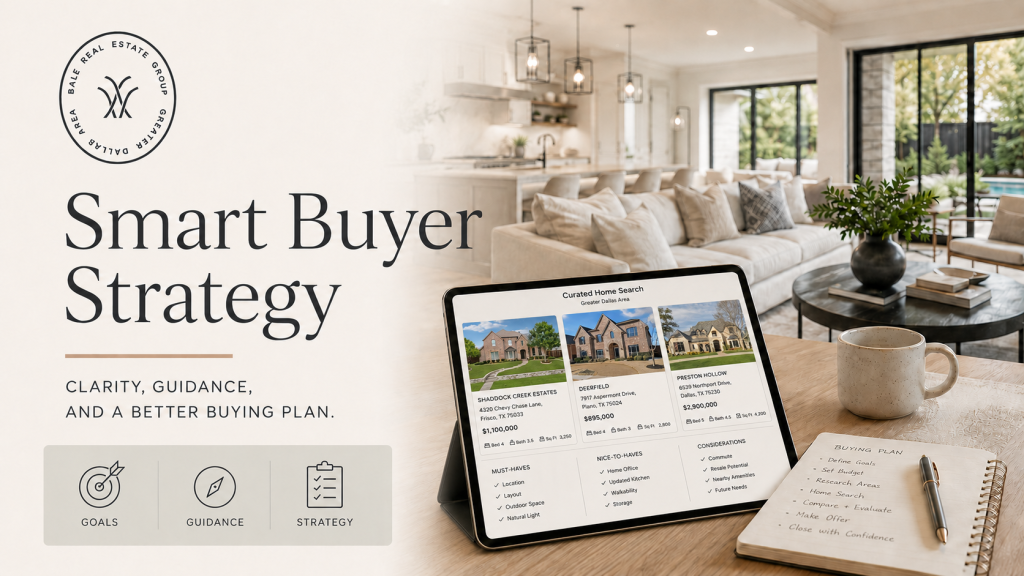
Finding the right home is about more than square footage, paint colors, or the number of bedrooms.
The right home should fit the way you live, the way you spend your time, and the future you are trying to build.
When you walk through the front door, you should be able to picture your everyday life there. Morning routines. Family dinners. Work-from-home space. Entertaining friends. Kids playing outside. Quiet evenings after a long day.
A home is not just a property.
It becomes the place where life happens.
That is why the home buying process should begin with clarity.
Before you start touring homes, it helps to understand what you need, what you want, and where you may need to stay flexible.
Meeting Your Criteria
Choosing the right real estate team matters.
You need someone who can help you look beyond the surface and evaluate each home with confidence.
Bale Real Estate Group helps buyers understand location, value, condition, layout, neighborhood appeal, resale potential, and long-term fit.
Our goal is not just to help you find a home. Our goal is to help you make a smart, confident decision.
Size of Home
Think through how much space you truly need.
• How many bedrooms would be ideal?
• How many bathrooms do you need?
• Do you need a dedicated office, guest room, playroom, media room, or flex space?
• Would you prefer a single-story home or a two-story layout?
• How important is storage, garage space, or a larger backyard?
The best home is not always the largest home. It is the home that functions best for your lifestyle.
Location
Location affects convenience, lifestyle, resale value, and your daily routine.
Consider your commute, school preferences, proximity to family, shopping, dining, parks, entertainment, airports, and major roads.
A great home in the wrong location can become frustrating over time. A well-located home can make everyday life easier.
Neighborhood
The neighborhood should match the way you want to live.
• Do you prefer a quiet residential community?
• Do you want nearby parks, trails, schools, pools, or recreation areas?
• Is walkability important?
• Do you prefer a gated community, golf course setting, established neighborhood, or newer master-planned area?
When you buy a home, you are also buying into the neighborhood around it.
Lifestyle
Your lifestyle should guide your search.
• Do you entertain often?
• Do you need a large kitchen or open living area?
• Do you have pets that need yard space?
• Do you work from home?
• Do you want low-maintenance living?
• Do you need room for extended family or guests?
The right home should support the way you actually live, not just look good online.
Other Costs to Consider
The purchase price is only one part of the decision.
Buyers should also consider property taxes, homeowner’s insurance, HOA dues, utilities, maintenance, future repairs, landscaping, and potential updates.
A home should feel comfortable after you buy it, not just affordable on closing day.
Condition and Updates
Not every home needs to be perfect, but every buyer should understand what they are taking on.
Consider the age and condition of the roof, HVAC systems, water heater, windows, foundation, appliances, flooring, paint, kitchen, bathrooms, and major mechanical items.
Some buyers want move-in ready. Others are comfortable making improvements over time.
The key is knowing the difference between cosmetic updates and costly repairs before you make a decision.
Resale Potential
Even if you plan to stay in the home for years, resale value still matters.
Layout, location, school zoning, neighborhood demand, lot size, updates, natural light, parking, and overall condition can all affect future value.
A smart home purchase should work for your life today and protect your options tomorrow.
Tracking Your Wants and Needs
As you begin looking at homes, it helps to separate your priorities into three categories.
Must-Haves
These are the items you are not willing to compromise on.
Examples may include location, price range, number of bedrooms, school zoning, home office space, yard size, or single-story living.
Must-haves should guide your search and help you avoid wasting time on homes that do not fit your real needs.
Nice-to-Haves
These are features you would love, but they may not be deal breakers.
Examples may include a pool, media room, three-car garage, outdoor kitchen, updated finishes, or a specific architectural style.
Nice-to-haves can help narrow the search, but they should not distract you from the bigger picture.
Deal Breakers
These are items that would make a home the wrong fit.
Examples may include a difficult commute, too much renovation work, limited storage, poor layout, no yard, high HOA fees, or a location that does not fit your lifestyle.
Knowing your deal breakers upfront helps protect you from making an emotional decision you may regret later.
General Questions to Consider
Before choosing a home, ask yourself:
• Do you have a preference for when the home was built?
• Do you want move-in ready, or are you open to making updates?
• How long do you see yourself living in the home?
• What do you want the home to say about you when people walk in?
• Do you want a swimming pool, spa, outdoor living area, or larger backyard?
• Are you looking for any additional space such as a shed, workshop, guest suite, or detached structure?
The clearer you are about what matters most, the easier it becomes to compare homes with confidence.
Property Exterior
The outside of the home should support your lifestyle, maintenance preferences, and long-term needs.
Consider:
• Single-family home
• Townhome
• Condo
• Low-maintenance property
• Larger estate-style lot
• Yard size
• Brick, stone, stucco, traditional, modern, or transitional architecture
• Front porch, covered patio, deck, outdoor kitchen, or pool area
• Garage space, driveway parking, or three-car garage
Curb appeal matters, but function matters just as much.
A home may look beautiful from the street, but the exterior should also fit the way you live and maintain your property.
Property Interior
The interior should feel comfortable, functional, and aligned with your daily routine.
Think about the style and layout that feels most like you.
• Formal
• Casual
• Cozy
• Traditional
• Modern
• Transitional
• Open concept
• Defined rooms
Also consider natural light, ceiling height, flooring, kitchen layout, bedroom placement, storage, closet space, and how the home flows from room to room.
• Do you prefer the primary bedroom downstairs?
• Do you need a private office?
• Would a game room or media room be useful?
• Are the kitchen and living areas large enough for the way you live?
A home may look beautiful in photos, but the floor plan has to work in real life.
How Bale Real Estate Group Helps Buyers
Bale Real Estate Group helps buyers move through the home buying process with clarity, strategy, and confidence.
We help you evaluate homes based on more than emotion.
We look at pricing, condition, upgrades, location, active competition, resale potential, inspection concerns, negotiation opportunities, and overall fit.
Our role is to help you see what matters before you make one of the biggest decisions of your life.
From your first conversation to closing day, we help you understand the process, avoid common mistakes, compare homes clearly, and make a decision that feels right for both your lifestyle and your financial future.
A Smarter Way to Buy
Buying a home should feel exciting, but it should also feel informed.
When you know what matters most, the search becomes more focused, less stressful, and much more productive.
The right strategy helps you avoid distractions, compare homes more clearly, and move forward with confidence when the right property becomes available.
Ready to Start Your Home Search?
If you are thinking about buying a home in North Dallas, Frisco, Plano, Prosper, McKinney, Allen, Preston Hollow, or the surrounding areas, Bale Real Estate Group can help you take the next step.
From lifestyle needs to location, value, inspections, offer strategy, and closing, our goal is to help you buy the right home with confidence.