
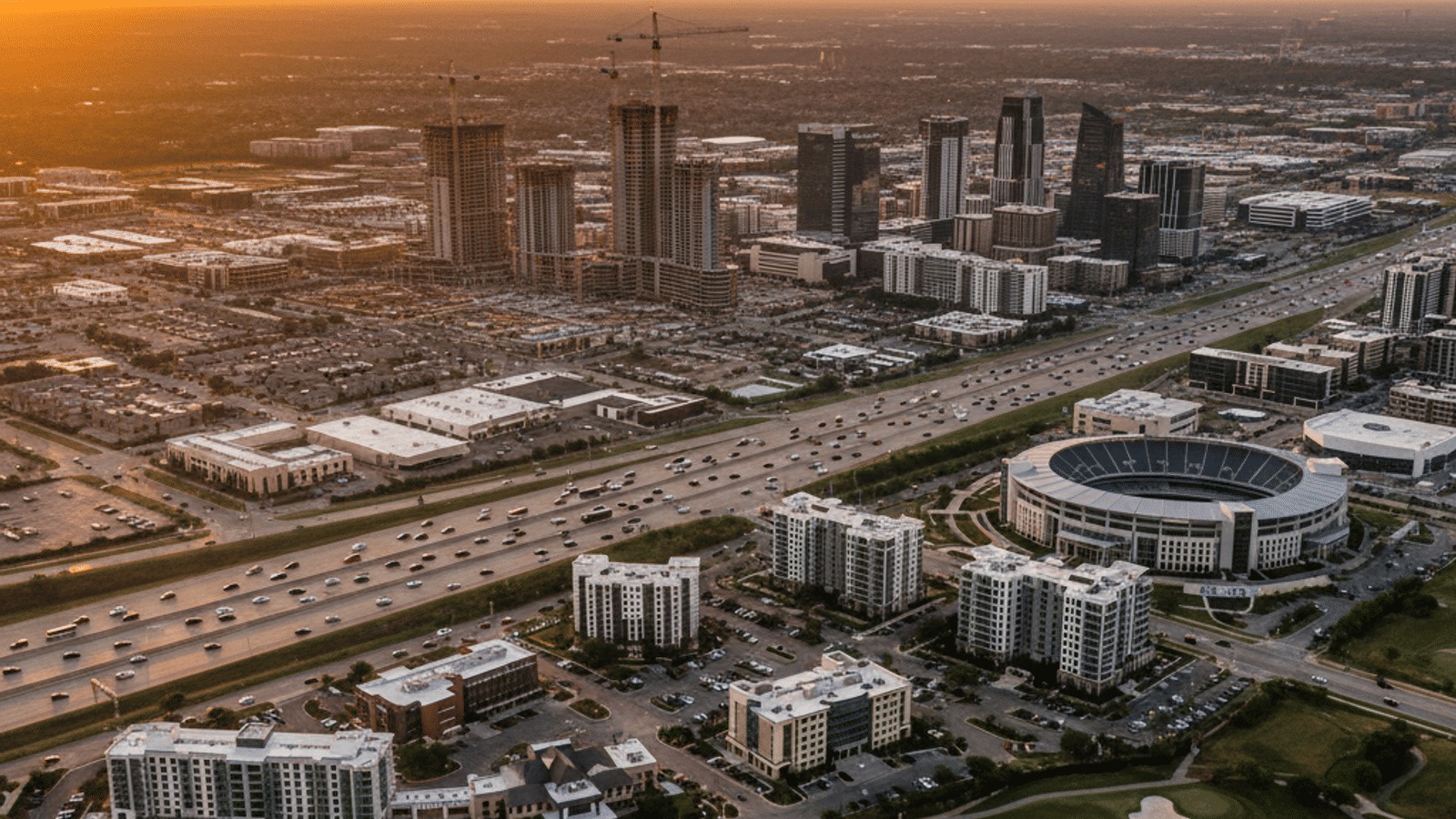
If you haven’t looked at Frisco lately, you might still think of it as that quiet bedroom community north of Plano where land was cheap and traffic was nonexistent. Let me stop you right there—that Frisco is long gone. As we settle into 2026, living in Frisco feels less like a traditional suburb and more like residing in a high-end, resort-style city that happens to be attached to Dallas.
We are seeing a major shift this year. With the PGA headquarters fully established, the Universal Kids Resort gearing up for its big opening, and the massive Fields development reshaping the northern horizon, Frisco has solidified its reputation as the “crown jewel” of the northern suburbs. It is energetic, polished, and undeniably expensive.
However, the real estate market has shifted gears. After the frantic pace of the last few years, 2026 has brought a welcome cooling trend. Buyers finally have room to breathe and negotiate, even if prices remain at a premium. It’s a fascinating time to be looking here—you get the maturity of a city that has “arrived” mixed with the fresh energy of new developments. But the big question remains: is the resort lifestyle worth the highest price tag in the metroplex? Let’s break it down.
Pros and Cons of Living in Frisco
Every city has its trade-offs, and Frisco is no exception. When I sit down with clients moving to Frisco, I usually tell them they are paying for the amenities, the safety, and the “newness” of everything. The infrastructure here is modern, the streets are wide, and the landscaping is meticulously manicured.
On the plus side, the amenities are unmatched. You have The Star (the Dallas Cowboys’ world headquarters) which has evolved into a legitimate nightlife and dining district, and the PGA District which offers a golf-centric lifestyle you basically can’t find anywhere else in Texas. Safety ratings consistently remain high, and the job market is incredibly robust, meaning many residents don’t even have to commute down to Dallas anymore.
But we have to talk about the traffic. As the city has filled in, particularly with the explosion of development in the north near the new Fields community, getting around has become a chore. The Dallas North Tollway (DNT) is the main artery, and during rush hour, it can feel more like a parking lot than a highway. You also have to make peace with construction noise. Even though the southern part of the city is built out, the northern sector is a symphony of jackhammers and backup beepers as commercial and residential projects race to completion.
At a Glance:
- The Wins: Incredible amenities like The Star and PGA District, top-tier safety, and modern infrastructure.
- The Schools: Frisco ISD still maintains its “small school” feel for the most part, though things are evolving (more on that later).
- The Trade-offs: Cost of living is significantly higher than neighbors like Plano or McKinney.
- The Headache: Traffic congestion on the DNT is real, and construction is a constant companion in the north.
Frisco Cost of Living & Real Estate Market (2026 Update)
Let’s talk numbers, because this is usually the biggest hurdle for new residents. For a long time, Frisco was a seller’s paradise, but 2026 is telling a different story. The market has softened. We aren’t seeing the wild bidding wars of the early 2020s. Instead, we have a more balanced environment where buyers can actually ask for repairs or concessions.
Currently, the median home price is hovering in the $655,000 to $700,000 range. While that sounds high—and it is—it’s actually a stabilization from the peak. This gives you, the buyer, a bit more leverage. You can find stunning homes in that range, but if you are looking for new construction in the premier developments, you should be prepared to go significantly higher.
For those not ready to buy, the rental market is robust but pricey. There is high demand for luxury apartments, especially walkable units near The Star and Frisco Square. You’re paying for the convenience of walking to coffee shops and workspaces, and the rates reflect that.
Taxes and Utilities
The elephant in the room in Texas is always property taxes. Since we don’t have a state income tax, the local governments lean heavily on property owners. In Frisco, you can expect a tax rate generally between 1.8% and 2.2%. This varies significantly depending on if you are in a newer development with a MUD (Municipal Utility District) tax or an older, established neighborhood.
There is some good news this year, though. The city adopted a full 20% homestead exemption for the 2026 fiscal year. That’s the maximum allowed by state law, and while it might only save you about $120 a year on the city portion of your taxes, every little bit helps when you’re budgeting.
Don’t forget to factor in your “hidden” costs. Commuting via the DNT adds up quickly in tolls—easily a few hundred dollars a month if you drive daily. And with our Texas summers, keeping a 3,000-square-foot home cool can lead to some eye-watering electricity bills from June through September.
Best Neighborhoods & Master-Planned Communities
Frisco is essentially a collection of master-planned communities, each with its own vibe. When you’re looking at fields Frisco community guide materials, it can get overwhelming, so I like to categorize them by lifestyle. You have the established luxury of the “old guard” and the flashy appeal of the new northern developments.
The New “It” Factor: Fields Frisco
If you want to be where the action is in 2026, you are looking at Fields. This is a massive 2,500-acre development that is practically a city within a city. The buzz right now is all about “The Preserve,” which offers high-end luxury lots, and “Fields West.” Vertical construction on Fields West started late last year, and it is positioned to be the new commercial core—think of it as Frisco’s answer to Legacy West. It’s fresh, it’s expensive, and it’s where everyone wants to be.
Established Luxury
If you prefer mature trees and quiet streets over construction dust, neighborhoods like Starwood and Newman Village are your best bet. These are gated communities with custom homes that have stood the test of time. You get a sense of privacy here that is hard to find in the newer, denser subdivisions. The landscaping is lush, the HOAs are strict (in a good way, usually), and the homes have unique architectural character.
Resort-Style Living
For those who want their neighborhood to feel like a vacation, Phillips Creek Ranch and The Grove are the heavy hitters. These communities were designed with socialization in mind. We’re talking extensive trail systems, multiple community pools, fitness centers, and social calendars packed with events. If you are looking for Phillips Creek Ranch homes, you are generally looking for that connected, active lifestyle where neighbors know each other from the splash pad or the community gym.
Golf Course Living
Finally, you can’t talk about Frisco without mentioning Stonebriar. This is country club living at its finest. It feels a bit more traditional and settled than the PGA District, offering a classic golf course environment with easy access to the Stonebriar Centre and the highway.
Frisco ISD: Schools, Sports, and 2026 Changes
For many of my clients, the schools are the number one driver for moving here. Frisco Independent School District (FISD) has a stellar reputation, consistently ranking near the top in Texas. They have historically operated on a “small school model,” meaning they preferred to build more high schools with smaller student bodies rather than a few massive mega-schools. The logic was simple: smaller schools mean more kids get to make the varsity team, lead the debate club, or get the lead in the play.
However, 2026 has brought a major shake-up. In a controversial move this January, it was announced that Wakeland High School is moving to the 6A classification. This challenges that long-held philosophy and puts Wakeland in a much more competitive bracket for sports and academics. It’s a hot topic at PTA meetings right now, as parents adjust to what this means for student opportunities.
Despite the shifts, the district remains a powerhouse. The youth sports culture here is intense—Friday night lights are a religion, and soccer at Toyota Stadium is a big deal. The fine arts programs are equally supported, so whether your kid is a linebacker or a violinist, they will have world-class facilities.
We also have great proximity to higher education now, with the University of North Texas at Frisco and Collin College offering growing campuses, which adds a layer of educational depth to the city that wasn’t here a decade ago.
Job Market & Commuting
Frisco isn’t just a place to sleep; it’s a place to work. The economic engine here is humming. Major employers like T-Mobile, the PGA of America, and Keurig Dr Pepper have large operations right in our backyard. Plus, you are just a stone’s throw from the Toyota North America headquarters and Liberty Mutual in nearby Plano.
For remote or hybrid workers, the infrastructure is ready for you. High-speed fiber internet is standard in almost every neighborhood, making the home office life seamless.
If you do have to commute to Downtown Dallas, you need to be realistic about the drive. The Dallas North Tollway is your lifeline, but it is also a bottleneck. On a good day with no accidents, you might make it in 35 minutes. In peak traffic? Plan for 50 minutes or more. It is a sleek, well-maintained road, but the volume of cars in 2026 is higher than ever.
Lifestyle: Dining, Shopping, & Entertainment
They call it “Sports City USA” for a reason, but the lifestyle appeal goes beyond just watching a game. The Star District has really matured into a hub for dining and nightlife. It’s not just about watching the Cowboys practice; it’s about grabbing a high-end steak, catching a concert, or just people-watching on a Friday night.
Then there is the PGA District. This is effectively the “Silicon Valley of Golf.” The Omni resort is fully active, the courses are pristine, and the retail and dining options there have created a new center of gravity for the city. It’s a great place to spend a Saturday, even if you don’t play golf.
Retail therapy is easy to find, with Stonebriar Centre remaining a major regional draw. But all eyes are on the upcoming Fields West to see how it reshapes the shopping landscape. And we have to mention the Universal Kids Resort. It is opening later this year, and while it’s going to be amazing for tourism, locals are bracing for the impact it will have on traffic. It’s definitely something to keep in mind when choosing which side of the tollway you want to live on.
Weather: What to Expect
If you are relocating from out of state, the weather is the final piece of the puzzle. We have four seasons, but they aren’t equal. Summers are hot—expect temperatures consistently over 100°F from July through August. It’s a dry-ish heat, but it is intense. Winters are generally mild, but we do get the occasional freeze.
Spring is beautiful but volatile. This is storm season, and hail is a real risk. When you are looking at homes, pay attention to the age of the roof and ask about hail-resistant materials. A good HVAC system isn’t a luxury here; it’s a life support system.
Frequently Asked Questions
Is Frisco TX expensive to live in?
Yes, compared to the rest of the DFW metroplex, Frisco is at the top of the price bracket. While you get incredible amenities and safety for your money, housing costs and property taxes are higher here than in neighboring cities.
What is the new Fields development in Frisco?
Fields is a massive 2,500-acre master-planned community in north Frisco that is being called a “city within a city.” It includes luxury residential areas like The Preserve and a major commercial hub called Fields West that will rival Legacy West.
Does Frisco TX have good schools?
Absolutely. Frisco ISD is consistently rated as one of the best districts in Texas, known for high academic standards and robust extracurriculars. However, parents should be aware of recent changes, such as Wakeland High School moving to the 6A classification in 2026.
How far is Frisco from Dallas/Fort Worth Airport (DFW)?
It typically takes about 25 to 35 minutes to get to DFW Airport from Frisco, depending on where you live in the city and the time of day. The connection via Sam Rayburn Tollway makes it a relatively straight shot for business travelers.
Is Frisco or Plano better for living?
It depends on what you value. Frisco offers a newer, flashier “resort” feel with more modern construction, while Plano is more established with mature trees, slightly lower housing costs, and a more central location to Dallas.