
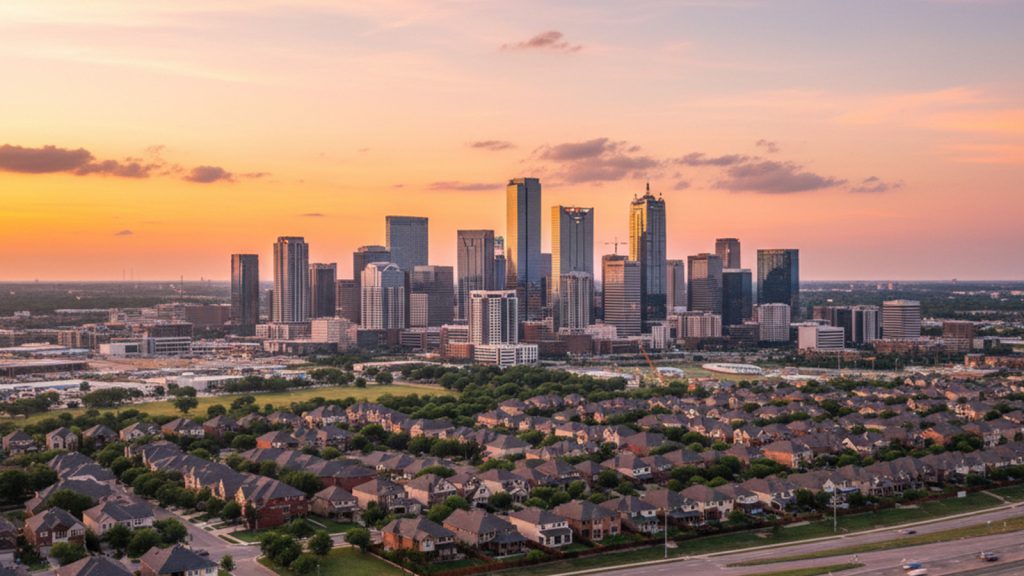
If you have been keeping an eye on the fastest-growing cities in the U.S., you have almost certainly heard of Frisco. Located just about 25 minutes north of Dallas, this city has transformed from a quiet railroad stop into a powerhouse destination often called “Sports City USA.”
But the headlines don’t tell you the whole story. With a population now pushing past 225,000, the secret is definitely out. Frisco frequently lands at the top of national lists for safety and quality of life, yet that popularity comes with specific price tags and logistical realities.
The goal of this guide isn’t to sell you a house—it is to give you a transparent look at what living here actually looks like in 2026. We will cover the real costs, the neighborhood vibes, and the lifestyle shifts you can expect if you decide to make the move.
Living in Frisco, TX: Pros and Cons
Before we dive deep into the data, let’s look at the high-level trade-offs. Every city has its pain points, and Frisco is no exception. Here is a quick snapshot of what residents love and what they gripe about.
The Pros:
- Top-Tier Education: Access to highly rated schools and a unique district model.
- Safety: Consistently ranked as one of the safest cities in America.
- Infrastructure: Modern roads, new master-planned communities, and excellent city services.
- Tax Benefits: No state income tax keeps more money in your paycheck.
The Cons:
- Cost of Living: Housing and general costs are higher than the Texas average.
- Traffic: While roads are modern, congestion is real, and you will likely rely on tollways (DNT and SRT).
- Property Taxes: The trade-off for no income tax is a higher property tax bill.
Cost of Living & Real Estate Market Trends (2026)
Let’s get straight to the numbers. A few years ago, the market here was in a frenzy, but as we move through 2026, we are seeing a shift toward a more balanced market. Inventory has increased significantly, giving buyers a bit more breathing room than they had in previous years.
However, “balanced” doesn’t necessarily mean cheap. The median home price in Frisco generally hovers between $650,000 and $699,000. While you can find smaller starter homes below this range, competition for them remains steady. If you are looking to rent before you buy, expect to budget around $1,900 or more per month for a standard apartment, with single-family rental homes commanding significantly more.
The biggest financial surprise for newcomers—especially those moving from the coasts—is the tax structure. Texas has no state income tax, which sounds amazing until you see your property tax bill. In Frisco, the property tax rate typically lands between 1.8% and 2.17%, depending on your specific county (Collin or Denton) and if you are in a MUD (Municipal Utility District).
For a home valued at $600,000, you need to budget heavily for that annual tax bill. When calculating your monthly payments, do not forget to factor this in, as it can add several hundred dollars to your mortgage payment.
Is Frisco Safe? Crime Rates & Statistics
One of the primary drivers for relocation to this area is safety. You don’t have to just take a local’s word for it; the data backs it up. Recent rankings from SmartAsset listed Frisco as the #1 Safest City, and MoneyGeek placed it at #2.
When you look at the FBI and NIBRS data, the violent crime rate here is exceptionally low—approximately 90% lower than comparable cities of this size. We are talking about roughly 86 to 95 incidents per 100,000 residents, which is a fraction of the national average.
Property crime is also lower than the national average, though it does happen. The most common issue reported is car break-ins, usually involving unlocked vehicles. The local culture promotes a “lock, take, and hide” mentality. Much of this safety is attributed to a well-funded police department and high levels of community engagement, where neighbors actively look out for one another.
Best Neighborhoods in Frisco, TX
Frisco is geographically large, and the “vibe” changes depending on which pocket you choose. Most housing here is found in Master-Planned Communities (MPCs), which are designed with parks, pools, and walking trails woven into the neighborhood.
Here is how the different areas break down by lifestyle:
- Luxury & Privacy: If you are looking for custom builds and gated security, Starwood and Newman Village are the premier choices. These areas feature higher price points and often include guard-gated entries.
- Amenity-Rich Communities: Phillips Creek Ranch and The Grove Frisco are massive developments known for their lifestyle centers. Phillips Creek Ranch, for example, boasts over 100 acres of green space, multiple pools, and extensive paved trails.
- New Development: Fields Frisco is the newest major project. Located near the new PGA headquarters, this area is rapidly developing and offers modern, new-construction homes.
- Golf Course Living: For a more established, country-club feel, Stonebriar is the go-to. It is located right around the Stonebriar Country Club and offers mature trees and easy access to the highway.
If you are trying to decide between these areas, it is worth reading a detailed Phillips Creek Ranch Guide or looking specifically for Newman Village Homes to see the architectural differences.
Education: Frisco Independent School District (FISD)
Education is often the deciding factor for people moving here. Frisco ISD does things differently than many other large Texas districts. They utilize a “Small School Model.”
Instead of building massive high schools with 4,000+ students, FISD prefers to build more, smaller high schools. The philosophy is that smaller student bodies give more students the opportunity to participate in extracurriculars—whether that is varsity football, band, theater, or debate.
The results speak for themselves. The district is consistently “A” rated by the Texas Education Agency (TEA). Beyond K-12, the city is also home to higher education opportunities, including a University of North Texas (UNT) campus and Collin College, making lifelong learning accessible. Most neighborhoods are designed so that elementary and middle schools are within walking or biking distance, creating a tight-knit community feel around the campuses.
Job Market & Major Employers
While many people commute from Frisco to Dallas or Plano, the local economy has boomed to the point where you might never need to leave the city limits for work. The job market here has diversified well beyond retail and service.
Major headquarters have relocated here, bringing thousands of corporate jobs. Keurig Dr Pepper, the PGA of America, and Complexity Gaming all call Frisco home. Of course, the Dallas Cowboys world headquarters at The Star is a major economic engine for the area as well.
If you do need to commute, you are in a prime location. Frisco borders the “Platinum Corridor” along the Dallas North Tollway. This puts you just minutes away from Legacy West in Plano, which houses giants like Toyota North America, Liberty Mutual, and JPMorgan Chase. Growth sectors here are heavily leaning toward tech, sports management, and healthcare.
Retiring in Frisco: What to Know
We are seeing a significant increase in retirees moving to the area to be closer to children and grandchildren. If you are considering retiring here, there are specific communities designed for you, such as Frisco Lakes (a Del Webb community), which offers 55+ living with low-maintenance homes and active social calendars.
Healthcare access is excellent, with major facilities like Baylor Scott & White and Texas Health located directly in the city.
However, retirees on a fixed income need to be very aware of the property tax situation. The good news is that Texas offers an “Over 65 Homestead Exemption.” Once you turn 65 and file this exemption, the school district portion of your property taxes (usually the largest chunk) is frozen. It will not go up, even if your home value doubles. This tax freeze is a critical financial tool for long-term affordability.
Things to Do: Sports City USA & Entertainment
You will never be bored here. The city has leaned hard into its “Sports City USA” moniker.
- Sports: You can watch the Dallas Cowboys practice at The Star, catch an FC Dallas soccer match at Toyota Stadium, or watch the Frisco RoughRiders (minor league baseball) at Riders Field, which features a lazy river in the outfield. The new PGA Frisco district adds world-class golf and dining to the mix.
- Culture: It’s not just sports. The National Videogame Museum and the Frisco Discovery Center offer great indoor activities.
- Shopping: Stonebriar Centre is one of the largest malls in North Texas, and the surrounding area is packed with boutiques and furniture stores.
- Outdoors: For fresh air, Frisco Commons Park and Central Park offer expansive playgrounds, amphitheaters, and walking paths.
Frequently Asked Questions
Is Frisco, TX a good place to live?
Yes, it is widely considered one of the best places to live in the U.S. due to its explosive growth, modern infrastructure, and top-tier schools. The combination of low crime rates and high community engagement makes it highly desirable for those seeking a safe, active lifestyle.
What is a good salary to live in Frisco, TX?
Given housing costs and general inflation, a household income of $100,000 or more is generally recommended to live comfortably. This allows you to manage the costs of a median-priced home ($650,000+) and property taxes without being house-poor.
Does Frisco, TX get tornadoes?
Yes, Frisco is located in North Texas, which is part of Tornado Alley. While direct hits are statistically rare, severe weather and siren warnings are a normal part of spring living here, and most residents rely on weather apps and local alerts to stay safe.
How far is Frisco from Dallas?
Frisco is approximately 25 miles north of downtown Dallas. Without traffic, it is about a 30-minute drive, but during rush hour, commutes can easily stretch to 45 minutes or an hour depending on congestion on the Dallas North Tollway.