
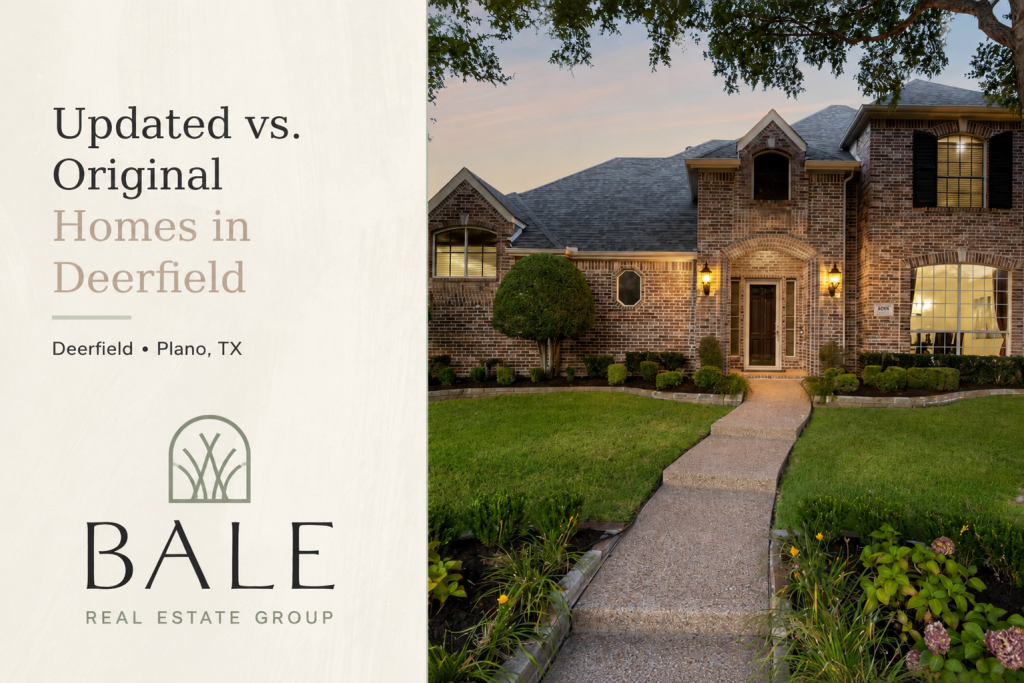
Updated vs. Original Homes in Deerfield
The Direct Answer
Updated and original Deerfield homes should be compared by the work completed, current condition, usable layout and costs you would face after purchase. The label “updated” does not establish renovation quality or major-system age.
Define what updated actually includes
Ask for the scope and available records of improvements. Compare a finished home with an original property plus realistic project costs, disruption and uncertainty. Include features that are difficult to change, such as the lot and basic layout.
What Is Considered an Updated Deerfield Home?
An updated home may include improvements completed over many different time periods and to very different standards.
Common updates may include:
- Kitchen renovations
- Bathroom renovations
- New flooring
- Updated lighting
- Interior paint
- Updated windows
- Newer HVAC equipment
- Roof replacement
- Updated plumbing fixtures
- Electrical improvements
- Pool renovations
- Outdoor-living improvements
- Landscaping enhancements
The word “updated” should never be treated as a complete description of a home’s condition.
Buyers should understand exactly what was improved, when the work was completed, whether major systems were included, and how well the renovation was executed.
What Is an Original or Partially Updated Home?
An original Deerfield home may still have many of its earlier finishes, systems, or design features.
That does not automatically mean the home is in poor condition.
A well-maintained original home may provide a strong foundation for a buyer who wants to personalize the property over time.
Original or partially updated homes may include:
- Older cabinetry
- Earlier countertop materials
- Original bathroom finishes
- Traditional flooring
- Older lighting
- Original windows
- Older appliances
- Earlier pool finishes
- Older mechanical systems
The key is understanding which items are simply cosmetic and which may require significant future investment.
Why Updated Homes Often Cost More
Buyers are often willing to pay more for a property that requires less immediate work.
A professionally renovated home can reduce the time, uncertainty, and disruption associated with completing major improvements after closing.
The premium buyers pay may reflect:
- Renovation costs already incurred
- Time saved
- Reduced construction disruption
- Current design appeal
- Improved functionality
- Newer systems
- Greater move-in readiness
However, a higher asking price does not automatically mean the home represents better value.
Buyers should compare the premium being charged with the actual quality and scope of the improvements.
Understanding the Real Cost of Renovating an Original Home
A lower purchase price can be appealing, but buyers should calculate the complete cost of bringing the home to the condition they want.
Potential renovation expenses may include:
- Kitchen remodeling
- Bathroom remodeling
- Flooring
- Interior and exterior paint
- Lighting
- Windows
- Roof replacement
- HVAC replacement
- Plumbing work
- Electrical work
- Pool renovation
- Landscaping
- Outdoor living
Buyers should also account for contingency funds because renovation projects can uncover additional issues once work begins.
Renovation Quality Matters
Not all renovations are equal.
A home may photograph beautifully while still containing workmanship, design, or system issues that deserve closer evaluation.
Buyers should consider:
- Quality of materials
- Quality of installation
- Consistency throughout the home
- Functionality of the new layout
- Whether structural changes were made
- Whether permits were required
- Age of the renovation
- Condition of systems not included in the renovation
A cosmetic renovation can improve appearance without addressing older mechanical systems, plumbing, electrical components, windows, drainage, or roofing.
The total condition of the property matters more than finishes alone.
Home Inspections Are Important for Both Updated and Original Homes
A recently renovated home should not automatically be assumed to be free of concerns.
Likewise, an original home should not automatically be assumed to require extensive repairs.
A professional home inspection can help buyers better understand:
- Roof condition
- Foundation performance
- HVAC systems
- Electrical systems
- Plumbing
- Drainage
- Windows
- Attic and insulation
- Pool systems
- Visible renovation workmanship
Consider How Renovations Will Be Funded
Buyers choosing an original or partially updated home should think about how improvements will fit into their overall financial plan.
Potential considerations include:
- Cash reserves after closing
- Future renovation savings
- Financing options
- Timing of projects
- Whether improvements are essential or optional
- Emergency reserves
- Expected ownership period
Using every available dollar for the purchase can make future improvements more difficult.
Buyers should evaluate the purchase price and renovation budget together rather than as separate decisions.
Renovation Requires More Than Money
Renovation also requires time, planning, decision-making, contractor coordination, and tolerance for disruption.
Before choosing a project home, consider:
- How quickly you want the work completed
- Whether you can live in the home during construction
- How comfortable you are selecting finishes
- Whether you have trusted contractors
- How much project management you want to handle
- Whether delays would create stress
For some buyers, paying more for a completed home is worth avoiding months of renovation.
For others, the ability to create a personalized home is part of the appeal.
An Original Home Can Offer More Personalization
Buying a more original property gives buyers the opportunity to make design decisions based on their own preferences rather than paying for another owner’s renovation choices.
That may include:
- Kitchen layout
- Cabinetry
- Countertops
- Flooring
- Lighting
- Bathroom design
- Paint colors
- Outdoor living
- Pool finishes
- Landscaping
The tradeoff is that personalization requires both capital and execution.
Deerfield FAQs
What should I ask about an updated Deerfield listing?
Ask which components were changed, when the work occurred and what records are available. Distinguish finishes from structural, electrical, plumbing and mechanical work.
Can an original Deerfield home be the better fit?
Yes, when its layout, location, condition and realistic improvement plan fit your priorities and budget. Compare the complete ownership experience.
Discuss Your Deerfield Plans
Gary and Linda Bale can help you evaluate your options and plan at your own pace. Clarity First. Pressure Never.