
Updated on: October 29, 2026
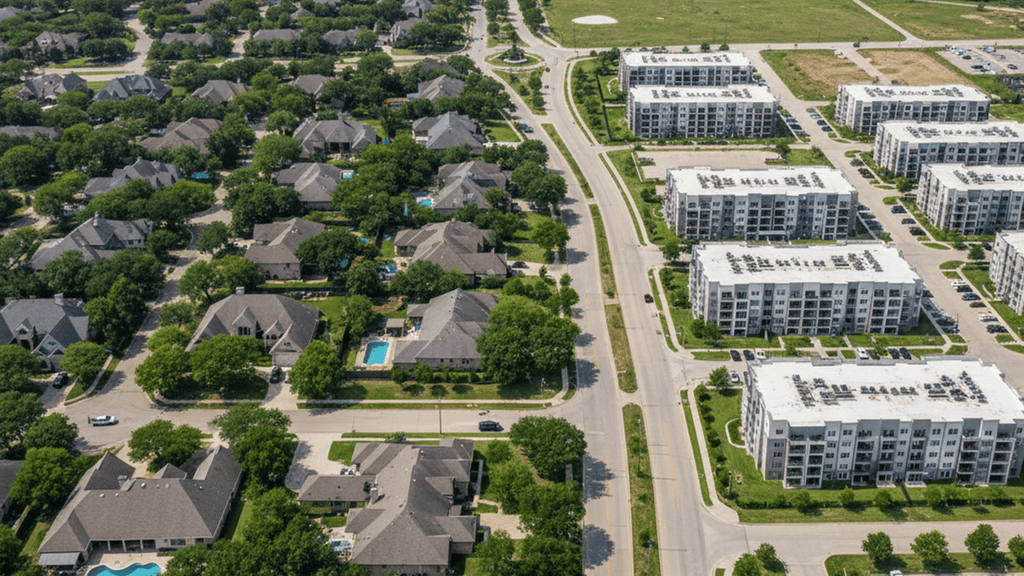
Moving to Plano, TX puts you in a large Dallas-area city with major corporate job centers, DART rail and an extensive park system.
Key takeaway
Plano offers major job centers, DART rail to Dallas, an extensive park system and a wide range of housing. The trade-offs are higher home prices and property taxes than many Texas cities, offset by no state income tax, plus summer heat, hail and tolls. Check the assigned school for the exact address before you lease or buy, and meet the Texas driver license and vehicle registration deadlines after you arrive.
Who this guide is for
You are relocating to Plano from another city or state and deciding where to live and what to set up once you get here.
Moving to Plano at a glance
- Median sale price $490,000 (March 2026); average rent $1,695.
- Combined property tax about $1.70 per $100; no state income tax.
- Register your vehicle within 30 days; get a Texas license within 90.
- Schools follow the exact address; some Plano addresses aren’t Plano ISD.
- DART Red and Orange lines run from Downtown Plano to Dallas.
Why people are moving to Plano
Plano has about 292,600 residents, according to U.S. Census Bureau American Community Survey estimates for 2020 to 2024. It sits north of Dallas in the Dallas-Fort Worth metro.
Is Plano affordable? What to budget for
Plano’s overall cost of living runs higher than in many smaller Texas cities, mostly because of home prices and property taxes. Texas has no state income tax, which offsets part of that higher housing and tax bill.
- Housing: Plano’s median sale price was $490,000 in March 2026, down 10.9% from a year earlier. Average apartment rent was $1,695 as of September 2026, slightly below the year before.
- Property taxes: for tax year 2026, a Plano ISD address in Collin County carries a combined rate of about $1.7033 per $100 of taxable value. Your actual bill depends on the appraised value and the exemptions you qualify for, such as the homestead exemption.
- Cooling costs: air conditioning pushes electricity bills up through the summer months, so plan for your highest utility bills then.
- HOA dues: many master-planned neighborhoods charge them, so ask for the HOA fee and what it covers before you commit to a home.
Renting vs. buying when you first move
Renting first makes sense when you have not driven the commute yet, your start date is fixed, or you need time to compare areas. A lease lets you learn the city before you commit to an address.
Rents within Plano shift with a building’s distance from the highways and tollways, the school district that serves it and the amenities it offers. Compare listings on those points rather than against the citywide average alone.
The home types you will find:
- Single-family homes in established neighborhoods
- Master-planned communities with shared pools and amenities
- Townhomes and condos, concentrated around Legacy West and the Shops at Legacy
- Apartments near Downtown Plano’s rail station, for walking to shops and transit, and near the Legacy offices, for a short trip to work
- New construction
To time a purchase with your move:
- Build the closing period into your start date.
- Take a short-term lease if the dates don’t line up.
- Schedule the sale of your current home so both closings fit.
Housing market conditions change month to month, so ask for recent sales near any home you like before you set an offer price. For new-home developments, get a firm completion date from the builder, since an unfinished home can miss your move-in date.
Plano areas: West, Central, East and Downtown
The parts of the city differ mainly in housing age, amenities and access to roads, rail and jobs. East Plano developed first and West Plano more recently. Home age and size differ by area, and prices differ with them.
- West Plano: generally newer homes and master-planned communities, with Dallas North Tollway access. It also holds the Legacy business and mixed-use area, where offices sit alongside shopping, dining and housing. Willow Bend is in west Plano.
- Central Plano: a mix of older and newer housing, with access to US-75 and the President George Bush Turnpike.
- East Plano: established neighborhoods with generally older homes and mature trees, close to historic Downtown Plano and Oak Point Park, with some new infill construction.
- Downtown Plano: the historic district and arts area, with apartments and rail access, ringed by older neighborhoods. Look in those surrounding streets if you want a house within walking distance of the district and station.
Within each area, individual neighborhoods vary in lot size, HOA rules and home age, so tour the streets you are considering at different times of day. If you are also weighing Plano vs. Allen or Plano vs. McKinney, compare each city on the same points: housing age, commute to your job and park access.
Where the jobs are
Plano’s main employment areas are:
- The Legacy Business Park in west Plano, with corporate campuses for Toyota, Frito-Lay, JPMorgan Chase and Capital One.
- Healthcare employers, including Medical City Plano and Texas Health facilities.
- Office corridors along the Dallas North Tollway and US-75.
A Legacy-area job makes west Plano and Tollway-adjacent housing the shorter commutes. The City of Plano is itself an employer and posts openings on its official careers page. Salaries vary widely across Plano’s industries, so compare an offer against your housing budget before you choose an area.
Commuting and getting around
Plano’s main roads are the Dallas North Tollway, the President George Bush Turnpike, US-75 and the Sam Rayburn Tollway. Toll roads bill by TollTag or at higher pay-by-mail rates. If you will use the tollways, set up a TollTag and budget for tolls.
Both DART rail lines stop at the Downtown Plano station on their way into downtown Dallas, and DART buses cover local trips. For flights, you will drive or take transit to Dallas Fort Worth International Airport.
The trade-off for Dallas commuters is this: rail-adjacent housing near Downtown Plano lets you skip rush-hour driving, while most other parts of the city mean driving and paying tolls. For short trips around town, rideshare and cycling can fill gaps that bus routes don’t cover.
Schools and enrollment for new residents
The Plano Independent School District serves most of the city, but assigned schools follow the home address, not the city name. Take these steps before you lease or buy:
- Check the address: Plano ISD’s SchoolFinder tool on the district’s website shows the assigned elementary, middle, high school and senior high campuses for a home address, with links to boundary maps.
- Confirm the district: parts of Plano are served by Frisco ISD and Allen ISD, and Plano ISD campuses extend into neighboring Allen, so district lines don’t match city limits.
- Know the grade structure: six high schools (Jasper, Shepton, Williams, Clark, Vines and McMillen) serve grades 9 and 10. They feed four senior high schools (Plano Senior, Plano West, Plano East and Academy) for grades 11 and 12. Academy High School and the IB program at Plano East run grades 9 through 12.
- Gather documents: bring the following for the student:
- An original or certified birth certificate, or other proof of identity (stricter rules apply for children under 11).
- A current immunization record signed by a physician.
- Proof of residency, such as a current gas or electric bill or the original lease.
- The latest report card or withdrawal slip.
Ratings and programs differ campus by campus, so look at the specific schools an address feeds into. For higher education, Collin College has campuses in the area and UT Dallas sits nearby in Richardson.
Lifestyle, parks and things to do
Arbor Hills Nature Preserve in west Plano has hiking trails, off-road cycling paths and an observation tower. In east Plano, Oak Point Park and Nature Preserve is the city’s largest park space, with a lake and trails along the creek. Bob Woodruff Park connects to it and adds fishing piers and pavilions. A citywide trail network and recreation centers fill in between.
For shopping and dining, Legacy West and the Shops at Legacy combine open-air patios and walkable streets, while historic Downtown Plano has its arts district. Restaurants and events in both areas change often, so spend a weekend visiting before you pick a place to live.
Weather and climate in Plano
Plano shares the Dallas-area climate. NOAA’s 1991-2020 normals for Dallas Love Field put the average July and August high near 96°F, with an average January high of 57.7°F and low of 37.9°F. Winters are mild but bring occasional ice and hard freezes, and spring is storm season, with hail and severe thunderstorms.
Practical steps for a mover:
- Insurance: compare homeowners quotes on the wind and hail deductible as well as the premium.
- Roof: have the roof’s age and condition checked during the home inspection.
- Cooling: working air conditioning is essential here. Check the system’s age and condition before you lease or buy, and service it before summer.
- Freezes: find the water shutoff and insulate exposed pipes before cold snaps.
Pros and cons of moving to Plano
Weigh the draws described above against the costs: the housing and tax bill, tolls and rush-hour traffic, a car for most errands, and summer heat and hail.
The Plano Police Department publishes crime data, which is the place to check safety for a specific address. For a fuller sense of day-to-day living in Plano, drive your commute at rush hour and run errands from the address you are considering.
Your Plano moving checklist
Work through these steps in order:
- Book movers: reserve several weeks ahead for summer dates.
- For a cross-state move, verify the mover’s USDOT number and operating authority free on the FMCSA SAFER Company Snapshot.
- For a move within Texas, confirm the mover’s household-goods registration through TxDMV’s carrier search.
- Set up utilities: arrange these before move-in day so service is on when you arrive.
- Electricity: Plano is in a deregulated part of the ERCOT market, so you choose your own retail electricity provider. The provider sells the power and bills you, while Oncor delivers it. Compare plans on the Public Utility Commission of Texas site, Power to Choose.
- Water, sewer and trash: start service through the City of Plano Customer and Utility Services online Start/Stop Service request. Residential accounts pay a deposit per unit.
- Internet: schedule installation once the other services are set.
- Inspect and register your vehicle: in Collin County, the vehicle must pass an emissions inspection before registration; a safety inspection is no longer required. Within 30 days of becoming a Texas resident, apply for title and registration at the county tax assessor-collector’s office. Bring proof of insurance and TxDMV’s Form 130-U.
- Get a Texas driver license: you have 90 days after establishing residency, and you can drive on your valid out-of-state license until then. Book a Texas DPS appointment and bring:
- Proof of identity and lawful presence
- Your Social Security number
- Two Texas residency documents
- Proof of insurance for each vehicle, or a statement that you own none
- Enroll students: once you have a lease or utility bill as proof of residency, complete Plano ISD’s online registration with the documents listed for schools.
- Register to vote: register through the Collin County or Denton County Elections Administration, depending on your address. Your application must be received or postmarked by the 30th day before an election.
- File for the homestead exemption after buying: once you own and live in the home as of January 1, file with the Collin Central Appraisal District by April 30 of that tax year. Homes in the Denton County portion file with the Denton Central Appraisal District. Late filings are generally accepted for up to two years after the delinquency date.
Relocating with Bale Real Estate Group
Buying in the Plano real estate market takes more than just watching prices. The Bale Real Estate Group helps buyers and sellers understand how to position themselves based on current competition, not just past sales. From identifying the right neighborhoods to negotiating stronger terms, their approach is focused on preparation, strategy, and results.
If you are planning a move to Plano, I’d be glad to help you compare areas and line up your purchase with your move. Contact the team to start the conversation.
Frequently asked questions about moving to Plano
How long is the commute from Plano to Downtown Dallas?
The DART train ride from the Downtown Plano station to downtown Dallas takes about 40 minutes. Driving time on US-75 or the Dallas North Tollway depends on where you start and whether you travel at rush hour.
Which county is Plano in?
Plano is located in Collin and Denton Counties, with a small portion of the city in Denton County. Your county decides where you register your vehicle and register to vote, and which appraisal district handles your homestead exemption.
Do I need a car to live in Plano?
Most households rely on a car, because errands and many job sites are spread across the city. DART rail and buses work for Dallas commutes and some local trips, especially from homes near the Downtown Plano station and other stops.
When is the best time of year to move to Plano?
Summer is the busiest moving season and the hottest, so plan for heat on moving day. If you are moving with school-age students, aim to arrive before the school year starts. Weekday and mid-month dates are usually easier to book.
Planning to sell? Learn how Bale Real Estate Group helps sellers prepare, price, and market their homes. Why Sellers Hire Bale Real Estate Group.
Planning to buy? Learn how Bale Real Estate Group helps buyers evaluate homes and complete their purchase. Why Buyers Choose Bale Real Estate Group.
Sources
Census Reporter: Plano, TX profile
Dallas Express: Plano home values
Collin County property tax rates
Willow Bend community information
Collin County elementary attendance zones