
Choosing where to buy a home in the Dallas-Fort Worth metroplex often comes down to comparing two neighboring powerhouses. Buyers looking at Plano TX vs Frisco quickly realize both cities offer extensive amenities, strong economic foundations, and highly rated infrastructure.
While they share a border along the Sam Rayburn Tollway, the daily experience in each city feels distinct. Plano leans on its established history and mature neighborhoods. Frisco continues to expand with massive new developments and expansive sports headquarters.
Deciding between the two requires looking past the surface appeal. Buyers need to weigh the differences in commute times, property tax rates, and the availability of new construction. Understanding these local nuances is the key to making a sound real estate investment.
The final choice depends on prioritizing specific daily conveniences. Whether a buyer values a shorter drive to downtown or the pristine feel of a brand-new subdivision, both locations offer strong real estate fundamentals.
Plano vs. Frisco Real Estate and Housing Trends
The housing stock in these two cities reflects their different timelines of rapid growth. Buyers will notice a sharp contrast in architectural styles, lot sizes, and neighborhood structures.
Plano features a massive inventory of homes built between the 1980s and early 2000s. These established neighborhoods often provide larger lots, mature tree canopies, and a distinct lack of mandatory homeowners associations in certain zip codes. This older housing stock appeals to buyers who want custom architecture rather than uniform tract homes.
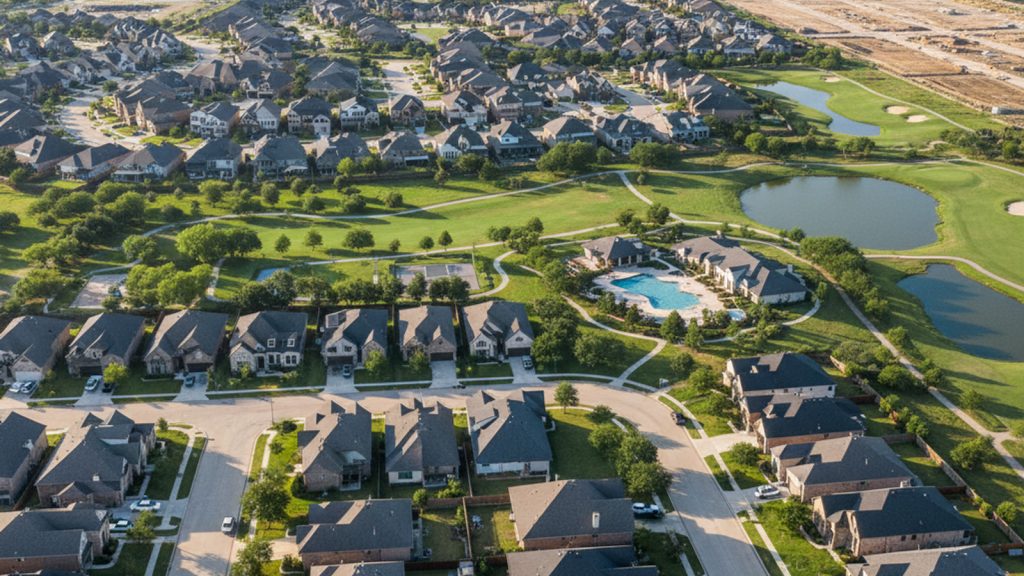
Frisco is dominated by newer construction and expansive master-planned communities. Nearly every residential development built here in the last two decades includes an active HOA. These associations maintain neighborhood pools, parks, and strict architectural standards.
Median home prices currently reflect Frisco’s newer inventory and high demand. Buyers can expect median prices in Plano to hover around $508,000 to $540,000. Frisco commands a higher entry point of approximately $580,000 to $645,000.
This $40,000 to $100,000 gap directly impacts monthly carrying costs for buyers. Those searching for homes for sale in Plano often find their budget stretches further. Frisco buyers generally pay a premium for modern floor plans and community amenities.
Location within each city also dictates property values. West Plano historically commands higher prices than East Plano due to its proximity to the Dallas North Tollway. Frisco’s rapid northward expansion means the newest construction is often found closer to the US-380 corridor.
Cost of Living and Property Tax Comparison
Texas levies no state income tax, making property taxes a crucial factor in any housing budget. Buyers relocating from out of state are often surprised by how heavily these local assessments impact their monthly mortgage payments.
The base city tax rates are quite competitive between the two municipalities. Plano currently assesses a city tax rate of approximately 0.4376 per $100 of property valuation. Frisco sits slightly lower at roughly 0.4255 per $100.
The city rate is only one piece of the puzzle. The total effective property tax rate depends heavily on the specific school district and county assessments. Homes in this region fall into either Collin County or Denton County, which alters the final calculation.
Total effective tax rates generally range between 1.37% and 2.2% of the assessed home value. Buyers must verify the exact tax rate of a specific property before making an offer.
Crossing a neighborhood street can sometimes alter the annual tax bill by thousands of dollars.
Buyers looking at new construction in Frisco should ask about Public Improvement Districts or Municipal Utility Districts. These special tax assessments are common in newer developments to fund local infrastructure. They can add a noticeable amount to the annual tax burden on top of the standard city and county rates.
Commuting to Downtown Dallas and DFW Airport
Daily travel times are a major deciding factor for commuters working in central Dallas or traveling frequently. The highway infrastructure in North Texas is robust, but geographic location still dictates the daily drive.
Buyers must carefully map their specific routes before choosing a zip code.
Plano holds a distinct geographic advantage for anyone commuting into Downtown Dallas. Located roughly 20 miles north of the city center, residents can typically reach downtown in 30 to 45 minutes via the Dallas North Tollway or US-75.
Plano also offers access to the DART light rail system, providing a rare car-free commuting option in North Texas. This transit connection is a significant asset for buyers who want to avoid toll road traffic entirely.
Frisco sits further north, adding roughly seven miles to the downtown commute. The drive from Frisco to Downtown Dallas spans about 27 miles and generally takes 35 to 50 minutes. This travel time depends heavily on rush hour congestion along the Dallas North Tollway.
Both cities offer excellent access to DFW International Airport via the Sam Rayburn Tollway. Residents in either location can expect a relatively smooth 25-mile drive. This puts the airport within a convenient 30 to 40-minute reach.
Toll road expenses are another factor commuters must budget for in North Texas. Driving the Dallas North Tollway or Sam Rayburn Tollway daily requires an active TollTag. These fees can quickly add up to hundreds of dollars per month for a household with two commuting vehicles.
Educational Infrastructure: Plano ISD vs. Frisco ISD
The public school systems in both cities are massive operations that draw buyers to the region. While both districts offer extensive facilities, their approaches to campus size and student distribution differ significantly.
Plano Independent School District operates as an established, mature district serving approximately 44,000 to 50,000 students. The district spans 73 campuses and is highly regarded for its specialized academic programs. Its massive senior high schools offer a vast array of extracurricular activities.
Frisco Independent School District has experienced explosive growth, currently serving around 63,000 students across 77 campuses. To manage this rapid expansion, Frisco ISD adopted a smaller-school model. This structure caps high school enrollment to keep student populations manageable per campus.
This model means Frisco has a higher number of high schools compared to traditional districts of its size. Buyers should also note that school zoning in the Dallas-Fort Worth metroplex frequently crosses city lines.
It is entirely possible to purchase a home within the Plano city limits that is zoned for Frisco ISD, or vice versa. Always verify the specific attendance zones using the district’s official address locator. Relying strictly on the city mailing address can lead to unexpected zoning surprises.
The sheer scale of the athletic and arts facilities in these districts rivals many small colleges. Frisco ISD partners with the Dallas Cowboys to use the indoor stadium at The Star for high school events. Plano ISD utilizes multiple massive district-owned stadiums to host its varsity athletics.
Retail, Dining, and Entertainment Amenities
The sheer volume of commercial development in Collin County means residents rarely need to travel to Dallas for entertainment. Both suburbs boast massive retail hubs and distinct dining districts.
Plano is anchored by Legacy West, a premier mixed-use destination that combines high-end retail with corporate headquarters like Toyota. Just a few miles away, Downtown Plano offers a more historic, walkable atmosphere. This downtown sector features independent restaurants and brick-paved streets.
Frisco counters with an unmatched focus on sports and large-scale entertainment. The Star serves as the world headquarters for the Dallas Cowboys, anchoring a massive district of restaurants, boutiques, and a hotel.
Frisco Square also provides a centralized civic and retail hub located right next to Toyota Stadium. Buyers seeking a highly walkable, modern nightlife scene often gravitate toward Legacy West. Sports enthusiasts find Frisco’s amenities tough to beat.
The retail borders between these North Texas suburbs are increasingly blurred. Residents in northern Frisco often cross over to enjoy the historic downtown square in McKinney. This interconnected web of commercial districts ensures buyers are never more than a short drive from premium shopping.
Parks and Outdoor Recreation Areas
Access to green space is a priority for many buyers relocating to the Texas suburbs. Both municipalities have invested heavily in their parks and recreation departments. This preserves natural areas amidst the rapid commercial growth.
Plano is home to the Arbor Hills Nature Preserve, a sprawling 200-acre park located on the western edge of the city. This preserve offers miles of unpaved hiking trails, paved cycling paths, and elevated observation towers. It feels entirely removed from the surrounding suburban environment.
Frisco takes a highly structured approach to its outdoor amenities, heavily emphasizing community sports facilities and manicured green spaces. Frisco Commons Park serves as a centerpiece for the community. The park features extensive playgrounds, an amphitheater, and a stocked fishing pond.
The integration of these parks directly impacts local real estate values. Homes located within walking distance of Arbor Hills or major Frisco trailheads consistently command a premium on the open market.
Golf courses and country clubs provide another layer of outdoor recreation in Collin County. Both cities feature prestigious private clubs and well-maintained public courses woven directly into residential neighborhoods. Living on a golf course lot remains a highly sought-after real estate premium in both Plano and Frisco.
Your Advantage With Bale Real Estate Group
Navigating the Plano and Frisco real estate market takes more than just watching prices. The Bale Real Estate Group, ranked in the top 1% of North Texas Realtors, helps buyers and sellers understand how to position themselves based on current competition, not just past sales. From identifying the right neighborhoods to negotiating stronger terms, their approach is focused on preparation, strategy, and results.
Frequently Asked Questions
Is it more expensive to live in Plano or Frisco?
Frisco generally carries a higher price tag for real estate, with median home prices sitting roughly $40,000 to $100,000 higher than Plano. This is largely due to Frisco’s high concentration of newer construction and master-planned communities. The base city property tax rates remain very similar between the two municipalities.
Which city has a better commute to Downtown Dallas?
Plano offers a noticeably shorter and more flexible commute to the city center. Located roughly 20 miles from downtown, Plano residents save about 10 to 15 minutes of driving time compared to Frisco. Plano also provides access to the DART light rail system for a completely car-free transit option.
Are HOAs more common in Plano or Frisco?
Homeowners associations are significantly more common in Frisco. Because the vast majority of Frisco’s housing stock was built within the last two decades, nearly all residential developments operate as master-planned communities with mandatory HOAs. Plano offers more opportunities to find established neighborhoods without these association fees.
Planning to sell? Learn how Bale Real Estate Group helps sellers prepare, price, and market their homes. Why Sellers Hire Bale Real Estate Group.
Planning to buy? Learn how Bale Real Estate Group helps buyers evaluate homes and navigate their purchase. Why Buyers Choose Bale Real Estate Group.