Top 1% Frisco & Plano Realtors | Bale Real Estate GroupTop 1% Frisco & Plano Realtors | Bale Real Estate Group

Top 1% North Texas luxury real estate team with $50M+ in sales and 80+ 5-star reviews. Frisco, Plano, Preston Hollow & North Dallas.

  • Home
  • Search
  • Buyers
    • 8 Steps to Buying a Home
    • Smart Buyer Strategy
    • How Much Home Can You Afford?
    • Choosing the Right Community & Location
    • New Construction Buyer Representation
    • Buying and Selling at the Same Time
    • Relocating to North Dallas
    • DFW Property Taxes
  • Sellers
    • 8 Steps to Selling a Home
    • Pre-Listing Appointment
    • Certified Pre-Owned Home Listing Program
    • Strategic Pricing & Market Positioning
    • Professional Home Preparation
    • Marketing Your Home for Maximum Exposure
    • Zillow Showcase
      • Zillow Showcase – Example of Listing Your Home
    • Offer Strategy & Seller Protection
    • How Much Will I Make Selling My House?
  • Communities
    • Allen
    • Coppell
    • Dallas
      • Oakdale
    • Frisco
      • Country Club Ridge at The Trails
      • Custer Creek Farms
      • Griffin Parc
      • Heather Ridge Estates
      • Shaddock Creek Estates
      • Starwood
      • The Canals at Grand Park
      • The Fairways
      • Villages of Stonebriar Park
    • McKinney
    • Park Cities
    • Plano
      • Avignon Windhaven
      • Cliffs of Gleneagles
      • Crystal Creek
      • Deerfield
      • Lakeside on Preston
      • Shoal Creek
      • Wentworth Estates
      • Willow Bend Polo Estates
      • Windrose Tower
    • Preston Hollow
    • Prosper
    • Southlake
  • Our Advantage
    • Our Story
    • Real Producers: Cover Story
    • Resume
    • What if?
    • Testimonials
    • Past Sold Map
    • Blog
  • Videos
  • Contact

Relocating to North Texas in 2026: Plano TX vs Carrollton Real Estate Comparison


For those living in Dallas and looking to move north, the Dallas-Fort Worth metroplex continues to expand with robust local infrastructure. Two of the most prominent residential hubs in North Texas are Plano and Carrollton. Both municipalities offer distinct housing styles, significant commercial development, and extensive public transit networks.

Choosing between these cities comes down to evaluating objective data points like median home prices, commute times, and property tax rates. Buyers prioritizing proximity to major airports often lean one way, while those seeking expansive master-planned commercial districts may look the other. This guide compares the factual realities of both markets to help you determine which location aligns with your purchasing goals.

Relocating to the northern Dallas suburbs requires a clear understanding of how micro-markets operate within the broader region. Real estate values and neighborhood features can shift dramatically from one zip code to the next. Analyzing the specific infrastructure and housing inventory of each city ensures you make a sound investment.


Housing Markets, Property Types, and Median Price Ranges

Understanding the localized housing inventory is the first step in comparing these two Dallas suburbs. Both cities provide a wide spectrum of property styles, but they cater to different baseline budgets. Real estate pricing in this region heavily reflects the age of the housing stock and the proximity to major commercial hubs.

In 2026, the median home price in Plano sits approximately between $500,000 and $540,000. When researching homes for sale in Plano, buyers looking in the western portion of the city typically encounter large single-family homes with extensive square footage and premium finishes. These western neighborhoods often feature strict homeowners associations and master-planned streetscapes.

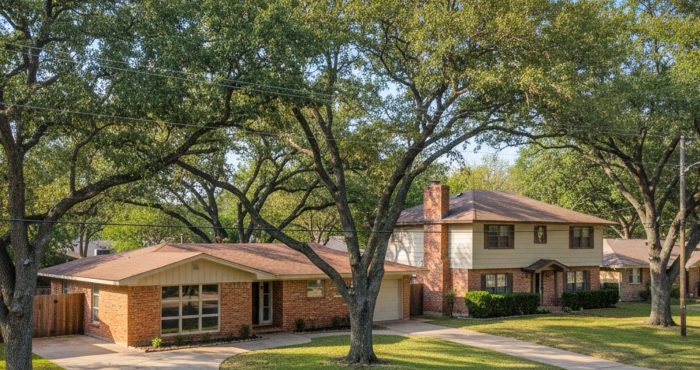
East Plano features older, more established properties that often require updating but provide mature trees and larger lot sizes. The housing density is slightly lower in these eastern sections, offering a different architectural feel. Buyers focused on mid-century designs frequently target this side of the city for renovation projects.

Carrollton presents a different financial entry point, with current median home prices ranging from $390,000 to $430,000. The housing market here includes a strong mix of traditional single-family homes built in the late twentieth century. You will also find a growing inventory of newer townhome developments clustered near major transit centers.

This pricing gap means buyers generally secure more interior space and larger lots for their money in Carrollton. The property tax burden also scales with these purchase prices, making the overall monthly payment noticeably different between the two municipalities. Evaluating your required square footage against your budget is essential before touring properties.

The clear takeaway for buyers is that budget and desired property style will heavily dictate the target city. Plano offers a massive inventory of higher-end properties, while Carrollton delivers a more accessible price point for standard single-family layouts.


Cost of Living and Property Tax Rates

Texas does not levy a state income tax, which shifts the burden of funding public services directly onto property taxes. This makes understanding the local tax assessment crucial when calculating your monthly housing costs. Municipal rates, county taxes, and school district levies all combine to form the final annual bill.

Plano residents typically see a combined property tax rate of approximately 1.71 percent. This total encompasses the city rate, Collin County taxes, and the local school district assessment. Because a large portion of Plano sits in Collin County, the valuation trends here can heavily influence year-over-year tax increases.

Homebuyers in Plano should also account for mandatory homeowners association dues, which are prevalent in the western and northern neighborhoods. These fees cover the maintenance of community pools, private parks, and landscaped medians. Factoring these monthly dues into your budget alongside the 1.71 percent tax rate is vital for accurate financial planning.

Carrollton spans portions of Denton, Dallas, and Collin counties, meaning a resident’s tax burden depends entirely on their specific address. The baseline city tax rate for Carrollton is roughly 0.5375 percent, but the total combined bill will fluctuate based on the overlapping county and school district. Buyers must verify the exact tax breakdown for any individual property before making an offer.

Texas homeowners can mitigate some of this property tax burden by filing for a residential homestead exemption. This exemption removes a portion of the home’s appraised value from taxation, lowering the final bill in either city. It also places a cap on how much the taxable value can increase from one year to the next.

The most critical takeaway regarding North Texas taxes is that municipal rates are only a fraction of the story. School district assessments generally make up the largest portion of the tax bill in both Plano and Carrollton. Always request a detailed property tax history from your real estate agent to avoid unexpected monthly payment adjustments.


Transportation Infrastructure and Commute Times

Commuting logistics play a major role in real estate decisions across the Dallas-Fort Worth metroplex. Both municipalities benefit from direct access to major tollways and interstate highways. The Dallas Area Rapid Transit system also provides light rail service to both cities, connecting residents directly to downtown Dallas.

Plano relies heavily on US-75 and the Dallas North Tollway for primary north-to-south travel. These major arteries provide a direct path into the Dallas urban core and connect to the broader regional highway network. Residents utilizing the DART system can access the Red and Orange lines from multiple stations throughout the city.

Driving from Plano to DFW International Airport generally takes about 30 to 35 minutes under normal traffic conditions. The route typically involves utilizing the Sam Rayburn Tollway or the President George Bush Turnpike. During peak rush hour, these travel times can easily extend, requiring careful schedule planning for frequent travelers.

Carrollton is positioned further west, providing immediate access to I-35E and the President George Bush Turnpike. Transit riders in this area utilize the DART Green Line, which features several stations integrated into pedestrian-friendly mixed-use developments. This geographic positioning gives Carrollton a distinct advantage for regional mobility.

The drive times from Carrollton to DFW International Airport average just 15 to 25 minutes. This straight-shot access via the tollway bypasses much of the heavy central Dallas congestion, making it a major selling point for corporate professionals.

For real estate investors and buyers, the commute takeaway is heavily dependent on the employment destination. Frequent flyers and those working in the western portion of the metroplex will find Carrollton highly efficient. Buyers commuting to the telecom corridor or the northern tollway business parks will likely prefer the highway access found in Plano.


Educational Infrastructure: PISD vs. CFBISD

The public education infrastructure is a major consideration for many buyers moving to the northern Dallas suburbs. Plano and Carrollton are served by two distinct, massive independent school districts. Evaluating these districts involves looking at the sheer scale of the campuses and the specialized academic programs available.

Plano Independent School District operates as the primary educational network for Plano residents. The district manages dozens of campuses and supports a massive student population with a wide array of specialized academic facilities. Property values within specific PISD attendance zones often reflect the high demand for housing near these campuses.

The senior high school system in Plano utilizes a unique structural model that separates upperclassmen. Students attend standard high schools for ninth and tenth grades before moving to dedicated senior high campuses for eleventh and twelfth grades. This format allows the district to consolidate advanced placement courses and specialized career training facilities.

Carrollton is primarily served by the Carrollton-Farmers Branch Independent School District. This district also manages a large portfolio of elementary, middle, and high school campuses across multiple municipalities. CFBISD maintains a strong focus on integrating technology and career-readiness programs into its standard curriculum.

The district features several specialized academies that allow students to focus on specific career paths, including engineering and health sciences. These programs draw students from across the district boundaries, providing unique educational opportunities. The presence of these facilities adds distinct value to the surrounding residential neighborhoods.

A crucial detail for homebuyers is that school zoning borders rarely align perfectly with municipal city limits. A home with a Carrollton address might be zoned for a neighboring district, and the same applies to the outer edges of Plano. Always verify the exact school zoning assignments through the official district portals rather than relying solely on the property zip code.


Local Amenities, Parks, and Recreational Facilities

Access to commercial retail and outdoor recreation significantly impacts property values in North Texas. Both cities maintain extensive parks departments and support large-scale commercial developments. The primary difference lies in the scale and style of these local amenities.

Plano is renowned for its massive commercial hubs, most notably Legacy West and the Shops at Legacy. These sprawling developments feature high-end dining, luxury retail, and significant corporate office spaces. The integration of residential lofts and apartments within these centers creates a dense, urban-style environment in the middle of the suburb.

On the recreational side, the city maintains thousands of acres of dedicated parkland. Arbor Hills Nature Preserve and Oak Point Park are standout facilities, offering extensive hiking trails and natural landscapes. These parks provide residents with off-road cycling paths, pavilions, and large open spaces right inside the city limits.

Carrollton provides a different pace, anchored by its historic downtown square. This revitalized central district features independent restaurants, boutique shopping, and seasonal community events. The architecture preserves the mid-century aesthetic of the original town, offering a stark contrast to modern mixed-use developments.

The city also prioritizes green space, maintaining the expansive Green Trail system that connects various neighborhoods. The Elm Fork Nature Preserve offers residents a densely wooded environment for hiking and wildlife observation along the Trinity River corridor. These interconnected trails make it easy for residents to navigate the city without relying entirely on major roadways.

The takeaway for buyers is a choice between sprawling modern development and historic, localized charm. Plano delivers master-planned commercial centers, whereas Carrollton offers a more traditional suburban layout with a strong emphasis on continuous greenbelt trails.

Your Advantage With Bale Real Estate Group

Buying or selling in Plano requires a clear strategy. The Bale Real Estate Group helps clients navigate pricing, competition, and how to position a home to attract serious buyers from day one. For sellers, that includes professional staging, targeted marketing, Zillow Showcase exposure, and our Certified Pre-Owned Home Listing Program. The goal is simple: create demand and deliver stronger results.

Frequently Asked Questions

Are housing costs lower in Carrollton or Plano?

Carrollton consistently features lower median home prices than Plano across the general real estate market. The 2026 median price in Carrollton sits between $390,000 and $430,000, making it a more accessible entry point for buyers. Plano’s median of $500,000 to $540,000 is heavily skewed by the dense concentration of luxury real estate in the western portion of the city.

Which city offers a shorter commute to DFW Airport?

Carrollton offers a noticeably shorter commute to DFW International Airport due to its western geographic positioning. Drivers can typically reach the airport terminals in 15 to 25 minutes using the President George Bush Turnpike or State Highway 121. In contrast, residents traveling from Plano should expect a drive time of 30 to 35 minutes under standard traffic conditions.

Posted in: Dallas Real Estate, Home Buying, Market Updates, Plano Real Estate, Relocating to North Dallas Tagged: 2026 Housing Market, Arbor Hills Nature Preserve, Buyer Guide, Carrollton Real Estate, Carrollton-Farmers Branch ISD, Cost of Living, Dallas Area Relocation, DART Rail, DFW Airport, Legacy West, North Texas Real Estate, Plano ISD, Plano Real Estate, Plano TX vs Carrollton, Property Taxes, Relocation Guide

Plano TX vs Richardson: Navigating North Dallas Suburbs in 2026


Choosing the right North Dallas suburb often comes down to comparing the established charm of one city against the master-planned expansion of another. Homebuyers looking closely at Plano TX vs Richardson will find two distinct markets sharing a border along the President George Bush Turnpike.

Both municipalities offer strong economic foundations and immediate access to major employment hubs across the Dallas-Fort Worth metroplex. Deciding between them requires a careful look at property taxes, daily commute times, and the architectural styles that define their neighborhoods.


Real Estate Markets: Plano vs Richardson

The housing landscapes in these neighboring cities reflect different eras of North Texas development. Richardson largely built out its residential zones during the mid-century boom. This resulted in established neighborhoods characterized by mature tree canopies and distinct architectural charm.

Plano experienced its most rapid growth slightly later, expanding steadily westward with larger lots and extensive master-planned communities. Buyers seeking newer construction and community amenities often gravitate toward Plano. Meanwhile, those looking for renovation projects and historic character find better opportunities in Richardson.

From an investment perspective, Richardson currently offers a slightly more accessible entry point for buyers. Conversely, Plano provides a wider inventory of luxury estates and newer builds that command higher price points.

Comparing Median Home Prices

Buyers exploring homes for sale in Plano will encounter median prices ranging from approximately $479,000 to $508,000 in early 2026. This average masks a distinct geographic split across the city. East Plano offers more accessible price points compared to the sprawling luxury estates found in West Plano.

Richardson presents a slightly lower barrier to entry, with median home prices sitting roughly between $437,000 and $450,000. This market is highly active with buyers purchasing older properties to update. It remains an excellent target for those wanting to build immediate equity through renovations.

These price differences directly impact purchasing power and down payment requirements. A buyer with a strict $450,000 budget will find a wider selection of move-in ready options in Richardson. The inventory at that specific price point is noticeably tighter in Plano.

Architectural Styles and Neighborhood Layouts

Richardson is heavily defined by classic mid-century ranch homes and traditional brick builds. Neighborhoods like Canyon Creek showcase this established architecture beautifully. You will find sprawling single-story layouts nestled under massive oak and pecan trees.

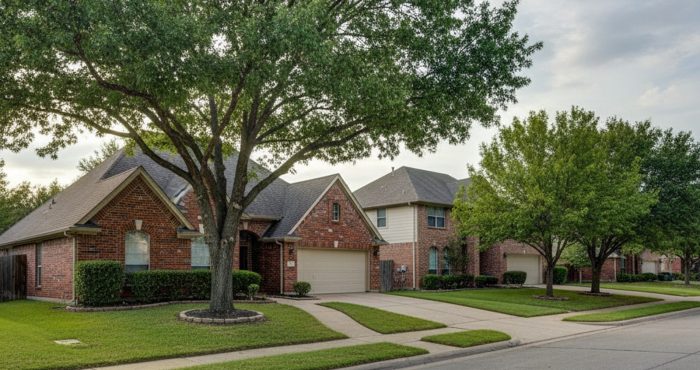
Plano transitions into a different aesthetic, especially as you move west toward the Dallas North Tollway. Here, the streetscapes are dominated by large, two-story brick estates and modern transitional designs. Most of these properties were built within the last three decades to accommodate rapid corporate relocation.

Homeowners associations also play a major role in how these neighborhoods operate. Plano features numerous restrictive, master-planned HOAs that manage extensive community amenities. In contrast, many established Richardson neighborhoods simply have voluntary neighborhood associations with no strict deed restrictions.

Property Taxes and County Lines

Understanding the local tax structure is crucial, as the final bill depends heavily on overlapping county and municipal boundaries. The 2025-2026 city tax rate for Plano sits at approximately $0.4376 per $100 of valuation.

Richardson carries a slightly higher city-level rate of approximately $0.54218 per $100 of valuation. However, the total effective tax rate changes significantly depending on county placement. Properties can sit in either Dallas County or Collin County.

County lines do not perfectly align with city borders in this region. Several Richardson addresses actually fall into Collin County and are zoned for Plano schools. This overlap directly alters the final assessment and yearly tax obligations for the homeowner.


Transportation and Daily Commutes

Moving around the Dallas-Fort Worth metroplex requires reliable access to major highways and public transit systems. Both municipalities are bisected by US Highway 75. This serves as the primary north-south artery connecting the northern suburbs to the Dallas urban core.

The President George Bush Turnpike also runs directly between the two cities, providing rapid east-west transit across the region. For buyers prioritizing a shorter commute to Downtown Dallas, Richardson is undeniably the more efficient choice.

Those working in the booming corporate sectors of West Plano or Frisco will find a Plano address much more convenient. The daily drive is heavily dictated by your specific office location. Geographic placement should be a primary deciding factor during your home search.

Highway Access to Employment Centers

Richardson residents benefit from immediate access to US-75, allowing for a relatively straightforward drive into the central business district. Commuting southbound to Downtown Dallas from Richardson generally saves drivers 10 to 15 minutes each way compared to starting from Plano.

Plano counters with excellent proximity to both the Dallas North Tollway and the Sam Rayburn Tollway. These routes are essential for accessing the dense concentration of corporate headquarters located in West Plano and neighboring Frisco.

Traffic patterns on these highways follow predictable rush-hour flows. Drivers will encounter heavy congestion southbound in the mornings and northbound in the evenings. Buyers should map their specific route during peak hours before finalizing a neighborhood choice.

Navigating the DART Light Rail System

The Dallas Area Rapid Transit system provides a robust rail alternative for residents looking to avoid highway traffic. Richardson is heavily integrated into the network. The city boasts four DART Red Line stations, including major hubs at Galatyn Park and CityLine/Bush.

Plano also connects directly to the Red Line, anchored by stations at Downtown Plano and Parker Road. These transit centers feature extensive parking facilities and bus transfer points.

Properties located within walking distance of these rail stations often carry a premium in both cities. The convenience of a direct train ride to Downtown Dallas or the airport remains a strong selling point. This infrastructure adds significant long-term value to real estate in these specific zones.


School District Boundaries and Facilities

Educational infrastructure is a major driver of property valuation and resale potential across North Texas. Buyers often prioritize specific attendance zones over exact municipal borders. This heavily influences demand and pricing in both municipalities.

It is essential to understand that city borders do not strictly dictate school zones in this area.

Navigating the overlapping municipal and district lines requires careful attention when house hunting. A home might have a Dallas mailing address but fall within the Richardson school system. Alternatively, a property could sit within Richardson city limits while being zoned for Plano schools.

Plano Independent School District (PISD)

Plano ISD operates a massive network of campuses serving the entirety of Plano, as well as portions of North Richardson and North Dallas. The district is uniquely structured with a senior high school system. Students attend separate campuses specifically for grades 11 and 12.

This educational structure requires students to transition between buildings more frequently than in traditional districts. The PISD tax rate for the 2026 cycle is approximately $1.0395 per $100 of valuation.

This specific tax rate factors heavily into overall housing costs for properties within the PISD boundaries. Buyers must calculate this into their monthly carrying costs. Comparing homes across district lines requires a close look at these exact tax figures.

Richardson Independent School District (RISD)

Richardson ISD covers the majority of Richardson, along with significant portions of Dallas and Garland. The district features dozens of neighborhood campuses and offers several specialized academic magnet programs.

RISD follows a more traditional high school model. The district serves grades 9 through 12 on single, comprehensive campuses. It maintains a 2025-2026 tax rate of approximately $1.1052 per $100 of valuation.

Historically, the RISD tax rate and administrative structure have remained highly stable. This stability is a strong draw for buyers. People appreciate predictable property tax assessments within these established neighborhoods.


Lifestyle, Amenities, and Parks

Beyond the housing data, the daily experience of living in Plano versus Richardson reveals two distinct cultural and commercial vibes. Both cities have invested heavily in creating engaging public spaces. However, their approaches to commercial development differ significantly.

Richardson maintains an established, localized feel with deeply integrated neighborhood retail. The city blends its mid-century roots with targeted modern developments. It also benefits from a strong connection to its local university population.

Plano leans heavily into high-end commercial growth and expansive, master-planned entertainment districts. Buyers seeking walkable luxury retail will strongly favor Plano. Those looking for a quieter, traditional suburban atmosphere often prefer Richardson.

Shopping, Dining, and Job Clusters

Plano is home to Legacy West and the Shops at Legacy. These areas serve as premier upscale retail and corporate centers for the entire region. They offer dense concentrations of high-end restaurants, boutique shopping, and major corporate campuses.

Richardson counters with the CityLine development. This is a massive mixed-use project integrating office space, dining, and apartments directly adjacent to a DART station. The city is also anchored by the Telecom Corridor and the University of Texas at Dallas.

Nightlife and dining in Plano tend to revolve around large, structured entertainment districts. Richardson offers a more dispersed dining scene. The city is known particularly for its incredible variety of international restaurants located along its main thoroughfares.

Green Spaces and Recreation Paths

Outdoor amenities are abundant in both locations, though the scale of the parks varies. Plano features the massive Arbor Hills Nature Preserve on the western edge of the city. This park provides hundreds of acres of unpaved trails and paved recreation paths.

Richardson offers the Spring Creek Nature Area and the Galatyn Woodland Preserve. These spaces provide heavily wooded escapes right in the middle of the urban grid. They are highly accessible and integrate seamlessly into the surrounding residential areas.

Both municipalities maintain extensive networks of community recreation centers and public pools. The overall acreage of parkland in Plano is larger. However, Richardson excels at integrating smaller green spaces within walking distance of its historic neighborhoods.

Your Advantage With Bale Real Estate Group

Buying or selling in Plano requires more than just timing the market. The Bale Real Estate Group helps clients understand pricing, competition, and how to position a home to stand out from day one. For sellers, that includes strategic pricing, professional staging, targeted marketing, Zillow Showcase exposure, and our Certified Pre-Owned Home Listing Program. The goal is simple: create stronger demand and better results in today’s market.

Frequently Asked Questions

Is Richardson cheaper than Plano?

Yes, Richardson generally offers a lower barrier to entry with median home prices sitting around $437,000 to $450,000. Plano tends to be more expensive, particularly in the western half of the city where large luxury estates drive the median price closer to $508,000. Buyers looking for renovation opportunities will find more accessible options in the Richardson market.

Does Richardson or Plano have a better commute to Downtown Dallas?

Richardson provides a noticeably shorter commute to the central business district. Driving southbound on US-75 from Richardson typically saves commuters 10 to 15 minutes each way compared to starting the drive in Plano. Proximity to the city center remains a major advantage for Richardson real estate.

Do both Plano and Richardson have access to DART rail?

Yes, both cities are thoroughly integrated into the Dallas Area Rapid Transit system via the Red Line. Richardson features four distinct rail stations, while Plano offers major transit hubs at Downtown Plano and Parker Road. This rail access provides an excellent alternative to highway commuting for residents of both suburbs.

Posted in: Dallas Real Estate, Home Buying, Market Updates, Plano Real Estate, Relocating to North Dallas Tagged: 2026 Housing Market, Arbor Hills Nature Preserve, Buyer Guide, CityLine Richardson, Cost of Living, DART Rail, Legacy West, North Dallas Real Estate, Plano ISD, Plano Real Estate, Plano TX vs Richardson, President George Bush Turnpike, Property Taxes, Relocation Guide, Richardson ISD, Richardson Real Estate, US 75

Plano TX vs Allen TX: A 2026 Guide to Collin County Real Estate


Deciding where to buy a property in the northern Dallas suburbs often comes down to a few neighboring communities. Collin County has experienced massive growth over the past decade, transforming former prairie towns into major economic hubs. Buyers comparing homes for sale in Plano TX vs Allen TX will find two distinct municipalities with unique housing markets, infrastructure, and daily routines.

While both cities share a border along the US-75 corridor, their real estate landscapes reflect different eras of development. Plano operates as a mature corporate center with a vast geographic footprint, while Allen functions as a slightly more compact, master-planned suburb. Understanding the nuances in property taxes, transit access, and daily commute realities is essential for making an informed real estate investment.


Real Estate and Cost of Living Comparison

The housing markets in both municipalities offer strong property appreciation, but entry prices and tax burdens differ. Plano features a massive inventory of homes built primarily between the 1980s and early 2000s, offering established neighborhoods with mature tree canopies. Allen generally features slightly newer construction, with many subdivisions developed over the last two decades.

Single-family homes dominate both markets, but Plano offers a wider variety of townhomes and high-density condos near its corporate centers. Allen remains heavily focused on traditional single-family subdivisions with larger lot sizes. Investors comparing the two will find stronger rental demand for multi-family units in Plano due to its massive corporate workforce.

Looking at approximate 2026 market data, the median home price in Plano sits between $508,000 and $540,000. In contrast, Allen offers a slightly lower median price range of $485,000 to $515,000. This price difference means buyers can often secure slightly more square footage or newer finishes in Allen for the exact same budget.

Property taxes also play a major role in the overall cost of living calculation for Collin County residents. The City of Plano maintains an approximate municipal tax rate of 0.4376 per $100 of assessed value. The City of Allen boasts a historically lower municipal rate of approximately 0.4154 per $100, which can lower monthly escrow payments for homeowners.

Buyers strictly optimizing for lower entry prices and municipal tax rates will find a financial edge in Allen. Conversely, buyers prioritizing established architectural character often prefer the older, heavily wooded subdivisions found throughout Plano.


Plano ISD vs. Allen ISD: District Overviews

Public education infrastructure is a major driver of real estate demand in both of these Collin County cities. Plano Independent School District operates on a massive scale, serving an approximate student population of 53,000 across more than 80 campuses. Allen Independent School District is significantly more consolidated, educating roughly 22,000 students across just 22 campuses.

Both districts continually adjust their infrastructure to manage shifting populations and optimize educational resources. Plano ISD has recently undergone facility realignments to balance enrollment across its older, established neighborhoods. Allen ISD focuses its ongoing capital improvements on maintaining its newer, centralized facilities to accommodate steady suburban growth.

The structural difference between the two districts becomes most apparent at the high school level. Allen ISD funnels all of its upper-level students into a single campus, Allen High School, which supports an enrollment of roughly 6,800 students. This single-school model pools district resources into one location, famously highlighted by its 72,000-seat stadium and extensive elective facilities.

Plano takes a different approach with multiple senior high schools and specialized academic centers. The district offers dedicated programs like the Academy High School, which focuses heavily on a project-based STEM curriculum. Buyers must decide if they prefer the massive, single-campus community focus of Allen or the specialized, multi-campus academic tracks available in Plano.


Commute Times and Transit Options to Dallas

Evaluating the daily drive is critical when comparing these two suburbs, especially for those working in downtown Dallas or the Telecom Corridor. Plano spans a wide east-to-west area, giving residents access to both major highways like US-75 and the Dallas North Tollway. Allen sits further north and relies predominantly on US-75 for its primary highway connectivity.

Navigating within the cities themselves also presents different daily driving experiences. Plano utilizes a rigid grid system of major six-lane thoroughfares, which efficiently moves heavy traffic but can feel highly commercialized. Allen features a slightly more winding, suburban road layout that slows down local traffic but provides a distinctly residential feel.

During morning and evening rush hour, a typical drive from Plano to downtown Dallas takes between 25 and 40 minutes. Commuting from Allen generally requires 35 to 50 minutes, depending heavily on congestion along the US-75 corridor. The extra distance from Allen translates to a noticeably longer weekly commute for downtown workers.

Public transportation is where the two cities diverge completely regarding infrastructure. Plano is a member city of the Dallas Area Rapid Transit system, providing direct access to the DART Red and Orange rail lines. A train ride from the Parker Road station to downtown Dallas takes roughly 49 minutes, offering a reliable alternative to highway traffic.

Allen is not part of the DART network, meaning residents rely almost exclusively on personal vehicles for their daily transit. Plano is the definitive choice for buyers who want the option of a rail commute, while living in Allen requires a firm commitment to driving.


Local Amenities, Retail, and Recreation

Both cities provide extensive commercial and recreational infrastructure, but their development styles cater to different preferences. Plano has cultivated several high-density, mixed-use districts that blend corporate headquarters with upscale dining and retail. The Shops at Legacy and Legacy West serve as major regional destinations, offering a highly walkable, cosmopolitan environment.

Beyond retail and dining, both municipalities invest heavily in resident-focused community facilities. Allen operates several large-scale recreation centers, including a dedicated municipal golf course and a massive public ice rink. Plano counters with multiple sprawling recreation centers, extensive public pool facilities, and specialized senior centers scattered across its vast footprint.

Allen focuses heavily on expansive, master-planned retail centers that draw shoppers from across North Texas. Watters Creek provides a sprawling, open-air shopping and dining experience built around a central green space and water features. The Allen Premium Outlets add another massive retail footprint, serving as a primary commercial anchor for the city.

Outdoor recreation is abundant in both municipalities, with extensive trail networks and well-maintained public parks. Plano stands out with the 200-acre Arbor Hills Nature Preserve, offering miles of unpaved trails and natural landscapes right in the middle of the city.

Buyers seeking high-end, urban-style dining will gravitate toward Plano, while those prioritizing massive retail hubs will appreciate Allen.

Why Homeowners Choose Bale Real Estate Group

Buying or selling requires a clear strategy. The Bale Real Estate Group helps clients navigate pricing, competition, and how to position a home to attract serious buyers from day one. For sellers, that includes professional staging, targeted marketing, Zillow Showcase exposure, and our Certified Pre-Owned Home Listing Program. The goal is simple: create demand and deliver stronger results.

Frequently Asked Questions

How far is Allen from Plano?

The two cities share a direct border, making them immediate neighbors in Collin County. Driving from the center of Allen to central Plano takes roughly 15 to 20 minutes via US-75. This close geographic proximity means residents of either city frequently cross municipal lines for shopping and dining.

Which city has a longer commute, Allen or Plano?

Allen generally has a longer commute to downtown Dallas because it is located several miles further north along the US-75 corridor. Drivers in Allen can expect a 35 to 50-minute trip during peak rush hour, compared to 25 to 40 minutes from Plano. Plano also offers DART rail access, providing a traffic-free alternative that Allen lacks entirely.

Are housing costs cheaper in Allen or Plano?

Real estate is generally slightly more affordable in Allen compared to Plano. Approximate 2026 market data shows Allen’s median home price hovering around $485,000 to $515,000, while Plano ranges from $508,000 to $540,000. Buyers in Allen also benefit from a marginally lower municipal property tax rate, which reduces overall monthly carrying costs.

Posted in: Allen Real Estate, Home Buying, Market Updates, Plano Real Estate, Relocating to North Dallas Tagged: 2026 Housing Market, Allen ISD, Allen Premium Outlets, Allen Real Estate, Arbor Hills Nature Preserve, Buyer Guide, Collin County Real Estate, Cost of Living, Dallas North Tollway, DART Rail, Legacy West, North Dallas Real Estate, Plano ISD, Plano Real Estate, Plano TX vs Allen TX, Property Taxes, Relocation Guide, US 75, Watters Creek

Relocating to North Texas in 2026: Plano TX vs Frisco Housing and Commutes


Choosing where to buy a home in the Dallas-Fort Worth metroplex often comes down to comparing two neighboring powerhouses. Buyers looking at Plano TX vs Frisco quickly realize both cities offer extensive amenities, strong economic foundations, and highly rated infrastructure.

While they share a border along the Sam Rayburn Tollway, the daily experience in each city feels distinct. Plano leans on its established history and mature neighborhoods. Frisco continues to expand with massive new developments and expansive sports headquarters.

Deciding between the two requires looking past the surface appeal. Buyers need to weigh the differences in commute times, property tax rates, and the availability of new construction. Understanding these local nuances is the key to making a sound real estate investment.

The final choice depends on prioritizing specific daily conveniences. Whether a buyer values a shorter drive to downtown or the pristine feel of a brand-new subdivision, both locations offer strong real estate fundamentals.


Plano vs. Frisco Real Estate and Housing Trends

The housing stock in these two cities reflects their different timelines of rapid growth. Buyers will notice a sharp contrast in architectural styles, lot sizes, and neighborhood structures.

Plano features a massive inventory of homes built between the 1980s and early 2000s. These established neighborhoods often provide larger lots, mature tree canopies, and a distinct lack of mandatory homeowners associations in certain zip codes. This older housing stock appeals to buyers who want custom architecture rather than uniform tract homes.

Frisco is dominated by newer construction and expansive master-planned communities. Nearly every residential development built here in the last two decades includes an active HOA. These associations maintain neighborhood pools, parks, and strict architectural standards.

Median home prices currently reflect Frisco’s newer inventory and high demand. Buyers can expect median prices in Plano to hover around $508,000 to $540,000. Frisco commands a higher entry point of approximately $580,000 to $645,000.

This $40,000 to $100,000 gap directly impacts monthly carrying costs for buyers. Those searching for homes for sale in Plano often find their budget stretches further. Frisco buyers generally pay a premium for modern floor plans and community amenities.

Location within each city also dictates property values. West Plano historically commands higher prices than East Plano due to its proximity to the Dallas North Tollway. Frisco’s rapid northward expansion means the newest construction is often found closer to the US-380 corridor.


Cost of Living and Property Tax Comparison

Texas levies no state income tax, making property taxes a crucial factor in any housing budget. Buyers relocating from out of state are often surprised by how heavily these local assessments impact their monthly mortgage payments.

The base city tax rates are quite competitive between the two municipalities. Plano currently assesses a city tax rate of approximately 0.4376 per $100 of property valuation. Frisco sits slightly lower at roughly 0.4255 per $100.

The city rate is only one piece of the puzzle. The total effective property tax rate depends heavily on the specific school district and county assessments. Homes in this region fall into either Collin County or Denton County, which alters the final calculation.

Total effective tax rates generally range between 1.37% and 2.2% of the assessed home value. Buyers must verify the exact tax rate of a specific property before making an offer.

Crossing a neighborhood street can sometimes alter the annual tax bill by thousands of dollars.

Buyers looking at new construction in Frisco should ask about Public Improvement Districts or Municipal Utility Districts. These special tax assessments are common in newer developments to fund local infrastructure. They can add a noticeable amount to the annual tax burden on top of the standard city and county rates.


Commuting to Downtown Dallas and DFW Airport

Daily travel times are a major deciding factor for commuters working in central Dallas or traveling frequently. The highway infrastructure in North Texas is robust, but geographic location still dictates the daily drive.

Buyers must carefully map their specific routes before choosing a zip code.

Plano holds a distinct geographic advantage for anyone commuting into Downtown Dallas. Located roughly 20 miles north of the city center, residents can typically reach downtown in 30 to 45 minutes via the Dallas North Tollway or US-75.

Plano also offers access to the DART light rail system, providing a rare car-free commuting option in North Texas. This transit connection is a significant asset for buyers who want to avoid toll road traffic entirely.

Frisco sits further north, adding roughly seven miles to the downtown commute. The drive from Frisco to Downtown Dallas spans about 27 miles and generally takes 35 to 50 minutes. This travel time depends heavily on rush hour congestion along the Dallas North Tollway.

Both cities offer excellent access to DFW International Airport via the Sam Rayburn Tollway. Residents in either location can expect a relatively smooth 25-mile drive. This puts the airport within a convenient 30 to 40-minute reach.

Toll road expenses are another factor commuters must budget for in North Texas. Driving the Dallas North Tollway or Sam Rayburn Tollway daily requires an active TollTag. These fees can quickly add up to hundreds of dollars per month for a household with two commuting vehicles.


Educational Infrastructure: Plano ISD vs. Frisco ISD

The public school systems in both cities are massive operations that draw buyers to the region. While both districts offer extensive facilities, their approaches to campus size and student distribution differ significantly.

Plano Independent School District operates as an established, mature district serving approximately 44,000 to 50,000 students. The district spans 73 campuses and is highly regarded for its specialized academic programs. Its massive senior high schools offer a vast array of extracurricular activities.

Frisco Independent School District has experienced explosive growth, currently serving around 63,000 students across 77 campuses. To manage this rapid expansion, Frisco ISD adopted a smaller-school model. This structure caps high school enrollment to keep student populations manageable per campus.

This model means Frisco has a higher number of high schools compared to traditional districts of its size. Buyers should also note that school zoning in the Dallas-Fort Worth metroplex frequently crosses city lines.

It is entirely possible to purchase a home within the Plano city limits that is zoned for Frisco ISD, or vice versa. Always verify the specific attendance zones using the district’s official address locator. Relying strictly on the city mailing address can lead to unexpected zoning surprises.

The sheer scale of the athletic and arts facilities in these districts rivals many small colleges. Frisco ISD partners with the Dallas Cowboys to use the indoor stadium at The Star for high school events. Plano ISD utilizes multiple massive district-owned stadiums to host its varsity athletics.


Retail, Dining, and Entertainment Amenities

The sheer volume of commercial development in Collin County means residents rarely need to travel to Dallas for entertainment. Both suburbs boast massive retail hubs and distinct dining districts.

Plano is anchored by Legacy West, a premier mixed-use destination that combines high-end retail with corporate headquarters like Toyota. Just a few miles away, Downtown Plano offers a more historic, walkable atmosphere. This downtown sector features independent restaurants and brick-paved streets.

Frisco counters with an unmatched focus on sports and large-scale entertainment. The Star serves as the world headquarters for the Dallas Cowboys, anchoring a massive district of restaurants, boutiques, and a hotel.

Frisco Square also provides a centralized civic and retail hub located right next to Toyota Stadium. Buyers seeking a highly walkable, modern nightlife scene often gravitate toward Legacy West. Sports enthusiasts find Frisco’s amenities tough to beat.

The retail borders between these North Texas suburbs are increasingly blurred. Residents in northern Frisco often cross over to enjoy the historic downtown square in McKinney. This interconnected web of commercial districts ensures buyers are never more than a short drive from premium shopping.


Parks and Outdoor Recreation Areas

Access to green space is a priority for many buyers relocating to the Texas suburbs. Both municipalities have invested heavily in their parks and recreation departments. This preserves natural areas amidst the rapid commercial growth.

Plano is home to the Arbor Hills Nature Preserve, a sprawling 200-acre park located on the western edge of the city. This preserve offers miles of unpaved hiking trails, paved cycling paths, and elevated observation towers. It feels entirely removed from the surrounding suburban environment.

Frisco takes a highly structured approach to its outdoor amenities, heavily emphasizing community sports facilities and manicured green spaces. Frisco Commons Park serves as a centerpiece for the community. The park features extensive playgrounds, an amphitheater, and a stocked fishing pond.

The integration of these parks directly impacts local real estate values. Homes located within walking distance of Arbor Hills or major Frisco trailheads consistently command a premium on the open market.

Golf courses and country clubs provide another layer of outdoor recreation in Collin County. Both cities feature prestigious private clubs and well-maintained public courses woven directly into residential neighborhoods. Living on a golf course lot remains a highly sought-after real estate premium in both Plano and Frisco.

Your Advantage With Bale Real Estate Group

Navigating the Plano and Frisco real estate market takes more than just watching prices. The Bale Real Estate Group, ranked in the top 1% of North Texas Realtors, helps buyers and sellers understand how to position themselves based on current competition, not just past sales. From identifying the right neighborhoods to negotiating stronger terms, their approach is focused on preparation, strategy, and results.

Frequently Asked Questions

Is it more expensive to live in Plano or Frisco?

Frisco generally carries a higher price tag for real estate, with median home prices sitting roughly $40,000 to $100,000 higher than Plano. This is largely due to Frisco’s high concentration of newer construction and master-planned communities. The base city property tax rates remain very similar between the two municipalities.

Which city has a better commute to Downtown Dallas?

Plano offers a noticeably shorter and more flexible commute to the city center. Located roughly 20 miles from downtown, Plano residents save about 10 to 15 minutes of driving time compared to Frisco. Plano also provides access to the DART light rail system for a completely car-free transit option.

Are HOAs more common in Plano or Frisco?

Homeowners associations are significantly more common in Frisco. Because the vast majority of Frisco’s housing stock was built within the last two decades, nearly all residential developments operate as master-planned communities with mandatory HOAs. Plano offers more opportunities to find established neighborhoods without these association fees.

Posted in: Frisco Real Estate, Home Buying, Market Updates, Plano Real Estate, Relocating to North Dallas Tagged: 2026 Housing Market, Arbor Hills Nature Preserve, Buyer Guide, Collin County Real Estate, Cost of Living, Dallas North Tollway, DART Rail, Frisco Commons Park, Frisco ISD, Frisco Real Estate, Legacy West, North Texas Real Estate, Plano ISD, Plano Real Estate, Plano TX vs Frisco, Property Taxes, Relocation Guide, Sam Rayburn Tollway, The Star Frisco

Moving to Plano TX: Housing Costs, Commutes, and the Job Market in 2026


Relocating to the Dallas-Fort Worth metroplex often leads buyers to search for specific suburbs that balance corporate access with substantial local amenities. Those considering moving to Plano TX will find a city that operates as a major economic engine in North Texas rather than a simple bedroom community.

Understanding the local housing inventory, commuting logistics, and school zoning is essential before making a real estate decision. This guide outlines the objective data buyers need to navigate the current property market, evaluate daily travel times, and calculate true living costs across the city.

The municipality provides a unique blend of suburban space and dense commercial infrastructure. Relocating buyers must weigh the advantages of robust employment hubs against the realities of higher property taxes and summer climate demands.


Cost of Living and Local Taxes in Plano

Evaluating the financial realities of this city requires looking beyond the purchase price of a home. Buyers must factor in local tax rates and seasonal utility spikes to understand their true monthly obligations.

The overall cost of living in the Plano area runs approximately 8.5 percent higher than the national average. A significant portion of this premium comes from local real estate valuations and the associated property tax burden.

For the 2025-2026 fiscal year, the adopted combined property tax rate sits at an approximate 1.71 percent per $100 of assessed value. This combined figure includes the City of Plano tax rate of roughly 0.4376 and the Plano Independent School District rate of approximately 1.0396. Buyers should calculate these exact percentages against their anticipated purchase price to avoid surprises at closing.

Utility costs also demand careful budgeting, running about 12.8 percent above the national average due to intense summer cooling requirements. Fortunately, residents benefit from the lack of a state income tax in the Lone Star State. This tax structure often offsets the higher property tax and energy expenses for the corporate workforce.


Plano Real Estate Market and Property Types

The local housing inventory offers everything from sprawling single-family estates to dense, walkable condominium developments. Prices vary significantly depending on the neighborhood and proximity to major corporate centers.

Current market data shows median home prices hovering between an approximate $536,000 and $540,000. Buyers looking at homes for sale in Plano will find that properties in the western half of the city generally command higher price points. East Plano tends to offer more affordable housing options, often featuring established neighborhoods with larger lot sizes and mature trees.

Renters and buyers seeking lower-maintenance lifestyles have plenty of options in the higher-density developments. Average rent prices range from an approximate $1,450 to $1,700 depending on the building amenities and location. Luxury mixed-use condominiums and townhomes are highly concentrated around Legacy West and the Shops at Legacy.

The market remains highly active, meaning buyers need to act decisively when a well-priced single-family home hits the Multiple Listing Service. Securing a property in the more accessible price tiers often requires submitting an offer within the first few days on the market.


Major Employers and Job Market Hubs

Employment density is one of the primary drivers of housing demand in this part of Collin County. The city hosts a massive concentration of corporate headquarters and regional offices.

The Legacy Business Park serves as the central economic node for the entire North Texas region. This massive development houses thousands of employees across the finance, technology, and automotive sectors. Major corporations with headquarters or significant campuses here include Toyota, Frito-Lay, JPMorgan Chase, and Capital One.

The healthcare sector also provides a robust foundation for the local labor market. Medical City Plano and various Texas Health facilities employ thousands of medical professionals and administrative staff. This strong medical infrastructure supports both the local economy and the residents requiring specialized care.

This density of high-paying jobs creates a hyper-local housing demand around the major employment centers. Buyers relocating for work will find that purchasing a home near the Dallas North Tollway corridor drastically cuts daily commute times for corporate employees.


Transportation, Commute Times, and Transit Options

Navigating the Dallas area requires a clear understanding of the regional toll roads and public transit networks. Daily travel times depend heavily on proximity to these major transportation arteries.

Several major highways serve the city, including the Dallas North Tollway, the President George Bush Turnpike, and US-75. Drivers should budget for monthly toll expenses, as utilizing the tollway system is often the most efficient way to travel across Denton County and Collin County. For frequent travelers, the Dallas Fort Worth International Airport is typically a 30-minute drive under normal traffic conditions.

Public transportation offers a viable alternative to driving for many residents. The Dallas Area Rapid Transit system operates extensive bus routes and light rail services throughout the region. The DART Red and Orange rail lines connect the Downtown Plano station directly to Downtown Dallas, bypassing rush hour traffic entirely.

Utilizing the DART rail system is the most predictable way to navigate morning commutes into the city center. Buyers prioritizing public transit should focus their property search near the historic downtown sector to maximize access to the train station.


Plano Independent School District (PISD)

The public education infrastructure is a massive consideration for anyone researching life in Plano. The local district operates with a unique structural model that differs from many other metropolitan areas.

The Plano Independent School District manages dozens of campuses that serve students across the municipality and into neighboring jurisdictions. The district boundaries are expansive, occasionally overlapping into parts of neighboring cities. Buyers should always verify exact zoning lines with a real estate agent before finalizing a purchase contract.

The district utilizes a distinct campus split for older students rather than a traditional four-year model. Students in the ninth and tenth grades attend standard high schools, while eleventh and twelfth graders transition to dedicated senior high schools. Plano Senior High School is one example of these specialized upper-level campuses.

This structural division allows the district to consolidate advanced academic tracks and specialized facilities for older students. The area also provides strong tertiary education options, anchored by the expansive Collin College system.


Parks, Recreation, and Outdoor Amenities

Balancing the intense corporate environment, the city maintains an impressive network of municipal parks and nature trails. Residents have immediate access to hundreds of acres of protected green spaces.

Arbor Hills Nature Preserve stands out as a premier destination for outdoor recreation in the western part of the city. The preserve features extensive hiking trails, dedicated off-road cycling paths, and a multi-story observation tower. This natural amenity provides a critical counterbalance to the heavily developed corporate corridors nearby.

On the eastern side of the city, Oak Point Park and Nature Preserve serves as the largest continuous park space in the area. Visitors can utilize the expansive lake, navigate the zip-lining courses, or explore miles of unpaved nature trails. Bob Woodruff Park connects directly to this system, offering local fishing piers and community pavilions.

For those who prefer urban recreation, the city integrates highly walkable retail districts with outdoor gathering spaces. Developments like Legacy West blend open-air patios and pedestrian walkways with local dining and commerce.

Expert Guidance for Buying and Selling in Plano

Navigating the Plano real estate market takes more than just watching prices. The Bale Real Estate Group, ranked in the top 1% of North Texas Realtors, helps buyers and sellers understand how to position themselves based on current competition, not just past sales. From identifying the right neighborhoods to negotiating stronger terms, their approach is focused on preparation, strategy, and results.

Frequently Asked Questions About Moving to Plano

Is Plano, TX an expensive place to live?

The overall cost of living is approximately 8.5 percent higher than the national average, largely driven by housing prices and property taxes. However, residents do not pay a state income tax in Texas. This tax structure often balances out the higher local costs for workers moving from higher-tax states.

What is the average commute time from Plano to Downtown Dallas?

Driving down US-75 to Downtown Dallas typically takes 30 to 45 minutes during standard rush hour traffic. Residents looking to avoid highway congestion can take the DART rail lines instead. The train ride from the historic downtown station to the city center takes approximately 40 minutes.

Does Plano have public transportation?

Yes, the city is fully integrated into the Dallas Area Rapid Transit network. The system provides extensive local bus routes and direct light rail access. The Red and Orange lines operate daily, connecting local stations to major employment hubs across the metropolitan area.

Posted in: Home Buying, Market Updates, Plano Real Estate, Relocating to North Dallas Tagged: 2026 Housing Market, Arbor Hills Nature Preserve, Buyer Guide, Capital One Plano, Cost of Living, Dallas North Tollway, DART Rail, JPMorgan Chase Plano, Legacy West, Moving to Plano TX, Oak Point Park, Plano Commute, Plano Housing Costs, Plano ISD, Plano Job Market, Plano Real Estate, Plano Relocation, Plano TX, Property Taxes, Relocation Guide, Toyota Plano

Is Plano TX Good for Young Professionals? A 2026 Relocation Guide

Plano has transformed from a quiet bedroom community into a massive economic powerhouse within the Dallas-Fort Worth metroplex. Relocating here means stepping into a thriving corporate environment rather than a traditional suburban retreat.

The balance of high-paying career opportunities and premium lifestyle amenities draws thousands of new residents to Collin County each year. If you are weighing a move to Texas, understanding how this city contrasts with urban centers like downtown Dallas is crucial.

This city offers exceptional career growth and high-end retail, but it operates at a different social pace than a dense urban core. The suburban lifestyle here is built around convenience, corporate campuses, and upscale dining.


The Plano TX Job Market and Corporate Headquarters

The local economy is the primary reason so many people move to Plano. The city serves as a major employment center, rivaling the downtown business districts of many mid-sized American cities.

Massive corporate campuses anchor the landscape, providing thousands of high-paying roles in finance, technology, and engineering. Toyota Motor North America, JPMorgan Chase, Frito-Lay, and Capital One all maintain significant operations here.

Living near these corporate hubs drastically improves your daily quality of life by eliminating the need to commute into downtown Dallas. You can build a robust resume while keeping your morning drive under fifteen minutes.

The expansion of these sectors creates a highly competitive but rewarding environment for recent graduates and established experts alike. The sheer volume of corporate roles makes Plano an unmatched destination for career advancement in North Texas.


Cost of Living in Plano TX

Evaluating the cost of living in Plano requires looking beyond the national average. While Texas benefits from having no state income tax, Collin County real estate commands a premium due to the heavy corporate presence.

As of early 2026, the average rent for a one-bedroom apartment ranges from approximately $1,450 to $1,680 per month. These rates typically secure a modern unit in a newer complex with amenities like fitness centers and coworking spaces.

For those looking to buy rather than rent, the median home price in Plano currently sits between $516,000 and $525,000. Purchasing a property at this price point generally buys a mid-sized single-family home or a luxury townhome near commercial centers.

First-time homebuyer tips often emphasize factoring in property taxes, which can be higher in Texas to offset the lack of state income tax. Budgeting for these local variations ensures a smoother transition when you decide to live in Plano.


Popular Neighborhoods in Plano TX for Residents Seeking Career Opportunities

Choosing the right area depends heavily on whether you prefer walkable retail districts or transit-connected historic streets. The city divides roughly into two distinct atmospheres, each offering a different daily routine.

West Plano features newer, upscale corporate hubs, while East Plano centers around historic architecture and rail connections. Both areas provide distinct advantages for anyone looking at homes for sale in Plano.

Here are the standout districts that attract new residents relocating for work. Each offers a unique blend of housing and entertainment.

  • Legacy West: This area offers high-end retail, upscale dining, and luxury apartment complexes right across from major corporate headquarters.
  • Historic Downtown Plano: Known for its unique brick-paved charm and local coffee shops, this neighborhood provides direct Dallas Area Rapid Transit access.
  • The Shops at Legacy: An established mixed-use development featuring walkable streets, independent boutiques, and active patio dining.

Legacy West living represents the peak of modern convenience. Meanwhile, the historic downtown appeals to those wanting a more traditional neighborhood feel.


Plano TX Nightlife, Social Scene, and Dating

The social landscape in this part of the metroplex leans heavily toward upscale dining, craft breweries, and cocktail lounges. It is not a gritty downtown nightclub scene, and expectations should be adjusted accordingly.

The local social environment is heavily shaped by the nearby corporate campuses. Meeting people often happens at local hubs like the Shops at Legacy rather than crowded dance floors.

When you want a more intense nightlife experience, the urban core is still highly accessible. Many residents simply use rideshare apps or the DART rail to spend their weekends in Dallas neighborhoods like Uptown or Deep Ellum.

Plano delivers a refined, relaxed social environment that perfectly suits a busy professional schedule. The local brewery scene and high-end restaurant patios provide plenty of spaces to unwind after work.


Outdoor Recreation and Commuting

Balancing a demanding job with physical activity is easy thanks to the extensive local park system. Green spaces are woven directly into the city layout, offering quick escapes from the office environment.

Arbor Hills Nature Preserve provides miles of unpaved trails for hiking, running, and mountain biking. Oak Point Park offers similar outdoor amenities on the eastern side of the city, complete with zip lines and paddleboarding.

Commuting around the region is streamlined by major thoroughfares like the Dallas North Tollway and the President George Bush Turnpike. These routes allow quick access to other suburbs and the Dallas-Fort Worth International Airport.

For those who prefer public transit, the Dallas Area Rapid Transit Red and Orange lines run directly through the city. This rail access makes navigating the broader metroplex simple and cost-effective.


Pros and Cons of Living in Plano Texas

Every city requires compromises, and understanding the local realities will help you make an informed decision. Plano excels in economic stability but presents challenges in traffic and housing costs.

Reviewing the specific advantages and drawbacks clarifies what daily life actually entails. These are the primary factors to consider before signing a lease or a mortgage.

  • Pros: The thriving job market, high-quality amenities, proximity to a major international airport, and excellent green spaces make daily life incredibly convenient.
  • Cons: A higher cost of living compared to rural Texas, heavy traffic congestion during rush hour, and a quieter nightlife compared to urban centers.

The career advantages generally outweigh the suburban drawbacks for those focused on professional growth. The key is prioritizing what matters most for your current lifestyle.

Why Buyers and Sellers Choose Bale Real Estate Group

Buying or selling in Plano requires more than just timing the market. The Bale Real Estate Group helps clients understand pricing, competition, and how to position a home to stand out from day one. For sellers, that includes strategic pricing, professional staging, targeted marketing, Zillow Showcase exposure, and our Certified Pre-Owned Home Listing Program. The goal is simple: create stronger demand and better results in today’s market.

Frequently Asked Questions

Is Plano a fun place for young adults to live?

Plano offers a refined type of entertainment focused on upscale dining, craft breweries, and luxury retail rather than late-night clubbing. Residents enjoy vibrant spots like Legacy West, which provides plenty of engaging patio bars and restaurants. For heavy nightlife, the 20-mile trip south to Dallas is a common weekend routine.

Where do young professionals live in Plano?

Many career-focused residents cluster around Legacy West and the Shops at Legacy to stay within walking distance of corporate offices and dining. Historic Downtown Plano is another popular choice due to its authentic brick-paved charm and direct DART rail access. Both areas offer dense, walkable environments within a broader suburban landscape.

How long is the commute from Plano to downtown Dallas?

Driving from Plano to the Dallas urban core typically takes 30 to 45 minutes via the Dallas North Tollway or US-75, depending on rush hour traffic. Taking the DART Red or Orange line offers a stress-free alternative that takes approximately 40 to 50 minutes. This reliable transit connection makes attending Dallas sporting events or concerts highly convenient.

Posted in: Community Guides, Home Buying, Plano Real Estate, Relocating to North Dallas Tagged: 2026 Relocation Guide, Arbor Hills Nature Preserve, Buyer Guide, Corporate Relocation, Cost of Living, Dallas North Tollway, DART Rail, Downtown Plano, Is Plano TX Good for Young Professionals, Legacy West, Oak Point Park, Plano Home Prices, Plano Job Market, Plano Real Estate, Plano Relocation, Plano Rent, Plano TX, Plano Young Professionals, The Shops at Legacy

Is Plano TX Good For Families? 2026 Homebuyer Relocation Guide

Buyers relocating to the Dallas-Fort Worth metroplex frequently ask if the northern suburbs match their lifestyle needs. When evaluating whether is Plano TX good for families, house hunters typically look at the density of local parks, the structure of the school district, and the daily commute into Dallas. Collin County has experienced massive growth over the last decade, transforming former prairie land into a highly developed residential corridor.

Plano stands out as a major corporate hub that also maintains thousands of acres of protected green space. Understanding the specific property types, median housing costs, and neighborhood amenities helps buyers make an informed decision before looking at homes for sale in Plano. Navigating this sprawling city requires a clear look at the objective data driving the local real estate market.


Community Amenities and Recreational Facilities in Plano

The city limits contain a massive network of outdoor recreation spaces designed for year-round use. Buyers prioritizing outdoor access will find that Plano maintains an exceptionally high density of parks, playgrounds, and paved trails. This infrastructure ensures that almost every residential block sits within a short distance of a maintained public green space.

Arbor Hills Nature Preserve and Oak Point Park serve as the two major outdoor hubs for the community. These locations provide extensive hiking and biking trails that wind through natural creeks and forested areas. Having these massive preserves nearby means residents do not have to drive out of the metroplex to find substantial hiking routes.

Beyond the natural preserves, the city operates multiple municipal indoor recreational centers. Facilities like the Tom Muehlenbeck Recreation Center are equipped with indoor tracks, swimming pools, and extensive fitness equipment. These municipal buildings give residents an alternative to private gym memberships while keeping community activities accessible during the hot Texas summers.


Plano Independent School District (PISD) Overview

The local public education system is a primary driver for real estate demand across Collin County. Plano Independent School District serves approximately 48,000 to 52,000 students distributed across more than 70 campuses. The sheer size of the district means that buyers have numerous neighborhood options while still remaining within the PISD boundaries.

A defining characteristic of this district is the unique division between high schools and senior high schools. Students attend a dedicated high school for ninth and tenth grades before transitioning to a senior high campus for eleventh and twelfth grades. This structure allows the senior high campuses to function much like college environments, offering an extensive catalog of Advanced Placement courses.

Class sizes remain manageable despite the massive overall student population within the city. The district maintains an approximate 14:1 or 15:1 student-teacher ratio across its various educational facilities. This ratio gives buyers confidence that the local educational infrastructure can support the continuing population growth in the area.


Plano Housing Market Breakdown

Navigating the local real estate landscape requires understanding the distinct price tiers across different property styles. The overall median home price in Plano sits between $480,000 and $500,000 as of early 2026. Buyers evaluating affordability must factor in local property taxes, which significantly impact the total monthly mortgage payment.

Buyers looking specifically for detached single-family houses should expect to see higher entry points. Those properties typically average between $600,000 and $760,000, depending heavily on the specific zip code and proximity to major retail centers. Understanding these baseline figures helps buyers set realistic expectations for their down payment requirements.

The market maintains a steady level of competitiveness, with well-priced homes going under contract quickly. Inventory levels fluctuate seasonally, but buyers will generally find a mix of older properties requiring updates and fully renovated homes carrying a premium price tag. Working with a local agent is crucial to identifying which neighborhoods offer the best long-term value.

Property Types and Lot Characteristics

The residential layout of the city offers distinct architectural choices depending on which side of the US-75 highway you explore. Single-family detached homes are the dominant property type, often featuring three to four bedrooms and traditional brick exteriors. These houses form the backbone of the local housing inventory.

Buyers will notice a stark contrast in housing age and lot size as they move from east to west. Central and East Plano feature older construction from the 1970s and 1980s, typically sitting on larger lots with mature, established trees. These older neighborhoods frequently operate without mandatory homeowners associations.

Moving toward West Plano, the real estate landscape shifts toward newer developments built in the 1990s and 2000s. These homes boast larger square footage but are often built on tighter lot lines with strict HOA oversight. Townhomes and condominiums are also increasingly available near retail hubs, providing a lower-maintenance alternative to traditional detached houses.


Commuting from Plano to Dallas Employment Centers

Transportation logistics are a crucial factor when evaluating real estate in the northern suburbs. The city is bordered and intersected by several major highway routes, including the Dallas North Tollway and US-75. These arterial roads dictate the daily traffic flow for thousands of local residents.

Driving into downtown Dallas during morning rush hour typically takes 45 to 60 minutes. Buyers who secure employment in neighboring Frisco or within the Legacy West corporate hub in Plano itself can drastically cut this daily travel time. Evaluating your specific office location against the local toll road map is essential for calculating your true monthly commuting costs.

Public transit provides a viable alternative to sitting in highway traffic during peak hours. The DART rail system operates several stations within the city limits, connecting the northern suburbs directly to the urban core. Taking the DART Red Line from central Plano to downtown Dallas takes approximately 48 minutes, offering a predictable and stress-free transit option.

How to Position Yourself For Success in the Plano Market

Navigating the Plano real estate market takes more than just watching prices. The Bale Real Estate Group, ranked in the top 1% of North Texas Realtors, helps buyers and sellers understand how to position themselves based on current competition, not just past sales. From identifying the right neighborhoods to negotiating stronger terms, their approach is focused on preparation, strategy, and results.

Why Homeowners Choose Bale Real Estate Group

Buying or selling in Plano requires more than just timing the market. The Bale Real Estate Group helps clients understand pricing, competition, and how to position a home so it stands out immediately. For sellers, that includes strategic pricing, professional staging, targeted marketing, Zillow Showcase exposure, and our Certified Pre-Owned Home Listing Program. The goal is simple: maximize exposure and drive stronger offers.
________________________________________

Frequently Asked Questions

Is Plano TX good for families looking to relocate?

Buyers frequently search this exact question when analyzing the Dallas-Fort Worth metroplex. The city offers objective benefits like an extensive 70-campus school district and thousands of acres of municipal parkland. These structural features provide a strong foundation for buyers prioritizing educational access and outdoor recreation.

What is the average commute time from Plano to downtown Dallas?

Drivers should expect a 45 to 60-minute commute to downtown Dallas during peak rush hour traffic. Taking the DART Red Line offers a comparable alternative, taking roughly 48 minutes from station to station. Both options require planning for daily travel expenses like toll tags or transit passes.

How much are typical HOA fees in Plano neighborhoods?

Mandatory homeowners association fees vary widely depending on the neighborhood amenities and property type. Single-family home HOAs often range from $300 to $800 annually to cover common green spaces and community pools. Condominium and townhome owners will see much higher monthly assessments that cover exterior building maintenance and master insurance policies.

Posted in: Community Guides, Home Buying, Market Updates, Plano Real Estate, Relocating to North Dallas Tagged: 2026 Homebuyer Guide, Arbor Hills Nature Preserve, Buyer Guide, Dallas North Tollway, DART Red Line, HOA Fees, Is Plano TX Good For Families, Oak Point Park, Plano Families, Plano Home Prices, Plano Housing Market, Plano ISD, Plano Parks, Plano Real Estate, Plano Relocation, Plano TX, Property Taxes, Relocation Guide, Tom Muehlenbeck Recreation Center, US 75

Finding Things to Do in Plano TX: A 2026 Guide to Amenities and Real Estate Values


Buyers evaluating Collin County often look closely at the sheer variety of things to do in Plano TX before making a final property decision. This major Dallas suburb has evolved into a powerhouse of corporate headquarters, master-planned retail districts, and extensive green spaces.

Understanding the layout of these local attractions is essential for anyone navigating the current housing market. Proximity to major dining hubs or nature trails directly impacts property valuations, commute times, and daily lifestyle routines.

Whether you are looking at homes for sale in Plano near transit lines or luxury high-rises near upscale shopping, the local amenities drive consistent demand. Evaluating these features helps buyers make informed investments in a highly active market.

Navigating the different sectors of the city reveals a diverse range of property styles and price points. From sprawling suburban lots to dense urban centers, the local real estate market provides options for a wide variety of preferences. Knowing exactly where the premier attractions are located helps narrow down the ideal neighborhood for your specific needs.


Exploring Plano’s Premier Retail and Dining Hubs

The economic landscape of this city is heavily anchored by its massive mixed-use developments. These commercial centers provide robust entertainment options while stabilizing the surrounding residential property values.

In 2026, the median home price in Plano sits at approximately $536,750, a figure supported by the dense concentration of upscale retail and dining. Buyers consistently pay a premium for properties that offer short drives or walkable routes to these major lifestyle hubs.

The key takeaway for investors is that residential lots located within a two-mile radius of these commercial zones tend to hold their value exceptionally well during market shifts. Access to high-end grocery stores, restaurants, and boutique shopping remains a top priority for house hunters.

The sheer volume of retail space also means that residents enjoy a highly competitive local economy. Job growth tied to these commercial centers fuels continuous housing demand across Collin County. This dynamic creates a robust environment for real estate investors looking for stable, long-term appreciation.

Legacy West and The Shops at Legacy

Located in West Plano, this expansive district features luxury boutiques, high-energy dining, and the massive three-story Legacy Hall food and entertainment venue. The area sits immediately adjacent to the Dallas North Tollway, providing residents with fast commuter access to the broader Dallas-Fort Worth metroplex.

The housing inventory surrounding this upscale shopping center consists primarily of luxury high-rise condos and modern townhomes. Properties near Legacy West currently range from approximately $800,000 to over $1,500,000, reflecting the high demand for walkable, maintenance-free living.

Historic Downtown Plano Arts District

The historic center offers a completely different atmosphere, characterized by classic brick storefronts, local art galleries, and the Interurban Railway Museum. Visitors and residents frequent the independent coffee shops and craft cocktail lounges that line the walkable streets.

Real estate in this sector provides a mix of restored historic homes and modern infill townhomes situated near the Downtown Plano station. Homes in the immediate downtown area frequently trade between $400,000 and $600,000, offering a slightly more accessible entry point for buyers prioritizing transit access.


Parks, Trails, and Outdoor Recreation in Collin County

Beyond the retail sectors, objective outdoor amenities play a massive role in local property demand. The city maintains over 4,000 acres of parkland, creating a vast network of green spaces that intersect with major residential neighborhoods.

Access to public recreation areas strongly influences real estate desirability and overall land values across the region. Neighborhoods connected to paved trail systems often see faster sales cycles than those situated further from municipal parks.

For buyers prioritizing outdoor recreation, focusing a home search near these established nature reserves ensures long-term access to biking, hiking, and water features. The sheer volume of maintained parkland acts as a major stabilizing factor for the local housing market.

Municipal investment in outdoor infrastructure remains a priority for city planners year after year. Maintaining these natural environments requires significant resources, but the payoff is evident in the sustained buyer interest. Well-kept parks and nature trails serve as a permanent draw for house hunters evaluating the region.

Oak Point Park and Nature Preserve

Spanning 800 acres, this massive preserve is the largest park in the city and features miles of paved nature trails for biking and walking. The grounds also host the Go Ape treetop adventure course, providing a unique outdoor attraction within city limits.

East Plano single-family neighborhoods situated near the preserve benefit from immediate access to these sprawling outdoor facilities. The location also offers a short commute to Plano Independent School District campuses, including the nearby Plano East Senior High.

The Boardwalk at Granite Park

This waterfront dining and recreation area blends commercial office space with accessible outdoor entertainment. The scenic water features and waterfront trails connect the dining hubs directly to local corporate campuses.

Buyers looking at residential master-planned communities nearby will find that this area serves as a major local gathering point. The Boardwalk features several distinct dining concepts that draw consistent crowds:

  • The Biscuit Bar, offering casual Southern-inspired menu items.
  • Union Bear brewery, providing local craft beer and expansive patio dining.
  • Various upscale coffeehouses and waterfront seating areas for daytime meetings.

These establishments provide a relaxed environment for both weekend outings and after-work networking.


Evaluating Real Estate Near Major Plano Attractions

The connection between local entertainment zones and property demand is highly visible throughout the city. Master-planned entertainment zones stabilize neighborhood values by ensuring residents never have to travel far for dining or recreation.

Strategic placement between the Dallas North Tollway and US-75 allows these attractions to serve both local residents and regional commuters. This infrastructure ensures that commercial hubs remain economically viable, which in turn supports the residential tax base.

The most critical takeaway for anyone living in Plano is that the correlation between transit corridors, school campuses, and lifestyle amenities dictates pricing tiers. Homes situated at the intersection of top-rated educational facilities and major retail centers will always command top dollar.

Evaluating these factors alongside current interest rates and market inventory provides a complete picture of the local housing landscape. Buyers who prioritize location and amenity access consistently secure the most resilient assets. Focusing on the physical features of the community ensures a sound real estate decision.

Expert Guidance for Buying and Selling in Plano

Navigating the Plano real estate market takes more than just watching prices. The Bale Real Estate Group, ranked in the top 1% of North Texas Realtors, helps buyers and sellers understand how to position themselves based on current competition, not just past sales. From identifying the right neighborhoods to negotiating stronger terms, their approach is focused on preparation, strategy, and results.

Frequently Asked Questions

What are the primary retail centers in Plano, TX?

The major shopping and dining hubs include Legacy West, The Shops at Legacy, and the Historic Downtown Plano Arts District. These centers anchor the local economy and provide a mix of luxury retail, craft cocktails, and high-energy dining. Properties located near these districts consistently hold high real estate values.

How much do homes cost near Legacy West?

Residential properties immediately surrounding this upscale district typically range from $800,000 to over $1,500,000. The inventory is heavily focused on luxury high-rise condos and modern townhomes. This pricing reflects the premium buyers pay for walkable access to high-end amenities and the tollway.

Does Plano have large outdoor recreation areas?

The city manages over 4,000 acres of public parkland, including the massive 800-acre Oak Point Park and Nature Preserve. These spaces offer extensive nature trails, water features, and outdoor courses. Many of these parks are strategically located near major Plano Independent School District campuses.

Posted in: Community Guides, Home Buying, Market Updates, Plano Real Estate, Relocating to North Dallas Tagged: 2026 Housing Market, Arbor Hills Nature Preserve, Buyer Guide, Collin County Real Estate, Dallas North Tollway, Downtown Plano Arts District, Granite Park Plano, Historic Downtown Plano, Legacy West, Oak Point Park, Plano Amenities, Plano Home Values, Plano Parks, Plano Real Estate, Plano TX, Relocation Guide, The Boardwalk at Granite Park, The Shops at Legacy, Things to Do in Plano TX

Moving to the Dallas Area: Is Plano TX Safe and Ready for 2026 Buyers?


Relocating to the Dallas – Fort Worth metroplex requires carefully evaluating multiple suburbs before making a major financial commitment. Many buyers look closely at Collin County to understand local infrastructure, commute times, and daily livability.

A frequent question from out-of-state buyers is: is plano tx safe compared to the national average? Evaluating a city involves looking objectively at recent crime data, emergency response capabilities, and the overall health of the real estate market.


Understanding Crime Rates and Statistics in Plano

Reviewing objective data provides the most accurate picture of city operations. Plano maintains detailed public records that help prospective residents understand local law enforcement trends.

The overall crime rate in Plano sits at approximately 16.1 incidents per 1,000 residents. This figure falls well below the national average, placing the city favorably in regional rankings across the United States. Lower statistical crime rates often correlate with stable property values over time.

Violent crime in the area is particularly low, recorded at roughly 1.6 incidents per 1,000 residents. Most reported incidents in the city fall under property crime categories rather than violent offenses like aggravated assault or robbery. The Plano Police Department regularly reports historic lows in major crime categories compared to other parts of the Lone Star State.

Relying on hard data rather than neighborhood rumors is the best way to evaluate any residential area. The clear takeaway for buyers is that Plano offers a statistically lower-risk environment than many comparable major suburbs. This baseline provides strong peace of mind for anyone purchasing a Plano home.


Civic Infrastructure and Emergency Services

A robust emergency response system is a core component of municipal infrastructure. Plano invests heavily in its police, fire, and medical services to maintain rapid response times.

The Plano Police Department operates with high efficiency, maintaining an average response time of under four minutes for Priority One calls. This rapid deployment capability is supported by proactive community policing efforts and civilian home security awareness programs. Strong civic funding ensures that patrol divisions remain well-staffed across all city sectors.

Fire and medical emergencies are handled by Plano Fire-Rescue, which averages a response time of approximately 5.5 minutes. This department is one of the few agencies globally to hold both CFAI/CAAS accreditations and an ISO 1 rating. These top-tier ratings can occasionally positively impact homeowner insurance premiums.

Healthcare access is another major structural advantage for the city. Residents are situated close to major medical centers, including Medical City Plano and Texas Health Presbyterian. The takeaway here is that Plano’s emergency and medical infrastructure is exceptionally well-funded and highly accredited.


Plano Real Estate Market Overview

The housing inventory in Collin County features a wide mix of properties. Buyers entering this market need to understand current pricing dynamics and standard property taxes.

The current median price for a single-family home in Plano is approximately $540,000. Prices can vary significantly depending on the zip code, with distinct valuation differences between the eastern and western portions of the city. Buyers will find everything from established single-family homes with HOAs to newer townhomes and urban condos.

Properties in this market move relatively quickly, with average days on market ranging from 25 to 39 days depending on the season. Most residential areas feature mature lots, though the age of the housing stock means some properties may require aesthetic updates. Buyers must also factor in standard Collin County property tax rates when calculating their total monthly carrying costs.

Navigating homes for sale in Plano requires a decisive approach due to the steady demand. The primary takeaway for the current market is that buyers must be financially prepared and ready to submit strong offers. Waiting too long on a well-priced property often results in missed opportunities.


Location Features, Transit, and Schools

Geography and daily logistics play massive roles in real estate decisions. Plano offers a strategic location that connects easily to major employment hubs.

Commuting to downtown Dallas typically involves a 20-mile drive via US-75 or the Dallas North Tollway. For those who prefer public transportation, the Dallas Area Rapid Transit network provides extensive light rail and bus access. This connectivity makes living in Plano highly convenient for professionals working throughout the Dallas – Fort Worth metroplex.

The educational infrastructure is managed by the Plano Independent School District, which utilizes a specific organizational model. PISD operates with a unique structure that includes separate senior high schools dedicated exclusively to 11th and 12th grades. This district layout is a major consideration for many buyers moving into the region.

Outdoor amenities add significant value to the local real estate landscape. The city maintains extensive green spaces, highlighted by the 200-acre Arbor Hills Nature Preserve and the massive Oak Point Park. The clear takeaway is that Plano balances dense suburban development with highly accessible natural preservation areas.

Why Buyers and Sellers Choose Bale Real Estate Group

Buying or selling in Plano requires more than just timing the market. The Bale Real Estate Group helps clients understand pricing, competition, and how to position a home so it stands out immediately. For sellers, that includes strategic pricing, professional staging, targeted marketing, Zillow Showcase exposure, and our Certified Pre-Owned Home Listing Program. The goal is simple: maximize exposure and drive stronger offers.

Frequently Asked Questions About Moving to Plano

Is Plano safer than Dallas?

Statistical data shows that Plano maintains a lower overall crime rate compared to the neighboring city of Dallas. Violent crime in Plano sits at approximately 1.6 incidents per 1,000 residents, which is notably lower than Dallas averages. Buyers often choose Collin County suburbs specifically for these favorable statistical comparisons.

Is Plano, TX safe from natural disasters?

Like all of North Texas, the city experiences severe weather, including spring thunderstorms and occasional tornado warnings. Properties are not located in coastal hurricane zones, but buyers should review local flood maps for specific residential areas. Standard home insurance policies generally cover the most common environmental risks in the region.

What is the average cost of a home in Plano?

The median price for a single-family property in the city currently hovers around $540,000. Prices fluctuate based on the specific zip code, lot size, and whether the home has been recently updated. Buyers should expect properties to stay on the market for an average of 25 to 39 days.

Posted in: Community Guides, Home Buying, Market Updates, Plano Real Estate, Relocating to North Dallas Tagged: 2026 Housing Market, Arbor Hills Nature Preserve, Buyer Guide, Collin County Real Estate, Dallas North Tollway, DART Rail, Is Plano TX Safe, Medical City Plano, Oak Point Park, Plano Crime Rate, Plano Fire-Rescue, Plano Home Prices, Plano ISD, Plano Police Department, Plano Real Estate, Plano Relocation, Plano Safety, Plano TX, Relocation Guide, Texas Health Presbyterian, US 75

Bale Real Estate Group
(972) 469-0332
TREC - Information About Brokerage Services
TREC - Consumer Protection Notice
Site created by Michael Tritthart Team. | View Privacy Policy