Top 1% Frisco & Plano Realtors | Bale Real Estate GroupTop 1% Frisco & Plano Realtors | Bale Real Estate Group

Top 1% North Texas luxury real estate team with $50M+ in sales and 80+ 5-star reviews. Frisco, Plano, Preston Hollow & North Dallas.

  • Home
  • Search
  • Buyers
    • 8 Steps to Buying a Home
    • Smart Buyer Strategy
    • How Much Home Can You Afford?
    • Choosing the Right Community & Location
    • New Construction Buyer Representation
    • Buying and Selling at the Same Time
    • Relocating to North Dallas
    • DFW Property Taxes
  • Sellers
    • 8 Steps to Selling a Home
    • Pre-Listing Appointment
    • Certified Pre-Owned Home Listing Program
    • Strategic Pricing & Market Positioning
    • Professional Home Preparation
    • Marketing Your Home for Maximum Exposure
    • Zillow Showcase
      • Zillow Showcase – Example of Listing Your Home
    • Offer Strategy & Seller Protection
    • How Much Will I Make Selling My House?
  • Communities
    • Allen
    • Coppell
    • Dallas
      • Oakdale
    • Frisco
      • Country Club Ridge at The Trails
      • Custer Creek Farms
      • Griffin Parc
      • Heather Ridge Estates
      • Shaddock Creek Estates
      • Starwood
      • The Canals at Grand Park
      • The Fairways
      • Villages of Stonebriar Park
    • McKinney
    • Park Cities
    • Plano
      • Avignon Windhaven
      • Cliffs of Gleneagles
      • Crystal Creek
      • Deerfield
      • Lakeside on Preston
      • Shoal Creek
      • Wentworth Estates
      • Willow Bend Polo Estates
      • Windrose Tower
    • Preston Hollow
    • Prosper
    • Southlake
  • Our Advantage
    • Our Story
    • Real Producers: Cover Story
    • Resume
    • What if?
    • Testimonials
    • Past Sold Map
    • Blog
  • Videos
  • Contact

Frisco vs. Richardson: The ‘New Build’ vs. ‘Location’ Dilemma

If you are currently looking at homes for sale in the Dallas-Fort Worth metroplex, you have likely hit a common fork in the road. Do you choose the shiny, brand-new home with resort-style amenities further north, or do you prioritize a shorter commute and a neighborhood with mature trees closer to the city core?

This is exactly the trade-off when comparing Frisco vs. Richardson.

Frisco is the high-growth giant. It is known for professional sports, endless retail, and schools that look like university campuses. It feels manicured, modern, and busy. Richardson, on the other hand, is the established tech hub. It is known for its cultural diversity, incredible food scene, and proximity to Dallas.

Here is the thesis I tell my clients: Choose Frisco if you want turnkey luxury and uniform school ratings. Choose Richardson if you want location, character, and long-term value potential.

Let’s break down the numbers and the lifestyle differences so you can decide which suburb fits your life.


Housing Inventory: 1960s Charm or 2020s Modern?

The biggest visual difference between these two cities is the age of the homes. When we drive through these neighborhoods, the vibe is completely different.

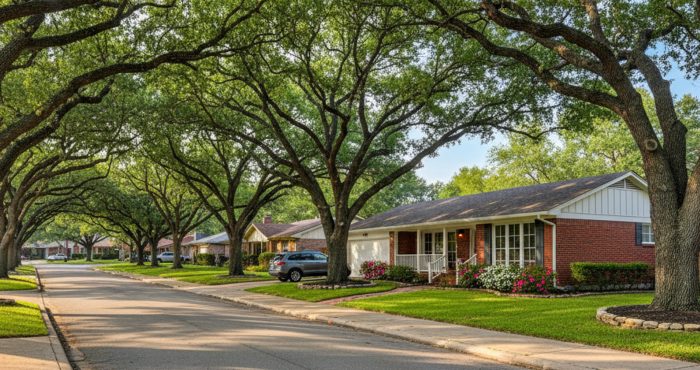
Richardson: The Established Choice In Richardson, you are going to see a dominance of ranch-style homes built between the 1960s and 1980s. Many of these feature “pier and beam” foundations, which are great for our shifting Texas soil but require maintenance. The streets are lined with massive, mature oak trees that form a canopy over the road—something you just don’t get in newer developments.

However, buying here often means you need a renovation budget. While you can find updated homes, many listings at the median price point (around $450,000 to $500,000) will need cosmetic updates or systems repairs. You generally get a larger lot here, and many neighborhoods do not have an HOA.

Frisco: The Modern Turnkey Frisco is dominated by builds from the 2000s to present day. You will see streets of two-story traditional brick homes, open floor plans, and high ceilings. If you are looking for new construction homes in Frisco, you are buying into master-planned communities. These almost always come with an HOA, but that fee pays for community pools, clubhouses, and meticulously landscaped common areas.

The trade-off is the lot size. In the newer phases of Frisco, lot sizes are shrinking. You are paying a premium for that “move-in ready” status, with median prices often hovering around $670,000 or more.


Commute & Infrastructure: Tollway vs. US-75 & DART

For many of my clients, the commute is the deciding factor. If you work in Downtown Dallas, this section is critical.

Richardson: The ‘Inner Ring’ Advantage Richardson is considered an “Inner Ring” suburb, located just about 15 miles from downtown. You have direct access to US-75 (Central Expressway) and I-635. While traffic on 75 is heavy, the distance is short enough that a typical commute is 20 to 30 minutes.

The major advantage here is the DART Rail (Red Line). Richardson has multiple stations, allowing for a car-free commute to Downtown Dallas, the Medical District, or even the airport (via connection). If you want to read a book on your way to work instead of fighting traffic, Richardson wins.

Frisco: The Tollway Life Frisco is located about 28 miles from downtown, and that extra distance matters. Drivers here rely heavily on the Dallas North Tollway (DNT) and the Sam Rayburn Tollway (121).

Because Frisco has grown so fast, traffic patterns can be intense. Rush hour commutes to Downtown Dallas can easily exceed 60 to 70 minutes one way. However, if you work in the Legacy West business park or at the Toyota headquarters in Plano, Frisco is a very convenient drive.


School Districts: Frisco ISD vs. Richardson ISD

Both cities offer strong educational opportunities, but the districts operate very differently.

Frisco ISDFrisco ISD is consistently “A” rated by the Texas Education Agency. The district is famous for its “small school model.” Rather than building massive high schools with 4,000 students, they build more high schools to keep student populations smaller. This allows more students to participate in varsity sports, band, and extracurriculars. For buyers who want consistent ratings across every single elementary, middle, and high school, Frisco is often the top pick.

Richardson ISD Richardson ISD is a diverse district with some incredible standout programs. While the district-wide ratings have fluctuated recently (receiving a C rating in the 2024/25 cycle), specific feeder patterns remain highly desirable. High schools like J.J. Pearce and Richardson High offer robust Advanced Placement and magnet programs that rival any in the state.

The Plano Factor It is important to note that the northern part of Richardson actually falls into Plano ISD boundaries. For many buyers, finding a home in Richardson that feeds into Plano schools is a sweet spot—you get the Richardson location with the Plano ISD reputation.


Lifestyle: Sports & Retail vs. Culture & Food

What do you want to do on a Saturday afternoon? The “vibe” in these two cities is distinct.

Frisco: Polished and Active Frisco feels very new and manicured. It is home to the “Billion Dollar Mile,” The Star (Dallas Cowboys World Headquarters), and the new PGA Headquarters. If you love high-end retail, Stonebriar Centre and the nearby Legacy West offer some of the best shopping in Texas. The parks here are modern, featuring expansive sports complexes and splash pads.

Richardson: Diverse and Grounded Richardson is often called the “Cultural Heart” of the suburbs. It is home to the DFW Chinatown and an Asian food district that foodies drive across town to visit. It has a university town feel thanks to the University of Texas at Dallas (UTD). Cultural amenities like the Eisemann Center for Performing Arts and the Alamo Drafthouse give it a grounded, community-focused atmosphere. The parks, like Sherrill Park, are older with plenty of shade trees.


Cost of Living & Tax Rates

When budgeting, you have to look beyond the mortgage payment. A cheaper house in Richardson might come with a different tax reality.

Tax Rates Frisco generally has a lower total tax rate (approximately 2.18%) compared to Richardson (approximately 2.67%). This is largely because Frisco has a massive commercial tax base (office parks, stadiums, malls) that helps subsidize the residential taxes.

Buying Power Here is how the math roughly works out:

  • Frisco: You might pay 2.2% taxes on a $700,000 home.
  • Richardson: You might pay 2.7% taxes on a $500,000 home.

Your money goes further in Richardson regarding square footage and land, but you are paying for it in the age of the home and potential maintenance costs. Frisco commands a premium price tag, but you are paying for modern energy efficiency and that “new” feel.

Verdict: Which Suburb Fits You?

  • Choose Frisco if: You work remotely or in the Legacy/Plano area, you want top-tier school ratings across the board, and you prefer modern, low-maintenance homes with community amenities.
  • Choose Richardson if: You commute to Downtown Dallas, you value cultural diversity and an incredible food scene, you want a larger lot with mature trees, and you don’t mind doing some updates to an older home.

Why Homeowners Choose Bale Real Estate Group

Buying or selling requires more than just timing the market. The Bale Real Estate Group helps clients understand pricing, competition, and how to position a home to stand out from day one. For sellers, that includes strategic pricing, professional staging, targeted marketing, Zillow Showcase exposure, and our Certified Pre-Owned Home Listing Program. The goal is simple: create stronger demand and better results in today’s market.

Frequently Asked Questions

Is Frisco or Richardson closer to Downtown Dallas?

Richardson is significantly closer to the city center. It is located approximately 15 miles from Downtown Dallas, whereas Frisco is about 28 miles north. This difference can save Richardson residents 30 to 40 minutes per day in commuting time.

Are home prices higher in Frisco or Richardson?

Generally, home prices are higher in Frisco. You can expect to pay 30% to 50% more in Frisco for comparable square footage, largely because the inventory is much newer. Richardson offers more affordable entry points, though renovated homes in prime neighborhoods can still command high prices.

Which city has better schools, Frisco or Richardson?

Frisco ISD generally holds higher district-wide accountability ratings and offers a consistent experience across all zones. Richardson ISD has more fluctuation in ratings but offers exceptional magnet programs and specific high-performing feeder patterns that many parents specifically target.

Does the DART train go to Frisco?

No, the DART rail system does not extend into Frisco. The Red Line ends at the Parker Road station in Plano, near the Richardson border. Residents in Richardson have direct access to rail transit, while Frisco residents are dependent on cars and tollways.

Posted in: Community Guides, Frisco Real Estate, Home Buying, Market Updates, Relocating to North Dallas Tagged: 2026 Housing Market, Buyer Guide, Dallas North Tollway, DART Rail, DFW Chinatown, Frisco ISD, Frisco Real Estate, Frisco vs Richardson, Legacy West, New Construction Homes in Frisco, North Dallas Real Estate, PGA Frisco, Plano ISD, Relocation Guide, Richardson Homes, Richardson ISD, Richardson Real Estate, The Star Frisco, US 75, UT Dallas

History of Frisco, TX: From Watering Stop to Sports City USA

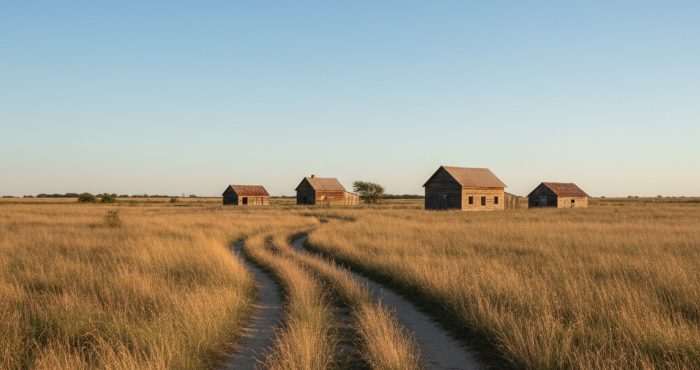
If you drive down the Dallas North Tollway today, passing the glistening glass of The Star or the massive PGA headquarters, it is genuinely hard to imagine that not too long ago, this was all blackland prairie.

Frisco feels brand new. It’s often headline news for being one of the fastest-growing cities in the country, known for the “$5 Billion Mile” and high-end retail. But here is the secret that adds so much character to living in Frisco TX: this isn’t just a pop-up suburb. It is a town born from grit, steam engines, and a very literal migration.

The city’s success has always been defined by transportation. First, it was the cattle trails, then the iron rails, and today, the tollways. While many assume the name connects us to the West Coast, the reality is a lot more local and a lot more interesting. Let’s grab a coffee and look at how a steam engine watering stop turned into a corporate powerhouse.


Before the Rails: The Story of Lebanon and the Shawnee Trail

Before we talk about Frisco, we have to talk about the town that was supposed to be the hub of the area: Lebanon.

If you drive down Preston Road (State Hwy 289) today, you are driving on top of the historic Shawnee Trail. In the mid-1800s, this was the main artery for millions of longhorn cattle being driven north to markets in Missouri and Kansas. Naturally, settlements popped up along this route to service the drovers and farmers.

Lebanon was established around 1860 (when it got its post office) and sat about four miles east of where downtown Frisco is today. By the late 1800s, Lebanon was thriving. It had a flour mill, a cotton gin, and a school. It was the center of gravity for the area.

So, why isn’t it the major city today? It came down to elevation. Lebanon sat on the “Preston Ridge,” which was high ground. When the steam trains came calling, they needed a flat route and, crucially, a water source. Lebanon was just too high up for the steam engines to pump water effectively.


1902: The Train Arrives and a Town Moves on Logs

This is where the story gets cinematic. In 1902, the St. Louis-San Francisco Railway decided to push a line through the area. Since they couldn’t service the trains in Lebanon, they chose a spot about four miles west where the elevation was lower and water was accessible.

The railroad built a depot, and that changed everything. The residents and business owners of Lebanon realized that if they wanted to survive economically, they had to be near the tracks. But they didn’t just move themselves—they moved their buildings.

In a massive undertaking often called the “Great Migration,” residents placed their homes and businesses on logs. Using steam engines and mules, they literally rolled the town of Lebanon four miles west to the new depot site.

One of the most famous examples of this is the T.J. Campbell house. It was rolled on logs to the new townsite and stands today as Randy’s Steakhouse, a local dining staple. This collection of moved buildings formed the original townsite, which you can still explore if you look at Downtown Frisco Rail District real estate.


Why is it Called Frisco? (It’s Not San Francisco)

There is a lot of confusion about the name. You will often hear people joke that it’s “Little San Francisco,” but the connection is strictly industrial, not cultural.

When the town first formed around the depot, the residents named it Emerson in honor of Francis Emerson, a wealthy banker and landowner who had promised to place a bank in the new town. It seemed like a solid plan until the federal government stepped in.

Here is how the name evolved:

  • The Rejection: The U.S. Postal Service rejected the name “Emerson” because it was too similar to “Emberson,” another town in Lamar County. They were worried about mail getting mixed up.
  • The Pivot: The residents needed a new name fast. They looked to the lifeline of their economy: the St. Louis-San Francisco Railway.
  • The Choice: They voted for “Frisco City” to honor the line.
  • The Shortening: Over time, “City” was dropped, and it became simply Frisco.

And if you have ever wondered about the city’s logo (the shield shape that looks a bit like a stretched hide), that comes from the railroad too. It is known as the “coonskin” logo. Railroad lore says a station agent in Neosho, Missouri, tacked a raccoon skin up on the depot wall to dry, and the railway executives liked the unique shape enough to adopt it as their emblem. Frisco adopted it right along with the name.


King Cotton and the Blackland Prairie

For most of the 20th century, Frisco wasn’t about sports or corporate HQs; it was about agriculture. The town sat right on top of the Blackland Prairie, which boasts some of the richest, deepest soil in the world.

Cotton was king here. By the mid-1900s, this small town supported five different cotton gins. It was a major shipping point for the region, sending agricultural products north and south along the rails.

Despite the industry, the town remained quiet. For decades, the population hovered under 2,000 people. It was a tight-knit community where everyone knew everyone, centered around the school and the grain elevators—some of which you can still see towering over the downtown area today.


From Bedroom Community to Corporate Powerhouse

The shift from a sleepy farm town to a major destination began in the 1990s, and once again, transportation was the catalyst.

The expansion of the Dallas North Tollway north of Highway 121 opened the floodgates. Suddenly, the commute to Dallas was manageable, and land was plentiful.

  • Population Explosion: In 1990, Frisco had a population of roughly 6,000. Today, that number has soared past 200,000. It held the title of the fastest-growing city in the U.S. for much of the 2000s (specifically 2000-2009 and again in 2017).
  • Economic Shift: We moved from cotton fields to corporate campuses. The development of the “$5 Billion Mile” brought massive mixed-use projects.
  • Sports City USA: Frisco leaned hard into public-private partnerships. This strategy brought us The Star (World Headquarters of the Dallas Cowboys), Toyota Stadium (FC Dallas), and the new PGA Frisco headquarters.

This rapid development has created a diverse inventory of new construction homes in Frisco, attracting buyers who want modern amenities but appreciate the stability of a well-planned city.


Preserving the Past: Where to See History Today

For those of us who live here, it’s important to remember that the shiny new developments are built on a deep foundation. If you want to connect with the history of Frisco, there are a few places you should visit:

  • Frisco Heritage Museum: Located near the city center, this is the best place to see the actual steam locomotives and historic structures that define the city’s past.
  • The Rail District: This is the original downtown. It’s currently undergoing revitalization, but it retains the original street grid and many historic buildings now serving as boutiques and restaurants.
  • Randy’s Steakhouse: As mentioned earlier, this is a piece of Lebanon that survived the move. Eating there is literally dining inside history.
  • Historical Markers: Keep an eye out along Preston Road for markers denoting the path of the Shawnee Trail.

The blend of this preserved history with modern luxury is what gives local real estate its edge. You aren’t just buying a house; you’re buying into a story of resilience and growth.

Your Advantage With Bale Real Estate Group

Buying or selling in Frisco requires more than just timing the market. The Bale Real Estate Group helps clients understand pricing, competition, and how to position a home to stand out from day one. For sellers, that includes strategic pricing, professional staging, targeted marketing, Zillow Showcase exposure, and our Certified Pre-Owned Home Listing Program. The goal is simple: create stronger demand and better results in today’s market.

Frequently Asked Questions

Was Frisco named after San Francisco?

No, not directly. The city was named after the St. Louis-San Francisco Railway line that ran through town. While the railway’s name obviously references the California city, Frisco, Texas, was named to honor the train company that gave the town life.

What was the original name of Frisco, Texas?

The town was originally named Emerson in 1902. However, the U.S. Postal Service rejected it because it was too similar to another Texas town called Emberson, leading the residents to choose “Frisco City” instead.

Why did the town of Lebanon disappear?

Lebanon sat on a high ridge, which made it difficult for steam engines to pump the water they needed. When the railroad bypassed Lebanon in 1902 for a lower route, the residents and businesses moved their buildings to the new railway stop, effectively dissolving the old town.

What is the meaning of the Frisco logo?

The unique shield shape used by the city is based on the logo of the St. Louis-San Francisco Railway. It is known as the “coonskin” logo, said to be modeled after a raccoon skin that was pinned up to dry on a depot wall in Missouri.

Posted in: Community Guides, Frisco Real Estate, Home Buying, Relocating to North Dallas Tagged: Blackland Prairie, Buyer Guide, Dallas North Tollway, Downtown Frisco, Frisco Heritage Museum, Frisco History, Frisco Rail District, Frisco Real Estate, Frisco Relocation, Frisco TX, History of Frisco TX, Lebanon Texas, Living in Frisco TX, New Construction Homes in Frisco, PGA Frisco, Randy’s Steakhouse, Relocation Guide, Shawnee Trail, Sports City USA, St. Louis-San Francisco Railway, The Star Frisco

Bale Real Estate Group
(972) 469-0332
TREC - Information About Brokerage Services
TREC - Consumer Protection Notice
Site created by Michael Tritthart Team. | View Privacy Policy