Top 1% Frisco & Plano Realtors | Bale Real Estate GroupTop 1% Frisco & Plano Realtors | Bale Real Estate Group

Top 1% North Texas luxury real estate team with $50M+ in sales and 80+ 5-star reviews. Frisco, Plano, Preston Hollow & North Dallas.

  • Home
  • Search
  • Buyers
    • 8 Steps to Buying a Home
    • Smart Buyer Strategy
    • How Much Home Can You Afford?
    • Choosing the Right Community & Location
    • New Construction Buyer Representation
    • Buying and Selling at the Same Time
    • Relocating to North Dallas
    • DFW Property Taxes
  • Sellers
    • 8 Steps to Selling a Home
    • Pre-Listing Appointment
    • Certified Pre-Owned Home Listing Program
    • Strategic Pricing & Market Positioning
    • Professional Home Preparation
    • Marketing Your Home for Maximum Exposure
    • Zillow Showcase
      • Zillow Showcase – Example of Listing Your Home
    • Offer Strategy & Seller Protection
    • How Much Will I Make Selling My House?
  • Communities
    • Allen
    • Coppell
    • Dallas
      • Oakdale
    • Frisco
      • Country Club Ridge at The Trails
      • Custer Creek Farms
      • Griffin Parc
      • Heather Ridge Estates
      • Shaddock Creek Estates
      • Starwood
      • The Canals at Grand Park
      • The Fairways
      • Villages of Stonebriar Park
    • McKinney
    • Park Cities
    • Plano
      • Avignon Windhaven
      • Cliffs of Gleneagles
      • Crystal Creek
      • Deerfield
      • Lakeside on Preston
      • Shoal Creek
      • Wentworth Estates
      • Willow Bend Polo Estates
      • Windrose Tower
    • Preston Hollow
    • Prosper
    • Southlake
  • Our Advantage
    • Our Story
    • Real Producers: Cover Story
    • Resume
    • What if?
    • Testimonials
    • Past Sold Map
    • Blog
  • Videos
  • Contact

Relocating to North Texas in 2026: Plano TX vs Frisco Housing and Commutes


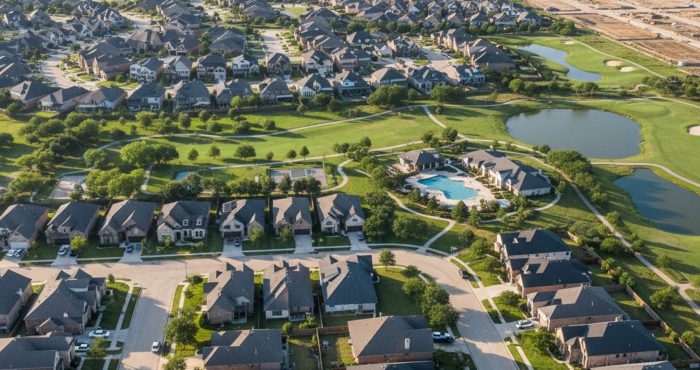
Choosing where to buy a home in the Dallas-Fort Worth metroplex often comes down to comparing two neighboring powerhouses. Buyers looking at Plano TX vs Frisco quickly realize both cities offer extensive amenities, strong economic foundations, and highly rated infrastructure.

While they share a border along the Sam Rayburn Tollway, the daily experience in each city feels distinct. Plano leans on its established history and mature neighborhoods. Frisco continues to expand with massive new developments and expansive sports headquarters.

Deciding between the two requires looking past the surface appeal. Buyers need to weigh the differences in commute times, property tax rates, and the availability of new construction. Understanding these local nuances is the key to making a sound real estate investment.

The final choice depends on prioritizing specific daily conveniences. Whether a buyer values a shorter drive to downtown or the pristine feel of a brand-new subdivision, both locations offer strong real estate fundamentals.


Plano vs. Frisco Real Estate and Housing Trends

The housing stock in these two cities reflects their different timelines of rapid growth. Buyers will notice a sharp contrast in architectural styles, lot sizes, and neighborhood structures.

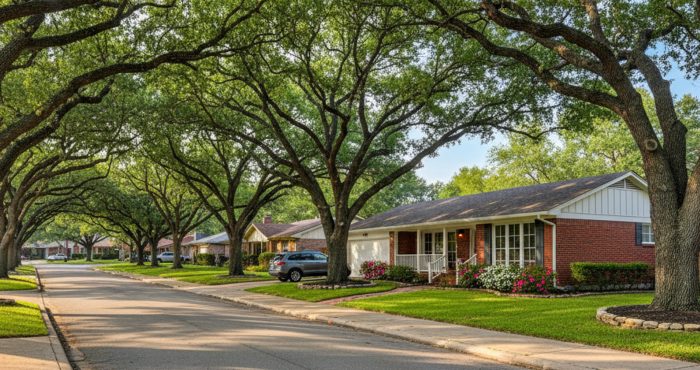
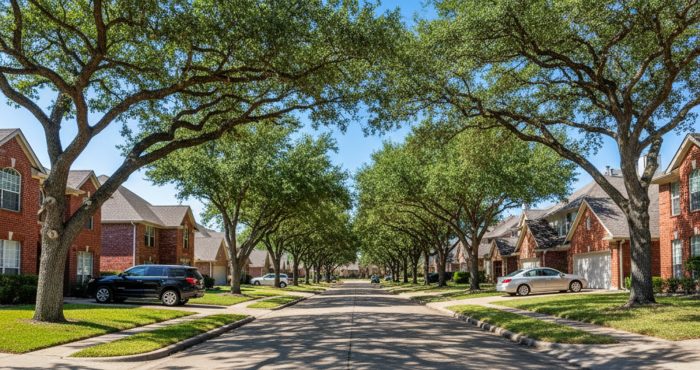
Plano features a massive inventory of homes built between the 1980s and early 2000s. These established neighborhoods often provide larger lots, mature tree canopies, and a distinct lack of mandatory homeowners associations in certain zip codes. This older housing stock appeals to buyers who want custom architecture rather than uniform tract homes.

Frisco is dominated by newer construction and expansive master-planned communities. Nearly every residential development built here in the last two decades includes an active HOA. These associations maintain neighborhood pools, parks, and strict architectural standards.

Median home prices currently reflect Frisco’s newer inventory and high demand. Buyers can expect median prices in Plano to hover around $508,000 to $540,000. Frisco commands a higher entry point of approximately $580,000 to $645,000.

This $40,000 to $100,000 gap directly impacts monthly carrying costs for buyers. Those searching for homes for sale in Plano often find their budget stretches further. Frisco buyers generally pay a premium for modern floor plans and community amenities.

Location within each city also dictates property values. West Plano historically commands higher prices than East Plano due to its proximity to the Dallas North Tollway. Frisco’s rapid northward expansion means the newest construction is often found closer to the US-380 corridor.


Cost of Living and Property Tax Comparison

Texas levies no state income tax, making property taxes a crucial factor in any housing budget. Buyers relocating from out of state are often surprised by how heavily these local assessments impact their monthly mortgage payments.

The base city tax rates are quite competitive between the two municipalities. Plano currently assesses a city tax rate of approximately 0.4376 per $100 of property valuation. Frisco sits slightly lower at roughly 0.4255 per $100.

The city rate is only one piece of the puzzle. The total effective property tax rate depends heavily on the specific school district and county assessments. Homes in this region fall into either Collin County or Denton County, which alters the final calculation.

Total effective tax rates generally range between 1.37% and 2.2% of the assessed home value. Buyers must verify the exact tax rate of a specific property before making an offer.

Crossing a neighborhood street can sometimes alter the annual tax bill by thousands of dollars.

Buyers looking at new construction in Frisco should ask about Public Improvement Districts or Municipal Utility Districts. These special tax assessments are common in newer developments to fund local infrastructure. They can add a noticeable amount to the annual tax burden on top of the standard city and county rates.


Commuting to Downtown Dallas and DFW Airport

Daily travel times are a major deciding factor for commuters working in central Dallas or traveling frequently. The highway infrastructure in North Texas is robust, but geographic location still dictates the daily drive.

Buyers must carefully map their specific routes before choosing a zip code.

Plano holds a distinct geographic advantage for anyone commuting into Downtown Dallas. Located roughly 20 miles north of the city center, residents can typically reach downtown in 30 to 45 minutes via the Dallas North Tollway or US-75.

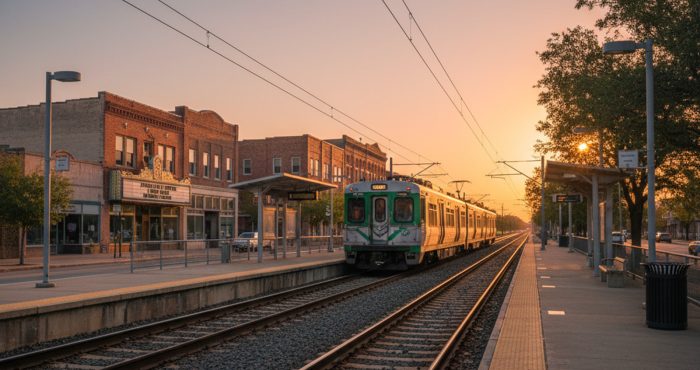
Plano also offers access to the DART light rail system, providing a rare car-free commuting option in North Texas. This transit connection is a significant asset for buyers who want to avoid toll road traffic entirely.

Frisco sits further north, adding roughly seven miles to the downtown commute. The drive from Frisco to Downtown Dallas spans about 27 miles and generally takes 35 to 50 minutes. This travel time depends heavily on rush hour congestion along the Dallas North Tollway.

Both cities offer excellent access to DFW International Airport via the Sam Rayburn Tollway. Residents in either location can expect a relatively smooth 25-mile drive. This puts the airport within a convenient 30 to 40-minute reach.

Toll road expenses are another factor commuters must budget for in North Texas. Driving the Dallas North Tollway or Sam Rayburn Tollway daily requires an active TollTag. These fees can quickly add up to hundreds of dollars per month for a household with two commuting vehicles.


Educational Infrastructure: Plano ISD vs. Frisco ISD

The public school systems in both cities are massive operations that draw buyers to the region. While both districts offer extensive facilities, their approaches to campus size and student distribution differ significantly.

Plano Independent School District operates as an established, mature district serving approximately 44,000 to 50,000 students. The district spans 73 campuses and is highly regarded for its specialized academic programs. Its massive senior high schools offer a vast array of extracurricular activities.

Frisco Independent School District has experienced explosive growth, currently serving around 63,000 students across 77 campuses. To manage this rapid expansion, Frisco ISD adopted a smaller-school model. This structure caps high school enrollment to keep student populations manageable per campus.

This model means Frisco has a higher number of high schools compared to traditional districts of its size. Buyers should also note that school zoning in the Dallas-Fort Worth metroplex frequently crosses city lines.

It is entirely possible to purchase a home within the Plano city limits that is zoned for Frisco ISD, or vice versa. Always verify the specific attendance zones using the district’s official address locator. Relying strictly on the city mailing address can lead to unexpected zoning surprises.

The sheer scale of the athletic and arts facilities in these districts rivals many small colleges. Frisco ISD partners with the Dallas Cowboys to use the indoor stadium at The Star for high school events. Plano ISD utilizes multiple massive district-owned stadiums to host its varsity athletics.


Retail, Dining, and Entertainment Amenities

The sheer volume of commercial development in Collin County means residents rarely need to travel to Dallas for entertainment. Both suburbs boast massive retail hubs and distinct dining districts.

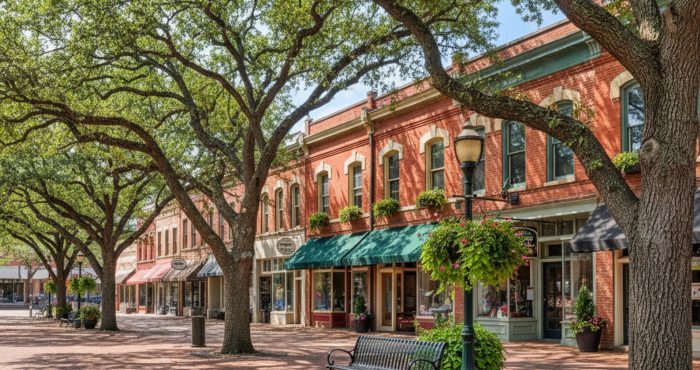
Plano is anchored by Legacy West, a premier mixed-use destination that combines high-end retail with corporate headquarters like Toyota. Just a few miles away, Downtown Plano offers a more historic, walkable atmosphere. This downtown sector features independent restaurants and brick-paved streets.

Frisco counters with an unmatched focus on sports and large-scale entertainment. The Star serves as the world headquarters for the Dallas Cowboys, anchoring a massive district of restaurants, boutiques, and a hotel.

Frisco Square also provides a centralized civic and retail hub located right next to Toyota Stadium. Buyers seeking a highly walkable, modern nightlife scene often gravitate toward Legacy West. Sports enthusiasts find Frisco’s amenities tough to beat.

The retail borders between these North Texas suburbs are increasingly blurred. Residents in northern Frisco often cross over to enjoy the historic downtown square in McKinney. This interconnected web of commercial districts ensures buyers are never more than a short drive from premium shopping.


Parks and Outdoor Recreation Areas

Access to green space is a priority for many buyers relocating to the Texas suburbs. Both municipalities have invested heavily in their parks and recreation departments. This preserves natural areas amidst the rapid commercial growth.

Plano is home to the Arbor Hills Nature Preserve, a sprawling 200-acre park located on the western edge of the city. This preserve offers miles of unpaved hiking trails, paved cycling paths, and elevated observation towers. It feels entirely removed from the surrounding suburban environment.

Frisco takes a highly structured approach to its outdoor amenities, heavily emphasizing community sports facilities and manicured green spaces. Frisco Commons Park serves as a centerpiece for the community. The park features extensive playgrounds, an amphitheater, and a stocked fishing pond.

The integration of these parks directly impacts local real estate values. Homes located within walking distance of Arbor Hills or major Frisco trailheads consistently command a premium on the open market.

Golf courses and country clubs provide another layer of outdoor recreation in Collin County. Both cities feature prestigious private clubs and well-maintained public courses woven directly into residential neighborhoods. Living on a golf course lot remains a highly sought-after real estate premium in both Plano and Frisco.

Your Advantage With Bale Real Estate Group

Navigating the Plano and Frisco real estate market takes more than just watching prices. The Bale Real Estate Group, ranked in the top 1% of North Texas Realtors, helps buyers and sellers understand how to position themselves based on current competition, not just past sales. From identifying the right neighborhoods to negotiating stronger terms, their approach is focused on preparation, strategy, and results.

Frequently Asked Questions

Is it more expensive to live in Plano or Frisco?

Frisco generally carries a higher price tag for real estate, with median home prices sitting roughly $40,000 to $100,000 higher than Plano. This is largely due to Frisco’s high concentration of newer construction and master-planned communities. The base city property tax rates remain very similar between the two municipalities.

Which city has a better commute to Downtown Dallas?

Plano offers a noticeably shorter and more flexible commute to the city center. Located roughly 20 miles from downtown, Plano residents save about 10 to 15 minutes of driving time compared to Frisco. Plano also provides access to the DART light rail system for a completely car-free transit option.

Are HOAs more common in Plano or Frisco?

Homeowners associations are significantly more common in Frisco. Because the vast majority of Frisco’s housing stock was built within the last two decades, nearly all residential developments operate as master-planned communities with mandatory HOAs. Plano offers more opportunities to find established neighborhoods without these association fees.

Posted in: Frisco Real Estate, Home Buying, Market Updates, Plano Real Estate, Relocating to North Dallas Tagged: 2026 Housing Market, Arbor Hills Nature Preserve, Buyer Guide, Collin County Real Estate, Cost of Living, Dallas North Tollway, DART Rail, Frisco Commons Park, Frisco ISD, Frisco Real Estate, Legacy West, North Texas Real Estate, Plano ISD, Plano Real Estate, Plano TX vs Frisco, Property Taxes, Relocation Guide, Sam Rayburn Tollway, The Star Frisco

Frisco vs. Richardson: The ‘New Build’ vs. ‘Location’ Dilemma

If you are currently looking at homes for sale in the Dallas-Fort Worth metroplex, you have likely hit a common fork in the road. Do you choose the shiny, brand-new home with resort-style amenities further north, or do you prioritize a shorter commute and a neighborhood with mature trees closer to the city core?

This is exactly the trade-off when comparing Frisco vs. Richardson.

Frisco is the high-growth giant. It is known for professional sports, endless retail, and schools that look like university campuses. It feels manicured, modern, and busy. Richardson, on the other hand, is the established tech hub. It is known for its cultural diversity, incredible food scene, and proximity to Dallas.

Here is the thesis I tell my clients: Choose Frisco if you want turnkey luxury and uniform school ratings. Choose Richardson if you want location, character, and long-term value potential.

Let’s break down the numbers and the lifestyle differences so you can decide which suburb fits your life.


Housing Inventory: 1960s Charm or 2020s Modern?

The biggest visual difference between these two cities is the age of the homes. When we drive through these neighborhoods, the vibe is completely different.

Richardson: The Established Choice In Richardson, you are going to see a dominance of ranch-style homes built between the 1960s and 1980s. Many of these feature “pier and beam” foundations, which are great for our shifting Texas soil but require maintenance. The streets are lined with massive, mature oak trees that form a canopy over the road—something you just don’t get in newer developments.

However, buying here often means you need a renovation budget. While you can find updated homes, many listings at the median price point (around $450,000 to $500,000) will need cosmetic updates or systems repairs. You generally get a larger lot here, and many neighborhoods do not have an HOA.

Frisco: The Modern Turnkey Frisco is dominated by builds from the 2000s to present day. You will see streets of two-story traditional brick homes, open floor plans, and high ceilings. If you are looking for new construction homes in Frisco, you are buying into master-planned communities. These almost always come with an HOA, but that fee pays for community pools, clubhouses, and meticulously landscaped common areas.

The trade-off is the lot size. In the newer phases of Frisco, lot sizes are shrinking. You are paying a premium for that “move-in ready” status, with median prices often hovering around $670,000 or more.


Commute & Infrastructure: Tollway vs. US-75 & DART

For many of my clients, the commute is the deciding factor. If you work in Downtown Dallas, this section is critical.

Richardson: The ‘Inner Ring’ Advantage Richardson is considered an “Inner Ring” suburb, located just about 15 miles from downtown. You have direct access to US-75 (Central Expressway) and I-635. While traffic on 75 is heavy, the distance is short enough that a typical commute is 20 to 30 minutes.

The major advantage here is the DART Rail (Red Line). Richardson has multiple stations, allowing for a car-free commute to Downtown Dallas, the Medical District, or even the airport (via connection). If you want to read a book on your way to work instead of fighting traffic, Richardson wins.

Frisco: The Tollway Life Frisco is located about 28 miles from downtown, and that extra distance matters. Drivers here rely heavily on the Dallas North Tollway (DNT) and the Sam Rayburn Tollway (121).

Because Frisco has grown so fast, traffic patterns can be intense. Rush hour commutes to Downtown Dallas can easily exceed 60 to 70 minutes one way. However, if you work in the Legacy West business park or at the Toyota headquarters in Plano, Frisco is a very convenient drive.


School Districts: Frisco ISD vs. Richardson ISD

Both cities offer strong educational opportunities, but the districts operate very differently.

Frisco ISDFrisco ISD is consistently “A” rated by the Texas Education Agency. The district is famous for its “small school model.” Rather than building massive high schools with 4,000 students, they build more high schools to keep student populations smaller. This allows more students to participate in varsity sports, band, and extracurriculars. For buyers who want consistent ratings across every single elementary, middle, and high school, Frisco is often the top pick.

Richardson ISD Richardson ISD is a diverse district with some incredible standout programs. While the district-wide ratings have fluctuated recently (receiving a C rating in the 2024/25 cycle), specific feeder patterns remain highly desirable. High schools like J.J. Pearce and Richardson High offer robust Advanced Placement and magnet programs that rival any in the state.

The Plano Factor It is important to note that the northern part of Richardson actually falls into Plano ISD boundaries. For many buyers, finding a home in Richardson that feeds into Plano schools is a sweet spot—you get the Richardson location with the Plano ISD reputation.


Lifestyle: Sports & Retail vs. Culture & Food

What do you want to do on a Saturday afternoon? The “vibe” in these two cities is distinct.

Frisco: Polished and Active Frisco feels very new and manicured. It is home to the “Billion Dollar Mile,” The Star (Dallas Cowboys World Headquarters), and the new PGA Headquarters. If you love high-end retail, Stonebriar Centre and the nearby Legacy West offer some of the best shopping in Texas. The parks here are modern, featuring expansive sports complexes and splash pads.

Richardson: Diverse and Grounded Richardson is often called the “Cultural Heart” of the suburbs. It is home to the DFW Chinatown and an Asian food district that foodies drive across town to visit. It has a university town feel thanks to the University of Texas at Dallas (UTD). Cultural amenities like the Eisemann Center for Performing Arts and the Alamo Drafthouse give it a grounded, community-focused atmosphere. The parks, like Sherrill Park, are older with plenty of shade trees.


Cost of Living & Tax Rates

When budgeting, you have to look beyond the mortgage payment. A cheaper house in Richardson might come with a different tax reality.

Tax Rates Frisco generally has a lower total tax rate (approximately 2.18%) compared to Richardson (approximately 2.67%). This is largely because Frisco has a massive commercial tax base (office parks, stadiums, malls) that helps subsidize the residential taxes.

Buying Power Here is how the math roughly works out:

  • Frisco: You might pay 2.2% taxes on a $700,000 home.
  • Richardson: You might pay 2.7% taxes on a $500,000 home.

Your money goes further in Richardson regarding square footage and land, but you are paying for it in the age of the home and potential maintenance costs. Frisco commands a premium price tag, but you are paying for modern energy efficiency and that “new” feel.

Verdict: Which Suburb Fits You?

  • Choose Frisco if: You work remotely or in the Legacy/Plano area, you want top-tier school ratings across the board, and you prefer modern, low-maintenance homes with community amenities.
  • Choose Richardson if: You commute to Downtown Dallas, you value cultural diversity and an incredible food scene, you want a larger lot with mature trees, and you don’t mind doing some updates to an older home.

Why Homeowners Choose Bale Real Estate Group

Buying or selling requires more than just timing the market. The Bale Real Estate Group helps clients understand pricing, competition, and how to position a home to stand out from day one. For sellers, that includes strategic pricing, professional staging, targeted marketing, Zillow Showcase exposure, and our Certified Pre-Owned Home Listing Program. The goal is simple: create stronger demand and better results in today’s market.

Frequently Asked Questions

Is Frisco or Richardson closer to Downtown Dallas?

Richardson is significantly closer to the city center. It is located approximately 15 miles from Downtown Dallas, whereas Frisco is about 28 miles north. This difference can save Richardson residents 30 to 40 minutes per day in commuting time.

Are home prices higher in Frisco or Richardson?

Generally, home prices are higher in Frisco. You can expect to pay 30% to 50% more in Frisco for comparable square footage, largely because the inventory is much newer. Richardson offers more affordable entry points, though renovated homes in prime neighborhoods can still command high prices.

Which city has better schools, Frisco or Richardson?

Frisco ISD generally holds higher district-wide accountability ratings and offers a consistent experience across all zones. Richardson ISD has more fluctuation in ratings but offers exceptional magnet programs and specific high-performing feeder patterns that many parents specifically target.

Does the DART train go to Frisco?

No, the DART rail system does not extend into Frisco. The Red Line ends at the Parker Road station in Plano, near the Richardson border. Residents in Richardson have direct access to rail transit, while Frisco residents are dependent on cars and tollways.

Posted in: Community Guides, Frisco Real Estate, Home Buying, Market Updates, Relocating to North Dallas Tagged: 2026 Housing Market, Buyer Guide, Dallas North Tollway, DART Rail, DFW Chinatown, Frisco ISD, Frisco Real Estate, Frisco vs Richardson, Legacy West, New Construction Homes in Frisco, North Dallas Real Estate, PGA Frisco, Plano ISD, Relocation Guide, Richardson Homes, Richardson ISD, Richardson Real Estate, The Star Frisco, US 75, UT Dallas

Frisco vs. Carrollton: Commute and Value Comparison

If you are looking at homes north of Dallas, you have likely hit a very common fork in the road. On one side, you have the shiny, polished allure of Frisco. On the other, you have the practical, central convenience of Carrollton.

I talk to buyers about this tradeoff constantly. It usually comes down to a battle between the “dream home” lifestyle and the reality of your daily schedule. Frisco offers the “new” factor—newer homes, newer schools, and massive mixed-use developments. Carrollton offers the “time” factor—a significantly shorter commute and a much lower mortgage payment for the same square footage.

Let’s break down the numbers and the daily reality so you can decide which city fits your life.


Frisco vs. Carrollton: The Core Tradeoff

Think of Frisco as the “destination” suburb and Carrollton as the “connected” suburb. Frisco is located in Far North Dallas. It has exploded in growth over the last two decades, meaning most of what you see there was built after 2000. It feels grand, manicured, and very intentional.

Carrollton, by contrast, is an “inner-ring” suburb that borders Dallas proper. It was largely developed in the 1970s and 80s. It doesn’t have the same “brand new” shine, but it has something Frisco can’t buy: location.

Here is the main thesis I tell my clients: Choose Frisco if you want top-tier schools and a luxury lifestyle and don’t mind paying for it with both money and drive time. Choose Carrollton if you want to save 20 minutes on your commute and $200,000 on your mortgage.


Commute Deep Dive: The Real Cost of Distance

For many professionals, this is where the decision is actually made. When you look at a map, Frisco and Carrollton seem like neighbors. In rush hour traffic, they are worlds apart.

The Drive to Downtown

If you work in Downtown Dallas, Carrollton is the clear winner. You are looking at a commute of roughly 15 miles. Depending on where you live in the city, you have multiple options, including I-35E, the Dallas North Tollway (DNT), or even surface streets if the highways jam up. You can usually get downtown in 25 to 35 minutes.

Frisco is a different story. You are about 28 miles north of the city center. During rush hour, that drive often stretches to 45 or even 60+ minutes. There are fewer bail-out routes; you are heavily reliant on the Dallas North Tollway, which can become a parking lot during peak times.

The “Toll Tax”

We need to talk about the hidden cost of living in Frisco: tolls. Commuting from Frisco to Dallas essentially mandates using the DNT. If you are driving round-trip five days a week, you are looking at roughly $7 to $8 a day with a TollTag. That adds up to over $150 a month—or nearly $2,000 a year—just for the privilege of driving to work.

Carrollton drivers often have the option to take I-35E, which is toll-free (unless you opt for the Express Lanes). This offers significant monthly savings that many buyers forget to factor into their budget.

The Public Transit Wildcard

This is a massive differentiator. Frisco opted out of the DART (Dallas Area Rapid Transit) system years ago. There are no trains and limited bus options. You must have a car to survive there.

Carrollton is fully integrated into DART. The Green Line runs right through the city with a major hub at the Downtown Carrollton Station. If you work downtown or at the Medical Center, you can park your car, hop on the train, and read a book while you commute. For some buyers, this access alone seals the deal.

Airport Access

If you are a consultant or travel frequently, Carrollton is arguably the best location in the metroplex. You are roughly 15 to 20 minutes from both DFW International and Dallas Love Field. From Frisco, getting to DFW can take 30 to 45 minutes depending on traffic on Highway 121, and getting to Love Field is a long haul south.


Cost of Living & Housing Market (2026 Update)

When we look at homes for sale in Frisco versus Carrollton, we are comparing two different financial tiers.

Home Prices

The price gap is real. As of 2026, the median home value in Frisco hovers between $650,000 and $700,000. For that price, you are typically getting a home built in the last 15 years with modern open floor plans, high ceilings, and community amenities.

In Carrollton, the median sits closer to $415,000 to $450,000. Your money goes much further here, but the inventory is older. A $500,000 budget in Carrollton might get you a fully renovated 1980s home with a pool and mature trees. In Frisco, $500,000 is often the entry point for a smaller starter home or a townhome.

The Tax Rate Paradox

This confuses almost every buyer I work with. You will often hear that Frisco has a lower tax rate than Carrollton. This is generally true. Frisco’s rate is often around 2.1% to 2.2% because their massive commercial developments (like The Star and corporate HQs) help subsidize the residential tax base. Carrollton’s rate is typically higher, often around 2.5% to 2.6%.

However, do not let the rate fool you. Because homes in Frisco are significantly more expensive, your actual annual tax bill is usually higher.

  • 2.6% on a $450,000 Carrollton home = ~$11,700/year.
  • 2.2% on a $700,000 Frisco home = ~$15,400/year.

Housing Stock and HOAs

If you hate Homeowners Associations (HOAs), Frisco might be tough for you. Almost every neighborhood in Frisco is a master-planned community with mandatory HOAs that enforce strict rules on everything from fencing to lawn ornaments.

Carrollton is a mix. While there are some HOA communities, many of the established neighborhoods have voluntary associations or no HOA at all. If you want to park a boat in your driveway or paint your front door a unique color, you will have an easier time finding a place to do that in Carrollton.


Schools & Education: Frisco ISD vs. CFBISD

For families with school-aged children, the school district is often the primary driver for moving to Frisco.

Frisco ISD

Frisco ISD is a powerhouse. It is consistently A-rated and is famous for its “small school model.” Rather than building massive high schools with 5,000 students, they build more schools to keep student populations smaller, allowing more kids to participate in sports and arts. The facilities are college-level, especially with partnerships like The Star. If you want the “Friday Night Lights” experience with top-tier AP offerings, this is it.

Carrollton (CFBISD and LISD)

Most of Carrollton falls under the Carrollton-Farmers Branch ISD (CFBISD), though some northern parts are in Lewisville ISD (LISD). CFBISD is a solid district that often earns B ratings. While it lacks the uniform “prestige” branding of Frisco, it has incredible magnet programs, International Baccalaureate (IB) options, and strong dual-language programs.

The Value Play

Here is the hard truth: If you do not have school-aged children, or if your children are in private school, paying the “Frisco Premium” on your home price might not make financial sense. You are paying for a school system you aren’t using. For empty nesters or young professionals, Carrollton offers a way to opt out of that premium while still living in a safe, well-maintained community.


Lifestyle: The Star vs. Koreatown

The “vibe” of these two cities could not be more different.

Frisco feels like a “Disney” suburb. It is polished, grand, and new. It is the home of the Dallas Cowboys World Headquarters at The Star, the PGA of America, and FC Dallas. The social scene revolves around high-end retail at places like Legacy West (just over the border) and large-scale entertainment districts. It is fantastic for youth sports and luxury shopping.

Carrollton is the cultural hub. It feels more grounded and authentic. It is home to the “Asian Town Center” at Old Denton Road and George Bush Turnpike. This is the place to go for authentic Korean BBQ, H Mart, K-Pop stores, and arguably the best diverse dining scene in the metroplex. It also features a charming Historic Downtown square with independent shops and breweries. If you prefer hole-in-the-wall gems over national chains, you will prefer the lifestyle here.

Green space is different, too. Frisco has massive, manicured sports parks. Carrollton utilizes its natural landscape better, with extensive Greenbelt trails and nature preserves that feel a bit more wild and secluded.


Verdict: Who Wins?

There is no bad choice here, only the choice that fits your stage of life.

Choose Frisco If:

  • You prioritize highly-rated schools and modern educational facilities.
  • You want a newer home with high ceilings, open concepts, and community amenities.
  • You want the “luxury suburb” feel and don’t mind the higher price tag.
  • You work remotely or in the northern suburbs (Plano/Frisco) and don’t have to commute downtown.

Choose Carrollton If:

  • You work in Downtown Dallas, near the airports, or need central access to the whole metroplex.
  • You want to maximize your budget and get more house for your money.
  • You value food culture, diversity, and a more “down to earth” neighborhood feel.
  • You prefer mature trees and character over new construction and HOAs.

Your Advantage With Bale Real Estate Group

Buying or selling in Frisco requires a clear strategy. The Bale Real Estate Group helps clients navigate pricing, competition, and how to position a home to attract serious buyers from day one. For sellers, that includes professional staging, targeted marketing, Zillow Showcase exposure, and our Certified Pre-Owned Home Listing Program. The goal is simple: create demand and deliver stronger results.

Frequently Asked Questions

Is the commute from Frisco to Dallas really that bad?

Yes, you need to be prepared for it. While it is a manageable 35 minutes on a Sunday, rush hour traffic on the Dallas North Tollway can easily push the drive to an hour or more each way. If you commit to living in Frisco and working downtown, you are committing to spending 10+ hours a week in your car.

Which city has lower property taxes, Frisco or Carrollton?

Technically, Frisco usually has a lower tax rate (around 2.2%). However, because the average home price in Frisco is $200,000+ higher than in Carrollton, your actual annual tax bill will almost certainly be higher in Frisco.

Is Carrollton safer than Frisco?

Both cities are considered very desirable places to live with strong community policing. Frisco is often cited as one of the safest cities in the country due to its newer infrastructure and affluence, but Carrollton also maintains low crime rates and a strong reputation for safety, particularly in its established residential neighborhoods.

Can I take public transit from Frisco to Dallas?

No, not directly. Frisco does not have DART rail service. To take the train, you would have to drive south to a Plano station. Carrollton, however, has direct access to the DART Green Line, which can take you straight into Downtown Dallas without fighting traffic.

Posted in: Community Guides, Frisco Real Estate, Home Buying, Market Updates, Relocating to North Dallas Tagged: 2026 Housing Market, Buyer Guide, Carrollton Real Estate, Carrollton-Farmers Branch ISD, Commute Times, Cost of Living, Dallas Love Field, Dallas North Tollway, DART Green Line, DFW Airport, Frisco ISD, Frisco Real Estate, Frisco vs Carrollton, Historic Downtown Carrollton, Koreatown Carrollton, Legacy West, Lewisville ISD, North Dallas Real Estate, PGA Frisco, Property Taxes, Relocation Guide, The Star Frisco

Frisco vs The Colony: Which North Dallas Suburb Fits Your Lifestyle?

If you are looking at homes along the booming Highway 121 corridor, you have likely narrowed your search down to two heavy hitters: Frisco and The Colony. On a map, they look like neighbors separated only by a highway. In reality, living in Frisco vs The Colony offers two very distinct experiences.

Frisco is the polished, master-planned corporate powerhouse known for its rapid growth and immaculate aesthetic. It feels like the “new downtown” of the northern suburbs. On the other side of the highway, The Colony offers a more eclectic, recreational vibe with direct access to Lake Lewisville and some of the best entertainment districts in the metroplex.

For many buyers, the choice comes down to budget, vibe, and priorities. Frisco generally appeals to those looking for top-tier school ratings and consistent property appreciation, while The Colony attracts buyers wanting more affordability, lakeside living, or a more relaxed atmosphere.


Cost of Living & Housing Market Comparison

Let’s get right to the numbers, because this is usually where the decision-making process starts. Generally speaking, Frisco is the more expensive market, but the math isn’t as straightforward as just looking at the price tag.

Home Prices and Rent In Frisco, the median home price typically hovers in the high $500,000s to $700,000 range. You are paying a premium for the address, the school district, and the newer infrastructure. If you are looking for new construction homes in Frisco, the price point often pushes even higher.

The Colony, by contrast, offers a lower barrier to entry. You can often find decent single-family homes in the low $400,000s. This makes it an attractive option if you want to buy your first home or need more square footage for your dollar. Renting follows a similar trend, though high-demand luxury apartments near Grandscape have narrowed the rental gap between the two cities.

The Property Tax Twist Here is where you need to pay close attention. A lower home price in The Colony doesn’t always equal a proportionately lower monthly payment.

Frisco generally has a lower total property tax rate, often around 1.7% to 1.8%. The Colony usually has a higher base tax rate, often exceeding 2.0%. Furthermore, if you are looking at “New Colony” developments like The Tribute or Austin Ranch, you might encounter MUD (Municipal Utility District) or PID (Public Improvement District) taxes. These can push your total tax obligation closer to 2.7%.

So, while you get “more house for less money” in The Colony, be sure to calculate your estimated monthly taxes carefully. A $450,000 home with a 2.7% tax rate carries a tax bill similar to a much more expensive home in a low-tax area.


School Districts: Frisco ISD vs. Lewisville ISD

For many households, schools are the primary driver of the home search. Both cities offer solid educational opportunities, but they operate differently.

Frisco ISDFrisco ISD is often considered the “gold standard” for buyers in this region. It is rated “A” (90/100) by the state and is famous for its “small school model.” Instead of building massive high schools with thousands of students, Frisco builds more high schools to keep student counts lower. This is designed to give more students a chance to participate in sports, arts, and leadership roles.

Lewisville ISD (The Colony) Most of The Colony is served by Lewisville ISD. LISD is a strong competitor, generally holding “B” to “A-” ratings. The district has a robust reputation for STEM programs and athletics. The Colony High School has deep community roots and a spirited atmosphere that many residents love.

It is also worth checking the specific zoning for any home you view. Boundaries can be tricky; some northern parts of Frisco actually fall into Prosper ISD or Lewisville ISD, and there are rare pockets where boundaries blur. Always verify the specific address before falling in love with a house.


Lifestyle & Entertainment: Corporate Polish vs. Lakeside Fun

The “vibe” difference is arguably the biggest differentiator between these two suburbs.

Frisco: Sports City USA Frisco feels manicured and corporate. It is known as “Sports City USA” for good reason—it is home to The Star (Dallas Cowboys World Headquarters), the PGA Headquarters, and FC Dallas. The dining scene leans toward upscale steakhouses and polished concepts, particularly around The Star and the nearby Legacy West area. If you like walking out of your office and into a high-end happy hour, Frisco fits the bill.

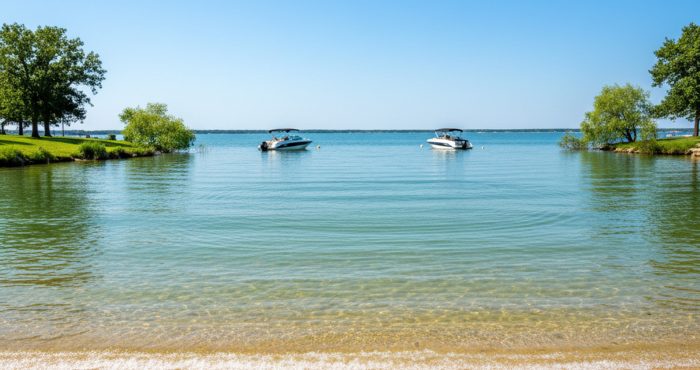
The Colony: City by the Lake The Colony feels more like a weekend destination. It calls itself the “City by the Lake,” and for good reason. You have direct access to Lake Lewisville for boating, fishing, and camping at Hidden Cove Park.

Then there is Grandscape. This massive entertainment district has completely changed the local landscape. Anchored by Scheels and Nebraska Furniture Mart, it features a Ferris wheel, an outdoor stage, and tons of patio dining. The vibe here is less “corporate lunch” and more “live music and beer,” especially at places like Truck Yard.


Commute & Location: Access to DFW Airport and Jobs

Since these cities are neighbors, you might think the commute is identical. However, small geographic differences can add up to 15 or 20 minutes of drive time depending on where you are headed.

DFW Airport Access The Colony wins this category handily. Because it sits further south and west along Highway 121, you can often get to DFW International Airport in about 20 to 25 minutes. From central or north Frisco, that drive is closer to 30 or 40 minutes, depending on traffic lights getting to the highway.

Downtown Dallas and Corporate HQs If you work in Downtown Dallas, Frisco offers a straight shot down the Dallas North Tollway (DNT). It is a direct, albeit busy, route. From The Colony, you often have to take Highway 121 to the Tollway or risk the traffic on I-35E, which can be unpredictable.

For those working at Toyota HQ or Legacy West, both locations are excellent. The Austin Ranch area of The Colony is practically across the street from these corporate hubs, making it a favorite for young professionals who want a five-minute commute.

Traffic Patterns One bottleneck to watch is Highway 423, which runs vertically through The Colony and western Frisco. It has seen massive development and can get congested. Frisco generally has more arteries (Preston, DNT, Custer, etc.) to disperse traffic, whereas The Colony relies heavily on 423 and 121.


Safety & Crime Rate Statistics

Safety is a top priority for anyone relocating to a new area. Both cities are generally considered safe places to live within the DFW metroplex, but the statistics show a slight difference.

Frisco is consistently ranked as one of the safest cities in America. In 2024, MoneyGeek ranked it the #2 safest city in the U.S. based on crime cost per capita. The high volume of new construction and master-planned subdivisions contributes to this environment.

The Colony is also statistically safe, though it tends to have slightly higher incident rates than Frisco. This is partly due to having older, denser neighborhoods and major entertainment districts that draw millions of visitors annually. As with any city, it is smart to check local police maps for specific neighborhood data before making a decision.

Why Buyers and Sellers Choose Bale Real Estate Group

Buying or selling in Frisco requires more than just timing the market. The Bale Real Estate Group helps clients understand pricing, competition, and how to position a home to stand out from day one. For sellers, that includes strategic pricing, professional staging, targeted marketing, Zillow Showcase exposure, and our Certified Pre-Owned Home Listing Program. The goal is simple: create stronger demand and better results in today’s market.

Frequently Asked Questions

Is it cheaper to live in Frisco or The Colony?

Generally, The Colony is cheaper regarding home prices and rent. You can typically buy a home for $100,000 to $200,000 less than a comparable property in Frisco. However, keep an eye on property taxes, as higher rates in The Colony can narrow the gap in your monthly payment.

Which city has better schools, Frisco or The Colony?

Frisco ISD generally holds higher state ratings (“A”) and is a major draw for buyers prioritizing education. Lewisville ISD, which serves The Colony, is a strong district with “B” to “A-” ratings and excellent specialized programs, so the “better” choice often depends on your specific student’s needs.

Does The Colony have high property taxes?

It can. While Frisco’s tax rate is often around 1.7%, The Colony’s rate is usually over 2.0%. If you buy in a newer development with MUD or PID assessments—like The Tribute—your total tax rate could approach 2.7%, which significantly impacts affordability.


The Verdict: Should You Move to Frisco or The Colony?

Choosing between Frisco vs The Colony ultimately comes down to what you value most in your daily life.

You should choose Frisco if:

  • You have a higher budget and want to maximize resale value.
  • Schools are your absolute number one priority.
  • You prefer a “new construction” feel with master-planned subdivisions.
  • You want quick access to the Dallas North Tollway for a downtown commute.

You should choose The Colony if:

  • You want a more affordable entry price into the housing market.
  • You love the idea of being minutes away from Lake Lewisville or Grandscape.
  • You need a shorter commute to DFW Airport.
  • You prefer an eclectic, entertainment-focused community over a corporate atmosphere.

Both cities offer an incredible quality of life. Whether you choose the polished streets of Frisco or the lakeside charm of The Colony, you are buying into one of the most dynamic regions in North Texas.

Posted in: Community Guides, Frisco Real Estate, Home Buying, Market Updates, Relocating to North Dallas Tagged: 2026 Housing Market, Austin Ranch, Buyer Guide, Dallas North Tollway, DFW Airport, Frisco ISD, Frisco Real Estate, Frisco vs The Colony, Grandscape, Highway 121, Lake Lewisville, Legacy West, Lewisville ISD, North Dallas Real Estate, PGA Frisco, Property Taxes, Relocation Guide, The Colony Real Estate, The Star Frisco, The Tribute

Frisco vs. Little Elm: Platinum Corridor or Lake Attitude?

Frisco vs. Little Elm: Platinum Corridor or Lake Attitude?

If you are looking to move to North Texas, you have almost certainly narrowed your search to the booming northern suburbs. Two of the most popular contenders sit right next to each other, yet they feel like different worlds.

On one side, you have Frisco—often called “Sports City USA”—which feels like the polished, high-energy center of the universe right now. It is defined by the “Platinum Corridor” of business, endless luxury retail, and headquarters for the Dallas Cowboys. On the other side is Little Elm, a town that has exploded in growth by embracing a “Lake Attitude.” It is laid-back, water-centric, and offers a sandy beach right in the middle of town.

For many buyers, the choice comes down to lifestyle preference versus budget. Frisco is for those who want to be in the absolute center of the action with premier amenities at their doorstep. Little Elm appeals to those seeking more square footage for their money and a relaxed vibe, all while staying just a 15-minute drive from the Frisco border.


Cost of Living & Housing Market Comparison

Let’s get straight to the numbers, because this is usually where the decision starts. When you look at the sticker prices, Little Elm seems like the obvious bargain, but there is a little more math involved than just the purchase price.

The median home price gap here is significant. In Frisco, you are generally looking at a median price range between $580,000 and $690,000. It is a premium market. In contrast, Little Elm offers a median range closer to $340,000 to $400,000. For buyers, this means you can often find a brand-new construction home in Little Elm for the same price—or less—than an older resale home in Frisco.

However, you need to watch out for the “tax trap.” This is the most common surprise for people relocating to North Texas. While Frisco’s tax rate hovers around 2.18%, Little Elm’s base rate is often higher, around 2.46%. But that isn’t the whole story.

Many newer neighborhoods in Little Elm are situated in MUDs (Municipal Utility Districts) or PIDs (Public Improvement Districts). These are special taxing jurisdictions used to fund infrastructure like roads and water lines. If you buy in one of these areas, your total property tax bill could be significantly higher than a comparable home in Frisco. Sometimes, the lower mortgage payment from a cheaper house is offset by a higher monthly tax bill, so always review the total monthly payment, not just the sales price.

For those not ready to buy, the rental market in Little Elm generally offers more affordable options for single-family homes compared to the luxury apartment-heavy inventory in Frisco.


Lifestyle & Amenities: The Star vs. The Lakefront

The difference in how you spend your Saturday afternoon defines the rivalry between these two towns. Frisco is built for entertainment, major events, and high-end leisure.

Living in Frisco means you are neighbors with The Star (the Dallas Cowboys World Headquarters), the massive new PGA Frisco district, and Stonebriar Centre. The dining scene is vast, ranging from upscale steakhouses to trendy patios. The parks are manicured and polished, fitting the city’s corporate, professional aesthetic. It is a busy, vibrant place where there is always something happening.

Little Elm flips the script with a focus on nature and water. The crown jewel here is Little Elm Park, which features one of the largest swim beaches in North Texas and boat ramps for easy access to Lake Lewisville. The town has developed “The Lakefront” district, a destination with restaurants, bars, and sand volleyball courts right along the water. If you prefer hiking trails and paddleboarding over watching professional sports practice, Little Elm is likely your speed.

That said, for major shopping runs—think furniture, high-end fashion, or specialty electronics—Little Elm residents frequently make the short drive into Frisco.


School Districts: Frisco ISD vs. Little Elm ISD

For households prioritizing education, the school district boundaries are often the deciding factor.

Frisco ISD is a massive draw for relocation. It consistently earns “A” ratings from the Texas Education Agency (TEA) and is known for its small-schools model, which aims to give students more opportunities to participate in extracurriculars despite the district’s massive size. It is highly competitive and widely recognized across the state.

Little Elm ISD generally holds a “B” rating from the TEA. It is a rapidly improving district with modern facilities, and many parents love the community feel and slightly smaller class sizes found in certain campuses.

Here is a “secret” that savvy buyers look for: the city limits and school district boundaries do not always align. There are specific neighborhoods physically located in Little Elm—such as Frisco Hills or parts of the Valencia corridor—that are zoned for Frisco ISD or Denton ISD. Buying in these pockets can be a strategic move, allowing you to get the lower home price of Little Elm while securing the school zoning that often drives resale value.


Location & Commute: The Hwy 380 Factor

If you commute to an office in Plano, Addison, or Downtown Dallas, your drive time will vary significantly between these two locations.

Frisco enjoys a central position with excellent access to the Dallas North Tollway (DNT) and State Highway 121. This infrastructure makes getting to the Legacy West business hub in Plano a breeze—often just a 10 to 15-minute drive. It is designed for the commuter who needs efficiency.

Little Elm is located further west and north. To get to the major highways, residents often have to travel via FM 423 or the notorious Highway 380. Highway 380 can struggle with congestion due to the area’s rapid growth. Living in Little Elm generally adds about 15 to 20 minutes to a commute to Downtown Dallas compared to living in Frisco.

However, if your workplace is actually in Frisco or the northern part of Plano, the commute from Little Elm is very manageable. The drive from the center of Little Elm to the center of Frisco is only about 10 to 15 minutes, making it easy to live in the lake town and work in the “Platinum Corridor.”


Crime Rates & Safety: What the Data Says

A common question from newcomers is simply, “Is it safe?” The short answer for both cities is yes.

When looking at the data, both Frisco and Little Elm consistently rank as significantly safer than national and state averages. Frisco is frequently cited in national rankings as one of the safest cities in America for its size.

Little Elm also boasts impressive numbers, with crime rates safer than approximately 61% of U.S. cities. While Frisco gets more headlines for its safety rankings, Little Elm is a quiet, secure community. For most buyers, safety is not a differentiator here because both options offer peace of mind.

Why Homeowners Choose Bale Real Estate Group

Buying or selling in Frisco requires more than just timing the market. The Bale Real Estate Group helps clients understand pricing, competition, and how to position a home so it stands out immediately. For sellers, that includes strategic pricing, professional staging, targeted marketing, Zillow Showcase exposure, and our Certified Pre-Owned Home Listing Program. The goal is simple: maximize exposure and drive stronger offers.

FAQ: Common Buyer Questions

Is Little Elm cheaper than Frisco?

Yes, housing prices in Little Elm are significantly lower, often by $200,000 or more. However, buyers must check for MUD or PID taxes, which can make monthly payments closer than the purchase price suggests.

How far is Little Elm from Frisco?

They are direct neighbors. Depending on where you start and end, it is about a 10 to 15-minute drive from the center of Little Elm to the amenities in Frisco.

Does Little Elm have good schools?

Yes, Little Elm ISD is TEA-rated “B” and offers modern facilities. Additionally, several neighborhoods inside Little Elm city limits are actually zoned for the highly-rated Frisco ISD.

Is Little Elm safe?

Yes. Little Elm has crime rates well below the national average, making it a very secure place to live, similar to its neighbor Frisco.


Verdict: Which City is Right for You?

Choosing between these two really comes down to what you value most in your daily life.

You should choose Frisco if:

  • You have a higher budget and want to protect resale value through a premier address.
  • Schools are your absolute number one priority.
  • You want the shortest possible commute to Plano or Dallas.
  • You prefer a polished, corporate city feel with high-end dining and shopping minutes away.

You should choose Little Elm if:

  • You want to maximize your square footage and get a newer home for your money.
  • You love the idea of “Lake Attitude”—beaches, boats, and trails.
  • You work in Frisco or Plano and don’t mind a slightly longer drive.
  • You prefer a more laid-back, casual vibe over the hustle of a major commercial hub.

Whether you choose the bustle of the Platinum Corridor or the breeze of the lake, both cities offer an incredible quality of life in North Texas. If you are ready to look at homes for sale in Frisco or explore the new construction in Little Elm, the best next step is to drive the neighborhoods and see which vibe feels like home.

Posted in: Community Guides, Frisco Real Estate, Home Buying, Market Updates, Relocating to North Dallas Tagged: 2026 Housing Market, Buyer Guide, Cost of Living, Dallas North Tollway, Denton ISD, FM 423, Frisco ISD, Frisco Real Estate, Frisco vs Little Elm, Highway 380, Lake Lewisville, Little Elm ISD, Little Elm Park, Little Elm Real Estate, MUD Taxes, North Texas Real Estate, PGA Frisco, PID Taxes, Property Taxes, Relocation Guide, Stonebriar Centre, The Lakefront Little Elm, The Star Frisco

Frisco vs. Prosper: The North Dallas Suburb Showdown

If you are looking at homes in North Texas, you have almost certainly narrowed your search down to two heavy hitters: Frisco and Prosper. It is the most common debate I hear from clients relocating to Dallas from the West Coast or the Northeast.

On a map, these two cities sit right next to each other, separated only by a highway. But on the ground, the lifestyle difference is massive.

Frisco is the “Mini-City.” It is established, energetic, and packed with corporate headquarters and entertainment districts. Prosper, on the other hand, is “Country Luxury.” It offers room to breathe, massive lots, and a sense of exclusivity that comes with being just a little further out.

Choosing between living in Frisco and living in Prosper isn’t just about the house; it’s about the daily rhythm of your life. Let’s break down the numbers, the schools, and the commute to help you decide.


The Vibe: Urban Energy vs. Country Luxury

The first thing you will notice when crossing the border from Frisco into Prosper is a shift in density.

Frisco feels developed. It is bustling. Over the last two decades, it has transformed from a bedroom community into a major economic hub. You have mid-rise office buildings, The Star (Dallas Cowboys HQ), and dense retail centers. If you like having five different grocery stores within a two-mile radius and urban walkability in pockets, Frisco delivers that energy.

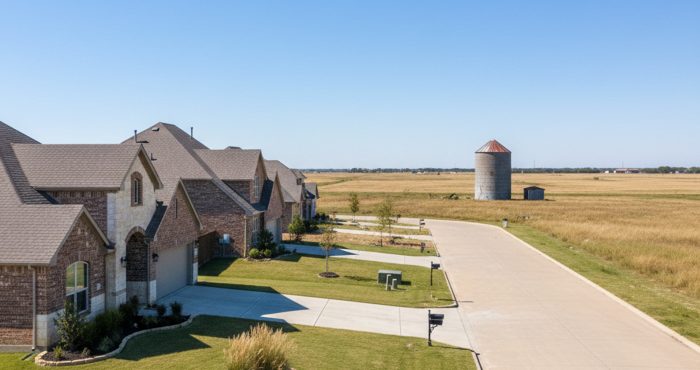
Prosper feels like a wealthy small town that is rapidly growing up. The town motto involves “dark skies” and a rural feel, even though luxury subdivisions are replacing the farmland. You will still see the historic grain silos in downtown Prosper, contrasting sharply with the corporate glass buildings you just left behind in Frisco. It is quieter, more spacious, and feels distinctively more “Texas” in its atmosphere.


Real Estate Market: Prices, Lots, and Availability

When we talk about the market, we are really talking about what your money buys you. The biggest differentiator here is land.

Lot Sizes are Critical This is usually the deciding factor for my clients. In Frisco, the real estate market is largely “built out.” Most homes sit on standard suburban lots, typically between 0.15 and 0.25 acres. You have a yard, but you can definitely see your neighbor’s patio furniture.

In Prosper, land is the luxury. It is famous for larger lots, with many master-planned communities offering 0.35 acres up to 1.0+ acre homesites. If your dream includes a sprawling backyard with a pool, outdoor kitchen, and plenty of grass left over, Prosper is the place to look.

Price Point and Inventory Because the homes and lots are larger, the entry price in Prosper is generally higher.

  • Frisco Median Price: Approximately $700,000.
  • Prosper Median Price: Approximately $850,000.

New Construction If you want a brand-new build, you will find far more options in Prosper. It is currently in a construction boom with massive developments like Windsong Ranch expanding rapidly. Frisco still has new construction, but it is often limited to smaller infill communities or ultra-luxury pockets, as the city runs low on undeveloped land.


The Hidden Cost: Property Tax Rates and MUDs

Before you sign a contract, we need to talk about the monthly payment, specifically property taxes. This is where Prosper can give buyers a bit of sticker shock compared to Frisco.

Frisco has a very competitive tax rate, generally hovering around 2.18%. Because the city has a massive commercial tax base (thanks to all those office parks and malls), the burden on homeowners is lighter. Also, Frisco has mature infrastructure, so you rarely see special assessments.

Prosper is different. The tax rates here are typically higher, often ranging from 2.39% to 2.58%.

Why the difference? Many of the popular new communities in Prosper are situated in MUDs (Municipal Utility Districts) or PIDs (Public Improvement Districts). These are special taxing jurisdictions used to pay for the roads and water lines in new developments. If you are buying a new home in Prosper, always check the total tax rate—that extra 0.3% or 0.4% adds up significantly on an $850,000 home.


Frisco ISD vs. Prosper ISD: A Clash of Philosophies

Both the Frisco Independent School District and Prosper Independent School District are A-rated and are primary drivers for why people move here. However, they approach education and athletics very differently.

Frisco’s “Small School” Model FISD has a unique philosophy: they believe in keeping high schools smaller (typically 5A classification) to give more students a chance to participate. Instead of building one giant high school, they build several. The logic is that more kids get to play varsity football, make the cheer squad, or lead the debate team if there are more schools to go around.

Prosper’s “Mega-School” Approach Prosper ISD leans into the collegiate-style “Mega School” model (6A). They build massive campuses with facilities that rival small universities—we are talking about $50 million stadiums and indoor practice facilities. This fosters a massive sense of community unity (“One Town, One Team”), but it also means the competition to make the varsity team is incredibly fierce.

Note: School boundaries do not always align with city limits. Some Frisco residents are zoned to Prosper ISD, and vice versa. Always check the specific address.


The Commute: The ‘Highway 380’ Factor

Geography matters. The physical dividing line between these two cities is Highway 380. This road is a major artery, and it can be a significant congestion point.

Distance to Dallas

  • Frisco: Approximately 25 miles to downtown Dallas.
  • Prosper: Approximately 35 miles to downtown Dallas.

It might not look like much on a map, but crossing Highway 380 and getting through the lights to reach the Dallas North Tollway can add 15 to 20 minutes to your drive.

Job Hubs Frisco is not just a suburb; it is a major employment center. If you work at The Star, Hall Park, or Legacy West, living in Frisco means a 10-15 minute commute. If you live in Prosper, you are strictly in a bedroom community. You will almost certainly be commuting to work, and you will pay more in tolls annually to cover that extra distance.


Lifestyle & Amenities: The Star vs. The Lagoon

Where will you spend your Saturday?

Frisco Amenities Frisco is the playground of North Texas. You have The Star (dining, shopping, and Cowboys practice facility), the new PGA Frisco headquarters with its massive resort, Stonebriar Centre, and the RoughRiders baseball stadium. For kids, the new Universal Kids Resort is a major draw. If you want high-end dining or nightlife, it is all in your backyard.

Prosper Amenities Prosper is quieter, but the amenities are upscale. The crown jewel is Windsong Ranch, famous for its 5-acre crystal lagoon that looks like a Caribbean beach. The Gates of Prosper offers plenty of retail (Target, dining, shops), and the downtown area features boutique shops near the silos.

The Trade-off The reality is that many Prosper residents drive into Frisco for date nights, movies, or high-end shopping. Frisco residents have immediate access to these things, but they also deal with the traffic that comes with them.


Summary: Pros and Cons at a Glance

If you are trying to weigh the options, here is the quick breakdown:

Frisco vs Prosper

  • Primary Pro
    • Frisco: Unmatched convenience and amenities
    • Prosper: Luxury living with massive backyards
  • Primary Con
    • Frisco: Smaller lots and heavier traffic
    • Prosper: Higher taxes and longer commute
  • Housing Stock
    • Frisco: Mix of older resale homes and infill developments
    • Prosper: Booming new construction
  • Vibe
    • Frisco: Energetic, polished, busy
    • Prosper: Relaxed, spacious, more exclusive

Quick Take

  • Frisco = Convenience, lifestyle, and access
  • Prosper = Space, luxury, and newer homes

Expert Guidance for Buying and Selling in Frisco

Navigating the Frisco real estate market takes more than just watching prices. The Bale Real Estate Group, ranked in the top 1% of North Texas Realtors, helps buyers and sellers understand how to position themselves based on current competition, not just past sales. From identifying the right neighborhoods to negotiating stronger terms, their approach is focused on preparation, strategy, and results.

FAQ: Common Questions from Buyers

Is Frisco or Prosper more expensive?

Generally, Prosper is more expensive in terms of total purchase price. The median home price in Prosper hovers around $850,000 compared to $700,000 in Frisco, largely because homes in Prosper are newer and sit on significantly larger lots.

Which school district is better, Frisco ISD or Prosper ISD?

“Better” is subjective as both are top-tier, A-rated districts. If you value your child having a higher statistical chance of making a varsity team, Frisco’s small-school model is advantageous. If you prefer the “Friday Night Lights” experience of a massive 6A high school with collegiate facilities, Prosper ISD is the winner.

Does Prosper have high property taxes?

Yes, property taxes in Prosper are generally higher than in Frisco. While Frisco’s rate is often near 2.18%, new developments in Prosper often include MUD or PID assessments that can push the total effective tax rate over 2.5%.

How far is the commute from Prosper to Downtown Dallas?

You should plan for a commute of 50 to 60+ minutes during peak traffic. Prosper is about 10 miles further north than Frisco, and navigating the congestion on Highway 380 to reach the tollway adds time compared to the 35-45 minute drive from Frisco.


Final Verdict: Which City Fits Your Family?

Deciding between Frisco and Prosper usually comes down to what you are willing to compromise on: the commute or the backyard.

Choose Frisco if: You work in Plano or Dallas and want to minimize your time in the car. You want lower tax rates, immediate access to dining and entertainment, and you prefer the “small school” philosophy for student activities.

Choose Prosper if: You work remotely or in the northern suburbs and don’t mind a longer drive. You are looking for a 0.5-acre lot or larger, you want a brand-new luxury build, and you are willing to pay a premium for a quieter, more exclusive atmosphere.

Both cities are incredible places to put down roots. Whether you choose the established energy of Frisco or the spacious luxury of Prosper, you are buying into one of the strongest real estate markets in the country.

Posted in: Community Guides, Frisco Real Estate, Home Buying, Market Updates, Prosper Real Estate, Relocating to North Dallas Tagged: 2026 Housing Market, Buyer Guide, Collin County Real Estate, Cost of Living, Dallas North Tollway, Frisco ISD, Frisco Real Estate, Frisco vs Prosper, Gates of Prosper, Highway 380, MUD Taxes, New Construction Homes, North Dallas Real Estate, PGA Frisco, PID Taxes, Property Taxes, Prosper ISD, Prosper Real Estate, Relocation Guide, Stonebriar Centre, The Star Frisco, Windsong Ranch

Frisco vs. Allen, TX: The Battle of North Dallas Suburbs

If you are looking at moving to North Texas, you have likely narrowed your search down to two heavy hitters: Frisco and Allen. It is a “good problem” to have. Both cities are consistently ranked among the best places to live in the country, boasting top-tier schools, low crime rates, and booming economies.

However, despite sharing a border, these two suburbs feel incredibly different once you get off the highway.

Think of Frisco as the energetic, high-growth “Sports City USA.” It is flashy, corporate, and rapidly expanding with a “new money” atmosphere. Allen, on the other hand, feels like the established, tight-knit older sibling. It has mature trees, a slightly slower pace, and a community identity that revolves around a single, massive high school.

Frisco is significantly larger, with a population pushing 245,000 and growing, while Allen has settled into a population of around 110,000. Understanding the distinct personality of each city is key to deciding where to plant your roots.


Cost of Living & Real Estate: Where Do You Get More for Your Money?

Let’s get straight to the numbers. While both cities are in the affluent Collin County area, your dollar stretches significantly further in Allen than it does in Frisco.

Currently, the median home price in Frisco sits around $670,000. Because Frisco is still in a massive development boom, much of the inventory consists of new construction. If you are looking for modern layouts, media rooms, and the latest energy-efficient tech, Frisco is the place to be. However, you pay a premium for that “newness.”

In contrast, the median home price in Allen is closer to $510,000. That is a gap of over $150,000, which can make a massive difference in your monthly mortgage payment. In Allen, you are typically buying established homes built in the 1990s or 2000s. The trade-off is that you often get slightly larger lots, mature tree canopies that provide actual shade, and traditional brick architecture.

When you look at homes for sale in Allen, you will likely find you can get a 3,000-square-foot home for the same price as a 2,200-square-foot home in Frisco.

A Note on Property Taxes

Taxes in Texas are high because there is no state income tax, so this is a major budget line item. Frisco technically has a slightly lower tax rate (around 2.18%) compared to Allen (around 2.31%).

However, don’t let the rate fool you. Because property values in Frisco are generally higher, your total annual tax bill will likely be higher there. Since both cities are primarily in Collin County, the county portion of your taxes remains identical.


Frisco ISD vs. Allen ISD: The “Small School” Model vs. The “Mega High School”

If you have school-aged children, this is the single most important distinction between these two cities. Both districts are A-rated academic powerhouses, but their philosophies are polar opposites.

Frisco Independent School District operates on a “Small School Model.” Their philosophy is that students engage more when schools are smaller. Instead of building one giant school, they keep building new high schools as the population grows. Currently, Frisco has 12+ high schools. The goal is to keep student bodies smaller (at the 5A or small 6A level) so that more students have the chance to make the varsity football team, lead the debate club, or get a solo in the choir.

Allen Independent School District believes in the “One High School” model. Almost every high school student in the city attends the massive Allen High School. With over 6,000 students, it is practically a small university. This scale allows Allen to offer specialized programs and facilities that smaller schools can’t match, including the famous $60 million Eagle Stadium and the largest marching band in the country.

The choice comes down to your preference:

  • Do you want your child to have a higher statistical probability of making the team? Look at Frisco ISD school ratings and zones.
  • Do you want your child to experience a “Friday Night Lights” culture with unmatched school spirit and college-level facilities? Allen is the clear winner.


Lifestyle & Amenities: Flashy Development vs. Hometown Feel

The vibe of your weekends will look different depending on which side of the border you live on.

Frisco is a destination. It has aggressively courted professional sports and tourism, earning the nickname “Sports City USA.” It is home to The Star in Frisco (the Dallas Cowboys World Headquarters), PGA Frisco, and FC Dallas. The area feels busy, commercial, and exciting. If you love having high-end steakhouses, vibrant nightlife, and major events right in your backyard, Frisco delivers that metropolitan energy.

Allen feels more like a traditional, comfortable suburb. It is anchored by Watters Creek, a lovely mixed-use development with walkable dining and green space, and the Allen Premium Outlets, which draw shoppers from all over the region. Allen also has the Hydrous Wake Park and a more relaxed atmosphere.

When it comes to parks, Allen has a distinct advantage for nature lovers. Because the city is older, the parks and trail systems along the creeks are lush and shaded. Frisco has incredible, manicured parks, but because the area was recently farmland, the trees are still young, and the landscape can feel a bit more barren and exposed to the Texas sun.


Commute & Transportation: DNT vs. US-75

Unless you work from home, your commute will likely dictate your happiness. The two cities rely on two completely different arteries to get to downtown Dallas.

Frisco relies on the Dallas North Tollway (DNT).

  • The Good: It is generally a well-maintained, fast-moving highway.
  • The Bad: It is expensive. The tolls add up quickly if you are driving daily.
  • The Commute: Expect 35–45 minutes to downtown Dallas in moderate traffic.
  • Airport: Frisco is much more convenient for frequent flyers, with easier access to DFW Airport via Highway 121.

Allen relies on US-75 (Central Expressway).

  • The Good: It is free.
  • The Bad: It is notoriously prone to gridlock. Traffic often comes to a standstill during rush hour.
  • The Commute: Expect 40–50 minutes to downtown Dallas, though accidents can blow this timeline up significantly.
  • Airport: Getting to DFW Airport from Allen is a longer trek, often requiring a drive across the metroplex on the George Bush Turnpike or 121.

Why Homeowners Choose Bale Real Estate Group

Buying or selling requires more than just timing the market. The Bale Real Estate Group helps clients understand pricing, competition, and how to position a home to stand out from day one. For sellers, that includes strategic pricing, professional staging, targeted marketing, Zillow Showcase exposure, and our Certified Pre-Owned Home Listing Program. The goal is simple: create stronger demand and better results in today’s market.

FAQs: Quick Answers for Homebuyers

Is Frisco or Allen cheaper to live in?

Allen is generally cheaper. While utility and grocery costs are similar, the median home price in Allen is roughly $150,000 less than in Frisco, making it the more budget-friendly option for housing.

Which city has better schools, Frisco or Allen?

Neither is objectively “better” academically; it depends on the experience you want. Frisco offers smaller schools with more chances for individual student participation, while Allen offers a massive, spirited “college campus” environment with extensive resources.

How far is Frisco from Allen?

They are immediate neighbors. They share a border along Custer Road and Highway 121. You can easily live in one city and drive across the street to have dinner in the other.


Final Verdict: Who Should Choose Which?

Choosing between Frisco and Allen isn’t about finding the “good” one—it’s about finding the one that fits your lifestyle and budget.

You should choose Frisco if:

  • You have a flexible budget ($650,000+) and want a modern, new-construction home.
  • You love the energy of professional sports, high-end dining, and a busy “city” feel.
  • You prefer the “small school” philosophy where your children have less competition for extracurriculars.
  • You want a faster commute to the airport or prefer paying tolls to save time on the highway.

You should choose Allen if:

  • You want to maximize your purchasing power and get more square footage for your money.
  • You love the look of established neighborhoods with brick homes and big, mature trees.
  • You want your kids to experience the massive school spirit and resources of the Allen High School model.
  • You prefer a quieter, “hometown” community vibe over a flashy tourist destination.

Both cities offer an incredible quality of life. If you are ready to see the difference for yourself, the next step is to drive the neighborhoods and see which one feels like home.

Posted in: Allen Real Estate, Community Guides, Frisco Real Estate, Home Buying, Market Updates, New Construction, Relocating to North Dallas Tagged: 2026 Housing Market, Allen High School, Allen ISD, Allen Premium Outlets, Allen Real Estate, Buyer Guide, Collin County Real Estate, Cost of Living, Dallas North Tollway, Frisco ISD, Frisco Real Estate, Frisco vs Allen TX, Highway 121, North Dallas Real Estate, PGA Frisco, Property Taxes, Relocation Guide, The Star Frisco, US 75, Watters Creek

Bale Real Estate Group
(972) 469-0332
TREC - Information About Brokerage Services
TREC - Consumer Protection Notice
Site created by Michael Tritthart Team. | View Privacy Policy