
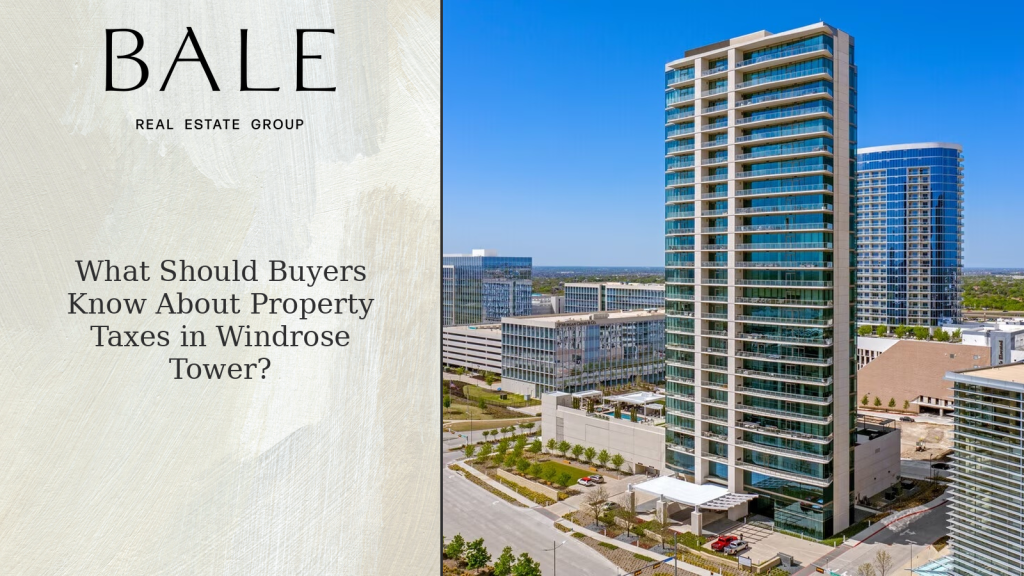
When evaluating a Windrose Tower residence, buyers should look beyond the purchase price and understand how property taxes fit into the complete cost of ownership.
Property taxes can represent a meaningful recurring expense, particularly when purchasing luxury real estate.
Gary and Linda Bale help Windrose Tower buyers incorporate estimated property taxes into the broader financial analysis alongside financing, HOA dues, condominium insurance, utilities, maintenance, and other ownership expenses.
Buyers should also understand that the taxes associated with the current owner’s property may not necessarily represent what a future owner will ultimately pay.
The objective is to evaluate the residence based on a realistic ownership budget—not simply the seller’s current tax bill.
Clarity First. Pressure Never.
Current Windrose Tower Residences for Sale
As you compare available residences, consider purchase price, estimated property taxes, HOA dues, insurance, financing, and other ownership costs together.







Property Taxes Are Part of Your Total Ownership Cost
The purchase price is only one component of the financial commitment involved in owning a Windrose Tower residence.
Depending on the buyer and property, recurring expenses may include:
- Mortgage principal and interest
- Property taxes
- HOA dues
- Condominium insurance
- Utilities not included through the association
- Interior maintenance
- Future improvements
- Parking or storage expenses when applicable
Understanding these costs together provides a more useful picture than evaluating any single expense in isolation.
Do Not Assume the Seller’s Current Tax Bill Will Be Yours
One of the most important concepts for buyers to understand is that a seller’s current property-tax amount may reflect circumstances that will not apply to the new owner.
The current owner may have exemptions or other factors affecting the existing tax bill.
Additionally, the property’s taxable value may change over time.
Buyers should use the current tax information as a reference point rather than automatically assuming it represents their future tax obligation.
Purchase Price and Taxable Value Are Different Concepts
The amount you pay for a residence and the taxable value used by the applicable taxing authorities are related to different processes.
Buyers should avoid assuming that either the current taxable value or current tax bill will remain unchanged after the purchase.
When budgeting, consider a reasonable estimate rather than relying solely on historical taxes.
Where Should Buyers Verify Property-Tax Information?
Property-tax information should be verified through the appropriate official sources and transaction professionals.
Depending on the question, buyers may want to consult:
- The applicable appraisal district
- The applicable tax offices
- The title company
- The lender
- A qualified tax professional
Gary and Linda Bale can help identify information relevant to the transaction, but buyers should seek tax advice from an appropriately qualified professional.
Understand the Difference Between Market Value and Taxable Value
A residence’s real estate market value and its value for property-tax purposes are not necessarily the same.
Market value in a real estate transaction is influenced by factors such as recent comparable sales, current competition, views, floor plan, condition, renovations, parking, storage, and buyer demand.
Property Taxes and Your Monthly Housing Budget
If you are financing your Windrose Tower purchase, estimated property taxes should be incorporated into your projected monthly housing expense.
Your lender can help you evaluate how:
- Purchase price
- Down payment
- Interest rate
- Property taxes
- HOA dues
- Insurance
- Other recurring obligations
affect your estimated monthly payment and buying power.
Qualifying for a purchase price is not the same as deciding that the complete monthly ownership cost is comfortable for you.
How Are Property Taxes Handled at Closing?
Property taxes can affect the closing statement and transaction accounting between buyer and seller.
The title company can explain how taxes are being handled in the specific transaction and how applicable prorations appear on the closing documents.
Because timing and circumstances vary, buyers should review their individual closing statement rather than relying on a generic calculation.
Ask About Potential Exemptions
Depending on the buyer’s circumstances and applicable law, certain property-tax exemptions may be available after ownership is established.
Buyers should verify eligibility, filing requirements, deadlines, and potential benefits through the appropriate official authority.
Do not assume an exemption automatically transfers from the seller to the buyer.
Tax Estimates Matter When Comparing Residences
If you are comparing multiple properties at different price points, property taxes can affect the difference in total monthly ownership cost.
This is particularly important when comparing a Windrose Tower residence with other luxury condominiums or single-family properties.
Compare Property Taxes With HOA Dues
Windrose Tower buyers should avoid looking at property taxes or HOA dues as isolated numbers.
The more useful analysis considers the complete ownership structure.
For example, a condominium’s HOA dues may support certain building services or maintenance responsibilities that a detached-home owner might otherwise handle separately.
That does not automatically make either option more or less expensive.
Compare the total cost and lifestyle—not one line item.
What Should Buyers Know About HOA Fees in Windrose Tower?
Property Taxes and Condo Insurance
Insurance is another recurring ownership expense that should be incorporated into the same analysis.
Condominium insurance differs from detached-home insurance because coverage may involve both an association master policy and an individual owner’s policy.
What Should Buyers Know About Condo Insurance in Windrose Tower?
Build a Complete Windrose Tower Ownership Budget
Before making an offer, consider creating a realistic ownership budget that includes:
- Estimated mortgage payment
- Estimated property taxes
- HOA dues
- Condominium insurance
- Utilities
- Interior maintenance
- Potential improvements
- Moving costs
- Parking or storage expenses when applicable
- Other personal housing expenses
A residence that fits your purchase-price range should also fit your ongoing ownership budget.
Cash Buyers Should Evaluate Taxes Too
Property taxes are not simply a financing consideration.
Cash buyers should also incorporate taxes, HOA dues, insurance, maintenance, and other recurring expenses into the long-term ownership analysis.
Property Taxes Are Only One Part of Buyer Due Diligence
A strong Windrose Tower purchase decision should combine financial analysis with property-specific and building-specific due diligence.
Gary and Linda Bale help buyers evaluate:
- Current inventory
- Market value
- Recent comparable sales
- Floor plan
- Elevation and orientation
- Views
- Condition
- Renovations
- Parking and storage
- HOA considerations
- Property taxes
- Insurance
- Inspections
- Financing
- Potential resale considerations
The right purchase should make sense as a residence, a lifestyle choice, and a financial commitment.
What Should Buyers Know Before Buying a Condo in Windrose Tower?
Understand Taxes Before You Make an Offer
Property-tax research does not need to wait until you are under contract.
Understanding estimated taxes before making an offer can help you:
- Evaluate monthly ownership costs
- Compare competing residences
- Discuss financing with your lender
- Understand your cash requirements
- Evaluate your long-term budget
This can be particularly useful if you are comparing Windrose Tower with other Plano or North Dallas luxury housing options.
Work With Your Lender Early
If financing is part of your purchase, your lender can help estimate the effect of property taxes on qualification and projected monthly payments.
Starting that conversation before the right residence appears can make the buying process more organized when you are ready to act.
Frequently Asked Questions About Windrose Tower Property Taxes
Can I use the seller’s current tax bill to estimate my future taxes?
The seller’s tax bill provides useful historical information, but it may reflect exemptions, taxable values, or other circumstances that may not apply to the buyer. Buyers should develop their own reasonable estimate.
Will my purchase price automatically become the property’s taxable value?
Purchase price and taxable value involve different processes. Buyers should consult the appropriate appraisal district or a qualified tax professional regarding property-tax valuation.
Can property taxes affect my mortgage qualification?
Estimated property taxes may be included when a lender evaluates projected housing expenses. Your lender can explain how taxes affect your individual financing.
Are property taxes included in Windrose Tower HOA dues?
Buyers should treat property taxes and HOA assessments as separate ownership considerations and verify the current association dues and included services through the applicable documents.
Where can I verify property-tax information?
Buyers should use the appropriate official appraisal district and tax authorities and consult their title company, lender, or qualified tax professional when additional guidance is needed.
Considering a Windrose Tower Residence?
Gary and Linda Bale can help you evaluate the complete purchase rather than focusing only on asking price.
We can help you consider:
- Current Windrose Tower inventory
- Residence-specific market value
- Property-tax estimates
- HOA considerations
- Insurance coordination
- Financing preparation
- Home inspections
- Offer strategy
- Negotiation
- Contract deadlines
- Closing coordination
You do not need to wait until the right residence appears to begin preparing.
Clarity First. Pressure Never.
Gary & Linda Bale
Bale Real Estate Group
Call or Text: 972-469-0332
Email: info@balerealestategroup.com
Planning to buy? Learn how Bale Real Estate Group helps buyers evaluate homes and navigate their purchase. Why Buyers Choose Bale Real Estate Group.