
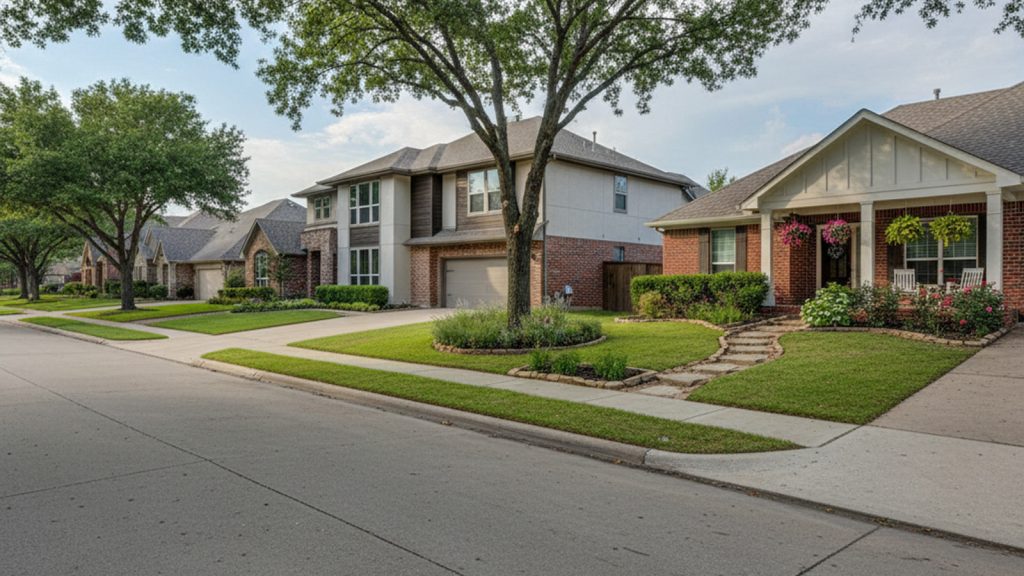
The median home price in Plano, TX hovers around $500,000 this year, making property tax planning a core part of your housing budget. Texas does not collect a state income tax, so local municipalities rely entirely on real estate assessments to fund public services.
Buyers moving from out of state often experience sticker shock when they see North Texas tax rates. Knowing exactly how these rates are calculated and what exemptions you qualify for can save you thousands of dollars over the life of your mortgage.
Understanding the local tax code helps you anticipate your monthly escrow payments before you make an offer. By taking advantage of available exemptions and monitoring county assessments, you can keep your housing costs predictable over the long term.
Property Taxes Plano, TX are a frequent topic of discussion among homebuyers evaluating the total cost of living in North Texas. This guide covers how the city calculates your bill, where the money goes, and what steps you can take to lower your annual obligation.
How Collin County Determines Your Bill
The Collin Central Appraisal District determines the assessed value of your home every January. Assessors look at recent sales data for similar properties in your neighborhood to establish a baseline market value for the year.
State law requires these county appraisals to reflect 100% of a property’s current market value as of the first of the year. Assessors use mass appraisal techniques, meaning they analyze neighborhood trends rather than inspecting the interior of every individual house.
Once the county sets that baseline value, four distinct taxing entities apply their approved rates to calculate your total obligation. The combined property tax rate for the 2025-2026 tax year sits at approximately $1.7077 per $100 of assessed value.
The 2026 Tax Rate Breakdown
Your total bill is a combination of separate levies from local jurisdictions that overlap your property lines. The Plano Independent School District takes the largest share of the pie at $1.0396 per $100 of valuation.
The City of Plano accounts for $0.4376 of the total rate to cover municipal operations. Collin County adds $0.1493 to the equation, while Collin College makes up the final piece with a rate of $0.0812.
These individual rates are set annually by elected officials and local school boards. Voters have the opportunity to influence these numbers during local elections and bond referendums.
Estimated Annual Tax Bills for Plano Homes
A home with a taxable value of $500,000 generates a gross annual tax bill of about $8,538 before any exemptions apply. You can estimate your own baseline costs by dividing your home’s purchase price by 100 and multiplying it by the 1.7077 combined rate.
Keep in mind that assessed value and market value are not always identical, especially if you have lived in the home for several years. State law caps how much an assessed value can increase annually for a primary residence, which slowly widens the gap between what a home sells for and what it is taxed at.
Buyers purchasing a home that has been occupied by the same owner for decades should prepare for an assessment reset. The county will likely update the property’s value to match your purchase price during the next appraisal cycle, which will increase the tax bill compared to the previous owner’s statements.
Mortgage lenders typically handle these payments on your behalf through an escrow account. They collect a portion of your estimated annual tax bill with your monthly mortgage payment and pay the county directly when the bill comes due in the winter.
Lowering Your Bill With Texas Homestead Exemptions
Texas offers substantial tax relief for homeowners who use their property as their primary residence. You must occupy the home on January 1 of the tax year to qualify for a standard homestead exemption.
This exemption removes a set portion of your home’s value from taxation entirely. The City of Plano offers a 20% exemption off its portion of the bill, which is the maximum percentage allowed under state law.
The local school district provides an even larger reduction by removing $100,000 from its taxable calculation. Collin County also chips in by offering a 5% exemption or a flat $5,000 reduction, whichever number is greater.
Steps to File Your Exemption
Homeowners apply for this benefit directly through the Collin Central Appraisal District official website. The application is free, and you only need to submit it once for as long as you own and live in the home.
You will need to upload a copy of your Texas driver’s license alongside the application form. The address on your license must match the property address exactly for the county to approve the exemption.
Processing takes a few weeks, but the resulting reduction in your effective property tax rate is permanent. Homeowners who forget to file immediately can claim the exemption retroactively for up to two years after the delinquency date.
Appealing Your Property Tax Assessment
The central appraisal district sends assessment notices in the mail around mid-April each year. If the county’s proposed value seems higher than recent comparable sales in your area, you have the right to protest the figure.
The standard deadline to file a protest in 2026 is May 15, or 30 days after the notice is mailed, whichever date is later. Filing an appeal is a routine part of homeownership in Texas and can prevent your baseline taxes from creeping up unnecessarily.
Many homeowners hire specialized property tax firms to handle the appeal on their behalf. These companies typically charge a percentage of your total tax savings, meaning you pay nothing out of pocket if the appeal fails.
The Protest Timeline and Process
Once you file your disagreement online or by mail, the county schedules a series of reviews. Most homeowners resolve their disputes early in the process by providing photos of needed repairs or a list of lower-priced recent sales.
The appeal follows three main phases:
- An informal hearing with a county appraiser to review your evidence and negotiate a lower value.
- A formal hearing before the appraisal review board if the informal meeting does not result in an agreement.
- A final adjustment to your tax record and an updated bill once a settlement is reached.
You should gather your evidence as soon as the assessment notice arrives in the mail. Delaying your preparation limits the amount of time you have to request closing statements from real estate agents or obtain contractor quotes for deferred maintenance.
Where Your Tax Dollars Go in Plano
Property tax payments directly fund the daily operations of local schools within Plano ISD. This revenue pays for teacher salaries, facility maintenance, and educational resources across the district.
The city’s portion of the tax levy supports local infrastructure and public services. This includes road maintenance, police departments, and fire and rescue operations throughout the city limits.
Tax revenue also maintains the extensive network of parks and public spaces in Plano, TX. Facilities like Oak Point Park and Nature Preserve and Bob Woodruff Park rely on these funds for upkeep and improvements.
A smaller portion of your payment goes toward Collin College to support higher education initiatives and vocational training programs. This ensures the region maintains a skilled workforce to support the local economy.
Frequently Asked Questions
When are property taxes due in Plano, TX?
Tax bills are mailed to property owners in October and become due upon receipt. You have until January 31 of the following year to pay the balance in full before penalty and interest charges begin accruing on February 1.
How much is property tax on a $500,000 house in Texas?
In Plano, a $500,000 home without any exemptions carries a gross tax burden of approximately $8,538 annually. If you qualify for the standard homestead exemptions, that total drops closer to $6,500 depending on the exact district lines.
Planning to buy? Learn how Bale Real Estate Group helps buyers evaluate homes and navigate their purchase. Why Buyers Choose Bale Real Estate Group.