
Buyers looking at the Dallas-Fort Worth metroplex often find themselves comparing different suburban markets to see where their budget stretches furthest. The decision between Plano TX vs Garland TX comes down to distinct differences in housing inventory, local amenities, and daily commute routes. Both cities offer robust infrastructure and established neighborhoods, but their real estate markets move at very different price points.
Understanding these differences is crucial for making a confident purchase in the current market. Finding the right home requires looking past basic city boundaries to evaluate specific property types, transit access, and local school district policies. This comparison will outline the objective data you need to weigh the costs and benefits of living in Plano versus living in Garland.
Real Estate Market Trends and Median Home Prices
The real estate markets in both municipalities cater to different budget tiers and property preferences. Buyers entering the market in 2026 will notice a distinct price gap between the two locations. Plano generally commands higher property values due to its concentration of luxury developments and large corporate headquarters.
The median home price in Plano currently sits between approximately $478,000 and $500,000. This higher entry point typically secures mid-to-large single-family homes with updated features. Conversely, Garland offers a median home price ranging from roughly $300,000 to $320,000, providing a broader level of affordability.
Homes for sale in both cities average between 50 and 70 days on the market before closing. Buyers looking to maximize square footage per dollar should focus their search on Garland. Those who prioritize newer master-planned communities and are comfortable with a higher price point will find more inventory matching their criteria in Plano.
Plano Property Types and Architecture
Residential architecture in Plano leans heavily toward brick-veneer transitional and traditional single-family homes. Many of these subdivisions feature active homeowners associations that maintain neighborhood standards and manage shared community facilities. These associations often oversee neighborhood pools, tennis courts, and landscaped common areas.
Beyond traditional subdivisions, the city has seen significant growth in high-density housing options. Modern apartment buildings and townhome complexes are heavily integrated near major commercial centers like Legacy West. This mix provides varied options for those looking at living in Plano without the maintenance of a large yard.
Garland Property Types and Architecture
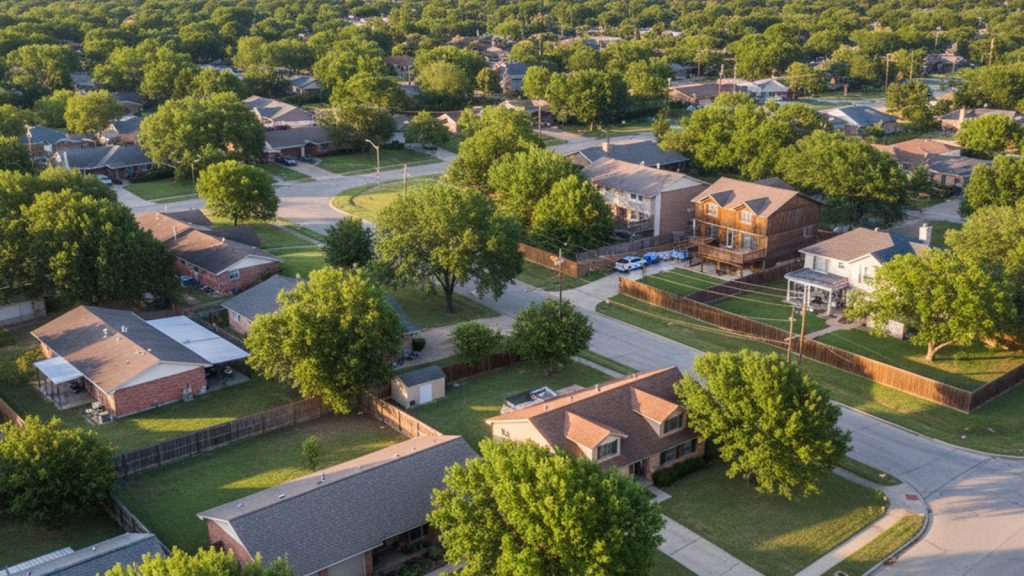
The housing landscape in Garland is characterized by established neighborhoods with mature, tree-lined lots. Buyers will find a strong presence of mid-century ranch styles and classic split-level homes throughout the city. These properties often appeal to those seeking entry-level single-family housing with unique architectural character.
Garland also provides a variety of multi-family housing options and duplexes scattered across different sectors. This diversity in property types ensures that renters and buyers have access to flexible living arrangements. The varied architecture reflects the steady, decades-long expansion of the city.
Commute Times and Transportation Infrastructure
Navigating the Dallas area requires a solid understanding of local highways and public transit networks. Commute times to major employment centers vary significantly depending on which city you choose as your home base. Both municipalities offer extensive connections, but they rely on completely different highway systems.
Plano commuters rely heavily on US-75, the Dallas North Tollway, and the President George Bush Turnpike. Garland drivers primarily utilize I-30, I-635, and the eastern segment of the President George Bush Turnpike. During peak traffic hours, a standard driving commute from Garland to downtown Dallas often takes less time than the drive from northern Plano.
Public transportation is a major factor for residents looking to avoid highway traffic. The Dallas Area Rapid Transit system services both cities through different rail lines. Plano residents have access to the Red and Orange Lines, while Garland is serviced by the Blue Line stations.
The optimal choice for a buyer depends entirely on their daily destination. If your work location is in North Dallas or the Frisco corridor, Plano offers a highly optimized, shorter commute. If your daily route takes you into downtown Dallas or the eastern industrial sectors, Garland provides a more direct path.
Parks, Recreation, and Retail Amenities
Both cities maintain distinct retail environments and outdoor recreational spaces. Plano is widely recognized for its expansive mixed-use developments that blend high-end retail, corporate offices, and dining. Legacy West and the Shops at Legacy serve as major commercial hubs, drawing visitors from across the region for upscale shopping.
Garland offers a different style of commercial infrastructure, anchored by large open-air shopping centers. Firewheel Town Center is the primary retail destination, featuring a wide array of department stores, boutiques, and restaurants. This center provides a traditional, accessible shopping experience without the dense, urban feel of Plano’s mixed-use districts.
When comparing outdoor facilities, the two locations offer impressive but differing natural amenities. Plano features the Oak Point Park and Nature Preserve, which provides miles of paved trails and open green space. This massive park is a central feature of the city’s recreational infrastructure.
Garland counters with exceptional water access due to its proximity to Lake Ray Hubbard. The city also maintains an extensive public park system with numerous athletic fields and recreation centers. Buyers prioritizing boating or lake access will naturally lean toward the eastern borders of Garland.
Educational Infrastructure: Plano ISD vs. Garland ISD
Evaluating local school districts is a common step for anyone purchasing real estate in the DFW area. The public education infrastructure in these two cities operates under very different enrollment models. Understanding these structural differences is helpful when narrowing down specific neighborhoods.
The Plano Independent School District operates approximately 73 campuses and utilizes a unique grade-level division. High schools in PISD are split into separate facilities for 9th and 10th grades, with senior high schools serving 11th and 12th grades. The district also features specialized academic tracks, including an IB World School and a Health Sciences Academy.
The Garland Independent School District serves students across Garland, Rowlett, and Sachse with a highly distinct enrollment policy. GISD utilizes a “Choice of School” program, which allows residents to apply to any campus within the district rather than being bound by strict neighborhood zoning lines. This boundary-free approach gives residents flexibility when selecting educational facilities.
Garland also provides a wide range of specialized academic offerings across its campuses. The district includes dedicated Magnet programs, extensive Career and Technical Education facilities, and bilingual campuses. Both districts maintain robust infrastructures, but the choice often comes down to preferring Plano’s specialized academies or Garland’s flexible enrollment model.
Your Advantage With Bale Real Estate Group
Buying or selling in Plano requires a clear strategy. The Bale Real Estate Group helps clients navigate pricing, competition, and how to position a home to attract serious buyers from day one. For sellers, that includes professional staging, targeted marketing, Zillow Showcase exposure, and our Certified Pre-Owned Home Listing Program. The goal is simple: create demand and deliver stronger results.
Frequently Asked Questions
Is the cost of living higher in Plano or Garland?
The overall cost of living is noticeably higher in Plano compared to Garland. This difference is primarily driven by housing costs, as Plano’s median home price sits near $500,000 while Garland’s is closer to $320,000. Everyday expenses like property taxes, dining, and retail services also tend to reflect the higher property values in Plano.
Which city has a longer commute to downtown Dallas?
Plano generally has a longer commute to downtown Dallas due to its geographic position further north. During peak rush hour, driving from northern Plano down US-75 can take significantly longer than taking I-30 from Garland. However, exact commute times depend heavily on your specific starting neighborhood and proximity to major highways.
Do both Plano and Garland have access to the DART rail?
Yes, both municipalities are integrated into the Dallas Area Rapid Transit rail system. Plano commuters can board the Red and Orange Lines at stations like Parker Road. Garland residents utilize the Blue Line, which offers a direct route into the downtown Dallas transit hubs.