Top 1% Frisco & Plano Realtors | Bale Real Estate GroupTop 1% Frisco & Plano Realtors | Bale Real Estate Group

Top 1% North Texas luxury real estate team with $50M+ in sales and 80+ 5-star reviews. Frisco, Plano, Preston Hollow & North Dallas.

  • Home
  • Search
  • Buyers
    • 8 Steps to Buying a Home
    • Smart Buyer Strategy
    • How Much Home Can You Afford?
    • Choosing the Right Community & Location
    • New Construction Buyer Representation
    • Buying and Selling at the Same Time
    • Relocating to North Dallas
    • DFW Property Taxes
  • Sellers
    • 8 Steps to Selling a Home
    • Pre-Listing Appointment
    • Certified Pre-Owned Home Listing Program
    • Strategic Pricing & Market Positioning
    • Professional Home Preparation
    • Marketing Your Home for Maximum Exposure
    • Zillow Showcase
      • Zillow Showcase – Example of Listing Your Home
    • Offer Strategy & Seller Protection
    • How Much Will I Make Selling My House?
  • Communities
    • Allen
    • Coppell
    • Dallas
      • Oakdale
    • Frisco
      • Country Club Ridge at The Trails
      • Custer Creek Farms
      • Griffin Parc
      • Heather Ridge Estates
      • Shaddock Creek Estates
      • Starwood
      • The Canals at Grand Park
      • The Fairways
      • Villages of Stonebriar Park
    • McKinney
    • Park Cities
    • Plano
      • Avignon Windhaven
      • Cliffs of Gleneagles
      • Crystal Creek
      • Deerfield
      • Lakeside on Preston
      • Shoal Creek
      • Wentworth Estates
      • Willow Bend Polo Estates
      • Windrose Tower
    • Preston Hollow
    • Prosper
    • Southlake
  • Our Advantage
    • Our Story
    • Real Producers: Cover Story
    • Resume
    • What if?
    • Testimonials
    • Past Sold Map
    • Blog
  • Videos
  • Contact

Relocating to the Dallas Area: Plano TX vs Garland TX in 2026


Buyers looking at the Dallas-Fort Worth metroplex often find themselves comparing different suburban markets to see where their budget stretches furthest. The decision between Plano TX vs Garland TX comes down to distinct differences in housing inventory, local amenities, and daily commute routes. Both cities offer robust infrastructure and established neighborhoods, but their real estate markets move at very different price points.

Understanding these differences is crucial for making a confident purchase in the current market. Finding the right home requires looking past basic city boundaries to evaluate specific property types, transit access, and local school district policies. This comparison will outline the objective data you need to weigh the costs and benefits of living in Plano versus living in Garland.


Real Estate Market Trends and Median Home Prices

The real estate markets in both municipalities cater to different budget tiers and property preferences. Buyers entering the market in 2026 will notice a distinct price gap between the two locations. Plano generally commands higher property values due to its concentration of luxury developments and large corporate headquarters.

The median home price in Plano currently sits between approximately $478,000 and $500,000. This higher entry point typically secures mid-to-large single-family homes with updated features. Conversely, Garland offers a median home price ranging from roughly $300,000 to $320,000, providing a broader level of affordability.

Homes for sale in both cities average between 50 and 70 days on the market before closing. Buyers looking to maximize square footage per dollar should focus their search on Garland. Those who prioritize newer master-planned communities and are comfortable with a higher price point will find more inventory matching their criteria in Plano.

Plano Property Types and Architecture

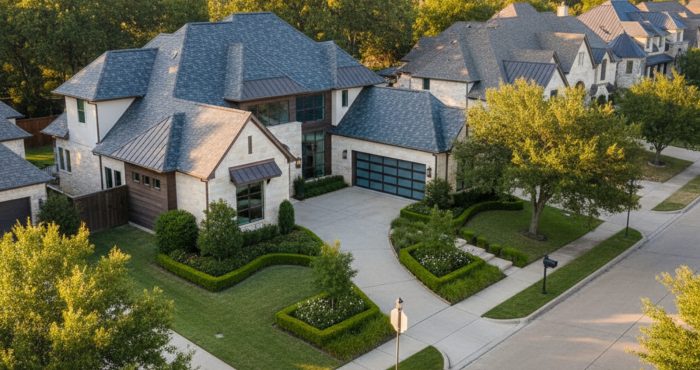
Residential architecture in Plano leans heavily toward brick-veneer transitional and traditional single-family homes. Many of these subdivisions feature active homeowners associations that maintain neighborhood standards and manage shared community facilities. These associations often oversee neighborhood pools, tennis courts, and landscaped common areas.

Beyond traditional subdivisions, the city has seen significant growth in high-density housing options. Modern apartment buildings and townhome complexes are heavily integrated near major commercial centers like Legacy West. This mix provides varied options for those looking at living in Plano without the maintenance of a large yard.

Garland Property Types and Architecture

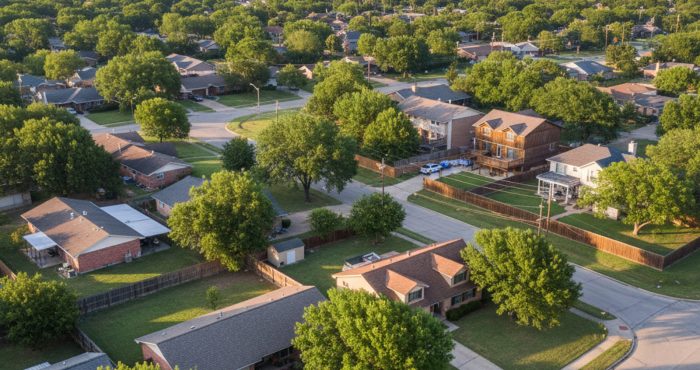
The housing landscape in Garland is characterized by established neighborhoods with mature, tree-lined lots. Buyers will find a strong presence of mid-century ranch styles and classic split-level homes throughout the city. These properties often appeal to those seeking entry-level single-family housing with unique architectural character.

Garland also provides a variety of multi-family housing options and duplexes scattered across different sectors. This diversity in property types ensures that renters and buyers have access to flexible living arrangements. The varied architecture reflects the steady, decades-long expansion of the city.


Commute Times and Transportation Infrastructure

Navigating the Dallas area requires a solid understanding of local highways and public transit networks. Commute times to major employment centers vary significantly depending on which city you choose as your home base. Both municipalities offer extensive connections, but they rely on completely different highway systems.

Plano commuters rely heavily on US-75, the Dallas North Tollway, and the President George Bush Turnpike. Garland drivers primarily utilize I-30, I-635, and the eastern segment of the President George Bush Turnpike. During peak traffic hours, a standard driving commute from Garland to downtown Dallas often takes less time than the drive from northern Plano.

Public transportation is a major factor for residents looking to avoid highway traffic. The Dallas Area Rapid Transit system services both cities through different rail lines. Plano residents have access to the Red and Orange Lines, while Garland is serviced by the Blue Line stations.

The optimal choice for a buyer depends entirely on their daily destination. If your work location is in North Dallas or the Frisco corridor, Plano offers a highly optimized, shorter commute. If your daily route takes you into downtown Dallas or the eastern industrial sectors, Garland provides a more direct path.


Parks, Recreation, and Retail Amenities

Both cities maintain distinct retail environments and outdoor recreational spaces. Plano is widely recognized for its expansive mixed-use developments that blend high-end retail, corporate offices, and dining. Legacy West and the Shops at Legacy serve as major commercial hubs, drawing visitors from across the region for upscale shopping.

Garland offers a different style of commercial infrastructure, anchored by large open-air shopping centers. Firewheel Town Center is the primary retail destination, featuring a wide array of department stores, boutiques, and restaurants. This center provides a traditional, accessible shopping experience without the dense, urban feel of Plano’s mixed-use districts.

When comparing outdoor facilities, the two locations offer impressive but differing natural amenities. Plano features the Oak Point Park and Nature Preserve, which provides miles of paved trails and open green space. This massive park is a central feature of the city’s recreational infrastructure.

Garland counters with exceptional water access due to its proximity to Lake Ray Hubbard. The city also maintains an extensive public park system with numerous athletic fields and recreation centers. Buyers prioritizing boating or lake access will naturally lean toward the eastern borders of Garland.


Educational Infrastructure: Plano ISD vs. Garland ISD

Evaluating local school districts is a common step for anyone purchasing real estate in the DFW area. The public education infrastructure in these two cities operates under very different enrollment models. Understanding these structural differences is helpful when narrowing down specific neighborhoods.

The Plano Independent School District operates approximately 73 campuses and utilizes a unique grade-level division. High schools in PISD are split into separate facilities for 9th and 10th grades, with senior high schools serving 11th and 12th grades. The district also features specialized academic tracks, including an IB World School and a Health Sciences Academy.

The Garland Independent School District serves students across Garland, Rowlett, and Sachse with a highly distinct enrollment policy. GISD utilizes a “Choice of School” program, which allows residents to apply to any campus within the district rather than being bound by strict neighborhood zoning lines. This boundary-free approach gives residents flexibility when selecting educational facilities.

Garland also provides a wide range of specialized academic offerings across its campuses. The district includes dedicated Magnet programs, extensive Career and Technical Education facilities, and bilingual campuses. Both districts maintain robust infrastructures, but the choice often comes down to preferring Plano’s specialized academies or Garland’s flexible enrollment model.

Your Advantage With Bale Real Estate Group

Buying or selling in Plano requires a clear strategy. The Bale Real Estate Group helps clients navigate pricing, competition, and how to position a home to attract serious buyers from day one. For sellers, that includes professional staging, targeted marketing, Zillow Showcase exposure, and our Certified Pre-Owned Home Listing Program. The goal is simple: create demand and deliver stronger results.

Frequently Asked Questions

Is the cost of living higher in Plano or Garland?

The overall cost of living is noticeably higher in Plano compared to Garland. This difference is primarily driven by housing costs, as Plano’s median home price sits near $500,000 while Garland’s is closer to $320,000. Everyday expenses like property taxes, dining, and retail services also tend to reflect the higher property values in Plano.

Which city has a longer commute to downtown Dallas?

Plano generally has a longer commute to downtown Dallas due to its geographic position further north. During peak rush hour, driving from northern Plano down US-75 can take significantly longer than taking I-30 from Garland. However, exact commute times depend heavily on your specific starting neighborhood and proximity to major highways.

Do both Plano and Garland have access to the DART rail?

Yes, both municipalities are integrated into the Dallas Area Rapid Transit rail system. Plano commuters can board the Red and Orange Lines at stations like Parker Road. Garland residents utilize the Blue Line, which offers a direct route into the downtown Dallas transit hubs.

Posted in: Home Buying, Market Updates, Plano Real Estate, Relocating to North Dallas Tagged: 2026 Housing Market, Buyer Guide, Commute Times, Cost of Living, Dallas Area Relocation, DART Rail, Garland ISD, Garland Real Estate, Lake Ray Hubbard, North Dallas Real Estate, Plano ISD, Plano Real Estate, Plano TX vs Garland TX

Relocating to North Texas in 2026: Plano TX vs Carrollton Real Estate Comparison


For those living in Dallas and looking to move north, the Dallas-Fort Worth metroplex continues to expand with robust local infrastructure. Two of the most prominent residential hubs in North Texas are Plano and Carrollton. Both municipalities offer distinct housing styles, significant commercial development, and extensive public transit networks.

Choosing between these cities comes down to evaluating objective data points like median home prices, commute times, and property tax rates. Buyers prioritizing proximity to major airports often lean one way, while those seeking expansive master-planned commercial districts may look the other. This guide compares the factual realities of both markets to help you determine which location aligns with your purchasing goals.

Relocating to the northern Dallas suburbs requires a clear understanding of how micro-markets operate within the broader region. Real estate values and neighborhood features can shift dramatically from one zip code to the next. Analyzing the specific infrastructure and housing inventory of each city ensures you make a sound investment.


Housing Markets, Property Types, and Median Price Ranges

Understanding the localized housing inventory is the first step in comparing these two Dallas suburbs. Both cities provide a wide spectrum of property styles, but they cater to different baseline budgets. Real estate pricing in this region heavily reflects the age of the housing stock and the proximity to major commercial hubs.

In 2026, the median home price in Plano sits approximately between $500,000 and $540,000. When researching homes for sale in Plano, buyers looking in the western portion of the city typically encounter large single-family homes with extensive square footage and premium finishes. These western neighborhoods often feature strict homeowners associations and master-planned streetscapes.

East Plano features older, more established properties that often require updating but provide mature trees and larger lot sizes. The housing density is slightly lower in these eastern sections, offering a different architectural feel. Buyers focused on mid-century designs frequently target this side of the city for renovation projects.

Carrollton presents a different financial entry point, with current median home prices ranging from $390,000 to $430,000. The housing market here includes a strong mix of traditional single-family homes built in the late twentieth century. You will also find a growing inventory of newer townhome developments clustered near major transit centers.

This pricing gap means buyers generally secure more interior space and larger lots for their money in Carrollton. The property tax burden also scales with these purchase prices, making the overall monthly payment noticeably different between the two municipalities. Evaluating your required square footage against your budget is essential before touring properties.

The clear takeaway for buyers is that budget and desired property style will heavily dictate the target city. Plano offers a massive inventory of higher-end properties, while Carrollton delivers a more accessible price point for standard single-family layouts.


Cost of Living and Property Tax Rates

Texas does not levy a state income tax, which shifts the burden of funding public services directly onto property taxes. This makes understanding the local tax assessment crucial when calculating your monthly housing costs. Municipal rates, county taxes, and school district levies all combine to form the final annual bill.

Plano residents typically see a combined property tax rate of approximately 1.71 percent. This total encompasses the city rate, Collin County taxes, and the local school district assessment. Because a large portion of Plano sits in Collin County, the valuation trends here can heavily influence year-over-year tax increases.

Homebuyers in Plano should also account for mandatory homeowners association dues, which are prevalent in the western and northern neighborhoods. These fees cover the maintenance of community pools, private parks, and landscaped medians. Factoring these monthly dues into your budget alongside the 1.71 percent tax rate is vital for accurate financial planning.

Carrollton spans portions of Denton, Dallas, and Collin counties, meaning a resident’s tax burden depends entirely on their specific address. The baseline city tax rate for Carrollton is roughly 0.5375 percent, but the total combined bill will fluctuate based on the overlapping county and school district. Buyers must verify the exact tax breakdown for any individual property before making an offer.

Texas homeowners can mitigate some of this property tax burden by filing for a residential homestead exemption. This exemption removes a portion of the home’s appraised value from taxation, lowering the final bill in either city. It also places a cap on how much the taxable value can increase from one year to the next.

The most critical takeaway regarding North Texas taxes is that municipal rates are only a fraction of the story. School district assessments generally make up the largest portion of the tax bill in both Plano and Carrollton. Always request a detailed property tax history from your real estate agent to avoid unexpected monthly payment adjustments.


Transportation Infrastructure and Commute Times

Commuting logistics play a major role in real estate decisions across the Dallas-Fort Worth metroplex. Both municipalities benefit from direct access to major tollways and interstate highways. The Dallas Area Rapid Transit system also provides light rail service to both cities, connecting residents directly to downtown Dallas.

Plano relies heavily on US-75 and the Dallas North Tollway for primary north-to-south travel. These major arteries provide a direct path into the Dallas urban core and connect to the broader regional highway network. Residents utilizing the DART system can access the Red and Orange lines from multiple stations throughout the city.

Driving from Plano to DFW International Airport generally takes about 30 to 35 minutes under normal traffic conditions. The route typically involves utilizing the Sam Rayburn Tollway or the President George Bush Turnpike. During peak rush hour, these travel times can easily extend, requiring careful schedule planning for frequent travelers.

Carrollton is positioned further west, providing immediate access to I-35E and the President George Bush Turnpike. Transit riders in this area utilize the DART Green Line, which features several stations integrated into pedestrian-friendly mixed-use developments. This geographic positioning gives Carrollton a distinct advantage for regional mobility.

The drive times from Carrollton to DFW International Airport average just 15 to 25 minutes. This straight-shot access via the tollway bypasses much of the heavy central Dallas congestion, making it a major selling point for corporate professionals.

For real estate investors and buyers, the commute takeaway is heavily dependent on the employment destination. Frequent flyers and those working in the western portion of the metroplex will find Carrollton highly efficient. Buyers commuting to the telecom corridor or the northern tollway business parks will likely prefer the highway access found in Plano.


Educational Infrastructure: PISD vs. CFBISD

The public education infrastructure is a major consideration for many buyers moving to the northern Dallas suburbs. Plano and Carrollton are served by two distinct, massive independent school districts. Evaluating these districts involves looking at the sheer scale of the campuses and the specialized academic programs available.

Plano Independent School District operates as the primary educational network for Plano residents. The district manages dozens of campuses and supports a massive student population with a wide array of specialized academic facilities. Property values within specific PISD attendance zones often reflect the high demand for housing near these campuses.

The senior high school system in Plano utilizes a unique structural model that separates upperclassmen. Students attend standard high schools for ninth and tenth grades before moving to dedicated senior high campuses for eleventh and twelfth grades. This format allows the district to consolidate advanced placement courses and specialized career training facilities.

Carrollton is primarily served by the Carrollton-Farmers Branch Independent School District. This district also manages a large portfolio of elementary, middle, and high school campuses across multiple municipalities. CFBISD maintains a strong focus on integrating technology and career-readiness programs into its standard curriculum.

The district features several specialized academies that allow students to focus on specific career paths, including engineering and health sciences. These programs draw students from across the district boundaries, providing unique educational opportunities. The presence of these facilities adds distinct value to the surrounding residential neighborhoods.

A crucial detail for homebuyers is that school zoning borders rarely align perfectly with municipal city limits. A home with a Carrollton address might be zoned for a neighboring district, and the same applies to the outer edges of Plano. Always verify the exact school zoning assignments through the official district portals rather than relying solely on the property zip code.


Local Amenities, Parks, and Recreational Facilities

Access to commercial retail and outdoor recreation significantly impacts property values in North Texas. Both cities maintain extensive parks departments and support large-scale commercial developments. The primary difference lies in the scale and style of these local amenities.

Plano is renowned for its massive commercial hubs, most notably Legacy West and the Shops at Legacy. These sprawling developments feature high-end dining, luxury retail, and significant corporate office spaces. The integration of residential lofts and apartments within these centers creates a dense, urban-style environment in the middle of the suburb.

On the recreational side, the city maintains thousands of acres of dedicated parkland. Arbor Hills Nature Preserve and Oak Point Park are standout facilities, offering extensive hiking trails and natural landscapes. These parks provide residents with off-road cycling paths, pavilions, and large open spaces right inside the city limits.

Carrollton provides a different pace, anchored by its historic downtown square. This revitalized central district features independent restaurants, boutique shopping, and seasonal community events. The architecture preserves the mid-century aesthetic of the original town, offering a stark contrast to modern mixed-use developments.

The city also prioritizes green space, maintaining the expansive Green Trail system that connects various neighborhoods. The Elm Fork Nature Preserve offers residents a densely wooded environment for hiking and wildlife observation along the Trinity River corridor. These interconnected trails make it easy for residents to navigate the city without relying entirely on major roadways.

The takeaway for buyers is a choice between sprawling modern development and historic, localized charm. Plano delivers master-planned commercial centers, whereas Carrollton offers a more traditional suburban layout with a strong emphasis on continuous greenbelt trails.

Your Advantage With Bale Real Estate Group

Buying or selling in Plano requires a clear strategy. The Bale Real Estate Group helps clients navigate pricing, competition, and how to position a home to attract serious buyers from day one. For sellers, that includes professional staging, targeted marketing, Zillow Showcase exposure, and our Certified Pre-Owned Home Listing Program. The goal is simple: create demand and deliver stronger results.

Frequently Asked Questions

Are housing costs lower in Carrollton or Plano?

Carrollton consistently features lower median home prices than Plano across the general real estate market. The 2026 median price in Carrollton sits between $390,000 and $430,000, making it a more accessible entry point for buyers. Plano’s median of $500,000 to $540,000 is heavily skewed by the dense concentration of luxury real estate in the western portion of the city.

Which city offers a shorter commute to DFW Airport?

Carrollton offers a noticeably shorter commute to DFW International Airport due to its western geographic positioning. Drivers can typically reach the airport terminals in 15 to 25 minutes using the President George Bush Turnpike or State Highway 121. In contrast, residents traveling from Plano should expect a drive time of 30 to 35 minutes under standard traffic conditions.

Posted in: Dallas Real Estate, Home Buying, Market Updates, Plano Real Estate, Relocating to North Dallas Tagged: 2026 Housing Market, Arbor Hills Nature Preserve, Buyer Guide, Carrollton Real Estate, Carrollton-Farmers Branch ISD, Cost of Living, Dallas Area Relocation, DART Rail, DFW Airport, Legacy West, North Texas Real Estate, Plano ISD, Plano Real Estate, Plano TX vs Carrollton, Property Taxes, Relocation Guide

Bale Real Estate Group
(972) 469-0332
TREC - Information About Brokerage Services
TREC - Consumer Protection Notice
Site created by Michael Tritthart Team. | View Privacy Policy