
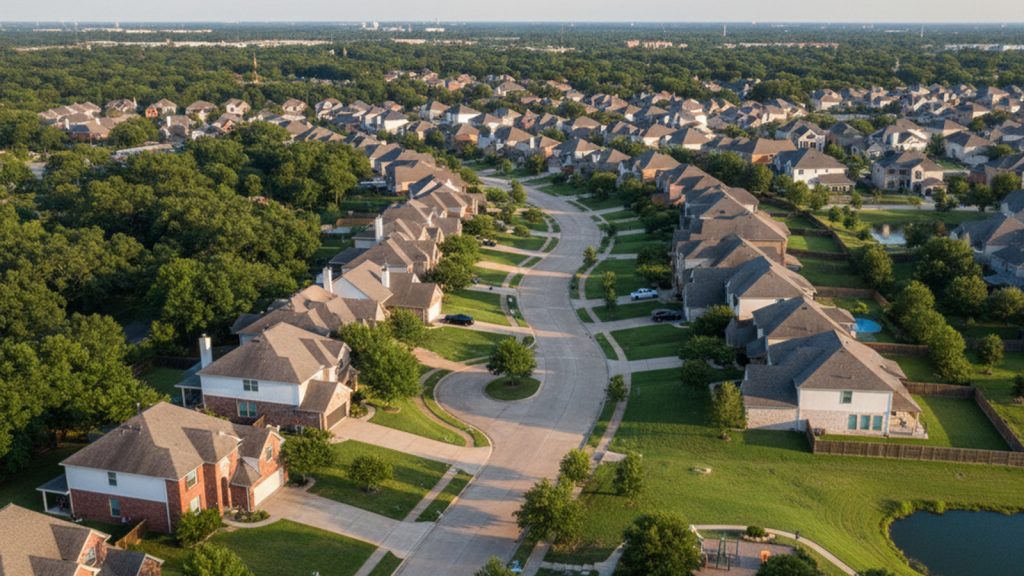
Relocating to the Dallas – Fort Worth metroplex requires carefully evaluating multiple suburbs before making a major financial commitment. Many buyers look closely at Collin County to understand local infrastructure, commute times, and daily livability.
A frequent question from out-of-state buyers is: is plano tx safe compared to the national average? Evaluating a city involves looking objectively at recent crime data, emergency response capabilities, and the overall health of the real estate market.
Understanding Crime Rates and Statistics in Plano
Reviewing objective data provides the most accurate picture of city operations. Plano maintains detailed public records that help prospective residents understand local law enforcement trends.
The overall crime rate in Plano sits at approximately 16.1 incidents per 1,000 residents. This figure falls well below the national average, placing the city favorably in regional rankings across the United States. Lower statistical crime rates often correlate with stable property values over time.
Violent crime in the area is particularly low, recorded at roughly 1.6 incidents per 1,000 residents. Most reported incidents in the city fall under property crime categories rather than violent offenses like aggravated assault or robbery. The Plano Police Department regularly reports historic lows in major crime categories compared to other parts of the Lone Star State.
Relying on hard data rather than neighborhood rumors is the best way to evaluate any residential area. The clear takeaway for buyers is that Plano offers a statistically lower-risk environment than many comparable major suburbs. This baseline provides strong peace of mind for anyone purchasing a Plano home.
Civic Infrastructure and Emergency Services
A robust emergency response system is a core component of municipal infrastructure. Plano invests heavily in its police, fire, and medical services to maintain rapid response times.
The Plano Police Department operates with high efficiency, maintaining an average response time of under four minutes for Priority One calls. This rapid deployment capability is supported by proactive community policing efforts and civilian home security awareness programs. Strong civic funding ensures that patrol divisions remain well-staffed across all city sectors.
Fire and medical emergencies are handled by Plano Fire-Rescue, which averages a response time of approximately 5.5 minutes. This department is one of the few agencies globally to hold both CFAI/CAAS accreditations and an ISO 1 rating. These top-tier ratings can occasionally positively impact homeowner insurance premiums.
Healthcare access is another major structural advantage for the city. Residents are situated close to major medical centers, including Medical City Plano and Texas Health Presbyterian. The takeaway here is that Plano’s emergency and medical infrastructure is exceptionally well-funded and highly accredited.
Plano Real Estate Market Overview
The housing inventory in Collin County features a wide mix of properties. Buyers entering this market need to understand current pricing dynamics and standard property taxes.
The current median price for a single-family home in Plano is approximately $540,000. Prices can vary significantly depending on the zip code, with distinct valuation differences between the eastern and western portions of the city. Buyers will find everything from established single-family homes with HOAs to newer townhomes and urban condos.
Properties in this market move relatively quickly, with average days on market ranging from 25 to 39 days depending on the season. Most residential areas feature mature lots, though the age of the housing stock means some properties may require aesthetic updates. Buyers must also factor in standard Collin County property tax rates when calculating their total monthly carrying costs.
Navigating homes for sale in Plano requires a decisive approach due to the steady demand. The primary takeaway for the current market is that buyers must be financially prepared and ready to submit strong offers. Waiting too long on a well-priced property often results in missed opportunities.
Location Features, Transit, and Schools
Geography and daily logistics play massive roles in real estate decisions. Plano offers a strategic location that connects easily to major employment hubs.
Commuting to downtown Dallas typically involves a 20-mile drive via US-75 or the Dallas North Tollway. For those who prefer public transportation, the Dallas Area Rapid Transit network provides extensive light rail and bus access. This connectivity makes living in Plano highly convenient for professionals working throughout the Dallas – Fort Worth metroplex.
The educational infrastructure is managed by the Plano Independent School District, which utilizes a specific organizational model. PISD operates with a unique structure that includes separate senior high schools dedicated exclusively to 11th and 12th grades. This district layout is a major consideration for many buyers moving into the region.
Outdoor amenities add significant value to the local real estate landscape. The city maintains extensive green spaces, highlighted by the 200-acre Arbor Hills Nature Preserve and the massive Oak Point Park. The clear takeaway is that Plano balances dense suburban development with highly accessible natural preservation areas.
Why Buyers and Sellers Choose Bale Real Estate Group
Buying or selling in Plano requires more than just timing the market. The Bale Real Estate Group helps clients understand pricing, competition, and how to position a home so it stands out immediately. For sellers, that includes strategic pricing, professional staging, targeted marketing, Zillow Showcase exposure, and our Certified Pre-Owned Home Listing Program. The goal is simple: maximize exposure and drive stronger offers.
Frequently Asked Questions About Moving to Plano
Is Plano safer than Dallas?
Statistical data shows that Plano maintains a lower overall crime rate compared to the neighboring city of Dallas. Violent crime in Plano sits at approximately 1.6 incidents per 1,000 residents, which is notably lower than Dallas averages. Buyers often choose Collin County suburbs specifically for these favorable statistical comparisons.
Is Plano, TX safe from natural disasters?
Like all of North Texas, the city experiences severe weather, including spring thunderstorms and occasional tornado warnings. Properties are not located in coastal hurricane zones, but buyers should review local flood maps for specific residential areas. Standard home insurance policies generally cover the most common environmental risks in the region.
What is the average cost of a home in Plano?
The median price for a single-family property in the city currently hovers around $540,000. Prices fluctuate based on the specific zip code, lot size, and whether the home has been recently updated. Buyers should expect properties to stay on the market for an average of 25 to 39 days.
Planning to buy? Learn how Bale Real Estate Group helps buyers evaluate homes and navigate their purchase. Why Buyers Choose Bale Real Estate Group.