
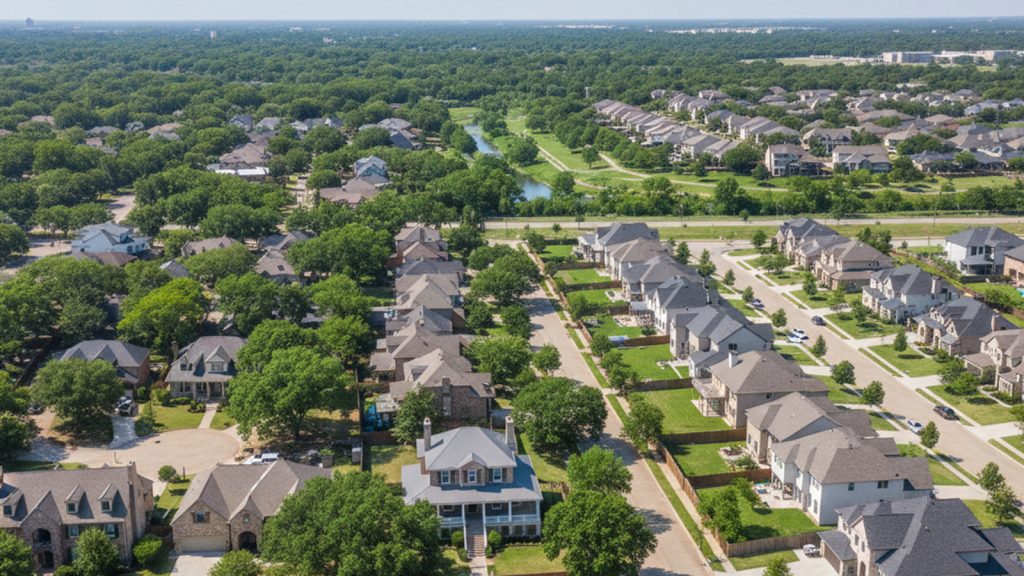
Buyers searching for properties in the North Dallas suburbs inevitably find themselves comparing these two heavyweights. Both cities are located in Collin County and offer robust local economies, but they deliver entirely different living experiences.
Choosing the right location depends heavily on your daily commute, architectural preferences, and budget constraints. Understanding the objective data behind real estate trends, property taxes, and infrastructure in both markets will help you make a confident investment.
Plano vs. McKinney: Comparing Two Premier North Dallas Suburbs
The geographical relationship between these two cities plays a massive role in their real estate dynamics. Plano sits immediately north of Dallas, acting as a major transitional hub between the central city and the expanding northern suburbs.
McKinney is located just north of Plano, which historically gave it a more removed, rural atmosphere. Today, rapid development has connected the two cities seamlessly, though McKinney still retains distinct pockets of undeveloped land and historic architecture.
When evaluating homes for sale in Collin County, buyers must weigh the premium of Plano’s central location against McKinney’s expanding footprint. The core comparison factors usually come down to home prices, the age of available properties, and the long-term carrying costs associated with local property taxes.
Average Home Prices and Available Property Types
Real estate markets in both cities are highly competitive, but they offer different types of inventory. Plano is largely built out, meaning buyers will mostly find established, master-planned developments from the 1980s through the early 2000s.
McKinney offers a wider spectrum of property ages, blending historic homes near its downtown core with expansive new construction neighborhoods on its northern and western edges. Average home prices in Plano currently hover between approximately $500,000 and $669,000, depending on the neighborhood and updates.
In contrast, McKinney average home prices range from roughly $483,000 to $621,000. Buyers often find that their dollar stretches slightly further in McKinney, though this usually comes with a longer drive to central Dallas.
Property Tax Rates and Collin County Assessments
Carrying costs are a critical consideration for any Texas homebuyer, as the state relies heavily on property taxes rather than state income tax. For 2025 and 2026, the combined property tax rate for homeowners in Plano sits at approximately 1.71 percent.
McKinney homeowners face a slightly higher combined property tax rate of roughly 1.75 percent. While a fractional difference might seem small, recent Collin County property assessments have increased valuations across the board.
This means holding costs have risen in both cities, directly impacting your monthly mortgage payment. Buyers must factor these specific tax rates into their long-term housing budget before submitting an offer.
Commute Times, Traffic, and Transportation Logistics
Daily travel is often the deciding factor for buyers choosing between these two cities. Collin County relies heavily on a network of tollways and state highways to move residents across the Dallas-Fort Worth metroplex.
Plano offers a distinct advantage for public transit users through its integration with the Dallas Area Rapid Transit system. The city features multiple DART rail stations, providing a direct, traffic-free commute into downtown Dallas.
McKinney, by contrast, is entirely car-dependent and does not currently have DART rail access. Residents here rely exclusively on personal vehicles to navigate the local infrastructure and reach regional commercial centers.
Highway Access and Proximity to Major Employment Hubs
Highway positioning dictates the rhythm of daily life in both municipalities. Both cities are bisected by US-75, but Plano benefits from direct access to the Dallas North Tollway and State Highway 121.
This infrastructure gives Plano residents a significant edge when traveling to major regional employment centers. To understand the daily driving reality, consider these approximate commute times during typical traffic conditions:
- Downtown Dallas requires a 30 to 40-minute drive from Plano, compared to a 45 to 55-minute drive from McKinney.
- Legacy West and the Telecom Corridor are highly accessible for Plano residents, often requiring just a 10 to 15-minute local drive.
- McKinney drivers typically face a 20 to 30-minute commute down the Sam Rayburn Tollway to reach those same corporate campuses.
Commercial Districts, Dining, and Local Amenities
The commercial layouts of these two cities reflect their different stages of development. Plano operates as a major corporate headquarters destination, resulting in a heavy concentration of upscale retail and modern office parks.
The city zoning prioritizes large-scale, mixed-use developments that blend luxury apartments, high-end dining, and retail into dense, walkable pockets. This creates a highly structured, modern commercial environment.
McKinney leans heavily into its historical roots, maintaining a commercial identity built around boutique shopping and independent restaurants. While the city has added modern retail centers along the highway corridors, its core identity remains tied to preserved historical districts.
Legacy West and The Shops at Legacy vs. Historic Downtown McKinney
The specific commercial zones defining each city offer completely different architectural and dining experiences. Legacy West and The Shops at Legacy in Plano feature modern, newly constructed mixed-use spaces focused on luxury retail and high-density dining.
These areas provide a highly manicured, contemporary environment with upscale steakhouses, designer storefronts, and structured parking garages. It is a hub built for modern convenience and premium commercial access.
Historic Downtown McKinney offers a stark contrast with its preserved 19th-century architecture and European-style Adriatica Village. This area delivers a walkable, traditional town square experience filled with independent cafes, antique shops, and local breweries.
Educational Infrastructure: Plano ISD vs. McKinney ISD
Public school districts are a major driver of real estate demand in Collin County. Plano Independent School District is a massive, fully established system with dozens of campuses serving the entire city and portions of neighboring towns.
Plano ISD accounts for approximately 61 percent of a typical Plano property tax bill, reflecting the heavy municipal investment in educational facilities. The district features extensive academic program offerings, specialized academies, and massive athletic complexes.
McKinney Independent School District is smaller but is currently managing significant residential growth as new neighborhoods expand the city limits. The district has invested heavily in modernizing its infrastructure, including a state-of-the-art high school stadium and updated extracurricular facilities.
Buyers looking at homes for sale in either city should carefully verify school boundaries, as zoning lines frequently shift to accommodate population growth. Both districts offer robust programs, but their scale and campus ages differ significantly.
Parks, Recreation, and Outdoor Green Spaces
Access to outdoor recreation is a strong selling point for both municipalities. Plano features a fully mature municipal parks system with integrated trail networks connecting various neighborhoods and commercial centers.
The city has prioritized continuous greenbelts, allowing residents to navigate miles of paved trails without crossing major intersections. McKinney approaches outdoor space differently, integrating its parks into the natural landscape and rolling hills of northern Collin County.
McKinney has invested heavily in massive sports complexes and natural preserves, utilizing its larger available land footprint. Both cities maintain excellent public facilities, but the style of outdoor access varies from highly structured trails to expansive natural areas.
Oak Point Park vs. Towne Lake Recreation Area
A direct comparison of each city’s premier public park highlights their different approaches to municipal recreation. Oak Point Park and Nature Preserve serves as the crown jewel of Plano, while Towne Lake Recreation Area is the central hub for McKinney.
Both parks offer extensive amenities, but they operate on vastly different scales. Here is a breakdown of what each location provides to local residents:
- Oak Point Park in Plano covers roughly 800 acres, featuring miles of soft-surface trails along Rowlett Creek and a Go Ape zipline course.
- Towne Lake Recreation Area in McKinney covers roughly 108 acres, focusing on a large central lake with paddleboat rentals and fishing piers.
- Oak Point emphasizes expansive nature preservation and long-distance running, whereas Towne Lake provides dense, centralized amenities like specialized sports fields and horseshoe-pitching courts.
Why Homeowners Choose Bale Real Estate Group
Buying or selling in Plano requires more than just timing the market. The Bale Real Estate Group helps clients understand pricing, competition, and how to position a home so it stands out immediately. For sellers, that includes strategic pricing, professional staging, targeted marketing, Zillow Showcase exposure, and our Certified Pre-Owned Home Listing Program. The goal is simple: maximize exposure and drive stronger offers.
Frequently Asked Questions
Is McKinney more expensive than Plano?
Generally, McKinney offers slightly lower housing costs compared to Plano. Average home prices in McKinney range from roughly $483,000 to $621,000, while Plano homes typically cost between $500,000 and $669,000. However, McKinney does have a slightly higher combined property tax rate of 1.75 percent.
Which city offers a shorter commute to Downtown Dallas?
Plano provides a significantly shorter commute to Downtown Dallas. Drivers can expect a 30 to 40-minute trip from Plano, whereas the drive from McKinney usually takes 45 to 55 minutes. Plano also offers direct rail access to downtown via the Dallas Area Rapid Transit system.
How do property tax rates compare between Plano and McKinney?
Property tax rates are very similar, but Plano holds a slight edge with a combined rate of approximately 1.71 percent. McKinney residents pay a combined rate of roughly 1.75 percent on their Collin County tax assessments. In both cities, the local school districts account for the largest portion of the annual tax levy.