
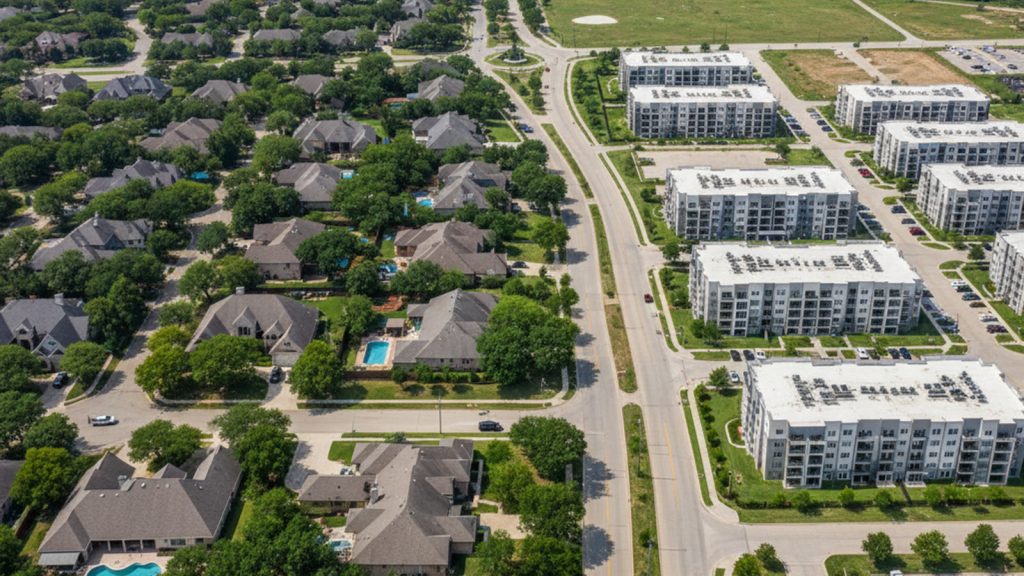
Relocating to the Dallas-Fort Worth metroplex often leads buyers to search for specific suburbs that balance corporate access with substantial local amenities. Those considering moving to Plano TX will find a city that operates as a major economic engine in North Texas rather than a simple bedroom community.
Understanding the local housing inventory, commuting logistics, and school zoning is essential before making a real estate decision. This guide outlines the objective data buyers need to navigate the current property market, evaluate daily travel times, and calculate true living costs across the city.
The municipality provides a unique blend of suburban space and dense commercial infrastructure. Relocating buyers must weigh the advantages of robust employment hubs against the realities of higher property taxes and summer climate demands.
Cost of Living and Local Taxes in Plano
Evaluating the financial realities of this city requires looking beyond the purchase price of a home. Buyers must factor in local tax rates and seasonal utility spikes to understand their true monthly obligations.
The overall cost of living in the Plano area runs approximately 8.5 percent higher than the national average. A significant portion of this premium comes from local real estate valuations and the associated property tax burden.
For the 2025-2026 fiscal year, the adopted combined property tax rate sits at an approximate 1.71 percent per $100 of assessed value. This combined figure includes the City of Plano tax rate of roughly 0.4376 and the Plano Independent School District rate of approximately 1.0396. Buyers should calculate these exact percentages against their anticipated purchase price to avoid surprises at closing.
Utility costs also demand careful budgeting, running about 12.8 percent above the national average due to intense summer cooling requirements. Fortunately, residents benefit from the lack of a state income tax in the Lone Star State. This tax structure often offsets the higher property tax and energy expenses for the corporate workforce.
Plano Real Estate Market and Property Types
The local housing inventory offers everything from sprawling single-family estates to dense, walkable condominium developments. Prices vary significantly depending on the neighborhood and proximity to major corporate centers.
Current market data shows median home prices hovering between an approximate $536,000 and $540,000. Buyers looking at homes for sale in Plano will find that properties in the western half of the city generally command higher price points. East Plano tends to offer more affordable housing options, often featuring established neighborhoods with larger lot sizes and mature trees.
Renters and buyers seeking lower-maintenance lifestyles have plenty of options in the higher-density developments. Average rent prices range from an approximate $1,450 to $1,700 depending on the building amenities and location. Luxury mixed-use condominiums and townhomes are highly concentrated around Legacy West and the Shops at Legacy.
The market remains highly active, meaning buyers need to act decisively when a well-priced single-family home hits the Multiple Listing Service. Securing a property in the more accessible price tiers often requires submitting an offer within the first few days on the market.
Major Employers and Job Market Hubs
Employment density is one of the primary drivers of housing demand in this part of Collin County. The city hosts a massive concentration of corporate headquarters and regional offices.
The Legacy Business Park serves as the central economic node for the entire North Texas region. This massive development houses thousands of employees across the finance, technology, and automotive sectors. Major corporations with headquarters or significant campuses here include Toyota, Frito-Lay, JPMorgan Chase, and Capital One.
The healthcare sector also provides a robust foundation for the local labor market. Medical City Plano and various Texas Health facilities employ thousands of medical professionals and administrative staff. This strong medical infrastructure supports both the local economy and the residents requiring specialized care.
This density of high-paying jobs creates a hyper-local housing demand around the major employment centers. Buyers relocating for work will find that purchasing a home near the Dallas North Tollway corridor drastically cuts daily commute times for corporate employees.
Transportation, Commute Times, and Transit Options
Navigating the Dallas area requires a clear understanding of the regional toll roads and public transit networks. Daily travel times depend heavily on proximity to these major transportation arteries.
Several major highways serve the city, including the Dallas North Tollway, the President George Bush Turnpike, and US-75. Drivers should budget for monthly toll expenses, as utilizing the tollway system is often the most efficient way to travel across Denton County and Collin County. For frequent travelers, the Dallas Fort Worth International Airport is typically a 30-minute drive under normal traffic conditions.
Public transportation offers a viable alternative to driving for many residents. The Dallas Area Rapid Transit system operates extensive bus routes and light rail services throughout the region. The DART Red and Orange rail lines connect the Downtown Plano station directly to Downtown Dallas, bypassing rush hour traffic entirely.
Utilizing the DART rail system is the most predictable way to navigate morning commutes into the city center. Buyers prioritizing public transit should focus their property search near the historic downtown sector to maximize access to the train station.
Plano Independent School District (PISD)
The public education infrastructure is a massive consideration for anyone researching life in Plano. The local district operates with a unique structural model that differs from many other metropolitan areas.
The Plano Independent School District manages dozens of campuses that serve students across the municipality and into neighboring jurisdictions. The district boundaries are expansive, occasionally overlapping into parts of neighboring cities. Buyers should always verify exact zoning lines with a real estate agent before finalizing a purchase contract.
The district utilizes a distinct campus split for older students rather than a traditional four-year model. Students in the ninth and tenth grades attend standard high schools, while eleventh and twelfth graders transition to dedicated senior high schools. Plano Senior High School is one example of these specialized upper-level campuses.
This structural division allows the district to consolidate advanced academic tracks and specialized facilities for older students. The area also provides strong tertiary education options, anchored by the expansive Collin College system.
Parks, Recreation, and Outdoor Amenities
Balancing the intense corporate environment, the city maintains an impressive network of municipal parks and nature trails. Residents have immediate access to hundreds of acres of protected green spaces.
Arbor Hills Nature Preserve stands out as a premier destination for outdoor recreation in the western part of the city. The preserve features extensive hiking trails, dedicated off-road cycling paths, and a multi-story observation tower. This natural amenity provides a critical counterbalance to the heavily developed corporate corridors nearby.
On the eastern side of the city, Oak Point Park and Nature Preserve serves as the largest continuous park space in the area. Visitors can utilize the expansive lake, navigate the zip-lining courses, or explore miles of unpaved nature trails. Bob Woodruff Park connects directly to this system, offering local fishing piers and community pavilions.
For those who prefer urban recreation, the city integrates highly walkable retail districts with outdoor gathering spaces. Developments like Legacy West blend open-air patios and pedestrian walkways with local dining and commerce.
Expert Guidance for Buying and Selling in Plano
Navigating the Plano real estate market takes more than just watching prices. The Bale Real Estate Group, ranked in the top 1% of North Texas Realtors, helps buyers and sellers understand how to position themselves based on current competition, not just past sales. From identifying the right neighborhoods to negotiating stronger terms, their approach is focused on preparation, strategy, and results.
Frequently Asked Questions About Moving to Plano
Is Plano, TX an expensive place to live?
The overall cost of living is approximately 8.5 percent higher than the national average, largely driven by housing prices and property taxes. However, residents do not pay a state income tax in Texas. This tax structure often balances out the higher local costs for workers moving from higher-tax states.
What is the average commute time from Plano to Downtown Dallas?
Driving down US-75 to Downtown Dallas typically takes 30 to 45 minutes during standard rush hour traffic. Residents looking to avoid highway congestion can take the DART rail lines instead. The train ride from the historic downtown station to the city center takes approximately 40 minutes.
Does Plano have public transportation?
Yes, the city is fully integrated into the Dallas Area Rapid Transit network. The system provides extensive local bus routes and direct light rail access. The Red and Orange lines operate daily, connecting local stations to major employment hubs across the metropolitan area.