Top 1% Frisco & Plano Realtors | Bale Real Estate GroupTop 1% Frisco & Plano Realtors | Bale Real Estate Group

Top 1% North Texas luxury real estate team with $50M+ in sales and 80+ 5-star reviews. Frisco, Plano, Preston Hollow & North Dallas.

  • Home
  • Search
  • Communities We Serve
    • Allen
    • Aubrey
    • Celina
    • Coppell
    • Dallas
      • Oakdale
    • Frisco
      • Country Club Ridge at The Trails
      • Custer Creek Farms
      • Griffin Parc
      • Heather Ridge Estates
      • Shaddock Creek Estates
      • Newman Village
      • Phillips Creek Ranch
      • Richwoods
      • Starwood
      • Stonebriar
      • The Canals at Grand Park
      • The Fairways
      • The Hills of Kingswood
      • Villages of Stonebriar Park
    • McKinney
    • Park Cities
    • Plano
      • Avignon Windhaven
      • Cliffs of Gleneagles
      • Crystal Creek
      • Deerfield
      • Lakeside on Preston
      • Normandy Estates
      • Shoal Creek
      • Wentworth Estates
      • Willow Bend Polo Estates
      • Willow Bend
      • Windrose Tower
    • Preston Hollow
    • Princeton
    • Prosper
    • Southlake
  • Buyers
    • Buying a Home in Dallas
    • 8 Steps to Buying a Home
    • First-Time Home Buyers
    • Smart Buyer Strategy
      • DFW Property Taxes
      • HOA Communities in North Texas
      • Homestead Exemptions
      • MUD and PID Districts
      • Cost of Home Ownership
    • Home Loan Process
      • Credit Score Requirements
      • How Much Home Can You Afford?
      • Down Payment Options
      • Interest Rates Explained
      • Mortgage Pre-Approval
    • Relocating to North Dallas
      • Choosing the Right Community & Location
      • School Districts
      • Commute Considerations
      • Community Comparisons
      • Cost of Living
    • New Construction Buyer Representation
    • Offer Strategy
    • Home Inspections
    • Buyer Closing Costs
    • Buying and Selling at the Same Time
      • Downsizing & Rightsizing
  • Sellers
    • Selling Your Home in North Dallas
    • 8 Steps to Selling a Home
    • Pre-Listing Appointment
    • Preparing Your Home for Sale
      • Professional Home Staging
    • Certified Pre-Owned Home Listing Program
    • Marketing Your Home for Maximum Exposure
      • Professional Photography
      • Drone Photography
      • Zillow Showcase
      • Social Media Marketing
      • Digital Advertising
    • Strategic Pricing & Market Positioning
    • Seller Closing Costs & Net Proceeds
      • Calculate Your Estimated Seller Net Proceeds
    • Offer Strategy & Seller Protection
    • Buying and Selling at the Same Time
      • Downsizing & Rightsizing
  • Our Advantage
    • Why Work With Bale Real Estate Group
    • Why Sellers Hire Bale Real Estate Group
    • Meet the Team
    • Real Producers: Cover Story
    • Our Story
    • Client Testimonials
    • Proven Results
    • Certified Pre-Owned Home Listing Program
    • Zillow Showcase
    • Professional Home Staging
    • Concierge Vendor Network
    • What if?
    • Videos
  • Blog
  • Contact

Understanding the Cost of Living in Plano TX for 2026 Buyers


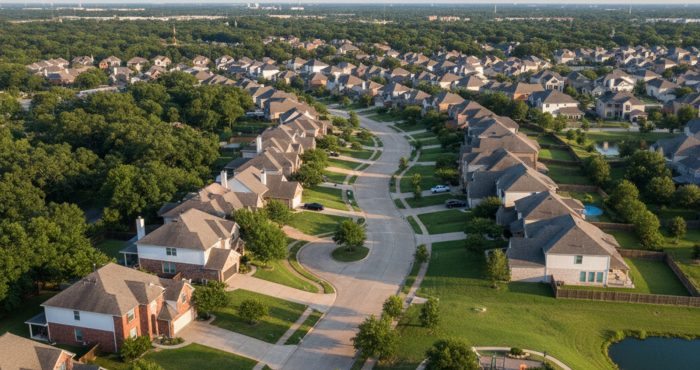
Relocating to North Texas requires a clear understanding of local expenses beyond just the sticker price of a house. Evaluating the cost of living in Plano TX means looking closely at property taxes, commuting tolls, and utility rates. This city offers robust infrastructure and major corporate campuses, but those features come with a specific financial footprint.

Buyers and renters often find that Plano balances premium pricing with high-level municipal services. Navigating the housing market here requires factoring in everything from deregulated electricity plans to Collin County tax assessments. Having a realistic budget helps ensure a smooth transition into this highly active real estate market.

Real estate professionals often remind clients that living in Plano means investing in a specific lifestyle and level of convenience. The local amenities are robust, but they require a solid financial foundation to enjoy fully. Understanding these specific numbers will help you determine exactly what you can afford in this vibrant North Texas market.

From the historic downtown arts district to the modern high-rises out west, the city presents multiple distinct living experiences. Each neighborhood carries its own unique pricing structure and commuting advantages. Breaking down these expenses category by category provides the clearest picture of what to expect.


Housing Costs in Plano: Renting vs. Owning

Securing a place to live will be your largest monthly expense in this market by a significant margin. Plano offers a diverse mix of established single-family neighborhoods and dense, mixed-use apartment developments. Navigating these options requires a clear understanding of current property values and local tax assessments.

The median home price in Plano currently sits between $508,000 and $540,000, depending heavily on the specific zip code. Properties located near major commercial centers or recently updated homes often command prices well above that average. Buyers must also factor in the combined Collin County property tax rate, which hovers around 1.71 percent.

This property tax rate includes assessments for the City of Plano, Collin County, and the Plano Independent School District. Taxes are assessed annually based on the market value of the property, which has steadily increased over the last decade. Texas does not collect a state income tax, making these property taxes the primary funding mechanism for local infrastructure.

Renters looking at apartments will find that one-bedroom units typically range from $1,450 to $1,700 per month. Newer builds situated near the western tollways consistently command the higher end of that rental spectrum. Many of these luxury complexes include premium amenities like resort-style pools and co-working spaces built into the lease price.

Leasing can offer a predictable short-term budget, especially since maintenance and property taxes are absorbed directly by the landlord. However, exploring homes for sale in Plano makes more financial sense than renting if you plan to stay in the area for at least five years. The historical equity growth in Collin County generally outpaces the flexibility of renting, making homeownership a stronger long-term strategy.


Average Utility Bills in Plano

Budgeting for monthly utilities requires understanding the local climate and the unique structure of the Texas energy grid. North Texas experiences extreme summer heat, which heavily influences seasonal cooling expenses. Preparing for these seasonal shifts is crucial for maintaining a balanced household budget.

A typical household in Plano pays approximately $342 per month for combined standard utilities. This estimate covers municipal water, natural gas, high-speed internet, and weekly trash collection services. Water rates can fluctuate slightly during the summer months when lawn irrigation systems run much more frequently.

The City of Plano manages water and trash services directly, meaning those costs remain relatively stable and predictable. Natural gas is typically used for winter heating and water heaters, keeping those specific bills low during the summer. High-speed internet is highly competitive here, with multiple fiber-optic providers driving down monthly connection costs.

Electricity is the most variable component of your utility budget due to the deregulated energy market in Texas. Residents must choose their own retail electric provider, with average monthly bills ranging from $150 to $203 based on home square footage. Running an HVAC system continuously from June through September easily pushes these costs toward the higher end of that range.

The most effective strategy for managing Plano utility costs is locking in a fixed-rate electricity plan during the milder spring or fall months. Variable-rate plans often lead to severe budget shocks when wholesale power prices spike during August heatwaves. Establishing a predictable rate ensures your cooling costs remain manageable even when temperatures soar.


Transportation Infrastructure and Commuting Costs

Getting around the sprawling Dallas-Fort Worth metroplex involves navigating a vast network of highways and transit systems. Your daily commute distance will significantly impact your monthly transportation budget and overall schedule. Evaluating these transit options early will help you choose the right neighborhood for your daily routine.

Plano features direct access to the Dallas Area Rapid Transit system, known locally as DART. The city hosts several active rail stations along the Red Line and Orange Line that provide straightforward access to downtown Dallas. While public transit is available, the sprawling nature of North Texas means most residents still rely heavily on personal vehicles.

The local road infrastructure is heavily reliant on tollways designed to move traffic quickly across long distances. Commuters traveling to neighboring cities like Frisco or downtown Dallas use these expressways daily. Commuting by car introduces several distinct expenses into your monthly budget that require careful planning.

Drivers must account for the following recurring transportation costs:

  • Toll roads are a daily reality, with heavy commuter usage concentrated on the Dallas North Tollway and the Sam Rayburn Tollway.
  • Gasoline expenses vary by commute length, but drivers frequently spend above the national average on fuel due to long driving distances.
  • Car insurance premiums in the DFW area tend to be elevated due to high traffic volume and severe weather events like spring hailstorms.

Relying strictly on public transit or rideshares in Plano is highly impractical for the vast majority of residents. Owning a personal vehicle is an absolute necessity to access suburban employment centers, grocery stores, and medical facilities efficiently. You should budget generously for toll tags and auto insurance when calculating your final relocation expenses.


Groceries, Healthcare, and Community Features

Beyond housing and transit, daily living expenses in Plano align closely with other major suburban centers across the country. The local economy is driven by massive commercial developments that bring premium amenities directly to residents. These conveniences contribute heavily to the overall standard of living in the area.

Grocery and healthcare expenses in the region generally track near or slightly above the national average. The city offers a wide spectrum of shopping options, ranging from massive regional supermarket chains to premium organic markets. Residents have easy access to diverse food options that can fit almost any household grocery budget.

Medical facilities are abundant, with several major hospital networks operating large, specialized campuses within the city limits. This dense concentration of healthcare providers ensures competitive pricing for routine medical services and urgent care visits. Having these facilities close by also reduces travel time during medical emergencies.

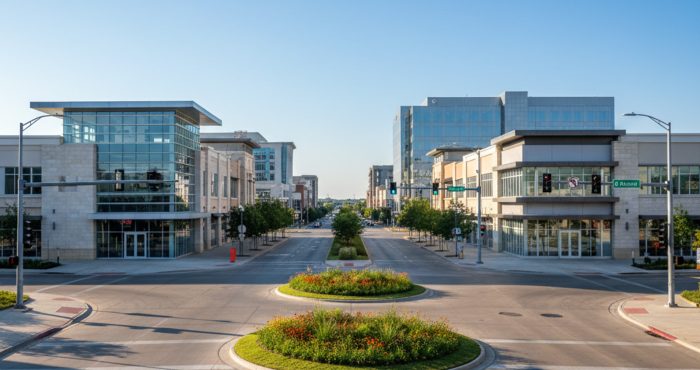
A major financial advantage of living in Plano is the immediate proximity to the Legacy West business district. This massive employment hub houses numerous corporate headquarters, allowing many residents to work just minutes from their front door. A significantly shorter commute directly reduces annual transportation expenses and daily toll fees.

Local taxes heavily fund the Plano Independent School District facilities and a dense network of public parks. These municipal investments provide highly maintained green spaces, recreation centers, and community pools throughout the city. Access to these well-funded public resources offsets the need for expensive private club memberships.

The sheer density of community amenities and nearby corporate headquarters easily justifies the higher local cost of housing. Residents pay a premium to live here, but they recoup that value through reduced commute times and immediate access to top-tier municipal services. This balance of cost and convenience is exactly what keeps the local real estate market so active.

How to Position Yourself for Success in the Plano Market

Buying or selling in Plano requires more than just timing the market. The Bale Real Estate Group helps clients understand pricing, competition, and how to position a home to stand out from day one. For sellers, that includes strategic pricing, professional staging, targeted marketing, Zillow Showcase exposure, and our Certified Pre-Owned Home Listing Program. The goal is simple: create stronger demand and better results in today’s market.

Frequently Asked Questions

How much do I need to make to live comfortably in Plano, Texas?

A household income of at least $100,000 is generally recommended to live comfortably in Plano while managing local housing costs. This income level provides enough room in the budget to handle a median-priced home of $508,000 alongside property taxes and toll road fees. Earning this amount ensures you can cover essential expenses while still saving for the future.

Is Plano, TX more expensive than Dallas?

Housing costs in Plano are often higher than the overall average for the city of Dallas, largely due to a concentration of newer, larger single-family homes. However, Dallas features ultra-luxury neighborhoods that far exceed Plano prices. Everyday expenses like groceries and utilities remain relatively comparable between the two cities.

What are the property tax rates in Collin County?

The combined property tax rate in the Collin County portion of Plano is approximately 1.71 percent of a property’s assessed value. This total includes individual tax rates levied by the county, the city, and the local school district. Texas does not have a state income tax, so local municipalities rely heavily on these property taxes to fund public services.

Posted in: Home Buying, Market Updates, Plano Real Estate, Relocating to North Dallas Tagged: 2026 Housing Market, Buyer Guide, Collin County Property Taxes, Cost of Living in Plano TX, Dallas North Tollway, DART Rail, Legacy West, Plano Cost of Living, Plano Home Prices, Plano Housing Costs, Plano ISD, Plano Property Taxes, Plano Real Estate, Plano Rent, Plano TX, Plano Utilities, Relocation Guide, Sam Rayburn Tollway

Moving to the Dallas Area: Is Plano TX Safe and Ready for 2026 Buyers?


Relocating to the Dallas – Fort Worth metroplex requires carefully evaluating multiple suburbs before making a major financial commitment. Many buyers look closely at Collin County to understand local infrastructure, commute times, and daily livability.

A frequent question from out-of-state buyers is: is plano tx safe compared to the national average? Evaluating a city involves looking objectively at recent crime data, emergency response capabilities, and the overall health of the real estate market.


Understanding Crime Rates and Statistics in Plano

Reviewing objective data provides the most accurate picture of city operations. Plano maintains detailed public records that help prospective residents understand local law enforcement trends.

The overall crime rate in Plano sits at approximately 16.1 incidents per 1,000 residents. This figure falls well below the national average, placing the city favorably in regional rankings across the United States. Lower statistical crime rates often correlate with stable property values over time.

Violent crime in the area is particularly low, recorded at roughly 1.6 incidents per 1,000 residents. Most reported incidents in the city fall under property crime categories rather than violent offenses like aggravated assault or robbery. The Plano Police Department regularly reports historic lows in major crime categories compared to other parts of the Lone Star State.

Relying on hard data rather than neighborhood rumors is the best way to evaluate any residential area. The clear takeaway for buyers is that Plano offers a statistically lower-risk environment than many comparable major suburbs. This baseline provides strong peace of mind for anyone purchasing a Plano home.


Civic Infrastructure and Emergency Services

A robust emergency response system is a core component of municipal infrastructure. Plano invests heavily in its police, fire, and medical services to maintain rapid response times.

The Plano Police Department operates with high efficiency, maintaining an average response time of under four minutes for Priority One calls. This rapid deployment capability is supported by proactive community policing efforts and civilian home security awareness programs. Strong civic funding ensures that patrol divisions remain well-staffed across all city sectors.

Fire and medical emergencies are handled by Plano Fire-Rescue, which averages a response time of approximately 5.5 minutes. This department is one of the few agencies globally to hold both CFAI/CAAS accreditations and an ISO 1 rating. These top-tier ratings can occasionally positively impact homeowner insurance premiums.

Healthcare access is another major structural advantage for the city. Residents are situated close to major medical centers, including Medical City Plano and Texas Health Presbyterian. The takeaway here is that Plano’s emergency and medical infrastructure is exceptionally well-funded and highly accredited.


Plano Real Estate Market Overview

The housing inventory in Collin County features a wide mix of properties. Buyers entering this market need to understand current pricing dynamics and standard property taxes.

The current median price for a single-family home in Plano is approximately $540,000. Prices can vary significantly depending on the zip code, with distinct valuation differences between the eastern and western portions of the city. Buyers will find everything from established single-family homes with HOAs to newer townhomes and urban condos.

Properties in this market move relatively quickly, with average days on market ranging from 25 to 39 days depending on the season. Most residential areas feature mature lots, though the age of the housing stock means some properties may require aesthetic updates. Buyers must also factor in standard Collin County property tax rates when calculating their total monthly carrying costs.

Navigating homes for sale in Plano requires a decisive approach due to the steady demand. The primary takeaway for the current market is that buyers must be financially prepared and ready to submit strong offers. Waiting too long on a well-priced property often results in missed opportunities.


Location Features, Transit, and Schools

Geography and daily logistics play massive roles in real estate decisions. Plano offers a strategic location that connects easily to major employment hubs.

Commuting to downtown Dallas typically involves a 20-mile drive via US-75 or the Dallas North Tollway. For those who prefer public transportation, the Dallas Area Rapid Transit network provides extensive light rail and bus access. This connectivity makes living in Plano highly convenient for professionals working throughout the Dallas – Fort Worth metroplex.

The educational infrastructure is managed by the Plano Independent School District, which utilizes a specific organizational model. PISD operates with a unique structure that includes separate senior high schools dedicated exclusively to 11th and 12th grades. This district layout is a major consideration for many buyers moving into the region.

Outdoor amenities add significant value to the local real estate landscape. The city maintains extensive green spaces, highlighted by the 200-acre Arbor Hills Nature Preserve and the massive Oak Point Park. The clear takeaway is that Plano balances dense suburban development with highly accessible natural preservation areas.

Why Buyers and Sellers Choose Bale Real Estate Group

Buying or selling in Plano requires more than just timing the market. The Bale Real Estate Group helps clients understand pricing, competition, and how to position a home so it stands out immediately. For sellers, that includes strategic pricing, professional staging, targeted marketing, Zillow Showcase exposure, and our Certified Pre-Owned Home Listing Program. The goal is simple: maximize exposure and drive stronger offers.

Frequently Asked Questions About Moving to Plano

Is Plano safer than Dallas?

Statistical data shows that Plano maintains a lower overall crime rate compared to the neighboring city of Dallas. Violent crime in Plano sits at approximately 1.6 incidents per 1,000 residents, which is notably lower than Dallas averages. Buyers often choose Collin County suburbs specifically for these favorable statistical comparisons.

Is Plano, TX safe from natural disasters?

Like all of North Texas, the city experiences severe weather, including spring thunderstorms and occasional tornado warnings. Properties are not located in coastal hurricane zones, but buyers should review local flood maps for specific residential areas. Standard home insurance policies generally cover the most common environmental risks in the region.

What is the average cost of a home in Plano?

The median price for a single-family property in the city currently hovers around $540,000. Prices fluctuate based on the specific zip code, lot size, and whether the home has been recently updated. Buyers should expect properties to stay on the market for an average of 25 to 39 days.

Posted in: Community Guides, Home Buying, Market Updates, Plano Real Estate, Relocating to North Dallas Tagged: 2026 Housing Market, Arbor Hills Nature Preserve, Buyer Guide, Collin County Real Estate, Dallas North Tollway, DART Rail, Is Plano TX Safe, Medical City Plano, Oak Point Park, Plano Crime Rate, Plano Fire-Rescue, Plano Home Prices, Plano ISD, Plano Police Department, Plano Real Estate, Plano Relocation, Plano Safety, Plano TX, Relocation Guide, Texas Health Presbyterian, US 75

Frisco vs. Richardson: The ‘New Build’ vs. ‘Location’ Dilemma

If you are currently looking at homes for sale in the Dallas-Fort Worth metroplex, you have likely hit a common fork in the road. Do you choose the shiny, brand-new home with resort-style amenities further north, or do you prioritize a shorter commute and a neighborhood with mature trees closer to the city core?

This is exactly the trade-off when comparing Frisco vs. Richardson.

Frisco is the high-growth giant. It is known for professional sports, endless retail, and schools that look like university campuses. It feels manicured, modern, and busy. Richardson, on the other hand, is the established tech hub. It is known for its cultural diversity, incredible food scene, and proximity to Dallas.

Here is the thesis I tell my clients: Choose Frisco if you want turnkey luxury and uniform school ratings. Choose Richardson if you want location, character, and long-term value potential.

Let’s break down the numbers and the lifestyle differences so you can decide which suburb fits your life.


Housing Inventory: 1960s Charm or 2020s Modern?

The biggest visual difference between these two cities is the age of the homes. When we drive through these neighborhoods, the vibe is completely different.

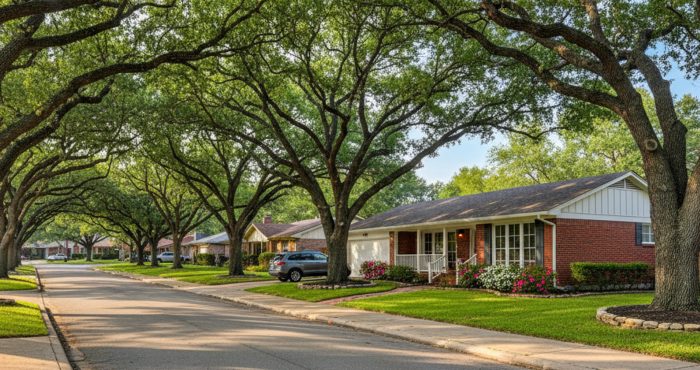
Richardson: The Established Choice In Richardson, you are going to see a dominance of ranch-style homes built between the 1960s and 1980s. Many of these feature “pier and beam” foundations, which are great for our shifting Texas soil but require maintenance. The streets are lined with massive, mature oak trees that form a canopy over the road—something you just don’t get in newer developments.

However, buying here often means you need a renovation budget. While you can find updated homes, many listings at the median price point (around $450,000 to $500,000) will need cosmetic updates or systems repairs. You generally get a larger lot here, and many neighborhoods do not have an HOA.

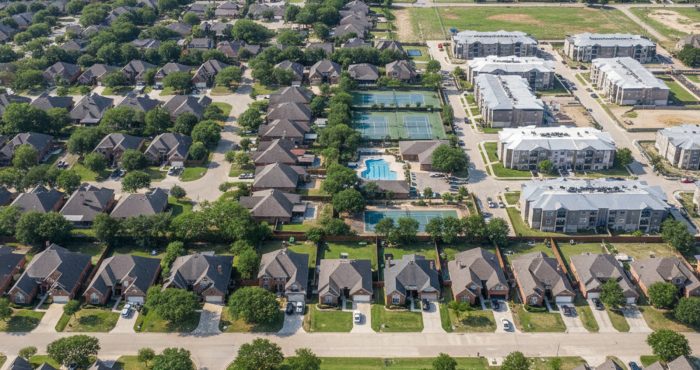
Frisco: The Modern Turnkey Frisco is dominated by builds from the 2000s to present day. You will see streets of two-story traditional brick homes, open floor plans, and high ceilings. If you are looking for new construction homes in Frisco, you are buying into master-planned communities. These almost always come with an HOA, but that fee pays for community pools, clubhouses, and meticulously landscaped common areas.

The trade-off is the lot size. In the newer phases of Frisco, lot sizes are shrinking. You are paying a premium for that “move-in ready” status, with median prices often hovering around $670,000 or more.


Commute & Infrastructure: Tollway vs. US-75 & DART

For many of my clients, the commute is the deciding factor. If you work in Downtown Dallas, this section is critical.

Richardson: The ‘Inner Ring’ Advantage Richardson is considered an “Inner Ring” suburb, located just about 15 miles from downtown. You have direct access to US-75 (Central Expressway) and I-635. While traffic on 75 is heavy, the distance is short enough that a typical commute is 20 to 30 minutes.

The major advantage here is the DART Rail (Red Line). Richardson has multiple stations, allowing for a car-free commute to Downtown Dallas, the Medical District, or even the airport (via connection). If you want to read a book on your way to work instead of fighting traffic, Richardson wins.

Frisco: The Tollway Life Frisco is located about 28 miles from downtown, and that extra distance matters. Drivers here rely heavily on the Dallas North Tollway (DNT) and the Sam Rayburn Tollway (121).

Because Frisco has grown so fast, traffic patterns can be intense. Rush hour commutes to Downtown Dallas can easily exceed 60 to 70 minutes one way. However, if you work in the Legacy West business park or at the Toyota headquarters in Plano, Frisco is a very convenient drive.


School Districts: Frisco ISD vs. Richardson ISD

Both cities offer strong educational opportunities, but the districts operate very differently.

Frisco ISDFrisco ISD is consistently “A” rated by the Texas Education Agency. The district is famous for its “small school model.” Rather than building massive high schools with 4,000 students, they build more high schools to keep student populations smaller. This allows more students to participate in varsity sports, band, and extracurriculars. For buyers who want consistent ratings across every single elementary, middle, and high school, Frisco is often the top pick.

Richardson ISD Richardson ISD is a diverse district with some incredible standout programs. While the district-wide ratings have fluctuated recently (receiving a C rating in the 2024/25 cycle), specific feeder patterns remain highly desirable. High schools like J.J. Pearce and Richardson High offer robust Advanced Placement and magnet programs that rival any in the state.

The Plano Factor It is important to note that the northern part of Richardson actually falls into Plano ISD boundaries. For many buyers, finding a home in Richardson that feeds into Plano schools is a sweet spot—you get the Richardson location with the Plano ISD reputation.


Lifestyle: Sports & Retail vs. Culture & Food

What do you want to do on a Saturday afternoon? The “vibe” in these two cities is distinct.

Frisco: Polished and Active Frisco feels very new and manicured. It is home to the “Billion Dollar Mile,” The Star (Dallas Cowboys World Headquarters), and the new PGA Headquarters. If you love high-end retail, Stonebriar Centre and the nearby Legacy West offer some of the best shopping in Texas. The parks here are modern, featuring expansive sports complexes and splash pads.

Richardson: Diverse and Grounded Richardson is often called the “Cultural Heart” of the suburbs. It is home to the DFW Chinatown and an Asian food district that foodies drive across town to visit. It has a university town feel thanks to the University of Texas at Dallas (UTD). Cultural amenities like the Eisemann Center for Performing Arts and the Alamo Drafthouse give it a grounded, community-focused atmosphere. The parks, like Sherrill Park, are older with plenty of shade trees.


Cost of Living & Tax Rates

When budgeting, you have to look beyond the mortgage payment. A cheaper house in Richardson might come with a different tax reality.

Tax Rates Frisco generally has a lower total tax rate (approximately 2.18%) compared to Richardson (approximately 2.67%). This is largely because Frisco has a massive commercial tax base (office parks, stadiums, malls) that helps subsidize the residential taxes.

Buying Power Here is how the math roughly works out:

  • Frisco: You might pay 2.2% taxes on a $700,000 home.
  • Richardson: You might pay 2.7% taxes on a $500,000 home.

Your money goes further in Richardson regarding square footage and land, but you are paying for it in the age of the home and potential maintenance costs. Frisco commands a premium price tag, but you are paying for modern energy efficiency and that “new” feel.

Verdict: Which Suburb Fits You?

  • Choose Frisco if: You work remotely or in the Legacy/Plano area, you want top-tier school ratings across the board, and you prefer modern, low-maintenance homes with community amenities.
  • Choose Richardson if: You commute to Downtown Dallas, you value cultural diversity and an incredible food scene, you want a larger lot with mature trees, and you don’t mind doing some updates to an older home.

Why Homeowners Choose Bale Real Estate Group

Buying or selling requires more than just timing the market. The Bale Real Estate Group helps clients understand pricing, competition, and how to position a home to stand out from day one. For sellers, that includes strategic pricing, professional staging, targeted marketing, Zillow Showcase exposure, and our Certified Pre-Owned Home Listing Program. The goal is simple: create stronger demand and better results in today’s market.

Frequently Asked Questions

Is Frisco or Richardson closer to Downtown Dallas?

Richardson is significantly closer to the city center. It is located approximately 15 miles from Downtown Dallas, whereas Frisco is about 28 miles north. This difference can save Richardson residents 30 to 40 minutes per day in commuting time.

Are home prices higher in Frisco or Richardson?

Generally, home prices are higher in Frisco. You can expect to pay 30% to 50% more in Frisco for comparable square footage, largely because the inventory is much newer. Richardson offers more affordable entry points, though renovated homes in prime neighborhoods can still command high prices.

Which city has better schools, Frisco or Richardson?

Frisco ISD generally holds higher district-wide accountability ratings and offers a consistent experience across all zones. Richardson ISD has more fluctuation in ratings but offers exceptional magnet programs and specific high-performing feeder patterns that many parents specifically target.

Does the DART train go to Frisco?

No, the DART rail system does not extend into Frisco. The Red Line ends at the Parker Road station in Plano, near the Richardson border. Residents in Richardson have direct access to rail transit, while Frisco residents are dependent on cars and tollways.

Posted in: Community Guides, Frisco Real Estate, Home Buying, Market Updates, Relocating to North Dallas Tagged: 2026 Housing Market, Buyer Guide, Dallas North Tollway, DART Rail, DFW Chinatown, Frisco ISD, Frisco Real Estate, Frisco vs Richardson, Legacy West, New Construction Homes in Frisco, North Dallas Real Estate, PGA Frisco, Plano ISD, Relocation Guide, Richardson Homes, Richardson ISD, Richardson Real Estate, The Star Frisco, US 75, UT Dallas

Frisco vs. Plano: Which North Dallas Suburb Fits Your Lifestyle?

If you are looking at moving to the Dallas-Fort Worth metroplex, you have almost certainly narrowed your search down to the two heavyweights of Collin County: Frisco and Plano. It is the most common debate I hear from clients. On a map, they look like neighbors blending into one another, but on the ground, they offer two very different living experiences.

Plano is the established powerhouse—the corporate hub with mature neighborhoods, central access, and a grounded atmosphere. Frisco is the energetic newcomer, known as “Sports City USA,” defined by explosive growth and manicured new developments. Both are consistently ranked among the best places to live in America, so you aren’t going to make a “bad” choice here.

However, the decision usually comes down to a preference for housing style and lifestyle pace: Do you want the modern polish of new construction, or do you prefer the character and location of an established community?


The Vibe Check: New Energy vs. Established Maturity

When you drive from Plano into Frisco, the shift is subtle but distinct. It’s a change in energy.

Frisco feels master-planned and high-energy. It is home to The Star (the Dallas Cowboys HQ), the PGA headquarters, and a younger demographic that feeds off this momentum. The aesthetic is incredibly manicured—think wide boulevards, perfectly landscaped medians, and rows of modern retail centers. It feels like a city that was built all at once with a clear vision for the future.

Plano, by contrast, feels more grounded and organic. Because it developed earlier, the city has a diverse dining scene that feels less “chain-heavy” and more authentic. The streets in neighborhoods are lined with massive, mature trees—something Frisco won’t have for another 20 years.

It is also important to note that Plano has two distinct personalities. “West Plano” offers luxury and sprawling estates that rival anything in Frisco, while “Central Plano” offers more modest, affordable housing stock. Both cities boast highly international communities, making them culturally rich places to call home.


Housing Market: New Construction vs. Renovation Potential

For most buyers, the house itself is the deciding factor. The inventory in these two cities caters to different tastes.

Frisco is dominated by homes built from the 2000s to the present. If you want open floor plans, high ceilings, modern insulation, and move-in ready aesthetics, this is your market. However, because land prices were higher during this boom, lot sizes in Frisco tend to be smaller. You are paying a premium price per square foot for that “new” smell and modern finish out.

Plano is dominated by builds from the 1980s and 1990s. While you might need to budget for renovations to open up a kitchen or update bathrooms, you generally get more land for your money. The lots are wider, the backyards are deeper, and the landscaping is lush.

If you are looking for luxury without the commute of Frisco, West Plano is a specific market you should watch. It features high-end estates that offer the square footage of Frisco mansions but with the benefit of mature trees and a closer location to Dallas.


Cost of Living: Taxes, Tolls, and Home Prices

When comparing the cost of living in North Dallas, you have to look beyond the listing price. The monthly “carry” costs can differ significantly between the two.

Home Prices Generally, Frisco commands a higher median price. This isn’t necessarily because the land is more valuable, but because the houses are newer. You are paying for the depreciation schedule of a 2015 build versus a 1985 build.

Property Taxes This is where buyers often get confused. The tax rates (City + School District + County) in both cities are comparable—roughly around a 2.2% effective rate. However, your actual bill in Frisco is often higher. Why? Because the assessed value of a brand-new $800,000 home is usually higher than an older Plano home that hasn’t changed hands in a decade.

Tolls and HOAs There are two hidden budget items to watch in Frisco:

  • Tolls: Frisco residents commuting south almost exclusively rely on the Dallas North Tollway (DNT). Those tolls add up quickly, often costing commuters hundreds of dollars a month.
  • HOA Fees: Frisco is famous for its “resort-style” communities with massive amenity centers, pools, and clubhouses. These are fantastic, but they come with higher monthly HOA dues compared to Plano neighborhoods, many of which have low fees or no HOA at all.


Battle of the School Districts: Frisco ISD vs. Plano ISD

If education is a priority, you are in luck—both districts are A-rated and premier destinations for education in Texas. However, they operate on very different structural philosophies.

Frisco ISD uses a “Small School Model.” Their philosophy is that smaller high schools allow more students to participate in extracurriculars. Instead of building one massive high school for 4,000 kids, they build four high schools for 1,000 kids each. This means your student has a statistically better chance of making the varsity team, the lead role in the play, or the student council.

Plano ISD utilizes a “Senior High Model.” Grades 9 and 10 attend High School, while grades 11 and 12 attend a dedicated Senior High. These Senior High campuses are massive. The benefit here is scale—they can offer specialized AP classes, IB programs, and niche electives that smaller schools simply can’t fund. It is a more collegiate atmosphere for juniors and seniors.

A note on Zoning: Always check the specific address. City limits and school district boundaries do not align perfectly. There are pockets of residents living in Plano who are actually zoned to Frisco ISD, and vice versa.


Commute & Location: Accessibility to Dallas

For professionals working in Downtown Dallas, the difference in commute time is arguably the biggest differentiator.

Plano is significantly closer to the city center. A commute from Plano to Downtown Dallas might take 20 to 30 minutes on a good day. From Frisco, that same drive can easily stretch to 40, 50, or 60+ minutes during rush hour. You are simply adding 10–15 miles of traffic to your day.

If you work at Legacy West or the Toyota Headquarters, you are in the sweet spot. This major economic hub sits right on the border of the two cities, making the commute negligible for residents of either.

Public Transit If you prefer not to drive, Plano is the clear winner. Plano is a member of DART (Dallas Area Rapid Transit) and has Red and Orange line rail stations that run directly to Downtown Dallas and DFW Airport. Frisco opted out of the DART system, meaning there is no rail connection. If you live in Frisco, you are driving.


Safety & Crime Statistics

When looking at crime statistics, both Frisco and Plano consistently rank as some of the safest cities in the United States relative to their population size.

The data shows that crime rates in both cities are significantly lower than the national average and the surrounding Dallas metro area. Frisco often edges out Plano slightly in rankings. This is largely due to Frisco being newer, less dense, and having fewer commercial transition zones than Plano. However, for the average resident, the difference is statistical rather than felt. Both cities offer a sense of security that draws people to the area.

Expert Guidance for Buying and Selling

Navigating the real estate market takes more than just watching prices. The Bale Real Estate Group, ranked in the top 1% of North Texas Realtors, helps buyers and sellers understand how to position themselves based on current competition, not just past sales. From identifying the right neighborhoods to negotiating stronger terms, their approach is focused on preparation, strategy, and results.

FAQs

Is Plano or Frisco closer to Downtown Dallas?

Plano is significantly closer to Downtown Dallas. Depending on where you live in the city, you are roughly 20 miles from downtown, whereas Frisco is located further north, adding an extra 15-20 minutes to a typical commute.

Are taxes higher in Frisco or Plano?

The actual tax rates are very similar for both cities. However, homeowners often pay a higher total tax bill in Frisco because the homes are newer and typically have higher assessed property valuations than the older housing stock in Plano.

Which school district is better, Frisco or Plano?

Both are top-tier districts, so “better” depends on your child’s needs. Frisco ISD offers smaller high schools which maximizes student participation in activities, while Plano ISD uses a Senior High model (grades 11-12) that offers massive scale for advanced academics and AP programs.

Why is Frisco growing faster than Plano?

Frisco is growing faster because it still has undeveloped land available for new construction. Plano is “landlocked,” meaning it is almost fully developed, so its market is driven by resale homes and renovations rather than new subdivisions.


Final Verdict: Which City Wins?

There is no wrong answer here, but there is likely a right answer for your specific situation.

Choose Plano if:

  • You commute to Downtown Dallas and want to minimize time in the car.
  • You value public transit access (DART) or proximity to airports.
  • You love mature trees, character-rich neighborhoods, and larger lots.
  • You prefer a more grounded, established community feel.

Choose Frisco if:

  • You want a brand-new home with modern finishes and energy efficiency.
  • You love the “master-planned” lifestyle with resort-style community amenities.
  • You prefer the “small school” educational model for student involvement.
  • You work in Legacy West or locally in Frisco and don’t mind the tolls.

Whether you are drawn to the established charm of living in Plano or the modern excitement of buying a home in Frisco, both cities offer an incredible quality of life in North Texas.

Posted in: Community Guides, Frisco Real Estate, Home Buying, Market Updates, Plano Real Estate, Relocating to North Dallas Tagged: 2026 Housing Market, Buyer Guide, Collin County Real Estate, Cost of Living, Dallas North Tollway, DART Rail, Downtown Dallas Commute, Frisco ISD, Frisco Real Estate, Frisco vs Plano, Legacy West, North Dallas Real Estate, PGA Frisco, Plano ISD, Plano Real Estate, Property Taxes, Relocation Guide, The Star Frisco, Toyota Headquarters, West Plano

Posts navigation

  • « Previous Page
  • 1
  • 2
Bale Real Estate Group
(972) 469-0332
TREC - Information About Brokerage Services
TREC - Consumer Protection Notice
Site created by Michael Tritthart Team. | View Privacy Policy