Top 1% Frisco & Plano Realtors | Bale Real Estate GroupTop 1% Frisco & Plano Realtors | Bale Real Estate Group

Top 1% North Texas luxury real estate team with $50M+ in sales and 80+ 5-star reviews. Frisco, Plano, Preston Hollow & North Dallas.

  • Home
  • Search
  • Buyers
    • 8 Steps to Buying a Home
    • Smart Buyer Strategy
    • How Much Home Can You Afford?
    • Choosing the Right Community & Location
    • New Construction Buyer Representation
    • Buying and Selling at the Same Time
    • Relocating to North Dallas
    • DFW Property Taxes
  • Sellers
    • 8 Steps to Selling a Home
    • Pre-Listing Appointment
    • Certified Pre-Owned Home Listing Program
    • Strategic Pricing & Market Positioning
    • Professional Home Preparation
    • Marketing Your Home for Maximum Exposure
    • Zillow Showcase
      • Zillow Showcase – Example of Listing Your Home
    • Offer Strategy & Seller Protection
    • How Much Will I Make Selling My House?
  • Communities
    • Allen
    • Coppell
    • Dallas
      • Oakdale
    • Frisco
      • Country Club Ridge at The Trails
      • Custer Creek Farms
      • Griffin Parc
      • Heather Ridge Estates
      • Shaddock Creek Estates
      • Starwood
      • The Canals at Grand Park
      • The Fairways
      • Villages of Stonebriar Park
    • McKinney
    • Park Cities
    • Plano
      • Avignon Windhaven
      • Cliffs of Gleneagles
      • Crystal Creek
      • Deerfield
      • Lakeside on Preston
      • Shoal Creek
      • Wentworth Estates
      • Willow Bend Polo Estates
      • Windrose Tower
    • Preston Hollow
    • Prosper
    • Southlake
  • Our Advantage
    • Our Story
    • Real Producers: Cover Story
    • Resume
    • What if?
    • Testimonials
    • Past Sold Map
    • Blog
  • Videos
  • Contact

Frisco vs. Plano: Which North Dallas Suburb Fits Your Lifestyle?

If you are looking at moving to the Dallas-Fort Worth metroplex, you have almost certainly narrowed your search down to the two heavyweights of Collin County: Frisco and Plano. It is the most common debate I hear from clients. On a map, they look like neighbors blending into one another, but on the ground, they offer two very different living experiences.

Plano is the established powerhouse—the corporate hub with mature neighborhoods, central access, and a grounded atmosphere. Frisco is the energetic newcomer, known as “Sports City USA,” defined by explosive growth and manicured new developments. Both are consistently ranked among the best places to live in America, so you aren’t going to make a “bad” choice here.

However, the decision usually comes down to a preference for housing style and lifestyle pace: Do you want the modern polish of new construction, or do you prefer the character and location of an established community?


The Vibe Check: New Energy vs. Established Maturity

When you drive from Plano into Frisco, the shift is subtle but distinct. It’s a change in energy.

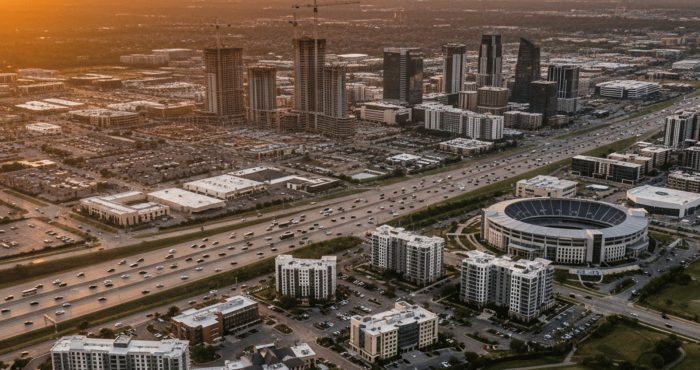
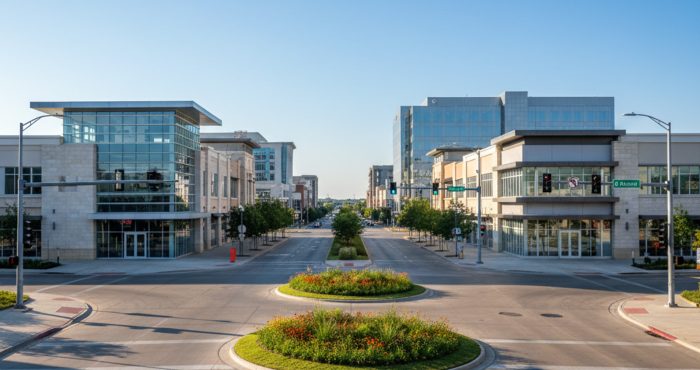
Frisco feels master-planned and high-energy. It is home to The Star (the Dallas Cowboys HQ), the PGA headquarters, and a younger demographic that feeds off this momentum. The aesthetic is incredibly manicured—think wide boulevards, perfectly landscaped medians, and rows of modern retail centers. It feels like a city that was built all at once with a clear vision for the future.

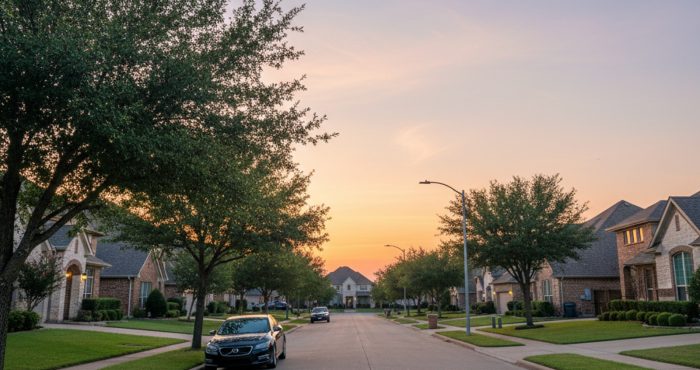
Plano, by contrast, feels more grounded and organic. Because it developed earlier, the city has a diverse dining scene that feels less “chain-heavy” and more authentic. The streets in neighborhoods are lined with massive, mature trees—something Frisco won’t have for another 20 years.

It is also important to note that Plano has two distinct personalities. “West Plano” offers luxury and sprawling estates that rival anything in Frisco, while “Central Plano” offers more modest, affordable housing stock. Both cities boast highly international communities, making them culturally rich places to call home.


Housing Market: New Construction vs. Renovation Potential

For most buyers, the house itself is the deciding factor. The inventory in these two cities caters to different tastes.

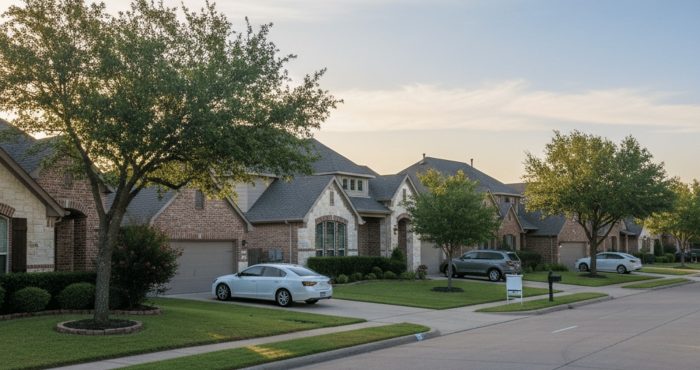
Frisco is dominated by homes built from the 2000s to the present. If you want open floor plans, high ceilings, modern insulation, and move-in ready aesthetics, this is your market. However, because land prices were higher during this boom, lot sizes in Frisco tend to be smaller. You are paying a premium price per square foot for that “new” smell and modern finish out.

Plano is dominated by builds from the 1980s and 1990s. While you might need to budget for renovations to open up a kitchen or update bathrooms, you generally get more land for your money. The lots are wider, the backyards are deeper, and the landscaping is lush.

If you are looking for luxury without the commute of Frisco, West Plano is a specific market you should watch. It features high-end estates that offer the square footage of Frisco mansions but with the benefit of mature trees and a closer location to Dallas.


Cost of Living: Taxes, Tolls, and Home Prices

When comparing the cost of living in North Dallas, you have to look beyond the listing price. The monthly “carry” costs can differ significantly between the two.

Home Prices Generally, Frisco commands a higher median price. This isn’t necessarily because the land is more valuable, but because the houses are newer. You are paying for the depreciation schedule of a 2015 build versus a 1985 build.

Property Taxes This is where buyers often get confused. The tax rates (City + School District + County) in both cities are comparable—roughly around a 2.2% effective rate. However, your actual bill in Frisco is often higher. Why? Because the assessed value of a brand-new $800,000 home is usually higher than an older Plano home that hasn’t changed hands in a decade.

Tolls and HOAs There are two hidden budget items to watch in Frisco:

  • Tolls: Frisco residents commuting south almost exclusively rely on the Dallas North Tollway (DNT). Those tolls add up quickly, often costing commuters hundreds of dollars a month.
  • HOA Fees: Frisco is famous for its “resort-style” communities with massive amenity centers, pools, and clubhouses. These are fantastic, but they come with higher monthly HOA dues compared to Plano neighborhoods, many of which have low fees or no HOA at all.


Battle of the School Districts: Frisco ISD vs. Plano ISD

If education is a priority, you are in luck—both districts are A-rated and premier destinations for education in Texas. However, they operate on very different structural philosophies.

Frisco ISD uses a “Small School Model.” Their philosophy is that smaller high schools allow more students to participate in extracurriculars. Instead of building one massive high school for 4,000 kids, they build four high schools for 1,000 kids each. This means your student has a statistically better chance of making the varsity team, the lead role in the play, or the student council.

Plano ISD utilizes a “Senior High Model.” Grades 9 and 10 attend High School, while grades 11 and 12 attend a dedicated Senior High. These Senior High campuses are massive. The benefit here is scale—they can offer specialized AP classes, IB programs, and niche electives that smaller schools simply can’t fund. It is a more collegiate atmosphere for juniors and seniors.

A note on Zoning: Always check the specific address. City limits and school district boundaries do not align perfectly. There are pockets of residents living in Plano who are actually zoned to Frisco ISD, and vice versa.


Commute & Location: Accessibility to Dallas

For professionals working in Downtown Dallas, the difference in commute time is arguably the biggest differentiator.

Plano is significantly closer to the city center. A commute from Plano to Downtown Dallas might take 20 to 30 minutes on a good day. From Frisco, that same drive can easily stretch to 40, 50, or 60+ minutes during rush hour. You are simply adding 10–15 miles of traffic to your day.

If you work at Legacy West or the Toyota Headquarters, you are in the sweet spot. This major economic hub sits right on the border of the two cities, making the commute negligible for residents of either.

Public Transit If you prefer not to drive, Plano is the clear winner. Plano is a member of DART (Dallas Area Rapid Transit) and has Red and Orange line rail stations that run directly to Downtown Dallas and DFW Airport. Frisco opted out of the DART system, meaning there is no rail connection. If you live in Frisco, you are driving.


Safety & Crime Statistics

When looking at crime statistics, both Frisco and Plano consistently rank as some of the safest cities in the United States relative to their population size.

The data shows that crime rates in both cities are significantly lower than the national average and the surrounding Dallas metro area. Frisco often edges out Plano slightly in rankings. This is largely due to Frisco being newer, less dense, and having fewer commercial transition zones than Plano. However, for the average resident, the difference is statistical rather than felt. Both cities offer a sense of security that draws people to the area.

Expert Guidance for Buying and Selling

Navigating the real estate market takes more than just watching prices. The Bale Real Estate Group, ranked in the top 1% of North Texas Realtors, helps buyers and sellers understand how to position themselves based on current competition, not just past sales. From identifying the right neighborhoods to negotiating stronger terms, their approach is focused on preparation, strategy, and results.

FAQs

Is Plano or Frisco closer to Downtown Dallas?

Plano is significantly closer to Downtown Dallas. Depending on where you live in the city, you are roughly 20 miles from downtown, whereas Frisco is located further north, adding an extra 15-20 minutes to a typical commute.

Are taxes higher in Frisco or Plano?

The actual tax rates are very similar for both cities. However, homeowners often pay a higher total tax bill in Frisco because the homes are newer and typically have higher assessed property valuations than the older housing stock in Plano.

Which school district is better, Frisco or Plano?

Both are top-tier districts, so “better” depends on your child’s needs. Frisco ISD offers smaller high schools which maximizes student participation in activities, while Plano ISD uses a Senior High model (grades 11-12) that offers massive scale for advanced academics and AP programs.

Why is Frisco growing faster than Plano?

Frisco is growing faster because it still has undeveloped land available for new construction. Plano is “landlocked,” meaning it is almost fully developed, so its market is driven by resale homes and renovations rather than new subdivisions.


Final Verdict: Which City Wins?

There is no wrong answer here, but there is likely a right answer for your specific situation.

Choose Plano if:

  • You commute to Downtown Dallas and want to minimize time in the car.
  • You value public transit access (DART) or proximity to airports.
  • You love mature trees, character-rich neighborhoods, and larger lots.
  • You prefer a more grounded, established community feel.

Choose Frisco if:

  • You want a brand-new home with modern finishes and energy efficiency.
  • You love the “master-planned” lifestyle with resort-style community amenities.
  • You prefer the “small school” educational model for student involvement.
  • You work in Legacy West or locally in Frisco and don’t mind the tolls.

Whether you are drawn to the established charm of living in Plano or the modern excitement of buying a home in Frisco, both cities offer an incredible quality of life in North Texas.

Posted in: Community Guides, Frisco Real Estate, Home Buying, Market Updates, Plano Real Estate, Relocating to North Dallas Tagged: 2026 Housing Market, Buyer Guide, Collin County Real Estate, Cost of Living, Dallas North Tollway, DART Rail, Downtown Dallas Commute, Frisco ISD, Frisco Real Estate, Frisco vs Plano, Legacy West, North Dallas Real Estate, PGA Frisco, Plano ISD, Plano Real Estate, Property Taxes, Relocation Guide, The Star Frisco, Toyota Headquarters, West Plano

Is Frisco, TX Safe? A Data-Driven Guide for New Residents

If you are looking into homes for sale in Frisco, you have likely heard the buzz. Frisco frequently dominates the headlines as one of the safest cities in the United States. It is a massive draw for people moving to North Texas, and for good reason.

But as a local, I know that “safety” means more than just crime statistics. It’s about whether you feel comfortable walking your dog at night, how the roads handle the morning commute, and what happens when the Texas weather turns severe. While Frisco’s population has exploded to around 235,000 residents, it has managed a rare feat: maintaining a small-town safety profile despite big-city growth.

In this guide, we are going to look past the marketing brochures and dig into the real numbers for 2026. We will cover crime rates, environmental risks, and infrastructure so you can decide if Frisco is the right fit for you.


Frisco Crime Rates vs. National Averages (2026 Data)

Let’s start with the question on everyone’s mind: crime. When you look at the data from sources like SmartAsset and MoneyGeek, Frisco consistently ranks in the #1 or #2 spots for safety nationwide. The numbers back this up, especially when you compare them to national baselines.

Violent Crime Violent crime in Frisco is exceptionally low. Recent data indicates a rate of approximately 86 to 95 incidents per 100,000 people. To put that in perspective, that is a fraction of the national average. It is one of the main reasons residents feel comfortable in the best neighborhoods in Frisco, even after dark.

Property Crime While violent crime is rare, property crime is the most common issue here, though it is still lower than the national average. This usually looks like “crimes of opportunity”—things like porch piracy or theft from unlocked vehicles. The economic impact of crime here is remarkably low; the cost of crime per capita in Frisco is estimated around $287, whereas the national average hovers near $2,178.

The Bottom Line

  • Violent Crime: Extremely rare compared to US averages.
  • Traffic Fatality Rate: 1.59 per 100k (significantly lower than nearby major cities).
  • Rankings: Consistently top-tier in 2024/2025 reports from SmartAsset and MoneyGeek.


Environmental Risks: Tornadoes, Hail, and Weather Safety

If the crime stats look too good to be true, here is the reality check: the weather. Living in North Texas means dealing with the elements, and this is the one area where new residents need to be vigilant.

Tornado Risk Frisco is located in a higher-risk zone for tornado activity, with a risk score hovering near 99/100. While direct hits from massive storms are statistically rare, they do happen. For example, in March 2024, a minor tornado (EF0) touched down near the UNT Frisco campus. It caused minimal damage, but it served as a reminder that severe weather is a part of life here.

Hail and Wind Frankly, hail is the safety risk that is most likely to impact your wallet. High winds and hail are the most frequent causes of property damage in the region, affecting roofs and parked cars. When budgeting for a move, it is smart to look closely at insurance deductibles regarding wind and hail.

Emergency Preparation The city is well-prepared for this. Frisco utilizes an extensive Outdoor Warning Siren System to alert residents of severe weather. Most locals also rely on weather apps and weather radios. The summer heat is another safety factor; with days consistently topping 100°F, staying hydrated and avoiding midday sun is mandatory.


Infrastructure & Health: Water, Roads, and Hospitals

Safety also covers the infrastructure you use every day. From the water coming out of your tap to the roads you drive on, Frisco generally scores very high marks.

Water Quality You might see questions online about water safety, but the official reports are solid. The Texas Commission on Environmental Quality (TCEQ) rates Frisco’s water supply as “Superior,” which is the highest rating a water system can achieve in the state. According to the 2025/2026 Annual Water Quality Report, the city meets or exceeds all federal safety standards.

Road Safety Traffic is a common complaint in any growing city, but strictly speaking, Frisco roads are safe. The traffic fatality rate is roughly 1.59 per 100,000 people. For context, the rate in Dallas is roughly eight times higher (around 14.42 per 100k).

Areas of Caution That said, congestion can create risks. High-volume areas like the intersection of US 380 and Dallas Parkway, as well as stretches of Preston Road, require extra defensive driving.

Healthcare Access If you have a medical emergency, you are in good hands. Frisco is home to major medical centers, including Baylor Scott & White and Texas Health, ensuring that high-level care is just minutes away for most residents.

For a deeper dive into the daily logistics of the city, you might want to read about living in Frisco pros and cons.


Community Demographics & Inclusivity

A common question for anyone relocating is, “Will I fit in?” Frisco has become increasingly diverse over the last decade, transforming from a quiet exurb into a cultural melting pot.

Who Lives Here? According to recent 2026 Census estimates, the population breakdown is approximately:

  • White: ~48%
  • Asian: ~28%
  • Hispanic: ~13%
  • Black: ~9%

Safety Sentiment Physical safety is high across all demographics. Whether you are browsing forums like Reddit or talking to neighbors, the consensus is that residents of all backgrounds feel physically secure in their homes and public spaces.

Community FeelFrisco ISD is known for its diversity, particularly its high Asian student population, which has fostered a variety of cultural events and inclusion initiatives. However, some residents note in online discussions that for specific cultural hubs—like niche grocery stores or specific dining scenes—they sometimes travel to neighboring Plano or Dallas. While Frisco is catching up rapidly, it is still developing its own deep cultural roots compared to the older suburbs.


Safety Comparison: Frisco vs. Plano, McKinney, and Dallas

When you are looking at the metroplex, it helps to compare Frisco to its neighbors.

Frisco vs. Dallas The difference here is stark. Frisco is exponentially safer than Dallas regarding both violent crime and traffic incidents. The “Frisco Bubble” is a real feeling; the transition from the dense urban environment of Dallas to the manicured streets of Frisco is immediate.

Frisco vs. Plano and McKinney This comparison is much closer. Plano and McKinney are also consistently ranked as some of the safest cities in America.

  • Plano: Very comparable to Frisco, though an older city with slightly different infrastructure.
  • McKinney: Also incredibly safe, with a historic downtown feel.

In recent 2025 and 2026 studies, Frisco often edges out its neighbors slightly in safety rankings, but the difference is marginal. You really can’t go wrong with any of the three if safety is your priority.


Verdict: Is Frisco a Good Place to Live?

So, is Frisco safe? By almost every statistical measure, the answer is a resounding yes.

For Families: The combination of low violent crime and a “Superior” rated water system makes it a top-tier choice. The biggest “threat” you are likely to face is a severe thunderstorm or a hailstorm, not criminal activity.

For Commuters: While traffic on US 380 can be stressful, the roads are statistically much safer than those in the urban core of Dallas.

Overall, Frisco remains one of the safest cities in the nation. As long as you prepare for the Texas weather and practice defensive driving in construction zones, it is an excellent place to put down roots.

Expert Guidance for Buying and Selling in Frisco

Navigating the Frisco real estate market takes more than just watching prices. The Bale Real Estate Group, ranked in the top 1% of North Texas Realtors, helps buyers and sellers understand how to position themselves based on current competition, not just past sales. From identifying the right neighborhoods to negotiating stronger terms, their approach is focused on preparation, strategy, and results.

Frequently Asked Questions About Frisco Safety

Is Frisco TX safe from tornadoes?

Frisco is located in a high-risk zone for tornadoes, consistent with the rest of North Texas. While direct hits are statistically rare, the city takes this risk seriously with a robust siren system. A minor tornado did touch down near UNT Frisco in March 2024, so having a weather plan is essential.

Is Frisco tap water safe to drink?

Yes, Frisco’s tap water is safe. The Texas Commission on Environmental Quality (TCEQ) has rated the city’s water system as “Superior,” which is the highest rating available. The water meets or exceeds all federal safety standards.

What is the crime rate in Frisco Texas?

Frisco has one of the lowest crime rates in the country. The violent crime rate is approximately 86 incidents per 100,000 people, which is significantly below the national average. Property crime is also low, though it is the most common type of police report filed in the city.

Is Frisco safer than Plano?

Both cities are exceptionally safe and frequently appear at the top of national safety rankings. In recent 2025 and 2026 studies, Frisco often ranks slightly higher than Plano, but the difference is minimal. Both offer a safety profile far superior to national averages.

Posted in: Community Guides, Frisco Real Estate, Home Buying, Market Updates, Relocating to North Dallas Tagged: 2026 Safety Guide, Baylor Scott & White Frisco, Best Neighborhoods in Frisco, Buyer Guide, Dallas Parkway, Frisco Crime Rate, Frisco Crime Statistics, Frisco Real Estate, Frisco Relocation, Frisco Roads, Frisco Safety, Frisco Tornado Risk, Frisco TX, Frisco vs Dallas, Frisco vs McKinney, Frisco vs Plano, Frisco Water Quality, Frisco Weather Safety, Is Frisco TX Safe, Living in Frisco TX, North Texas Relocation, Relocation Guide, TCEQ Superior Water Rating, Texas Health Frisco, US 380 Frisco

Bale Real Estate Group
(972) 469-0332
TREC - Information About Brokerage Services
TREC - Consumer Protection Notice
Site created by Michael Tritthart Team. | View Privacy Policy