
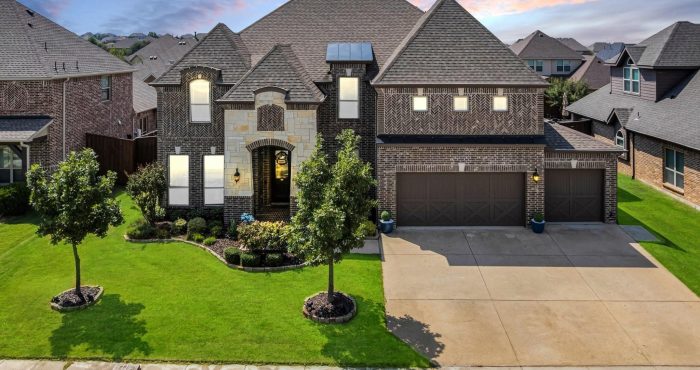
Luxury buyers searching in Frisco and Plano frequently face an important decision:
Should you purchase an older luxury home in an established neighborhood or choose a newer home with a more modern design?
There is no universal answer.
An established luxury home may offer mature trees, a larger or more distinctive lot, custom architecture, a pool, completed landscaping, and a desirable location. A newer luxury home may offer a modern floorplan, updated finishes, improved energy efficiency, newer mechanical systems, and fewer immediate maintenance concerns.
However, age alone does not determine which home is the better value.
The right choice depends on the property’s location, construction quality, condition, updates, lot, neighborhood, ownership costs, renovation needs, and long-term resale potential.
At Bale Real Estate Group, we help buyers compare homes throughout Frisco and Plano so they can understand what they are purchasing—not simply whether one home is newer than another.
What Is Considered an Older Luxury Home?
In Frisco and Plano, an older luxury home does not necessarily mean an outdated or undesirable property.
Many established luxury homes were custom-built with high-quality materials, generous room sizes, substantial trim work, distinctive architecture, and lots that may be difficult to duplicate in a newer development.
Depending on the community, an established luxury home may offer:
- Mature trees and landscaping
- A larger or more private lot
- Custom architecture
- Established streetscapes
- Completed pools and outdoor living spaces
- Desirable proximity to employment centers and major roads
- Lower neighborhood density
- More architectural variety
- Improvements completed by previous owners
- An established community identity
The condition of these homes can vary significantly. One property may have undergone a comprehensive renovation, while another may still have its original kitchen, bathrooms, windows, mechanical systems, and finishes.
That difference can have a major effect on value.
What Is Considered a Newer Luxury Home?
A newer luxury home generally offers more current construction, finishes, technology, energy features, and floorplan design.
Depending on the builder and community, newer homes may include:
- Open-concept living areas
- Larger kitchens and islands
- Modern primary suites
- Dedicated home offices
- Media or game rooms
- Improved insulation and windows
- Newer HVAC and mechanical systems
- Smart-home technology
- Contemporary lighting and fixtures
- Current flooring and cabinetry
- Builder warranties
- Newer neighborhood amenities
Newer construction can reduce the likelihood of major short-term repairs, but it does not eliminate the need for careful evaluation.
Construction quality, builder reputation, lot position, drainage, workmanship, upgrade selections, inspection findings, taxes, HOA obligations, and future development should all be considered.
Buyers considering a builder home should also understand that the builder’s sales representative works for the builder.
Learn More About New-Construction Buyer Representation
Independent buyer representation can help you compare builders, contracts, incentives, lot premiums, upgrades, inspections, timelines, and resale considerations before making a commitment.
Advantages of Buying an Older Luxury Home
Mature Trees and Established Landscaping
One of the clearest advantages of an established neighborhood is landscaping that has had years to mature.
Large trees, established shrubs, completed gardens, and mature streetscapes can provide shade, privacy, character, and a sense of permanence that newer developments may take years to achieve.
Buyers drawn to mature surroundings often consider established neighborhoods such as:
- Chapel Creek in Frisco
- Custer Creek Farms in Frisco
- Shaddock Creek Estates in Frisco
- Starwood in Frisco
- Stonebriar in Frisco
- Cliffs of Gleneagles in Plano
- Lakeside on Preston in Plano
- Shoal Creek in Plano
- Willow Bend in Plano
- Willow Bend Polo Estates in Plano
Landscaping should still be evaluated carefully. Mature trees can be valuable, but buyers should also consider tree health, root systems, irrigation, drainage, maintenance, and potential effects on foundations, roofs, driveways, and underground utilities.
Larger or More Distinctive Lots
Established luxury communities may offer lots that are larger, more private, more heavily landscaped, or more distinctive than those available in some newer developments.
A home’s lot can influence:
- Privacy
- Outdoor living
- Pool placement
- Natural light
- Noise
- Views
- Drainage
- Future expansion
- Resale demand
Buyers should look beyond the advertised lot size and examine how the lot actually functions.
A smaller interior lot with strong privacy may be more desirable than a larger lot affected by road noise, drainage issues, power lines, neighboring structures, or an awkward shape.
Communities such as Custer Creek Farms, The Hills of Kingswood, Willow Bend, and Willow Bend Polo Estates may appeal to buyers who place a high priority on lot size, privacy, outdoor living, or estate-style surroundings.
Custom Architecture and Character
Many older luxury homes offer architectural details that are difficult or expensive to reproduce.
These may include:
- Detailed millwork
- Custom staircases
- Extensive built-ins
- Wood-paneled studies
- Formal living and dining rooms
- Stone or masonry exteriors
- Interior courtyards
- Multiple fireplaces
- Custom ceiling treatments
- Distinctive elevations
For some buyers, these features create a sense of craftsmanship and individuality that is more important than having the newest finishes.
However, distinctive architecture can also become dated. Buyers should determine whether they truly appreciate the home’s design or are simply reacting to its size and original construction cost.
Established Location
An older luxury home may provide a more central or convenient location than a newer home farther from established employment, shopping, dining, medical facilities, and transportation routes.
Communities such as Starwood, Villages of Stonebriar Park, Lakeside on Preston, Shoal Creek, and Willow Bend offer access to established North Dallas destinations.
A shorter commute and convenient location can sometimes provide greater everyday value than additional square footage or newer finishes.
Completed Pools and Outdoor Living
Adding a pool, outdoor kitchen, landscaping, fencing, and covered living area can be expensive and disruptive.
An established home may already include these improvements.
However, buyers should evaluate:
- Pool surface
- Equipment age
- Plumbing
- Decking
- Drainage
- Outdoor structures
- Shade
- Privacy
- Maintenance requirements
A completed pool is only an advantage when it is in good condition and fits the buyer’s lifestyle.
Potential Disadvantages of an Older Luxury Home
Renovation Costs Can Add Up Quickly
An older luxury home may appear competitively priced until the buyer estimates the cost of updating it.
Potential projects may include:
- Kitchen renovation
- Bathroom renovation
- Flooring replacement
- Interior and exterior painting
- Lighting
- Cabinetry
- Windows
- Roofing
- HVAC systems
- Water heaters
- Electrical work
- Plumbing
- Pool equipment
- Landscaping
- Smart-home upgrades
Luxury renovations can be more expensive because the home is larger, the finishes are more specialized, and buyers may expect improvements that are consistent with the property’s price point.
Replacing flooring in a 5,000-square-foot home is not comparable to replacing flooring in a smaller property. The same is true for painting, roofing, windows, HVAC systems, and landscaping.
A buyer should not assume that cosmetic updates will be inexpensive simply because they are optional.
Older Mechanical Systems
Major systems may still function at the time of purchase but be approaching the end of their useful lives.
Important items include:
- Roof
- HVAC units
- Water heaters
- Windows
- Electrical panels
- Plumbing
- Pool equipment
- Appliances
- Irrigation
- Drainage systems
A home inspection can help identify visible concerns, but buyers should also consider the age, maintenance history, expected replacement schedule, and cost of major systems.
Learn More About Home Inspections When Buying a Home
Floorplans May Not Match Current Preferences
Some established luxury homes were designed around features that were popular at the time of construction.
These may include:
- Formal living rooms
- Enclosed kitchens
- Smaller primary bathrooms
- Limited home-office space
- Multiple level changes
- Secondary bedrooms with smaller closets
- Fewer electrical outlets
- Less storage
- Limited connection between indoor and outdoor living
Some floorplans can be improved through renovation. Others may require structural changes that are expensive or impractical.
The key question is whether the home’s basic layout works before cosmetic improvements are considered.
Insurance and Maintenance Costs
Older homes may have higher insurance or maintenance costs depending on the roof, systems, construction, claims history, location, and replacement requirements.
Buyers should obtain insurance estimates during the option period rather than waiting until shortly before closing.
The purchase price alone does not reveal the true cost of ownership.
Advantages of Buying a Newer Luxury Home
Modern Floorplans
Newer luxury homes are often designed around how buyers live today.
Common features may include:
- Open kitchens and living areas
- Oversized islands
- Walk-in pantries
- Dedicated offices
- First-floor guest suites
- Larger primary closets
- Mudrooms
- Media rooms
- Game rooms
- Flexible living spaces
- Larger garages
- Indoor-outdoor entertaining areas
These features can reduce the need for major floorplan changes after purchase.
Newer communities buyers may compare include:
- Edgestone at Legacy
- Newman Village
- Park Place Estates
- Phillips Creek Ranch
- Richwoods
- The Canals at Grand Park
- The Hills of Kingswood
- Kings Gate
- Normandy Estates
- Windrose Tower
Construction dates and home styles can vary within each community, so buyers should evaluate the specific property rather than relying only on the neighborhood name.
Newer Systems and Reduced Immediate Maintenance
A newer home may offer more time before major components require replacement.
Potential advantages include:
- Newer roofing
- Newer HVAC systems
- Newer plumbing
- Newer electrical components
- Newer windows
- Newer appliances
- Improved insulation
- Current building standards
This can make ownership more predictable during the first several years.
However, newer does not mean maintenance-free. Poor workmanship, drainage problems, foundation movement, roofing defects, HVAC issues, and other concerns can occur in homes of any age.
An independent inspection remains important—even with new construction.
Energy Efficiency
Newer homes may include improvements such as:
- Better insulation
- More efficient HVAC systems
- Improved windows
- LED lighting
- Energy-efficient appliances
- Smart thermostats
- Updated building materials
Energy efficiency can improve comfort and help manage utility expenses, particularly in a larger home.
Buyers should review actual utility information when available rather than relying only on general efficiency claims.
Current Finishes
A newer home may already have finishes that align with current buyer preferences.
These may include:
- Wide-plank flooring
- Modern cabinetry
- Quartz or natural-stone surfaces
- Updated lighting
- Contemporary hardware
- Larger showers
- Neutral paint
- Modern fireplaces
- Smart-home features
This can allow a buyer to move in without immediately beginning a renovation.
Builder Warranties
New construction may include warranties covering certain workmanship, systems, and structural components.
Buyers should review:
- What is covered
- How long coverage lasts
- Exclusions
- Claim procedures
- Transferability
- Builder responsibilities
- Third-party warranty requirements
A warranty can provide protection, but it should not replace inspections, documentation, or careful review of the home.
Potential Disadvantages of a Newer Luxury Home
Higher Property Taxes and Assessments
Some newer communities may have higher property taxes or additional assessments.
These can include:
- MUD taxes
- PID assessments
- HOA dues
- Amenity fees
- Private infrastructure costs
A newer home with fewer immediate repairs may still have a higher monthly ownership cost than an established resale property.
Buyers should compare estimated monthly payments using the actual tax rate, HOA obligations, insurance estimate, and assessments for each property.
Lot Premiums
Builders may charge additional premiums for:
- Larger lots
- Cul-de-sac lots
- Greenbelt lots
- Water views
- Corner lots
- Golf-course lots
- Lots with greater privacy
The premium may be justified, but buyers should consider whether the lot feature will remain desirable when the home is eventually resold.
Builder Upgrades Can Become Expensive
The advertised base price may not reflect the final cost of the home.
Additional expenses may include:
- Lot premium
- Structural options
- Flooring
- Cabinetry
- Countertops
- Lighting
- Appliances
- Media-room equipment
- Landscaping
- Window treatments
- Pool
- Outdoor kitchen
- Smart-home features
Buyers should compare the completed cost of the new home with updated resale alternatives—not simply compare the builder’s base price with a resale listing.
Ongoing Construction
Buying early in a development may mean living with:
- Construction traffic
- Noise
- Dust
- Incomplete landscaping
- Unfinished amenities
- Changing traffic patterns
- Future phases
- Undetermined neighboring homes
Buyers should review community plans while understanding that future development can change.
Smaller or Less Mature Lots
Some newer communities prioritize home size and amenities over lot size.
Buyers may find:
- Smaller yards
- Less privacy
- Younger landscaping
- Homes positioned closer together
- Limited room for a pool
- Greater visibility from neighboring homes
This may not matter to a buyer who prioritizes newer construction and lower yard maintenance. It can be a major issue for someone seeking privacy and outdoor space.
Updated Older Home vs. Brand-New Home
One of the most valuable comparisons is not simply old versus new.
It is an updated older home versus a completed newer home.
An updated established property may provide:
- Mature landscaping
- A better location
- A larger lot
- Architectural character
- Modernized interiors
- Completed outdoor living
- Fewer construction-related inconveniences
A new home may provide:
- Modern systems
- Current construction
- Builder warranty
- Greater energy efficiency
- More flexible floorplans
- The ability to select certain finishes
The better choice depends on which advantages are most important to the buyer.
A properly updated older home in a desirable location may compete very well with newer construction. A poorly renovated older home may create more risk than an original home priced appropriately for renovation.
Buyers should evaluate the quality of updates—not simply whether updates exist.
Renovated Does Not Always Mean Well Renovated
The term “updated” is used broadly in real estate marketing.
A home may have new paint and flooring but still retain:
- Aging HVAC systems
- Older windows
- Original plumbing
- Outdated electrical components
- An aging roof
- Old pool equipment
- Drainage concerns
- Deferred exterior maintenance
Cosmetic improvements can make a home appear newer without addressing expensive underlying systems.
Buyers should ask:
- Were permits required and obtained?
- Who completed the work?
- Were walls removed?
- Was electrical or plumbing work involved?
- Are receipts or warranties available?
- Were structural changes properly designed?
- Do the materials match the home’s price point?
- Was the renovation completed for long-term ownership or a quick resale?
A well-documented renovation is more valuable than improvements that cannot be verified.
Which Option Has Better Resale Potential?
Neither a newer nor an older home automatically has better resale potential.
Future value depends on several factors:
- Location
- Community demand
- Lot position
- Construction quality
- Floorplan
- Condition
- Updates
- Privacy
- School zoning
- HOA obligations
- Taxes
- Competing inventory
- Buyer preferences
- Overall price positioning
A newer home on a weak lot may be less desirable than an updated older home on a premium lot.
An older home with a difficult floorplan and substantial deferred maintenance may struggle against newer alternatives.
Buyers should consider not only whether they like the home today but also how future buyers may compare it with competing properties.
How Long Do You Plan to Own the Home?
Your expected ownership period can influence the decision.
A buyer planning to own the home for many years may be more comfortable completing renovations over time.
A buyer expecting another move within several years may prefer a home that already has broad resale appeal and does not require major improvements.
Questions to consider include:
- Will the home continue to meet your needs?
- Could you complete planned renovations before selling?
- Are the improvements likely to appeal to future buyers?
- Will the neighborhood remain competitive?
- Are major systems likely to require replacement during ownership?
- Could new construction nearby affect future resale competition?
The longer the anticipated ownership period, the more important it becomes to consider long-term maintenance and lifestyle—not simply current appearance.
Compare the Total Cost of Ownership
The list price is only one part of the financial decision.
Buyers should compare:
- Down payment
- Mortgage payment
- Property taxes
- Homeowners insurance
- HOA dues
- MUD or PID assessments
- Utilities
- Landscaping
- Pool maintenance
- Immediate repairs
- Future system replacements
- Renovation costs
- Lot premiums
- Builder upgrades
- Commuting expenses
An older home with a lower purchase price may cost more after renovation and repairs.
A newer home with fewer maintenance concerns may carry higher taxes, HOA dues, assessments, and upgrade costs.
The better value becomes clearer only after the complete ownership picture is considered.
Questions to Ask Before Buying an Older Luxury Home
Before purchasing an established home, ask:
- How old are the roof and HVAC systems?
- Have the windows been replaced?
- Has the plumbing been updated?
- What renovations have been completed?
- Were permits obtained when required?
- Are receipts and warranties available?
- Are there known drainage or foundation concerns?
- How old is the pool and its equipment?
- Does the floorplan work without structural changes?
- What maintenance has been deferred?
- What will the home cost after necessary improvements?
- Will the finished property be competitive with other homes in the neighborhood?
Questions to Ask Before Buying a Newer Luxury Home
Before purchasing a newer or new-construction home, ask:
- Who is the builder?
- What is included in the advertised price?
- What upgrades cost extra?
- Is there a lot premium?
- What is the estimated completion timeline?
- What warranties are provided?
- What are the property taxes?
- Are there MUD or PID assessments?
- What are the HOA dues and restrictions?
- What future phases are planned?
- What amenities are complete?
- Can the lot accommodate a pool?
- How does the completed price compare with resale homes?
- How might future builder inventory affect resale?
Frisco Communities Buyers May Compare
Frisco offers a wide range of established and newer neighborhoods.
Buyers comparing mature luxury communities may consider:
- Chapel Creek
- Custer Creek Farms
- Shaddock Creek Estates
- Starwood
- Stonebriar
- Villages of Stonebriar Park
Buyers seeking newer homes or more recently developed communities may compare:
- Edgestone at Legacy
- Newman Village
- Park Place Estates
- Phillips Creek Ranch
- Richwoods
- The Canals at Grand Park
- The Hills of Kingswood
Additional options include:
Explore All Frisco Communities
Plano Communities Buyers May Compare
Plano offers established luxury neighborhoods, gated communities, traditional homes, lower-maintenance properties, and luxury high-rise residences.
Buyers seeking mature landscaping, established surroundings, and architectural variety may compare:
- Avignon Windhaven
- Cliffs of Gleneagles
- Deerfield
- Lakeside on Preston
- Shoal Creek
- Willow Bend
- Willow Bend Polo Estates
Buyers comparing gated, newer, or lower-maintenance luxury options may consider:
Additional established Plano communities include:
Frequently Asked Questions
Is it better to buy an older or newer home in Frisco?
The better choice depends on the specific property.
An older Frisco home may offer a larger lot, mature landscaping, custom architecture, a completed pool, and a more established location. A newer home may offer a modern floorplan, newer systems, current finishes, improved energy efficiency, and fewer immediate repairs.
Buyers should compare condition, location, lot, taxes, HOA obligations, renovation costs, and resale potential—not just construction year.
Are older luxury homes in Plano a good investment?
An older luxury home in Plano can be a strong purchase when it offers a desirable location, functional floorplan, quality construction, strong lot, appropriate pricing, and manageable renovation needs.
However, buyers should carefully evaluate major systems, deferred maintenance, renovation quality, insurance, and the total cost required to bring the home to their desired condition.
Do newer homes have higher property taxes?
Newer homes can have higher property taxes depending on the community, assessed value, taxing jurisdictions, and additional assessments.
Buyers should verify the actual tax rate and determine whether MUD or PID assessments apply before comparing monthly payments.
Is renovating an older luxury home worth it?
Renovating may be worthwhile when the home has a strong location, desirable lot, good construction, functional basic layout, and sufficient value after improvements.
Renovation may be less attractive when the home requires major structural changes, extensive system replacement, or improvements that would push the buyer’s total investment beyond comparable updated homes.
Does a newer home have better resale value?
Not automatically.
Resale depends on location, lot, community demand, floorplan, condition, construction quality, taxes, HOA dues, and competition.
An updated older home on a premium lot may outperform a newer home with less privacy or a weaker location.
Should I buy new construction or an updated resale home?
New construction may appeal to buyers who want modern design, newer systems, warranties, and the ability to select finishes.
An updated resale home may offer mature landscaping, a more established location, completed improvements, and a shorter wait before moving.
The better option depends on the completed cost and the buyer’s lifestyle, timeline, and long-term plans.
Should I have a new-construction home inspected?
Yes. New homes can have workmanship, drainage, roofing, electrical, HVAC, plumbing, and other concerns.
Independent inspections can help identify issues before closing or before applicable warranty periods expire.
How can Bale Real Estate Group help me compare older and newer homes?
Gary and Linda Bale help buyers compare pricing, recent sales, property condition, renovation needs, lot position, construction quality, taxes, HOA obligations, inspection concerns, builder options, and long-term resale potential.
The objective is to help buyers understand the complete decision before making an offer or signing a builder contract.
Buying a Luxury Home in Frisco or Plano
Choosing between an older and newer luxury home requires more than reviewing photographs and list prices.
Bale Real Estate Group helps buyers evaluate:
- Neighborhood options
- Active listings
- Recent comparable sales
- Property condition
- Lot position
- Construction quality
- Updates and renovation needs
- Builder incentives
- Taxes and HOA obligations
- Inspection findings
- Offer strategy
- Resale considerations
Learn More About Bale Real Estate Group Buyer Services
Our goal is to provide clear information so buyers can make a confident decision without feeling rushed or pressured.
Selling an Older or Newer Luxury Home
The differences between older and newer homes also matter when selling.
An older luxury home may need strategic preparation to compete with updated properties and newer construction. A newer home may need to compete with builder inventory, incentives, and other recently completed homes.
Bale Real Estate Group helps sellers evaluate:
- Pricing
- Active competition
- Home preparation
- Staging
- Repairs
- Updates
- Photography
- Digital marketing
- Zillow Showcase eligibility
- Buyer objections
- Offer strategy
- Contract-to-close management
See Why Sellers Hire Bale Real Estate Group
Helpful Frisco and Plano Real Estate Resources
Explore All Frisco Communities
Learn About New-Construction Buyer Representation
Learn More About Buyer Services
See Why Sellers Hire Bale Real Estate Group
Read Bale Real Estate Group Client Testimonials
View Bale Real Estate Group Proven Results
Work With Bale Real Estate Group
Gary and Linda Bale lead Bale Real Estate Group, serving buyers and sellers throughout Frisco, Plano, Preston Hollow, Prosper, Allen, McKinney, and surrounding North Dallas communities.
Our approach combines local neighborhood knowledge, detailed property analysis, strategic guidance, strong negotiation, and personalized service from the first conversation through closing.
Whether you are deciding between an older luxury home and newer construction, relocating to North Dallas, or preparing to sell your current property, call or text Gary and Linda Bale at 972-469-0332.
We will help you compare the options, understand the complete cost, identify potential concerns, and make a confident decision.